This Week’s Bit of String: The perils of a sunny day
I’ll always remember the clear blue sky on September 11, 2001. I had a 9:00 a.m. doctor’s appointment, 5 days before my due date. I’d been on bedrest for a week and in labour for over 36 hours with no clear end in sight. So I didn’t anticipate enjoying the New England sunshine, but I must have looked out the window of my mother’s car and low-key admired it.
In the days that followed that attack, we were all certain more terrorists would strike and worse casualties would follow. I nursed my newborn son and wondered about families on the hijacked planes. What does a parent tell their children when doom and pain are imminent?
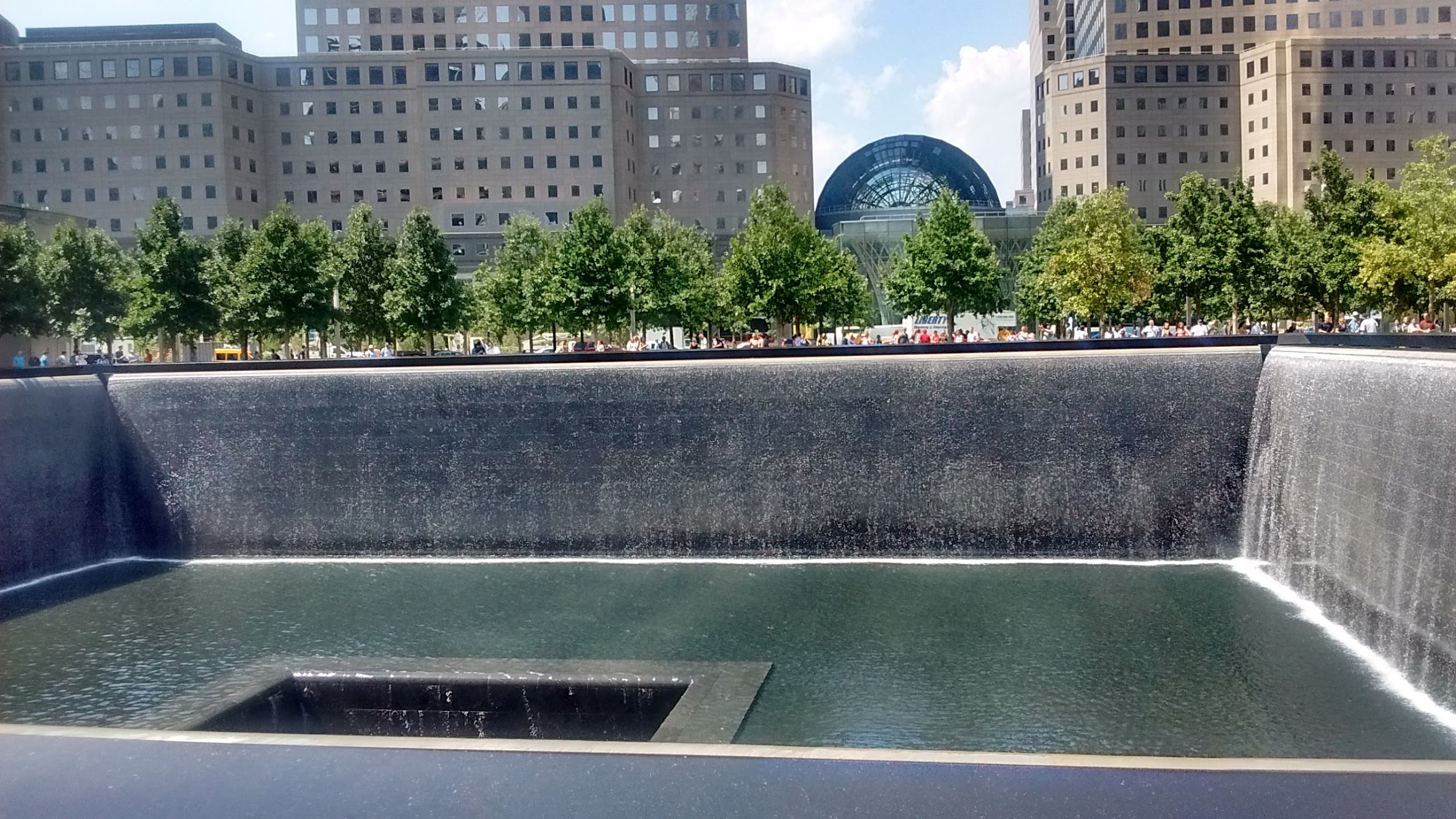
But even while I negotiated new parenthood, lonely and alone, and while I felt the nation gripped in panic, I remember thinking: In other parts of the world, this devastation is almost normal. In other parts of the world, sunny days mean nothing because people know what awful things can happen, any moment in any weather.
With the 25th anniversary of the 2001 terrorist attacks last week, I was a little obsessed watching old footage, and the poetry and art that came later. This includes Simon Armitage’s long poem “Out of the Blue.” It’s like a musical composition, with different movements. The lyrical “waving man” section in the 3rd of the 4 videos is perhaps most well-known. But there are other incredible sections, such as the frantic workers’ mantras in the second video.
The full poem opens and then closes with an imagined Twin Tower banker speaking of the keepsakes and photos he showcases on his desk—later to be found in the rubble. These are especially poignant to me because the financier is British. Those objects such as a cricket ball and a pressed leaf from an English oak travelled overseas with him to remind him of home.
Overseas Artefacts
When we came back from this year’s summer trip to America, we brought the usual supplies of maple syrup and Cheerios, wintergreen mints and Bisquick. We brought book purchases from a couple of newly-discovered independent bookstores, and New England-themed stickers portraying mountains and lakes.
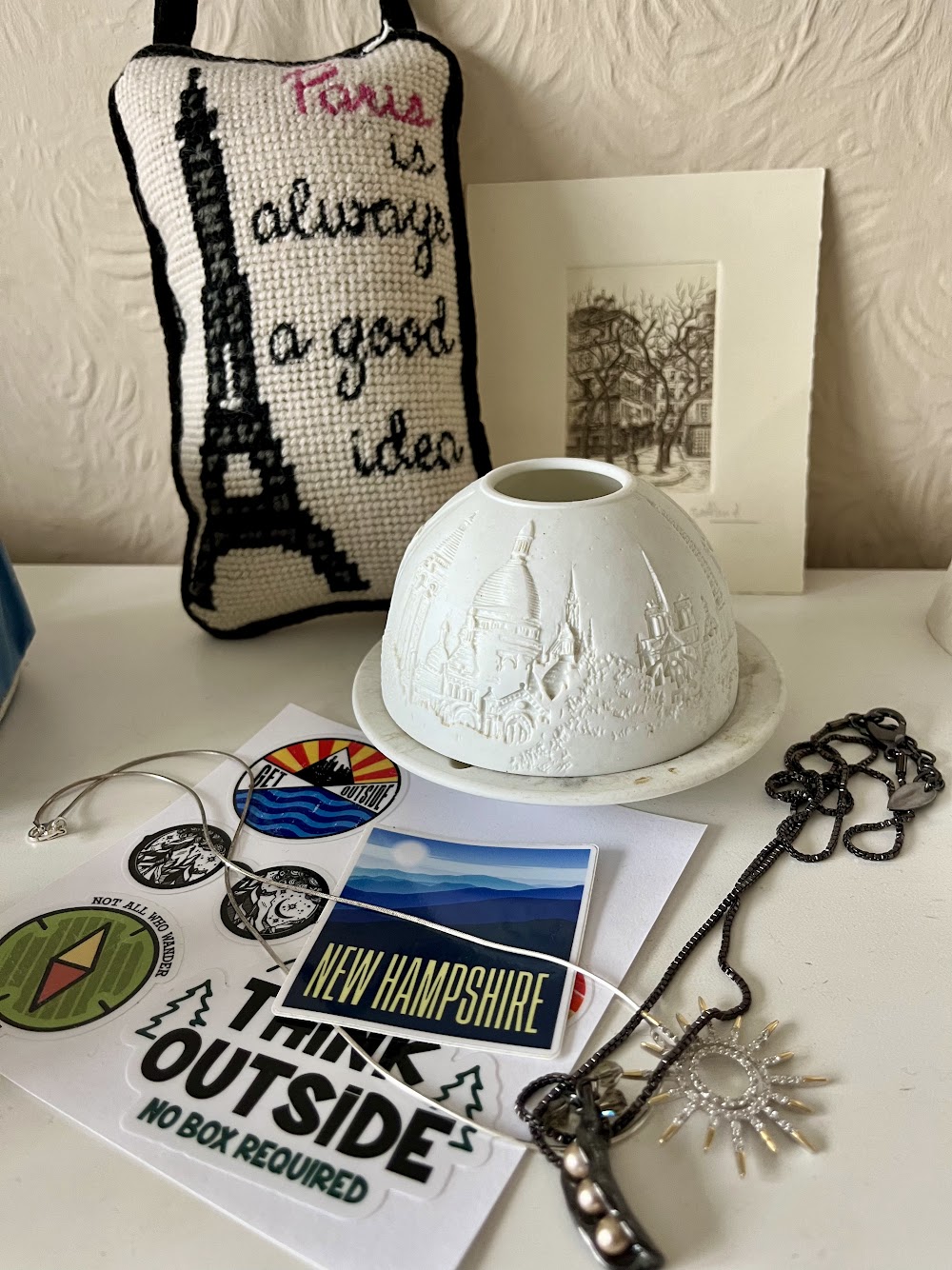
I had hand-me-up cardigans from my younger sister, and I had some of my late aunt’s French-themed decor and some pieces of jewellery. This included the pair of earrings I wore to our kiddo’s wedding one month ago, just as to my own wedding more than 20 years ago, I wore her earrings as my “something borrowed.” Only, she was alive then to lend them to me.
My aunt had kept various precious remnants of my paternal grandparents’ lives as well as her own. Now, my parents will look after all these things at their new house.
My mom is also the caretaker of her mother’s and sister’s family photos, plus all of the ones Mom and Dad took when we were growing up. There are a few gaps in pages where I slipped pictures of my childhood out, long ago, to keep as pieces of my story and they came over with me when I first moved to the UK.
Reverse Sifting
I read a fair bit about recovering remains after the terrorist attacks 25 years ago. So much was just pulverised. The canines trained to help rescue trapped humans became depressed. You can just imagine the psychological impact it had on the people there, as well as the only-recently acknowledged debilitating physical effects.
Searching through ruin for the tiniest clues to humanity.
It struck me that there’s a reverse sifting process some of us do. I remember when I was about 11, my mother and aunt set up a slideshow on our kitchen wall to look through their childhood photos. Lacy christening gowns, model trains on Christmas morning, birthday parties and lakeside summers. They were looking through these idyllic moments for clues to verify much darker memories they had. I’ve done that sometimes myself looking through old pictures.
As writers, this sifting is also part of the process, as I’ve realised and tried to come to terms with. It’s our job to show that our characters’ lives aren’t so great, to force them on a journey of repair and recovery. If they resist such reform, they’ll nearly ruin themselves.
We’re a bit like mobsters. We look at our protagonist’s situation and say, “That’s a tolerable existence you’ve built for yourself. Shame if someone started to examine it more closely.”
But then, when everything crumbles for our poor characters, that’s when we work with them to salvage what’s still good, what’s only a little broken, out of the rubble.
Both types of sifting are essential for us not only as writers, but as human beings. We must question what a sunny day really means in Ukraine, in Gaza, in Iran and in for-profit immigrant detention centres. What does it mean for the people down the street who may have fixed their house up nicely but now deal with a cancer diagnosis? And then, somehow, we must continue to find remnants of hope in the darker corners.