Finding a Door

This Week’s Bit of String: A dark and stormy night

One rainy evening out of several rainy evenings this week, our cat Oberon got restless. He was hanging around the hallway, so I opened the front door in case he wanted to go out.
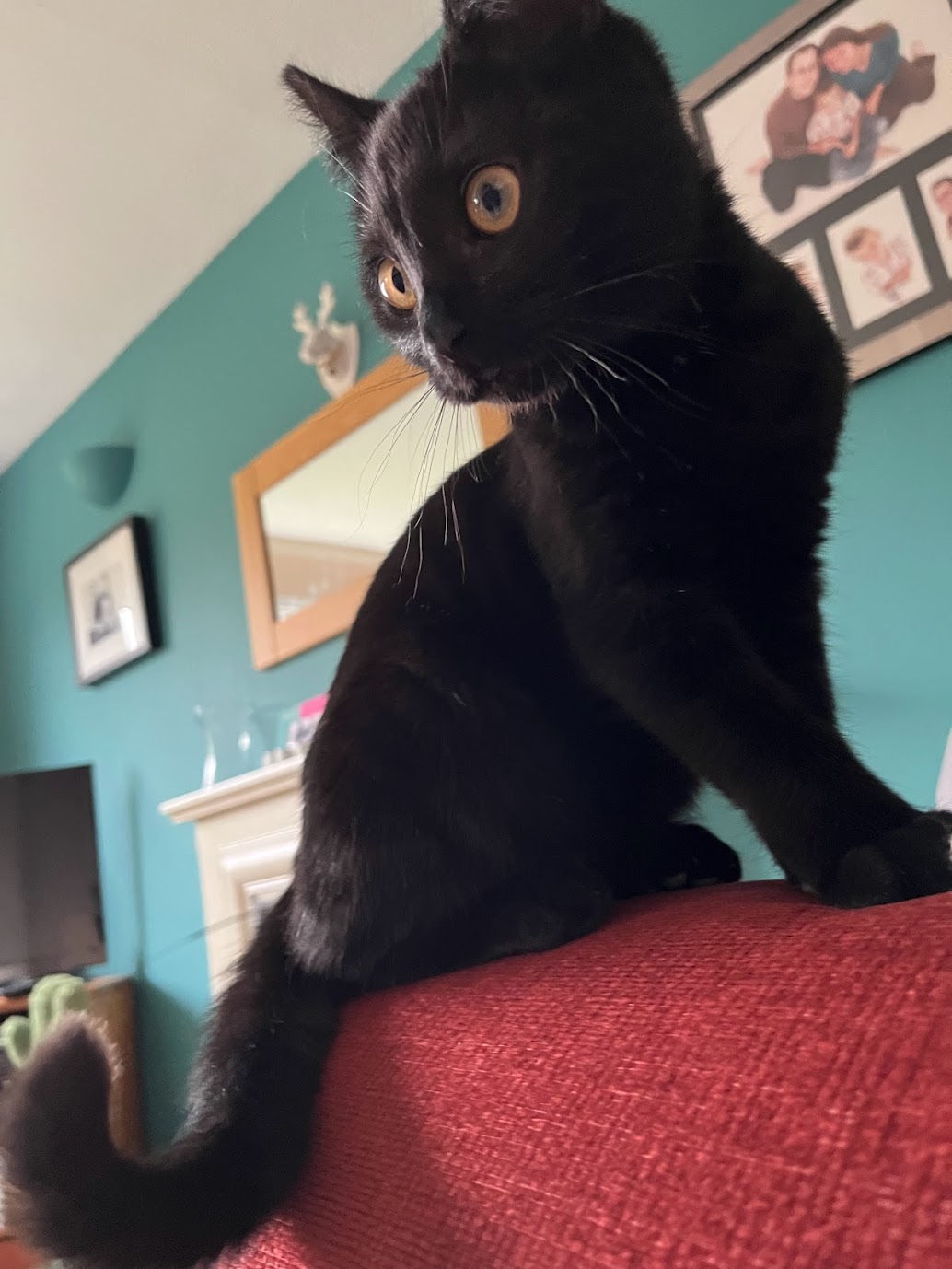
It’s all a bit much when you’re a small scaredy cat.

Named for the prince of the fairies, Obie does have a microchip-activated catflap in our double-glazed back door. It’s complete with fixed metal platforms in and outside the door for him to step up to the opening and then down, most daintily. Whenever possible, though, he naturally prefers a door to be opened for him.

When I opened the front door that night, exposing the wind and rain, Obie hissed immediately. That’s a no, then.

He lives in hope that the front door, actually at the driveway side of our semi-detached house, will reveal a different world from the one he sees out the back door into the garden, or the front windows onto the front garden and the cul-de-sac.

For us humans, opening our own front door rarely brings surprises. We expect most deliveries and don’t receive many guests. With Remembrance Day just passed, I consider the days when a knock at the door could bring devastating news. Now we have much tinier rectangles that do that for us.

Story Portals

Last Saturday, before the sun retired into indefinite hibernation, I spent the day wandering around Stroud for the Book Festival there. I went to Alice Jolly’s book launch for her new novel, The Matchbox Girl. It sounds excellent, a story told by an imagined adolescent neurodivergent girl who collects matchboxes and spends time in the Vienna Children’s Hospital, where she gets to know Dr. Asperger.

Jolly told us about the Children’s Hospital, and its workers who resisted categorising children, viewed each patient as gifted, and simply believed the deficiency lay in adults who hadn’t learned to understand a child’s differences yet.

Mock exams started this week for my poor SEN students, so let me tell you, that sounds pretty awesome.
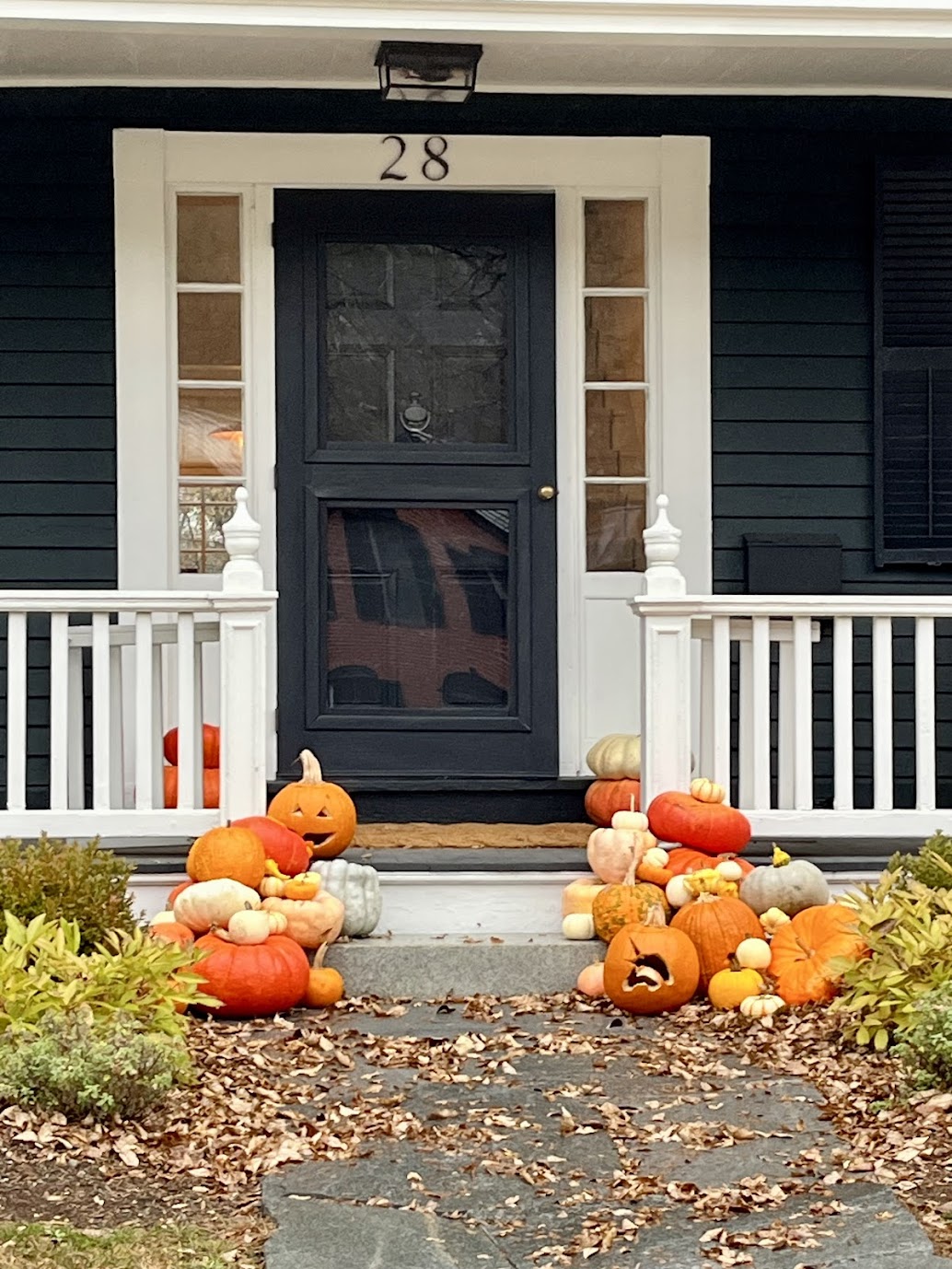
Seasonal front door reflections, Woodstock, Vermont

Unfortunately, The Matchbox Girl is set in 1934 and the ensuing years. So, things didn’t go so well in the lovely Vienna Children’s Hospital after a while. Dr. Asperger was revealed in this century to have collaborated disastrously with the Nazis.

Jolly explained that she was researching Dr. Asperger and the hospital, but didn’t know how to write a novel about it all until she had the idea of the matchbox-collecting Adelheid.

She said, “When writing a novel, you must never go in through the front door. You must find a way in the back.”

This edict pierced me. I’m always seeking to improve my craft and when a talented writer, who teaches Creative Writing at Oxford no less, issues a proclamation about how stories work, I immediately inventory everything I ever wrote. I suspect I’m not the only one?

Anyway, I was thinking, “What is the front door to each of my individual projects, and which is the back? Have I been heavy-handed and just crashed through the front, is that my problem? Why don’t I immediately understand what my novel’s front door is, is that my problem?”

Head and Heart

I meant to submit my novel The Gospel of Eve to more publishers and agents this year. But I was wrapping up an edit and more dauntingly, a synopsis rewrite, when I became so busy with critiques and a new project and work and family, I sort of forgot. That’s a major goal for 2026.

But Eve in herself is like a pre-fabricated back door, isn’t she, relegated as such for millennia? In my new project, I suppose the front door is the whole relentless mess of trying to appear good, while the back door is the comparatively straightforward (but still quite messy) task of fixing up a New England resort and cabins. Each banging cottage door reveals not just the renovations needed inside, but further internal turmoil for the new owners resulting from past relationships.
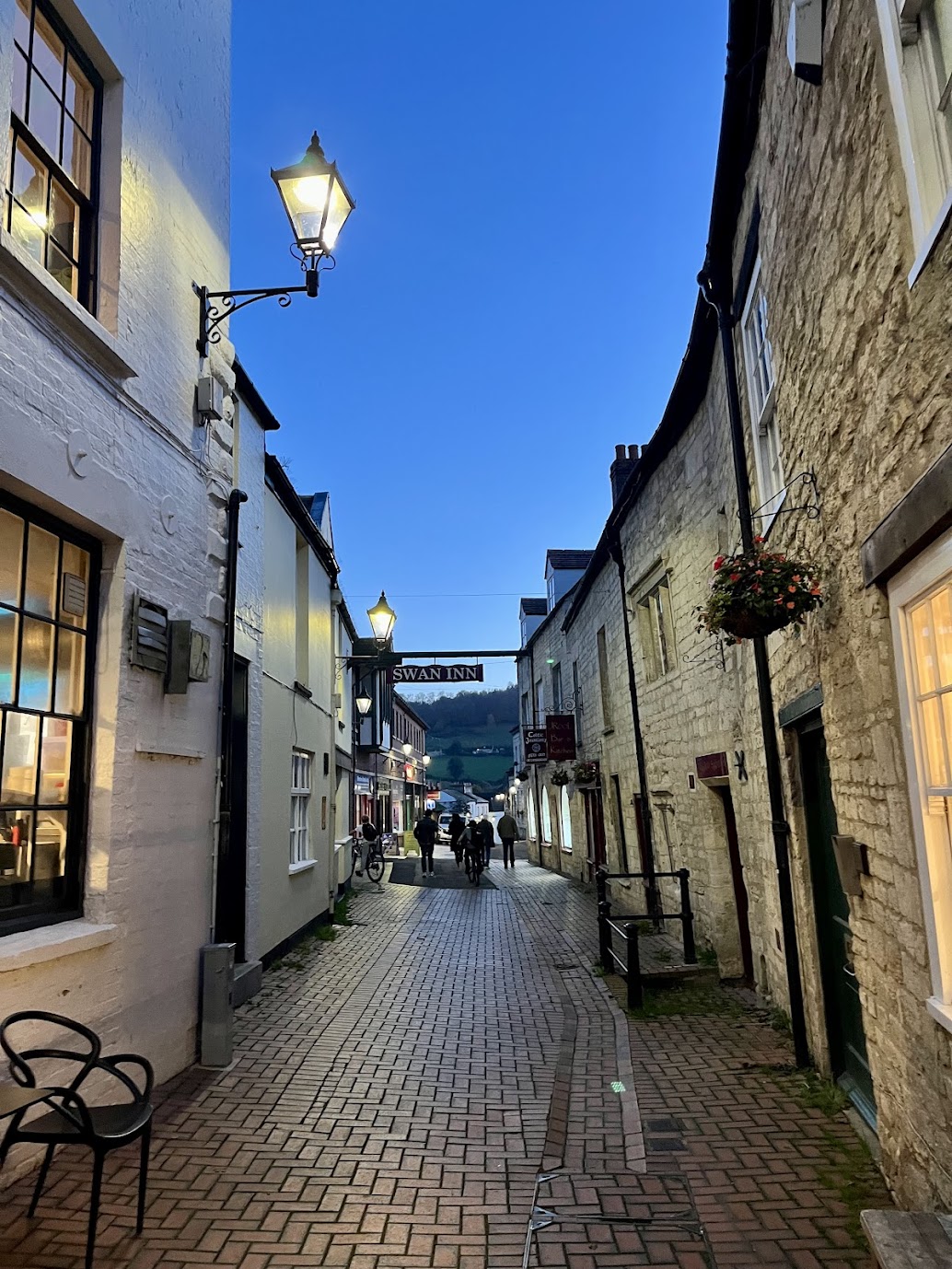
An evening in Stroud

While at Stroud Book Festival, I also attended an interview with Elif Shafak regarding her latest novel, There are Rivers in the Sky. I’m excited to read this book as well. It spans history through a single drop of rain and incorporates the epic Gilgamesh poem.

Elif Shafak is passionate and graceful, and she spoke about the difference between information, which we have in overabundance; knowledge, which requires sustained commitment; and wisdom, which engages the heart.

I don’t want to worry so much about front doors and back doors and such, so that the heart of my project goes the way of the sun recently, obscured by my deluge of thoughts. It’s been such a long time since I actually started writing a novel from scratch—my Eve novel started as a short story—that I’m constantly questioning myself. Were my previous drafts this rough?

But after receiving very positive feedback about the first 3000 words, I started to feel better. It takes time to find a story’s heart, front door, and back door. Now that I know someone wants to read more, that gives me strength to keep discovering.

Have you been to any literature festivals this year? What great books have you discovered, and what insights did you gain into your own creative work?
Befriending Darkness

This Week’s Bit of String: Black, feathery carnage

On Tuesday, I came home from work raring to finish a story. I’d been unsure about it for the last month, aware I didn’t have the voice right and possibly insufficient trajectory, but just before my shower early in the morning, it suddenly came clear. I knew exactly what to do, I just needed to get through the busy schoolday before I did it.

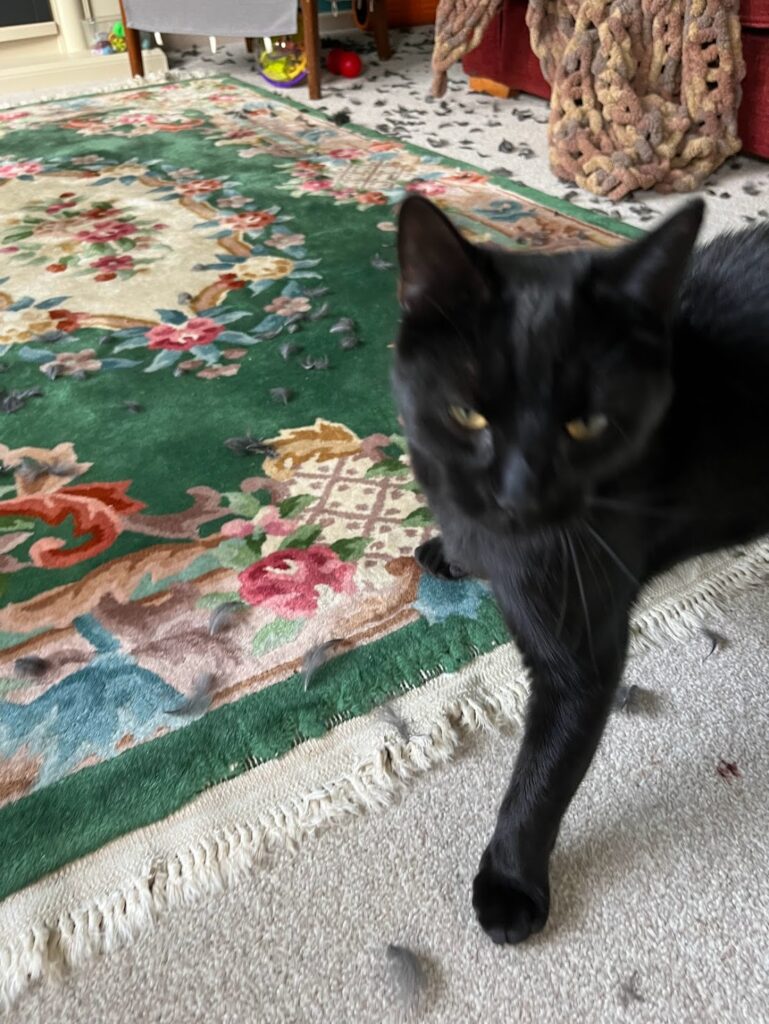
Our cat Oberon, however, had other plans. As soon as I opened my front door, I saw that writing would be delayed. There were feathers all over the living room floor. Hundreds of little, downy, charcoal-covered feathers, sometimes in clumps. I froze in the entryway. Was a live bird trapped inside?

Some of the carnage… and its creator

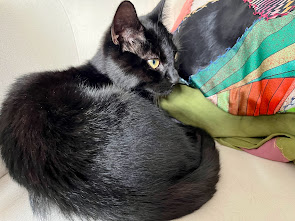
Obie quickly appeared, ecstatic that I’d finally arrived at his epic battle site. He’s ten months old, our lithe black beauty, and he’s a Mumma’s boy. He rubbed up against me, again and again, purring lustily. He ducked under the sofa and retrieved a blackbird corpse that was already starting to smell, thus answering my initial concern.

It took me a while to even face cleaning up, although I removed the bird and threw open the windows. By 9 p.m. I did finish the story, as I wanted to. By 9:30 Obie was curled up like a little dark foxlet on our bed, where he stayed snug between us for the night.

You wouldn’t have thought he was a vicious killer.

Dark Sides

Humans too are quite multifaceted, although hopefully most of us don’t prey on and then rip the life out of other creatures. We all assert control and manipulate circumstances, to varying extents.

Over the weekend, we had our annual outing to Cheltenham Literature Festival, and attended events pertaining to this complexity. David Mitchell (the comedian and actor, not the Cloud Atlas author) spoke about his book on historic royals, with his special brand of humorous pessimism. Progress isn’t necessarily linear; you never know when things might get a whole lot crappier, and there’s only so much power humans have to do anything about it. Not exactly cheery, and yet many laughs were had. It’s all in the telling.

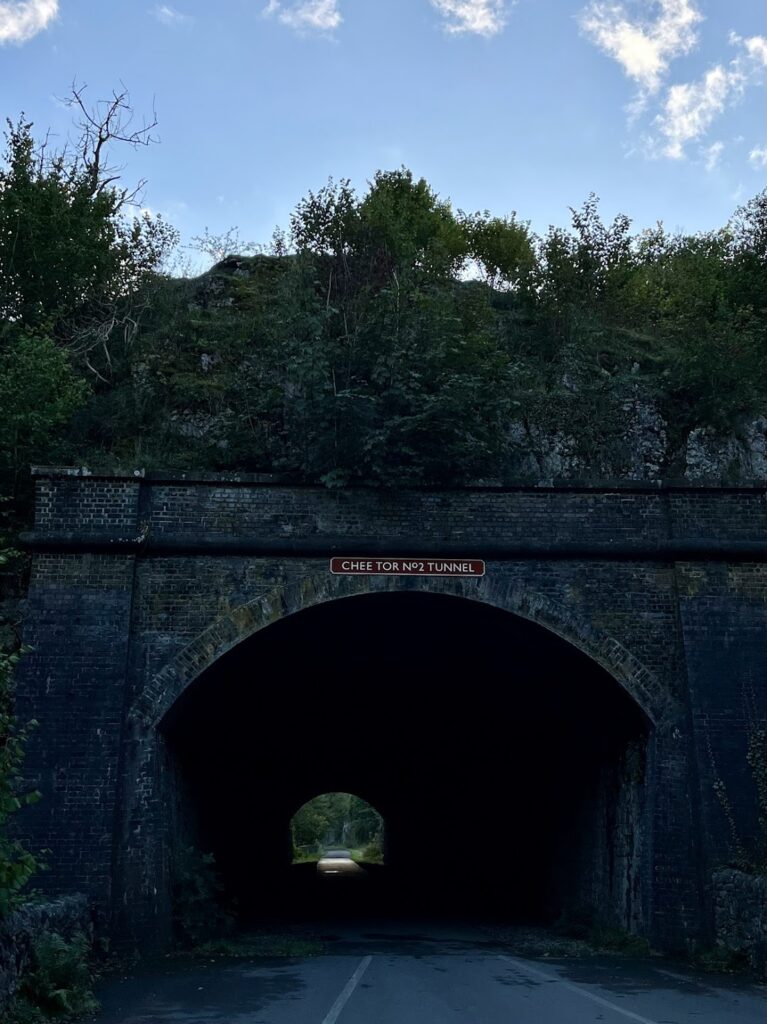
To get to the light at the end of the tunnel, you have to go through the dark…

Then we listened to Carmela Ciuraru interviewed about her book Lives of the Wives: Five Literary Marriages. This examines authors like Kingsley Amis and Roald Dahl, and their relationships with their wives (Elizabeth Jane Howard and Patricia Neal, respectively) who were talented writers/ performers in their own right. However, these towering male geniuses didn’t often treat their partners with the respect befitting, well, a partner. They were actually quite tyrannical.

Ciuraru doesn’t believe in ‘cancelling’ these figures, because she points out that we all have people in our lives who we love despite their flaws. Can’t we then love just someone’s art despite their flaws?

Furthermore, Ciuraru doesn’t think the work should be censored–we should be able to see the full evidence of the writers’ attitudes so we can make up our minds. For example, if the instances of Roald Dahl’s children’s books referring to characters as fat or other derisive terms are removed, people won’t see the evidence of his sometimes bullying nature.

Keeping Nuance Alive

It depends on your experiences of course, what you feel you can overlook in somebody, and it depends on what else they offer you. I remember being uncomfortable with some of Dahl’s books as a child, like George’s Marvellous Medicine and The Twits. The characters were so loathsome to each other. I loved James and the Giant Peach, but in that book no one intentionally harmed the villainous Aunt Spiker and Aunt Sponge–they got flattened by accident. 

When I’m writing stories, sometimes people do awful things to each other. Because that happens in real life, doesn’t it? I’ve had my work called dark before, such as my story The Apocalypse Alphabet, about a mum and a boy and an encroaching invasion that feels like the end of the world. Sometimes I feel bad about coming up with these things. What does it say about me as a person, that tragedy and grief come out of my head? But it’s usually counter-balanced with moments of warmth, even humour, and strong relationships. 

So sweet and soft…

There’s very little that’s entirely dark, just as my kitten isn’t just claws and fangs. The story I finally finished drafting this week is a triptych with three scenes set in different graveyards. The main characters seek them out because they feel safest in gloomy, forgotten spaces. When you’ve faced how dark life can get, you may not feel comfortable in the light.

Funnily, I’ve always been afraid of the dark at night. Not the darkness outside, if I’m on one of my early morning hikes, but the darkness in houses, where you can so easily be cornered. When I was little, I tried treating darkness as a separate character. I told my mom I’d make friends with it, and we’d share jelly beans. Didn’t coax me out of my fear, but maybe writing dark stories now and then is a different way of befriending darkness.

How would you characterise your relationship with darkness? Does it work to counterbalance difficult subjects in our portrayals or should we let them be?