Well-Balanced Nightmares

This Week’s Bit of String: How much can fit in one duffel bag

Recently I had a nightmare about being deported to a concentration camp. My family was packing as much as they could into their bags. In my dream no one else realised what this journey entailed, and I was debating whether to tell them what lay ahead; we wouldn’t be able to take our belongings with us.

I’ve travelled the world in nightmares. I’ve climbed trees to escape Rwandan genocide, tried to reason with a mob to save my son from Cambodian killing fields, I’ve found my sister dying in the desert following an ISIS-type invasion. I live a privileged life and such things may never affect me, but when I read about crises such as Rwanda’s, I’m struck by how quickly and brutally people can be turned against each other. Those who participated were, after all, no less human than you or I. My dreams solidify this for me and I’m kind of proud of that.

Do you ever find reading about something isn’t enough; there’s some satisfaction in knowing it’s imprinted on your subconscious?

Evasive Manœuvres

A couple weeks ago, nightmares became a hot election issue in the American state of Virginia—nightmares and racism and censorship. The Republican candidate for governor ran ads with a woman complaining about how the Democrat candidate would allow schools to assign books of the type that give children nightmares. Her son, while in his late teens, had suffered bad dreams from reading a Toni Morrison book recounting some horrors of slavery. Parents should get a say in what their kids read at school, and Democrats would deny parents that power, went the rationale.
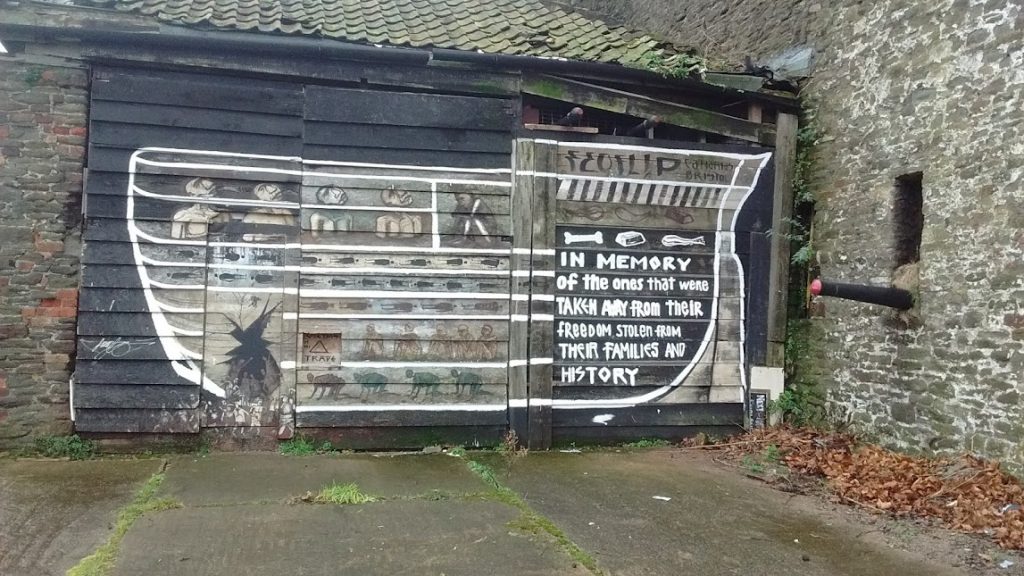
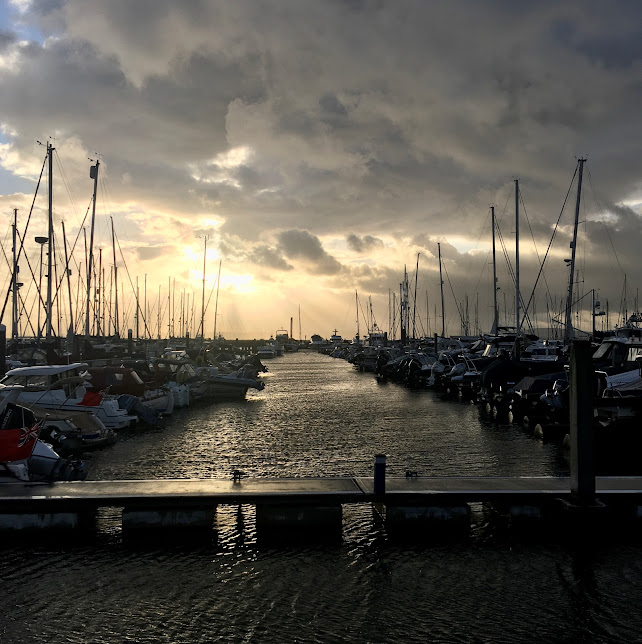
A memorial to trafficked and enslaved people, Bristol harbour

While I was in school there were a few books that met with my disapproval. Cormier’s The Chocolate War wasn’t up to my literary standards, for example, and the writer seemed to slip in references to masturbation just to impress his own teen son. Reading about Greek mythology annoyed me; the gods and goddesses were petty and selfish. Because of my own PTSD, I dreaded my sophomore year when I had to read I Know Why the Caged Bird Sings, Maya Angelou’s memoir. But it never occurred to me to object to reading them. School’s all about putting up with things you don’t like. So is life, come to that.

As a parent, I want school to broaden my child’s knowledge. There are plenty of books I recommend that he reads, but school professionals will introduce him to other things. If those things give him nightmares occasionally—good. He’s taking the world seriously.

How do you read about the torture and enslavement of human beings and not get nightmares? Is the discomfort of nightmares a legitimate excuse to not be educated about the crimes perpetrated on millions of our fellow Americans?

Selective Discomfort

Stories highlighting racial injustice and persecution aren’t the only ones parents are agitating to get removed from school curricula and from library shelves. There are a lot of campaigns against books that represent LGBTQIA characters. I’m not sure where the nightmare fuel in those are, although I did dream once that a gay colleague and I ran into King George III, who was going to execute my friend for his homosexuality, and the only way I could stop this was by stabbing His Majesty with a pencil.

It was pretty traumatic, inflicting that wound. But that’s just my brain putting weird spins on things again. The truth is, it looks as if a lot of people are trying to abolish diversity in literature.
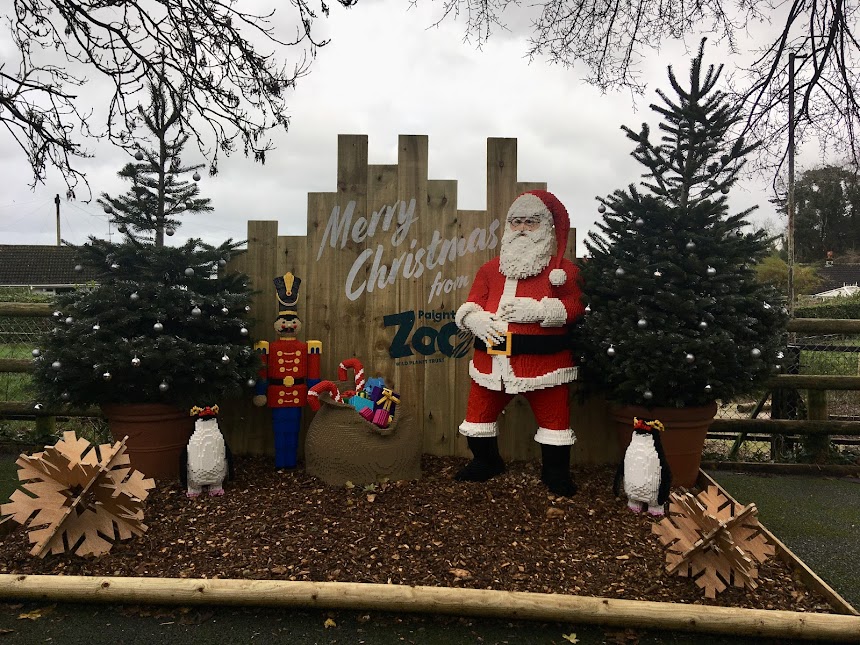
I wonder if that video made for some awkward Christmas Eve bedtime conversations.

Years ago I had a brief job looking after 3-year-olds during Bible studies at a church. For Christmas, I was given a video to show them about Saint Nicholas’s life story. It was a cartoon, but it did feature his arrest and imprisonment, and the children were horrified. “Santa’s in jail!” I had seen this trend growing up religious; our church library had videos about Roman persecution of Christians featuring people being thrown to the lions. My friend watched these when she was nine years old.

I suspect the same young man who complained about slavery nightmares (which apparently he’d never have had if he hadn’t been forced to read a Toni Morrison novel his senior year in high school) probably knew the gruesomest details of Jesus’s crucifixion by the time he started Kindergarten. One of my earliest nightmares, at the age of 5, was seeing my mom carrying a cross down our street and knowing what would happen next.
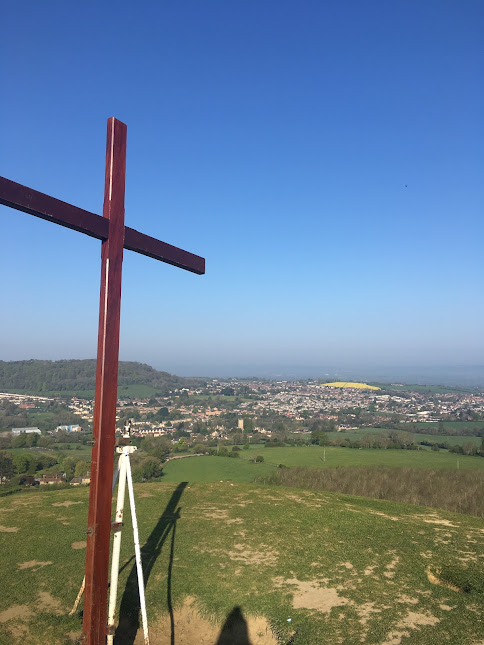
Nightmare fuel?

The boy in Virginia went on to the dizzying heights of interning in the Trump White House. He’s fine. But I think schools play an essential role in helping us equalise our nightmares. We shouldn’t be allowed to only read about threats against people we think are like us. At heart, everyone is like us. Because I’m a law nerd as well as a literature and education one, I found this interesting case from 1977 where a federal appeals circuit ruled a school board could not remove books from school libraries, because students have “a right to know.” We might be seeing this case cited a lot in the coming months.

A disturbed sleep is a small price to pay to keep us in touch with the world, to perceive the harsh realities other people face. I’ve been told some of my grittier stories are “harrowing,” but also that “it’s good to be harrowed.” Sometimes that’s our job as writers. Would you be a bit proud if you wrote something that fuelled a nightmare or two?
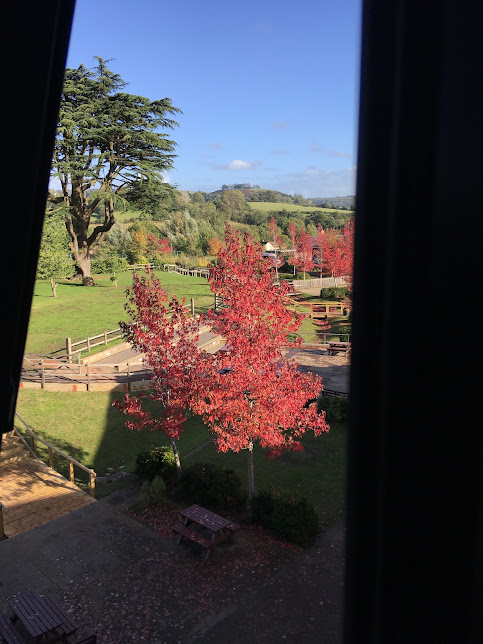
Language Lessons

This Week’s Bit of String: Water, chipper, calm, them.

“Miss, where are you from? America—I knew it! Do you know how to shoot guns? Say something, say ‘water.’”

I’ve changed jobs recently, emerged from a spreadsheet jungle and opted to be pelted by howls of “Miss! Miss!” as a secondary school Teaching Assistant again. Negotiating crowds of teenagers is a big change after 19 months working from home. Seeing colleagues deliver clear, targeted lessons and witnessing new provisions to nurture students’ mental health makes me feel better about the world.

This view though… Looking out the wide open window from the TA offices

I worked at the same large local comprehensive school more than five years ago. This is a whole new group of students, slightly less mature than I remember their earlier cohorts being, because obviously they’ve had to deal with Covid disruption. Students still miss school for positive tests, teachers have long absences and our most vulnerable students can’t abide cover teachers. The windows are all open as the temperatures dip into the single digits (Celsius) so throughout the lessons we burrow into coats and scarves; a Year 11 girl shares her fuzzy white gloves so her friend can wear one while she wears the other.

Slang has evolved since I was last working with young adults. They still use “safe” and “wicked.” But there’s also “chipper” for when they want you to think they’ve understood something: “Nah, Miss, I’m chipper, I’ll start working in a minute.” And “calm” to describe someone they like. Maybe it’s just that they know they can get away with things around a “calm” teacher, but I suspect there are other ways they feel safer with him or her, too.

It makes sense that after the last few years “calm” might be one of the highest terms of esteem used by young people. And that “sick” has gone out of fashion.

Reuniting

Supporting in different lessons means I get to learn, too. In a GCSE class about Maths vocabulary, the teacher shared that “Algebra” comes from an Arabic term meaning “reunion of broken parts.” I love hearing that stuff. The kids were busy sharpening rulers under the table or doodling or exchanging gloves or peeling labels off glue sticks, but with gentle prompting they got a few notes down, and the disparate parts came together a little.

The pandemic seems to have given my school cover to broaden its aims from academic achievement to include more nurturing and tolerance. While the government was forced to acknowledge that students couldn’t be expected to pass the same rigorous exams due to lockdown disruptions, there was more leave to consider their mental state. Consequently, more students have Time Out options, to spend a few minutes cooling down in an alternative classroom designed for that purpose. When I last worked at school, students would get an official warning and be one step closer to detention if they didn’t have a pen. Now, all teachers have equipment to loan.

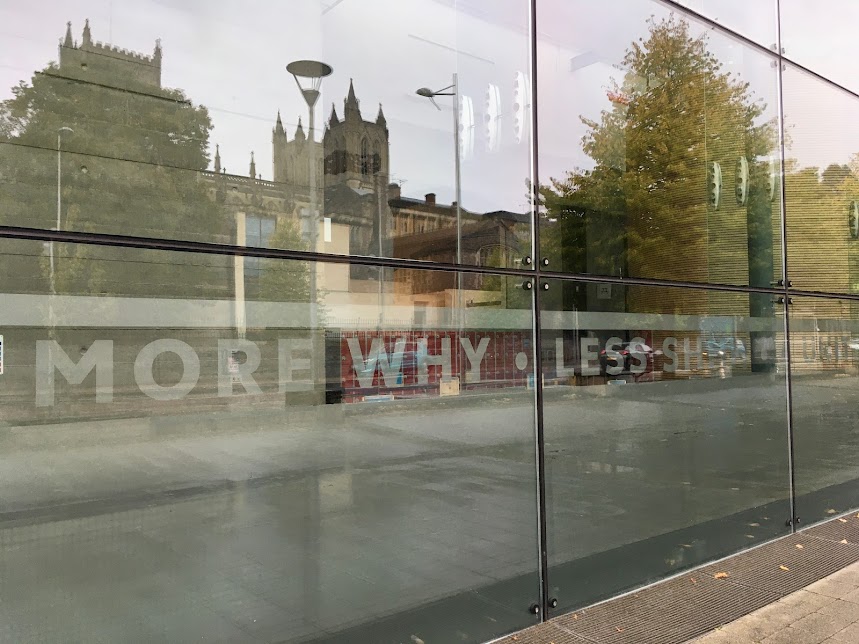
“More why, less shhh.” I love this slogan from the We the Curious museum in Bristol.

The fact that I’m American serves a similar purpose. My slight accent piques their curiosity, forces them to acknowledge I’m here, lets them make fun of my pronunciation and feel more comfortable. “Water” is a giveaway for an American accent. I can try to make the T more clipped, less like a D, but it sounds ridiculous and forced. When I first emigrated our street was called Water Lane and my accent embarrassed me every time I told my address to local people. I oblige the kids when they want to hear it, though. They like to feel superior in something, even if I have lived on this Small Island longer than they’ve been alive.

I have a stash of writing utensils too, of course. Lessons start much better when I can quietly check with a student that they have the equipment they need and lend what’s necessary, rather than them instantly getting into trouble.

“I bet you still say ‘water’ funny.”

“I’m afraid I haven’t quite got rid of all my Americanisms.”

“Oh, that’s okay, Miss.”

So they get to play the part of being generous and hospitable, too.

Retraining

One successful result of the school’s efforts to support well-being may be the diversity accepted within the student population. While it’s a rural area and not very multicultural, students support their friends of colour and Black Lives Matter. I also got to have a discussion with a Year 11 prefect about her witchcraft practice, and of course the crux of my job is to support students with various disabilities.

Sunrise on a new adventure. We’re not expecting fully calm seas, and that’s ok.

With a designated unisex bathroom now on site, other students are able, more and more, to inhabit more comfortable roles. Previously it was agony for certain teens to deal with bodies that were developing in an unwanted direction while their thoughts and preferences veered a different way, and everything around them reminded them how they ought to be. There’s a student in most of my Year 11 lessons whom I’ve tried to remember not to apply gendered language to, but I slip up sometimes since my ways of referring to subsets within the group are old-fashioned.

“Here you go, ladies.” I hand out the GCSE Language practice paper to the two students in the back.

“Non-binary,” corrects one, without even looking up.

“Of course. I’m so sorry, I’ll try to keep doing better.” They shrug and get on with the work. I hope that they’re always around people they can safely express their identity to. People who are, one might say, “calm.”

After all, I’m feeling more and more free to say “water” in my slightly redneck American way. That’s one word I won’t convincingly be able to fix, but I can work on a few others. Having to mind my language puts me in a much more writing-centred frame of mind than when I was dealing with billing and numbers. Have you been picking up any new lingo lately?

The Stopover

This Week’s Bit of String: Four and a half hours in Dublin

A couple metres to my right, a nun is counting a somewhat alarming quantity of 50-Euro notes under her table. A couple metres to my left, a very small girl is alternating between blowing noisy raspberries into the back of her chair, and drowning herself in a lidless juice cup. You guessed it, I’m in an airport.

People-watching is great and all, but so is an entire row of empty seats on the first flight.

Over the years as an immigrant I’ve learned a few tricks, and one of them is to fly from our local airport, stop in Dublin, then on to America. The US has a customs and immigration point in Dublin, so during the stop, we get fully processed and then can just step out of the airport in Boston without spending more time queuing for border control after we’ve arrived. It means less time wasted, and brings us closer to home.

This time, my first flight in a long while and my first opportunity to see my family in over 2 years, the stopover is 4.5 hours. A bit on the long side. Even with going through American passport checks, I’ve got 3.75 hours left.

I don’t mind it too much because this also happens to be my first solo airline excursion in two decades. I don’t have to worry about whether anyone else is comfortable or entertained. I can hang out with a sandwich and do some first class people-watching as a third-class passenger.

Part of the Journey

he tiny, now very sticky girl at the neighbouring table has been instructed to clean up her mess and is wiping the table quite capably. Then her mum has her stand on her chair, and wrangles her into a new outfit. “Not everyone can just change their top in an airport,” the mum tells her, “but you can.”

The nun has a mobile phone pressed to her ear and I can just hear the voices sounding off to her. She needs it close to hear over Queen’s “Don’t Stop Me Now” on the airport radio. (Yes, I love that this is the song playing here while I am fleeing the country after so long.) I think it’s an audiobook the nun is listening to, and I’d love to know what it’s about.

There are no small adventures, only small adventurers.

With all this going on, it doesn’t feel like wasted time. These hours aren’t getting me closer to home, but they’re reminding me that being around people, anywhere, can be an adventure.

If the pandemic has taught us anything, it’s that we don’t have to change location to go on a journey. The last 16 months have been an adventure, wouldn’t you agree? Just trying to get groceries could be a monumental quest.

The word adventure, it turns out, doesn’t just mean to wander or travel, but also to take a chance. To “risk the loss of.” Heck, many of us don’t need to venture outside to strike up something a bit reckless. Anything we say to another person risks rejection or misinterpretation. Every seed planted, every page we poise our pen over. You never really know how it will turn out.

Taking Off

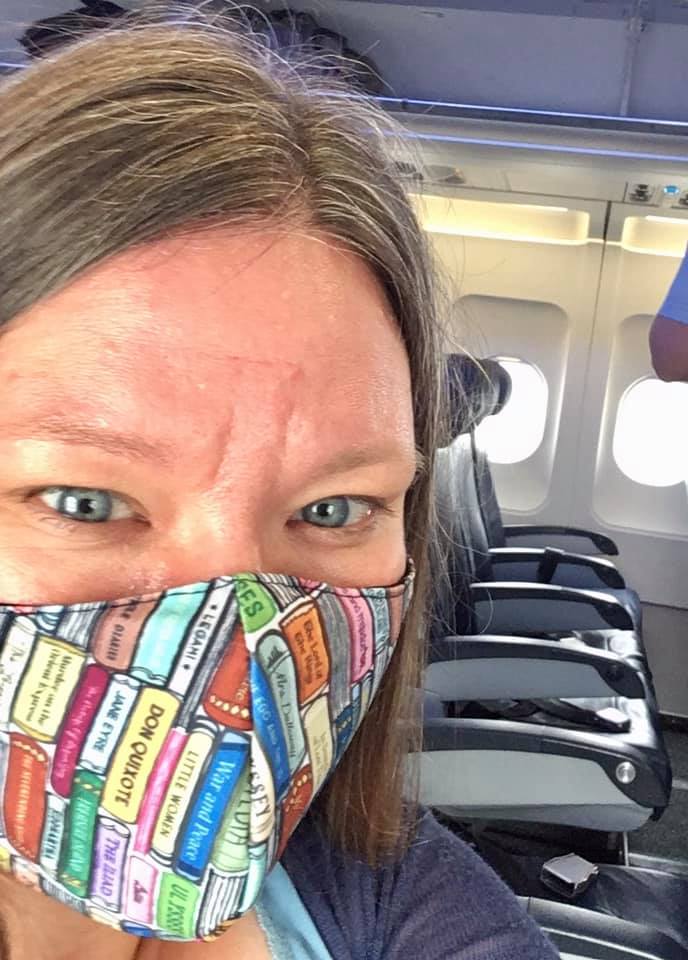
Of course, when it comes to actual travel, especially these days, there are quite big risks. As much as I want to spend time with my family, I have had to weigh the likelihood that I might carry over a virus that could hurt them. There are a lot of factors to put our minds at ease about this: the vaccine, strict testing requirements, social distancing and hand sanitiser stations all over the airport.

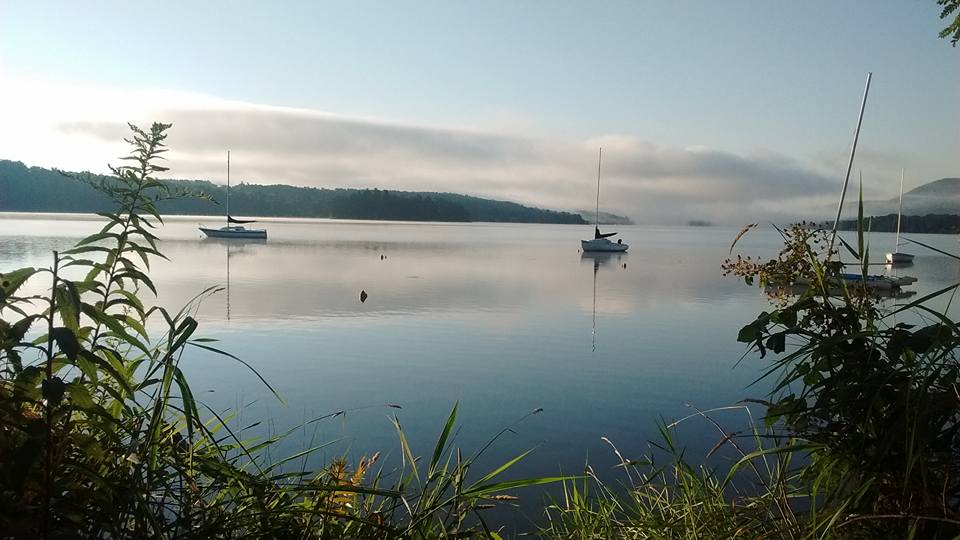
The lakes of home…

I look at the other people waiting around me and wonder what risks they’ve taken, how badly they want to get to their destination. Are they going home, or coming from it? Are they a bit like me and they don’t know which side of the ocean is truly home?

Every Christmas during my marathon viewing of the Extended Lord of the Rings films, I am struck by the line at the end, “You cannot always be torn in two.” But I think most of us are, and probably wouldn’t have it any other way. In our world with so many connections and crossings—how do you choose just one place, just one group of people? It is hard, it’s a painful tearing, but nonetheless both pieces are always with me in some way. Leaving my home country, I still believe, was a risk that had to be taken, as right and necessary as returning when I can.

Loving one home over another would be like doing only one writing project at a time (I know others must be able to relate to this). Or like telling me to ignore either the nun or the tiny girl. Thank you, I’m quite taken with both. So here I am, between my two places, just breathing behind my mask and relishing some non-useful time.

Resolving

This Week’s Bit of String: View to a sundown

During the recent heatwave, we went out for a late evening drive, finding ourselves at a viewpoint on a local peak. The large car park was almost full. Students in pairs or trios enjoyed the views, family groups packed up disposable barbecues, friends took stock of the situation while balancing MacDonald’s cups on their car roofs.

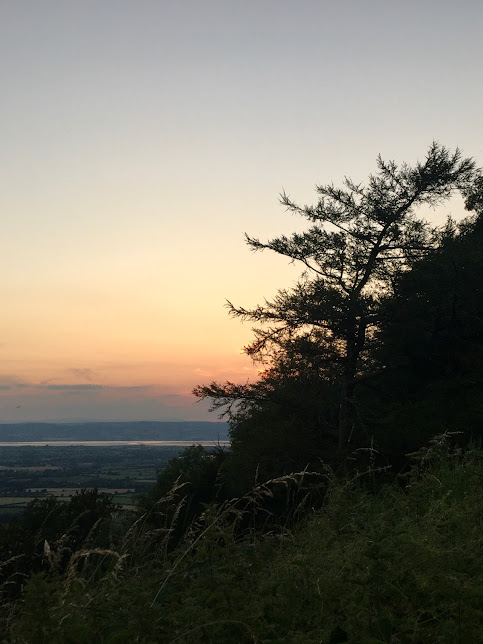
We wandered to take in the sunset, while dragonflies patrolled the scabia and thistles, and kids laughed and the tractor haying in the pasture below turned on its lights. It was the eve before all restrictions would be eased (despite covid cases rocketing to the same levels as January) and, whether intentionally or not, people were keeping their distances.

We came here in the beginning: March 15, 2020. My husband and I went to a local film festival to see the silent movie Beggars of Life accompanied by a live bluegrass band. There were quite a few empty chairs in the theatre, as people started withdrawing from events, but we thought we’d go, try something a little different, fully knowing it might be our last night out in a long time.

After the movie, we stopped at the same viewpoint and looked at the stars filling in the gap between peak and ground. It felt precipitous.

Unfinished Business

Most people I know are worried about the timing of lockdown’s end. The delta variant of covid seems so contagious; every day we hear of more people having to isolate. The sun has not set on this pandemic.

Even if cases were way down, I think I’d still feel… anticlimactic, perhaps, about lockdown ending. Some people sorted their lives out during that time, it seems. I fear mine is in more disarray than when we started, and I can’t be the only one.

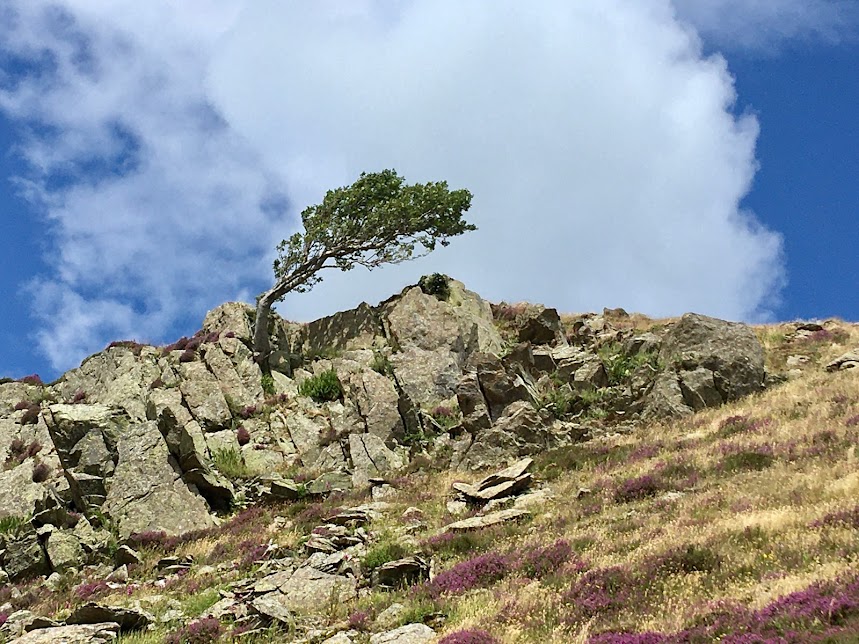
We are all this wind-shoved tree. Still standing…

My son’s first year at uni was a bit rubbish with all the restrictions; now he doesn’t know what he wants to do. Still working full-time, my husband and I didn’t accomplish any stunning DIY feats. We didn’t even have a clear-out since the charity shops and tip were closed. When the toilet and shower leaked under the floor, we peeled the laminate away revealing splintery, water-stained boards, but we couldn’t figure out what to do beyond that. Any further solutions would involve turning the house water off for a while, and we had no other place to go.

I took a lot of good walks—and also got plantar fasciitis and tennis elbow which made many of those hikes quite painful. I finished a handful of stories, and even found publications or events for a couple of them. But I haven’t had the energy or support or just the time to myself to properly tackle rewriting my novel. The loneliness of being an immigrant was more acute than ever. Maybe survival is the one thing I have achieved through lockdown.

Survival Mode

Let’s not underestimate the importance of surviving these times. And let’s not discount the monumental effort of it. When we’re spinning in a frenzy, we’re not going to make an accomplished journey. One about-face and then another don’t really equate to coming full circle.

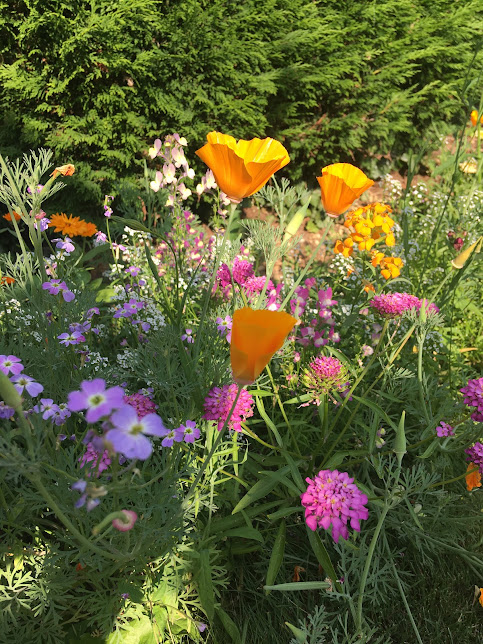
A strip of wildflower seeds in our garden has brought us as much joy as our carefully planted roses and veggies. Chaos can be ok.

Most stories are written to show character development parallel to event progression. I’m not sure real life is like that. We are constantly challenged, and sometimes it’s not until the next really big test that we might notice what we learned from the last. Getting time to process something is a myth, at least in my existence.

So we emerge, reminded that time and family are incredibly precious. I don’t really care how little I’ve written for publication in the last 16 months, I have notebooks full of daily scribbles on how my husband and son were doing and what small things we did for each other. The clutter in my house hasn’t stopped me working lots of overtime right next to it, from a corner in my dining room; the injuries I had didn’t stop me going out for my alotted local exercise.

We’ve all learned what we can push on through, despite being cut off from others. Very likely, we’ll be doing that some more in the near future. This chapter is ongoing, even if the format’s changed. There’s no resolution yet, but we have resolve to keep working toward one! How are you getting through it all?

What to Notice

This Week’s Bit of String: That ship has sailed

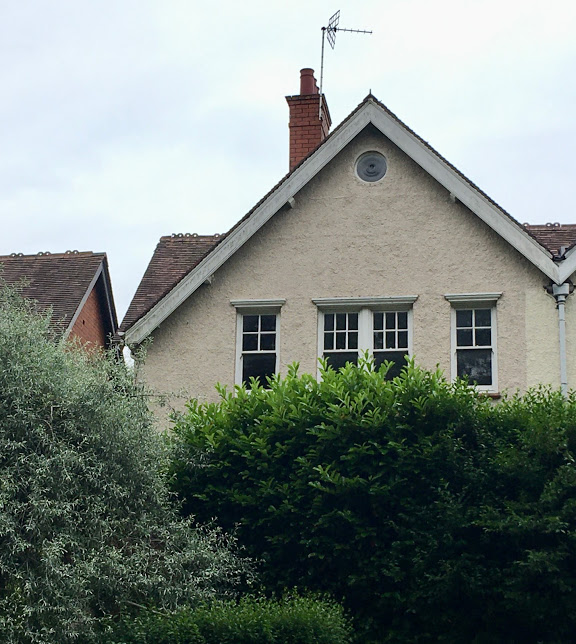
There’s a house I walk past on my early morning hike each day, with a round window like a porthole under the steep roof’s apex. The pane covering it boasted a stained glass sailing ship.

Only it’s not there anymore. I noticed recently, the porthole now has normal glass. Nice glass, with a whorly navel in its centre, but it’s not an adventuring ship. I did not approve this change.

During lockdown one gets attached to certain things. While unable to leave town for months on end, the sights on my limited range of local hikes became my safety network.

Wouldn’t a ship look nice in that window?

Blossoms and blackbirds, shop displays and creeping cats, the church rubbish bin with a fish symbol painted on it just in case the name and location aren’t identity enough. Footbridges and milk deliveries. The man with two huskies who wears a neon vest asking for space, and always smiles Good Morning when I give it to him. The young guy who strides down to the construction depot at the new housing estate and takes position outside the gates to aim a thermometer at the foreheads of entering labourers. The patched and re-patched bit of pavement which my son always said looks like a guitar, insisting we make suitable sound effects every time we walked over it.

So it shook me to realise a little mainstay of mine, something my gaze sought out while I hustled uphill from town, had disappeared. When did I see it last? What if the window was changed a while ago and I didn’t notice?

Missed Signals

I’m not sure if monotony is better or worse for noticing things. We might notice the slightest change, or we might have started tuning out. Even now that lockdown’s over, I use the same 3.8 mile route most mornings because I don’t have to expend energy on decisions.

Baby Georgie.

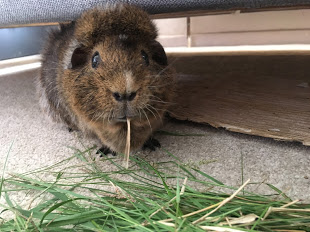
We need choices sometimes, though; to confront us into consciousness. A couple of weeks ago, one of our guinea pigs got sick, after 4.5 years with us. After multiple attempts to dropper water into him, we took him to the vet, and sadly George died there in the night. Had I noticed his discomfort too late? Should I have put him through the trauma of a vet visit earlier? You can bet we’ve been watching his brother extra carefully. I’m not sure Fred is pleased with the spotlight; he prefers food to affection.

I assume other people struggle as I do to be more present, less dulled by the daily grind. As parents we’ll always be trying to catch up with what we miss, and as writers it can be even harder to notice things, even while we’re the ones who should be super observant.

Taking Roll Call

The thing is, writers have an observing, idea-gathering mode, but also a developing mode. When we notice something that snags our interest, our body moves on but our mind is snared in what ifs, and character-building. While it’s nice to be consumed, to have that momentum, we don’t want to miss too much.

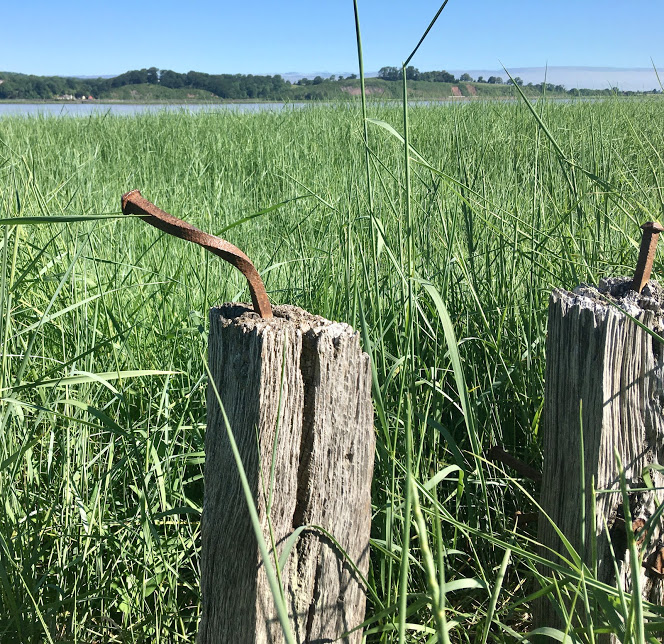
Infinite story possibilities in a rusty ship’s nail

Here’s what I’ve been reminding myself to stop and look out for, even while in the midst of plot problem-solving:

  • Multi-sensory check. Every now and then pause and concoct a quick description for each smell, sound, sight, taste and texture around you.
  • Revel in the wrong. I recently saw a typo in a Missing Person notice, describing a “balding man with a bear and glasses.” This transformed a sober paragraph about a man with facial hair to an imagined adventure with an ursine companion, and my imagination hadn’t had such fun in a long while.
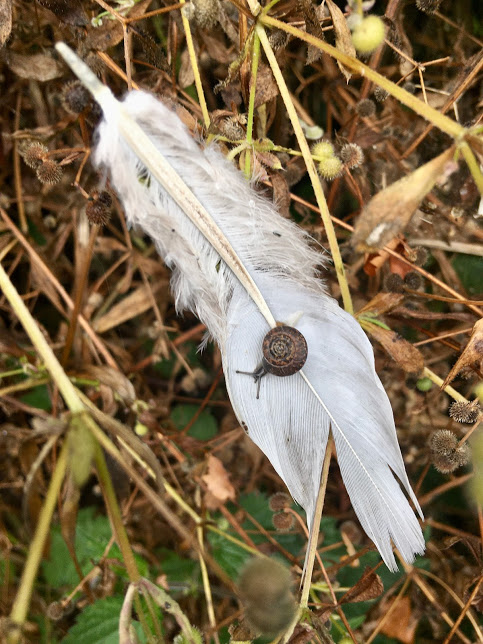
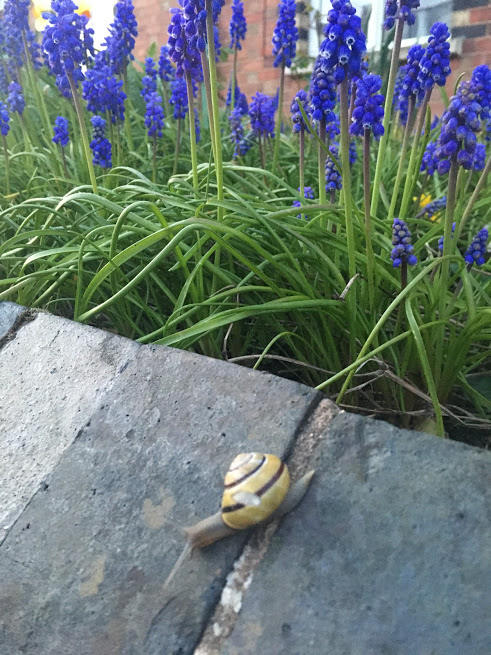
  • All creatures great and small. A ladybird straying across the work desk, snails curled around lavender stalks, their shells listing blissfully sideways, judgmental rooks and feline drama queens. It’s fun to make inferences about all their behaviours.
  • Sift through the remains. Any found object in your travels could tell a story, from a dropped shoe or stuffed animal to a grocery list. A badly repaired square of pavement, allegedly guitar-shaped, brings me happy memories of walks with my son, so truly inspiration can be anywhere.
  • Shameless use of prompts. Every day I try to come up with, for example, a sky description. Or a description of something in relation to the sky. This derives from when I used to use a sentence starter, “The sky today…” and it became habit to look out for the sky and how to portray it.
  • Keep an eye on your people. I have kept up with daily journal scribbles, primarily to leave myself reminders of thoughts and experiences shared with my family. For years I didn’t want to keep a journal, reserving any precious writing time for “real work,” pieces that might be published. Now, I’m so glad I recorded some interactions. These are the last things I’d want to miss.

What have you been noticing lately? Do you have any suggestions on how to keep observational skills sharp and make the most of the moment?

Restarting

This Week’s Bit of String: How to begin a writing day
Battle-scarred fellow traveler

Let your brain drag you out of bed.
It will have jolted you awake several times already, nervous, excited, random, clamouring to achieve release.
It’s been asking, Is this really allowed, is your partner genuinely ok with you spending a whole weekend day on writing work, will you be able to keep up with everything else, is your kid all right too (always is your kid going to be all right), am I smart enough, do I have the stamina, the wit, the imagination to get anything done?
And you’ve been telling your brain, you’ll have none of those things if it keeps waking you.
But this time you must get up, get outside, have some fresh air while there aren’t too many people for you to slalom around.
You have to feel as if you’re ready. You exercise your body to get permission to exercise your mind.
You don’t need the hoodie. No one cares if your frame is visible, if it’s gotten bulkier.
You have been working hard. You have the right to slice through space as bluntly or as sharply as you like.
The same goes for the page. You have the right to be heavy-handed in your first draft. Anything you say can only be used against you when you are ready to reveal it.
Swerve around the mud-spattered fallen geranium and poppy petals.
Nod a greeting to the other early morning travelers: determined snails and industrious blackbirds.
Indulge in the futile summoning of every cat you see, haughty after its night out.
Your legs are stretched. Your brain has been pounded into a rhythm. It has been lulled into focus.
You are prepared with snacks. Fruit and nuts, a politically incorrect tuna sandwich and some chocolate-coated pretzels.
You are an ambitious squirrel, you are a reckless, rule-flouting heathen.
You are a person of great imagination and careful planning, who has reserved fuchsia socks with penguins on them for this occasion.
The blinking cursor awaiting words on your document isn’t taunting you, it’s jumping up and down with excitement for what you’ll come out with. It adores you.
Give the page what it wants, open the cage door and pour your mind into its arms.

Back to the Projects

It’s been a while. The lockdown of 2021 was a tough one, and I haven’t had time to write for submission. After a long lapse, after constant flirtation with exhaustion, I wondered if I had the concentration for it anyway. I booked myself a writing day, using Writers HQ’s online retreat (which are wonderful and free, by the way, try them out here).

Bit rough, but the way through is visible.

There are ideas to work on. There are even plots. My goal was to finish one story, rewrite another, and edit a final one. Submissions will happen once again! It’s hard to contemplate the emotional roller coaster of submitting work when isolation has knocked you down. That was part of my issue, not to mention a dearth of submittable work, and I’m sure I wasn’t the only one. So I am building up my arsenal of stories, as well as my perseverance to once again plough through the inevitable rejections en route to some kind of success. It takes a lot of rearranging around the weekend chores and the weekday job, but I’m excited.

Daily Words

Despite my inability to write for possible publication, I have been writing every day, in my journal. Each notebook lasts 2 or 3 months, filling up with observations from my walks, reflections on current events, and details from family life. In each notebook cover I write something I want to remember for the period.

The inner jacket of the notebook I started just after Christmas says: “Small steps, long pauses, unlimited restarts are allowed.” And there did come a pause. I’m glad I told myself it was allowed. There was enough stress without beating myself up for not publishing anything.

Now I’m ready to fit in a bit of creating again. If you’re not, I hope you enjoy your break.

There’s a lot in life we can’t do over. But with writing, we can! We can stop and come back to it as many times as we like. Readjusting our balance doesn’t mean we’re not writers, any more than reworking a piece makes it less of a story. If you have to focus elsewhere for a while—let yourself. We know you’re a writer. Your work knows you’re a writer. You will meet again, in better times.

I started my latest journal a couple of weeks ago, and this time the cover has a line from an Avalanches song, “Frankie Sinatra.” It’s highly inappropriate, but I am a sucker for a catchy tune. The lyric goes, “Like Frank Sinatra bitch I do this shit my way.”

Folks, it begins.

Counting Mental Calories

This Week’s Bit of String: Full bellies, empty legs

The first time I remember eating way too much was the summer when I was 9, at a barbecue with rarely-seen, well-off relatives in Long Island. So much food we wouldn’t normally have at home, and on such a scale. My sister and I were about to start puberty, approaching the “empty leg stage” as one family friend described the ever-hungry growth spurt. But our appetites were no match for what we consumed at that barbecue. We were so full, we swore we would never eat again.

Reader, we did eat again. And speaking for myself, I have overeaten again. Sometimes, the only way to stave off despair seems to be Bournville chocolate, even though I know my heart will race and my brain will fog up.

A lot of things we think of as treats aren’t really what we need. That’s one reason I dislike the term self-care; some people apply it however and whenever they like. It’s such a vague principle. If we have an opportunity to treat ourselves, does this mean catching up with a friend or curling up for a nap? Does it mean a pint of Ben & Jerry’s or some lentil soup?

Varying Metabolism

“Self-care” wasn’t invented when I became a parent. Or maybe it was; certainly the remedies associated with it existed, but none of them were available to low-income single mothers just out of their teens. Even having self-care in our vocabulary is a privilege. Strategies ranging from socialising to yoga to massages to a decent night’s sleep are completely inaccessible for many people.

Nice smells and warm glows working from home. Gotta love multitaskable luxuries…

I often wonder how people keep going who can’t afford or schedule the things I now think of as treats. For example, what about mums from disadvantaged communities who look after kids poisoned by their drinking water while constantly campaigning to fix the problem? Aren’t they proof that I should be doing even more, not less?

I know, comparing ourselves with other people isn’t seen as healthy. It’s important to note all perspectives, though, and be aware of our privilege.

A Balanced Mental Diet

I’ve started thinking about self-care as more mental than physical, considering the mind in similar terms to the body. Perhaps mental calories are a thing. We must feed our brains in order to get motivation and inspiration. We need thoughts and stimuli from diverse sources, or we’ll suffer a deficiency. But we also need to burn off some of what we take in. If our minds get overcrowded, we struggle to function.

Views that nourish the mind

Different people will have different mental metabolisms. Some might shake things off easier than others. And at times we ourselves will need a higher mental intake or a more thorough clear-out than we’ve needed previously.

If we had mental nutritional pyramids, like the physical ones that used to appear on American cereal boxes, what would yours look like? Mine has rows for keeping up with my job and housework, family time and exercise (though physical it’s absolutely essential to my mental health). Some people are fine doing less each day. When I skip one thing, even if it’s to do something other people find necessary (like meet up with friends or stay in bed past 7), I will be too stressed, struggling to catch up on subsequent days.

Appreciating others’ artwork helps suspend the mental burden of trying to create my own.

And because there’s so much to manage on a daily basis, I have to burn off some of these brain calories, too. Daily scribbles, fresh air, reflecting on art or music or literature, make me feel mentally fitter, a bit more agile and able to cope. Life has been tough lately, so I need to experiment with what else might help.

By considering whether I need more or fewer mental calories, maybe I can tell what sort of “treatment” I need and when it’s genuinely required. It’s tricky though, isn’t it? The lack of real, in-person stimulation during the very long lockdown has skewed my mental metabolism. Tedious things like work and worry make my mind feel full, but not sated. I suspect a cognitive vitamin deficiency of some sort.

What do you think of self-care, and the idea of mental calories? Any suggestions for balancing it all out?

Closing the Distance

This Week’s Bit of String: The meaning of far away

When our son was very young my husband and I had to live on different sides of the ocean. I missed him badly but couldn’t dwell on it, so when our little Bear asked about his dad, I would say, “Daddy’s far away.”

During a quick visit when Bear was two and a half, he climbed all over his dad and asked him, “Are you Far Away?”

It sounds obvious, but in my own loneliness and the frantic rush of being a single working mum, I hadn’t considered that my toddler would not understand intangible concepts such as distance. My explanation was totally inaccessible to him.

As writers, we are engaged in shrinking things. A written word is a miniature representation of its real-life counterpart; a book is a flattened, condensed episode from a collision of lives. The paradox we deal with is how to reduce things without losing a sense of their magnitude, and as readers, we know it’s possible to do just that.

Amazing, really.

With Great Power…

It’s daunting too, isn’t it? Our job is to serve up bite-sized fragments of potentially suffocating reality, to pinpoint the fleeting, and to bring distant concepts near. We greet an idea after its long flight and take it home and nestle it into bed, letting it in from the cold.

So hard to do justice.

We may feel, when the world is so vast and problem-ridden, when many of us share similar lockdown woes, that our words don’t matter. Isn’t everyone thinking the same things already? Doesn’t it reduce an issue to confine it to the page?

But we are vain as humans. We like to see our reflection. We also like to shrink things a bit so we can come to grips with it. If we find the words to resize something small enough that lots of people can access it, we’ve ended up multiplying it. A bit like if we take a trillion dollar relief package and divide it between millions of people.

Creating the Magic

To effectively do this, we have to acknowledge, within ourselves, the enormity of what we want to convey. There have to be moments when our message, when our feeling for our characters and what they’ve been through, bring us to our knees. This may take the form of us crying over our laptops, or wandering in a shell-shocked haze through our day jobs and household routines. It may be sleepless nights or nightmares. Even our for-fun stories will consume us—another paradox of writing is that by trying to portray one aspect of reality, we distance ourselves from our current one.

Magic. Part of the Window Wanderland display in Wotton-Under-Edge

Then we negotiate. We try different terms and exchanges and sequences, see which ones are most succinct yet impactful. Lay out everything you want people to know, then chisel it to a sharp point.

Part of this carving out will include an examination from every angle: have we smoothed a surface that should remain rough and challenging? Are there facets we have left too splintery? This is the part of the process where we bring in new sets of eyes to look at our work, and we check that the representation of humanity we’re offering doesn’t inadvertently exclude or minimise any marginalised groups.

It’s a tricky process but each step is essential, and when it comes together, it’s so worth it.

Ready for the Close-Up

During one long period when my husband was Far Away, we did a webcam call. Our son’s face lit up when he saw his father’s appear on the screen of my chunky monitor. “THERE’S Daddy,” he cried, as if finally things made sense. Daddy may not be where he was expected to be, but he was at last visible.

That’s the sort of recognition we want our stories to bring. Not an exact replica of a particular human being, but a sudden proximity if not familiarity. We want to stop people in their tracks, momentarily, with a Eureka moment where everything fits together and the distant becomes immediate.

In this time of prolonged isolation and separation, have you used your writing to draw closer to the far away?

Just Keep Writing

This Week’s Bit of String: Storytelling bribery

It was the last class of the day. My 13-year-old student was still wound up from lunchtime; someone had incurred his wrath and plotting vengeance was more interesting than a Science lesson.

He squirmed in his seat and flicked bits of paper at his classmates. ‘Miss,’ he said, ‘have you ever punched anyone?’

‘Yes I have, and if you sit quietly and do your work, I’ll tell you about it at the end of class.’

The school had tried to encourage him to settle. Special daily reports signed by each teacher at the end of lessons, plenty of threats and consequences… But I’d finally hit on something (no pun intended). He kept himself cool for the rest of the session, and then I told him and his pals about how I got offended at a birthday party when I was seven years old and punched a boy I’d been friends with for years in the stomach.

Old school.

As writers, we know about target audiences. Any other anecdote would not have pressured my student into compliance. We’re always checking and re-assessing which tale is best to submit to which publication; this takes up a great deal of our precious writing time.

We also need to consider a key demographic: ourselves. Which project will hold our own focus at this time so we can develop it? When so much is out of our control, and so little available to brighten our days or broaden our horizons, not every idea will work for us right now. More than ever, we’ve got to write what we like.

Revisiting

In Britain, since October we’ve had just 3 weeks that weren’t on lockdown and there’s still at least six weeks until we can venture outside the same routes we’ve been walking for ages now. It may not be coincidence, then, that I’ve only this week written my first complete story since last fall.

I’ve had perfectly decent ideas in my daily notebook scribbling, for bizarre, dark humorous stories and feminist stories and tragedies-in-flash. But I couldn’t stick with them—not yet. If I had a few minutes of quiet to work on, you know, non-office work, I’d find myself staring at the computer until I found an excuse to Google something before shuffling off to spoon peanut butter into my mouth. (It’s not just me, right?)

Our writing can welcome us home.

The ones I manage to finish have pieces of home in them. They have youthful confidence and lakes and mountains and music like Salt-n-Pepa or Alanis Morissette played on old, fourth-hand car stereos with the windows down while driving several exits up Interstate 89 to get a root beer float.

These are the things I want, and probably need, to write about right now. There’s heartache and conflict but humour and resilience too—warmth. I’m not strong enough to dissect British daily life or examine the class structure or plunge deep into grief. It’s important that we do those things when we can, but if, like me, you’re just not up for creating such pieces right now, you can help amplify those who are: this upcoming volume of stories from the Lesbian Immigrant Support Group, for example, or Nikesh Shukla’s latest book Brown Baby.

The Places You’ll Go

There’s lots we can still do in our pages. If you’re struggling to get some work done, see if you can write something that feels less like work. Here are some suggestions:

Recreate a favourite setting: Since I can’t get back to New England, that’s become my favourite place to write about. I’m enjoying reading and daydreaming about other destinations (currently one of Peter Carey’s novels about Australia in the early 1900s), but for my writing to flow easily, I need deep familiarity, as with the place where I grew up.

Time travel: Every era has its challenges, but in recent decades at least, they weren’t the ones we have now. Set your characters at a stage in life when they might enjoy things more freely. I’ve been writing about teens who are alienated yet spunky, or about parents with mischievous kids to enliven the pages.

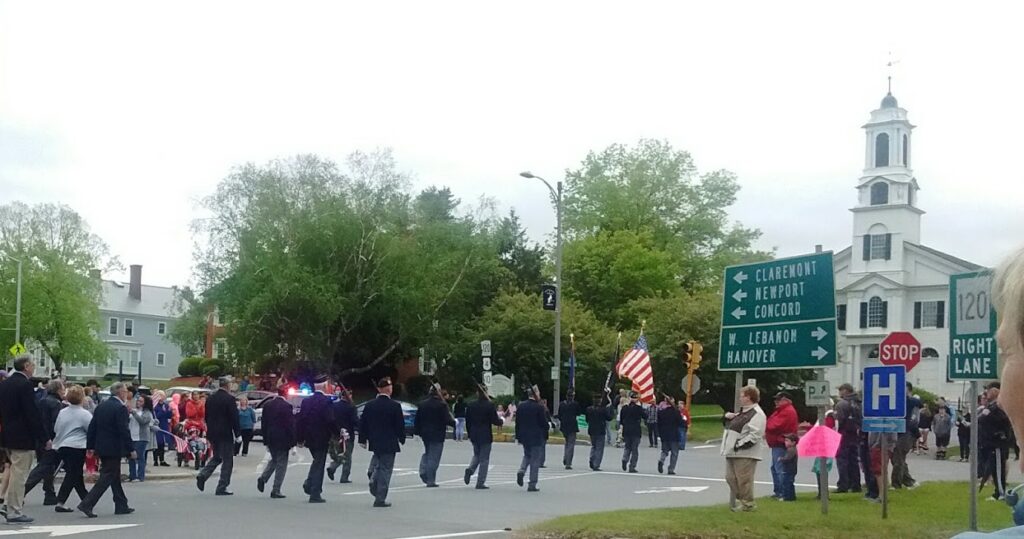
Or a drizzly New Hampshire Memorial Day parade.

Mingle with crowds: Let your characters do things we can’t. School dances, bowling alleys, mountain hikes. I find I’m not just counteracting my own losses and separations in my pages, I’m also imagining the things my son has missed out on, in his final year of school and first year of uni.

Do a remix: If you can’t summon your own ideas, twist a well-known story. You can go speculative on a historical event, or subvert a fairy tale. One of the stories I got published last year was this reversal of Kafka’s “Metamorphosis.” Following a pre-existing plot line from another angle helped me get the work done.

Use a natural progression: Seasons, holidays, milestones—these can help move your piece along. I started one story about growing up in the 80’s/ 90’s and wasn’t sure what would happen, until I used the terrorist attacks on the World Trade Center as the turning point.

Give hugs: Create on the page the relationships we’re missing out on. This year I’ll have a story published in Retreat West’s anthology that I absolutely love. I wrote it last year, about two sisters. I haven’t seen my actual siblings in over 18 months.

Life’s not easy right now. We still want our writing to be great, and to get it out there, so we’ll make ourselves think of something original or follow a trend or submission theme. But you are allowed to write what you want. Write anything that keeps you wanting to write.

Literary Valentines

This Week’s Bit of String: Who wants to be Juliet?

Happy Valentine’s Day. It’s perhaps fitting to a holiday of Love that the patron saint’s origins aren’t definitively known apart from a martyred end of some sort. Who can really say where love comes from, and the most classic literary examples of romance often end tragically. (Insert special heart-shaped, chocolate-covered spoiler warning here.)

I’m sure there are a few lists out there of great romances. But most of us probably wouldn’t choose to live in previous eras, and so we wouldn’t prefer a romance from times when honouring and obeying were more important than striking out on adventures together and actually having some idea what your partner thinks about the world. Would any of us like to be in Juliet’s place? It’s hard to believe she and Romeo would have thrived together had they lived. Killing them off allowed the romance to linger, just as in Anna Karenina, if she had actually died in childbirth rather than surviving it, the great love affair would have outlived her.

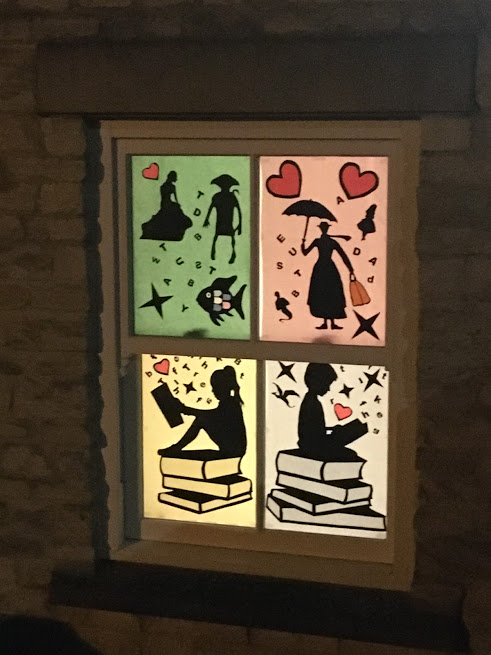
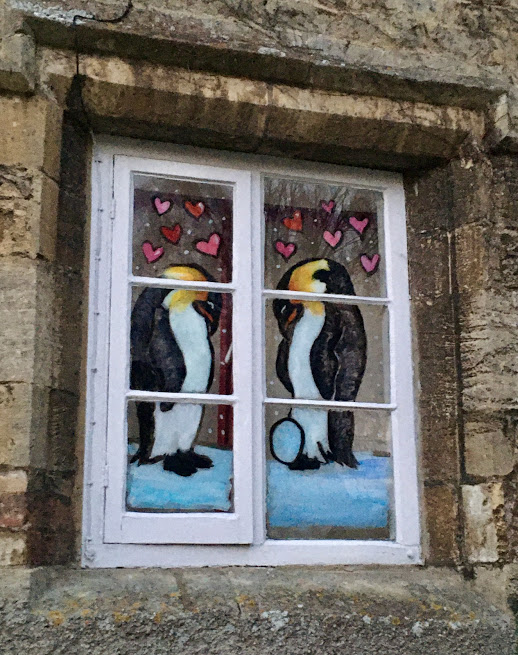
Local window art for Valentine’s Day

To me, a good romance is one that I would actually be content to participate in. They’re not so common as you’d think. There must be some give-and-take to the relationship, a sort of useful friction which drives rather than divides. Definitely a mutual admiration. I wonder if we called romances “relationship stories,” would that lend them more credibility? We’re just learning about the varying dynamics, the infinite degrees of desirability. Here are the top ten literary relationships that I enjoyed reading about—with quotes, of course! You know I like quotes.

Little Women by Louisa May Alcott

This was probably the first book I read that provided an enticing insight into a relationship. I was 9 or 10 years old, and Alcott’s novel introduced the idea that deep friendship and shared passions aren’t necessarily sufficient grounds to accept a marriage proposal, but that waiting and maintaining independence don’t have to leave you lonely.

“’Ah! Thou gifest me such hope and courage, and I haf nothing to gif back but a full heart and these empty hands,’ cried the Professor, quite overcome.

“Jo never, never would learn to be proper, for when he said that as they stood upon the steps, she just put both hands into his, whispering tenderly, ‘Not empty now,’ and, stooping down, kissed her Friedrich under the umbrella.”

Possession by A. S. Byatt

A very literary romance, as two scholars fall in love while unearthing evidence of an unknown affair between two poets a century before. This examines whether, when love stifles independence, it might yet cause art to flourish. How much determination does passion leave us?

“And is love then more
Than the kick galvanic
Or the thundering roar
Of Ash volcanic
Belched from some crater
Of earth-fire within?
Are we automata
Or Angel-kin?”

Their Eyes Were Watching God by Zora Neale Hurston

A rare example of a strong female protagonist who while remaining true to herself, longs to find a loving partner. And our heroine finally does so, making the most of life with TeaCake and with her memories of him after the relationship’s devastating end.

“‘Love is lak de sea. It’s uh movin’ thing, but still and all, it takes its shape from de shore it meets, and it’s different with every shore.’”

Maddaddam by Margaret Atwood

Atwood has a great ability to forensically dissect relationships, while not amputating any of the attraction. In this final book of the Oryx and Crake trilogy, two weary apocalypse survivors finally get together after years of waiting, and it’s simultaneously marvellous and familiar.

Coming home

“She’d longed for this, and denied it was possible. But now how easy it is, like coming home must have been once, for those who’d had homes. Walking through the doorway into the familiar, the place that knows you, opens to you, allows you in and tells you the stories you’ve needed to hear. Stories of the hands as well, and of the mouth… Yes. At last. It’s you.

Prayers for Rain by Dennis Lehane

I love Lehane’s dialogue. Banter crackling with warmth that sometimes crosses over to passion. This is why his detectives Kenzie and Gennaro are a big hit with me, and why their relationship is crave-worthy.

“Don’t look at me,” she said.
“Why not?”
“I’m telling you–” She lost the battle and closed her eyes as the smile broke across her cheeks.
Mine followed about a half second later.
“I don’t know why I’m smiling,” Angie said.
“Me, either.”
“Prick.”
“Bitch.”
She laughed and turned on her chair, drink in hand. “Miss me?”
Like you can’t imagine.
“Not a bit,” I said.

The Night Circus by Erin Morgenstern

This is quite a beautiful story that uses magic and fantasy to show love’s power, also addressing questions of destiny versus autonomy.

“As he kisses her, the bonfire glows brighter. The acrobats catch the light perfectly as they spin. The entire circus sparkles, dazzling every patron.”

We Need to Talk About Kevin by Lionel Shriver

I read this to research school shootings but it captivated me as a tragic love story, an elegy to a relationship as much as a confessional. Eva, the narrator, and her now absent husband Franklin loved each other so much, despite being quite opposite, and perhaps it made other relationships pale in comparison.

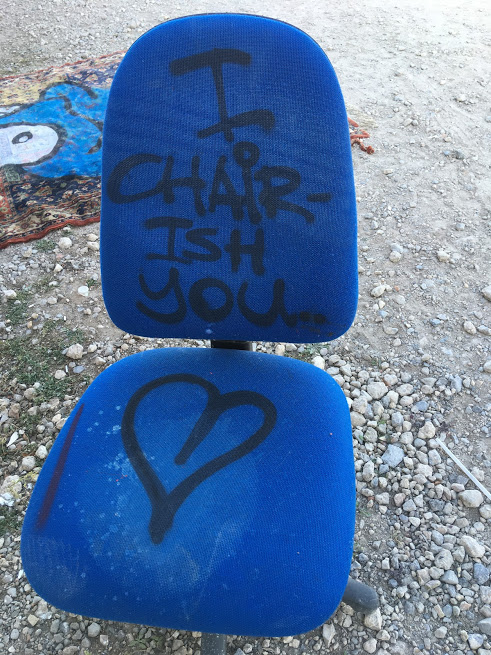
Affectionate chair, Cheltenham Street Art Festival, 2019

“After I’d survived so long on the scraps from my own emotional table, you spoiled me with a daily banquet of complicitous what-an-asshole looks at parties, surprise bouquets for no occasion, and fridge-magnet notes that always signed off, ‘XXXX, Franklin.’ You made me greedy. Like any addict worth his salt, I wanted more.”

Do Not Say We Have Nothing by Madeleine Thien

This is an epic book about trying to create and express oneself during political struggles. It is not a romance. However, there’s a wonderful relationship between Wen the Dreamer, who woos the protagonist’s young widowed aunt Swirl through stories, leaving her a volume of adventure tales every few days. When she’s ready, they marry with this perfect storyteller’s vow:

“‘I promise you that for all our life together, I will seek worlds that we might never have encountered in our singularity and solitude.’”

The Paying Guests by Sarah Waters

I’m a huge fan of Waters. Her books are suspenseful with expertly-crafted twists, but they’re also deeply romantic, usually giving voice to relationships on the LGBTQIA spectrum. She has a knack for conveying the overpowering, multi-sensory nature of love.

“Frances took all this in, even while angled away from her, gazing at her—how, exactly? Perhaps with the pores of my skin, she thought.”

A Grief Observed by C. S. Lewis

The creator of Narnia published this journal of his widowhood under a different name, and it’s sad and lovely and relatable. In it there’s this line which I feel sums up the beating heart of any truly desirable romance:

“The thing I want is exactly the thing I can never get. The old life, the jokes, the drinks, the arguments, the lovemaking, the tiny, heartbreaking commonplace.”

I think the best thing we can do when creating relationships on paper is to use the tiny commonplace that Lewis refers to, the familiar details that symbolise a routine privileged by virtue of simply being shared. What do you think of these relationships? Do you have any recommendations?