Leading While Female

This Week’s Bit of String: A Question for the Prime Minister

The interviewer narrowed her eyes studiously, and barely moved her mouth as she asked the question, conveying a sense that this high-stakes question was just between girls. ‘What’s the naughtiest thing you’ve ever done?’ (Video here.)

In the midst of general cheering as Conservative leader Theresa May moved one interview further toward a sub-optimal election performance, I squirmed at the question. I don’t know how I’d answer it, as a ‘normal’ person. If I were the Prime Minister, I would not expect it. What bearing does it have on defending the nation from terrorists, reviving the economy, negotiating Brexit?

I doubt anyone’s ever asked the masses of male politicians about the naughtiest thing they’ve ever done.

I don’t agree with Mrs. May’s government or party. Sharing a gender does not necessitate political affinity. But as a writer I advocate, and try to practise, empathy for any other person, female or male, public figure or not, and as a feminist, I believe we should push for empowerment of every woman, regardless of her political affiliation.

Many of us notice more blatant forms of sexism against women leaders. Donald Trump’s remarks about rival presidential candidate Carly Fiorina, for example, or the threats made against female game writers. But sometimes it takes slightly more subtle forms. What are the main forms of verbal sexism women encounter in leadership roles, and how might they be more covertly manifested?

Are You a Good Witch, or a Bad Witch?

To me, the question asked of Theresa May and the subsequent backlash that apparently the leader of the country isn’t ‘naughty’ enough, reflected a Madonna-whore complex in society. If women can’t be utterly perfect, they must be objects of scorn. Or perhaps to a portion of men, women are mere sexual objects beneath it all, and these men justify the idea by portraying women as bad or dirty.

A Woman’s Place
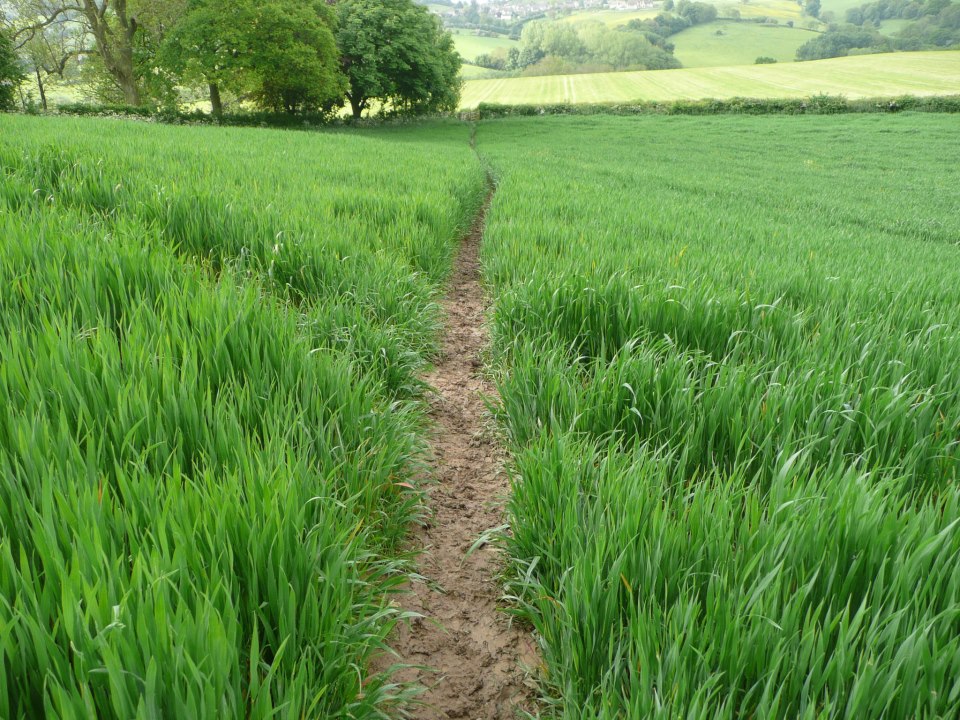
Field of wheat while green in spring
Future wheatfield. I can’t blame the Prime Minister for wanting to run through it.

Then of course there’s the grumbling about who’s going to make men’s sandwiches and iron their shirts if women are busy doing politics. Hillary Clinton faced such heckling remarks during various campaigns.

I’ve seen men default to their idea of women as housekeepers. When I worked at a sizeable secondary school, the headteacher happened by the SEN rooms and encountered two of our specialist teaching assistants catching up between student appointments. ‘Since you’re not busy,’ he joked, ‘I’m sure the toilets need cleaning.’

Not something he’d say if he found a couple of male staff bantering in the corridor.

The S-Word

A Year Ten student once complained to me about a meeting being cancelled when our SEN Coordinator was on sick leave: ‘We couldn’t have it ‘cause Miss wasn’t in. That slut.’

My supervisor’s attendance had nothing to do with her sex life. But most insults for women do. JK Rowling recently Tweeted against the prevalent method of sexualising a woman the second she disagrees. ‘Every woman I know who has dared express an opinion publicly has endured this kind of abuse at least once,’ she noted.

Although there have been efforts by feminists to remove the sting from these insults by embracing sexuality, continuously high rates of sexual abuse and harassment mean they are triggers to a huge portion of women in some way. And you don’t get that kind of demeaning language about men, because it doesn’t really exist.

Those Women and Their Damn Feelings

In last week’s U.S. Senate hearings investigating Russian interference, new Senator Kamala Harris questioned Attorney General Jeff Sessions persistently about his refusal to answer. Later a male commentator—with equal persistence—called her hysterical. To me, her voice was level, her facial expression calm, if disappointed. I saw no emotional imbalance (although the political situation in America can understandably rile people of any sex or party).
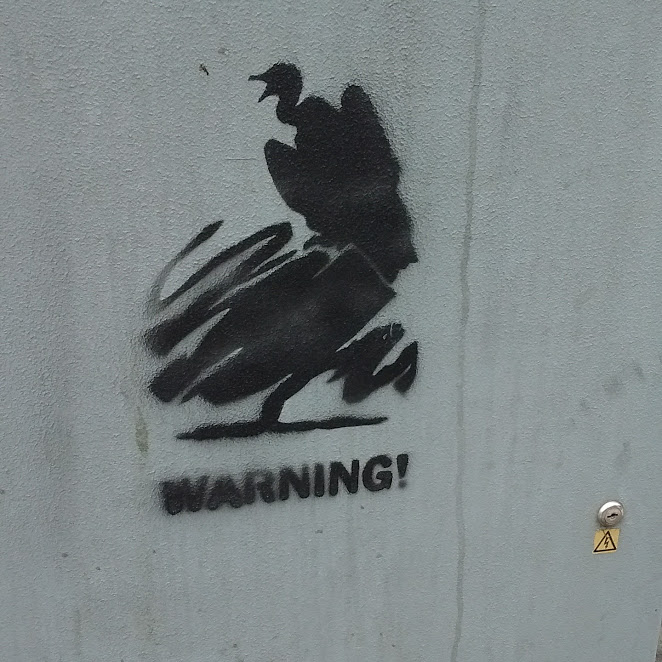
Stencilled graffiti of a vulture atop a scribbled tree, the Conservative party symbol.
Election graffiti 2017. Mrs. May’s appearance is sometimes likened to a vulture, a type of critique I’m not happy to participate in.

Women’s comments, no matter how they’re delivered, can be easily dismissed as overwrought nonsense. When I Googled the story about JK Rowling’s Tweets, one headline read: ‘JK Rowling Goes Off on Twitter…’ The phrase going off on one indicates an overreaction. So Yahoo’s writers and editors were, however subtly, encouraging readers to ignore Ms. Rowling’s actual argument.

Men’s impulses are often a societal and even legal excuse for everything from ‘locker room talk’ to rape. Women’s feelings, apparently, provoke ridicule and disqualify them from leadership.

Clothes Make the Woman

Any public figure should expect criticism for how they look and dress. Ed Milliband eating a bacon sandwich, Barack Obama’s jeans, Trump’s ties. But while men get mocked in extraordinary moments, women are assessed for their clothing, it seems, in every appearance. Theresa May’s shoes are always drawing comment.

Of course, she may like that. She likes her shoes. Bryce Dallas Howard could run through Jurassic World in heels, and there’s no reason a prime minister shouldn’t have them. But when Mrs. May claims her shoes actually inspired another woman to get into politics? I confess it seemed a petty reason to me.

Then again, if this anecdote is true, and the woman made that comment to Theresa May in Whitehall—she’d have faced all the above challenges, and more, to get there. Either she really loved the Prime Minister’s shoes, or there’s a lot more sustaining her.

So whether they’re Tories or Green, in stilettos or trainers, let’s eschew these subtle disparagements and encourage fair and intellectual discourse about our politicians. Particularly about female ones—because who else can they count on for that?
Stories on Buses

This Week’s Bit of String: Stagecoach Route 65

If you’re going to commute to work on rural buses, you need a bus buddy, or at the very least a placeholder.

I have a placeholder for my morning commute. She’s in Year 11, and we’re going to call her Ella. When I approach the bus stop in an inevitable rush, she’s already there. Through the hedges I see her bleach blond hair and baby blue hoodie over her tight-winched school uniform and I know I’m safe. The bus hasn’t been five or six minutes early instead of the three or four I make sure to give myself.

We don’t generally speak. We listen to our headphones and make polite, wordless gestures insisting the other board the bus first.

This is normal, of course, not speaking to strangers. Maintaining boundaries, erring on the side of giving extra distance because this seems more polite. Last week I posted about eliminating distance in our writing, about creating immediacy and manoeuvring the characters as close as we can to the readers. How often do we try, these days, to eliminate distance in real life? And is this a good thing, that we allow them to exist?

Case History

Here’s the thing with Ella. I’ve known her since she was in Year 2; I know her family. Not well, mind, but a few pages’ worth of stories out of her autobiography.

She was the first girl to have a crush on my son. She drew a little love note. I remember her standing near us at pick-up and drop-off times, watching, hopeful and expectant with an open-mouthed half-smile.

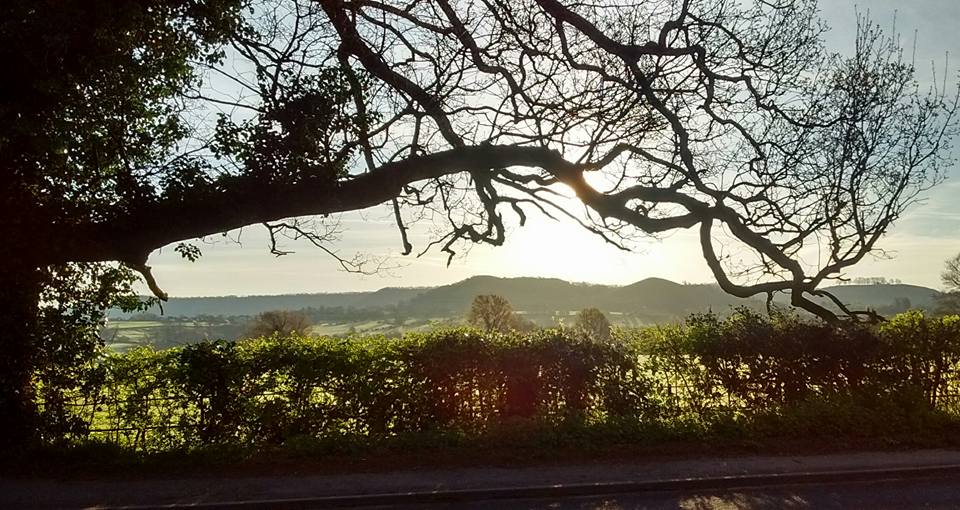
Hilly sunrise view from the bus stop
View over the hills from the morning bus stop

A couple years later I got a job at a nursing home where Ella’s mother was a Senior Carer. She did night shifts, and we hated starting a day after she’d been on duty. Oh, she could give sound updates at handover, but she did very little overnight to physically assist any residents.

Later, when I worked in the local comprehensive, I helped in Ella’s registration group, from when she was in Year 7, to her Media Studies GCSE class in Year 10. Her attendance was spotty. She didn’t speak much in registration, but detentions added up. Her uniform was never acceptable. She changed schools before the end of Year 10.

Hence her 40-minute, £4 bus ride every morning.

We acknowledge none of this. I don’t know if she remembers the love note she sent my son, or if she knows I worked with her mother. Maybe she’s reinvented herself at her new school and doesn’t wish to remember the old. Would we find it less necessary to maintain a respectful distance if we didn’t have that tiny bit of history?

In the last couple weeks she’s taken to fitting a cigarette in before the bus comes. The other day I saw her setting off from our last stop with a grown man who had kids of his own in tow, and I recognised Ella’s hopeful half-smile.

Going the Distance

We’ve heard about different cultural interpretations of personal space. People from certain countries might be more comfortable with closer approaches, even from strangers, that a lot of us Westerners are.

This discomfort seems to be linked to the amygdala, part of the brain relating to emotional responses, survival instinct, and memory. Tests show amygdala activity spiking when someone approaches too close, probably reflecting a deep-rooted warning system for potential danger.

On buses, though, we can’t avoid proximity. Just having a stranger in the seat behind and in front of us is closer than our amygdala would normally tolerate.

Maybe that’s why we use books and phones so prodigiously on buses and in other crowded scenarios, as this article suggests. We’re subconsciously putting up emotional barriers since we can’t put up physical ones.

The 17:25 Bus Alliance

My commute home in the evening is different. An elderly gentleman on the 17:25 Stroud to Dursley Stagecoach service has rocked the barriers we unwittingly put up.

It started with the odd comment from him: ‘Still reading that book, then?’ ‘Oh, you’ve got a different one today!’

Then he suggested charity shops where I might find more books. He

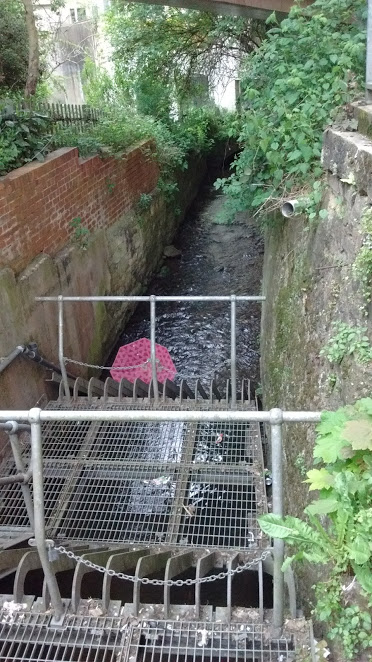
Pink umbrella floating in a drainage canal near the bus station
Umbrella caught near the bus station. I wonder who finally gave it freedom.

shouted the bus driver to a stop when he saw me running for it after lingering too long after work. I’m not the only one he looks after; if the young man with the red sweatshirt and impressive moustache doesn’t turn up for the 17:25, he gets a ribbing the next day, as do I if I’ve found alternative transport.

‘Where was you yesterday? You skived!’

‘My family met me for dinner and gave me a ride back,’ I tell him.

‘What’s this? But we were starving, you should have brought us along, too!’ The old man indicates himself and young Mr. Red Sweatshirt.

One day the weather attempted a semblance of warmth. Our elderly friend stepped onto the bus and scanned the group. ‘Where’s the other fellow? Can’t leave without him.’

Mr. Red Sweatshirt had removed his jumper. ‘He’s in disguise,’ I explained.

‘You almost had me there!’ More jolly banter ensued.

I don’t know their names, I don’t even know what they go to Stroud for. I’ve learned that the elderly gentleman likes to write little rhymes that publicise services on behalf of local doctor’s surgeries, and sometimes it even gets him in the paper. A part of me wants to know his story, but mostly I like him as he is, on the 17:25 Stagecoach 65 bus, and I’m reluctant to follow the string or turn the page in his tale.

Or am I just being lazy? I do get tired, especially by the end of the week. Friday afternoon I kept nodding off, finally giving up on the pages I was editing. At the penultimate stop, while the driver had a stretch, a smoke, and a fiddle with his phone, the old gentleman laboured from his seat and, gripping each available handlebar, walked back to see me.

‘Not reading today?’ His eyes are deep, almost fluid brown.

‘I’m just so tired.’

‘Never mind, you’ll soon be home. But you won’t put your feet up there, will you?’

‘Not exactly.’ I had a treadmill run to do, the dusting, washing up, two loads of laundry…

‘You rest for now, and I’ll make sure you’re awake before your stop.’

I’m glad he had the courage to disregard our distances, since I wouldn’t have done. Do you think we miss out sometimes by abiding by common etiquette? Should we try taking a few steps closer to each other and see what we can get away with?

Inclusion Versus Appropriation

This Week’s Bit of String: A thriving literature festival in a tiny Cotswolds town.

Hawkesbury Upton hosted its third annual literature festival last week, featuring among many other events a panel on ‘Writing About Difference.’ I went along to hear seven people who had written about firsthand experiences with disability or chronic illness. They were carers or had disabilities themselves, writing in fiction or nonfiction, poetry or prose, for children or adults.

The Inevitable Appropriation Question

Someone asked the panel how they feel about other writers with less personal experiences, writing about characters who have disabilities or illnesses. Concerns over appropriation and mainstream publishers’ sidelining of ‘Own Voices’ are prominent, particularly following Lionel Shriver’s controversial speech at Brisbane Writers Festival last year.

The panel generally responded that it’s necessary to have some knowledge. If you don’t have it, get it. If you’re not sure, ask someone to check. Moderator Dan Holloway emphasised the importance of sensitivity. ‘If you see no risk that you will offend, then you’re not the right person to write this.’

House up for auction in Hawkesbury Upton
I couldn’t resist taking a few photos while in Hawkesbury Upton.

We need to be aware of our characters and the resonances they carry. We may think we’re being grand and inclusive, but assuming that we’re portraying something correctly could be arrogant. If we’re taking the time to fully consider what our characters have gone through, if we’re getting to know and love them as we should, we’ll be aware of the risks and take precautions to avoid them.

A couple panelists seemed dazed by the question, and it occurred to me that in a way, making this an issue is selfish of us. Some of the speakers care for children with disabilities and parents with dementia, and spouses with mental illness, all at once. They don’t have time to assuage our artsy worries. We must ensure we don’t see them as potential plot devices, existing only to provide feedback on what we write about their difficulties.

‘Help us…’

The Hawkesbury Upton session got awkward when a prim older woman in the front row posed directed a question Jo Allmond and her grown up daughter Jess Hiles. Jess writes children’s stories based on her experiences living with learning disabilities, and gives educational talks. Despite these achievements, Jo had just told us that sometimes when she accompanies Jess to appointments, the professional will take one look at Jess, assume she can’t communicate, and speak solely to her mother.

‘But why shouldn’t they assume she can’t communicate?’ the front row woman asked. ‘She looks different, you’ve said as much yourself. If I were to approach any of you others on the panel,’ she addressed Dan and Thomas Shepherd, who’s written a novel called Mr. Tumnall and also happens to have Aspergers, ‘and speak to you as if you were normal, you’d take offence, even though you look normal. It seems to me that people in your situations almost want to be offended. Obviously we can’t expect you to wear a label informing us of your capacities, but how can you expect us to know them? Help us, we need you to help us.’

Rustlings from the audience, fixed smiles from the panel. I immediately detected the acute, uniquely English fear behind the woman’s question: For the love of God, don’t let me embarrass myself by offending somebody. I felt for her a little bit. I know people enslaved to that fear.

However, she neglected to think, even in the presence of these exceptional people facing terrible struggles, that worse fates can befall someone than embarrassment. In obsessing over her desire not to be perceived as offensive, she was genuinely offensive.

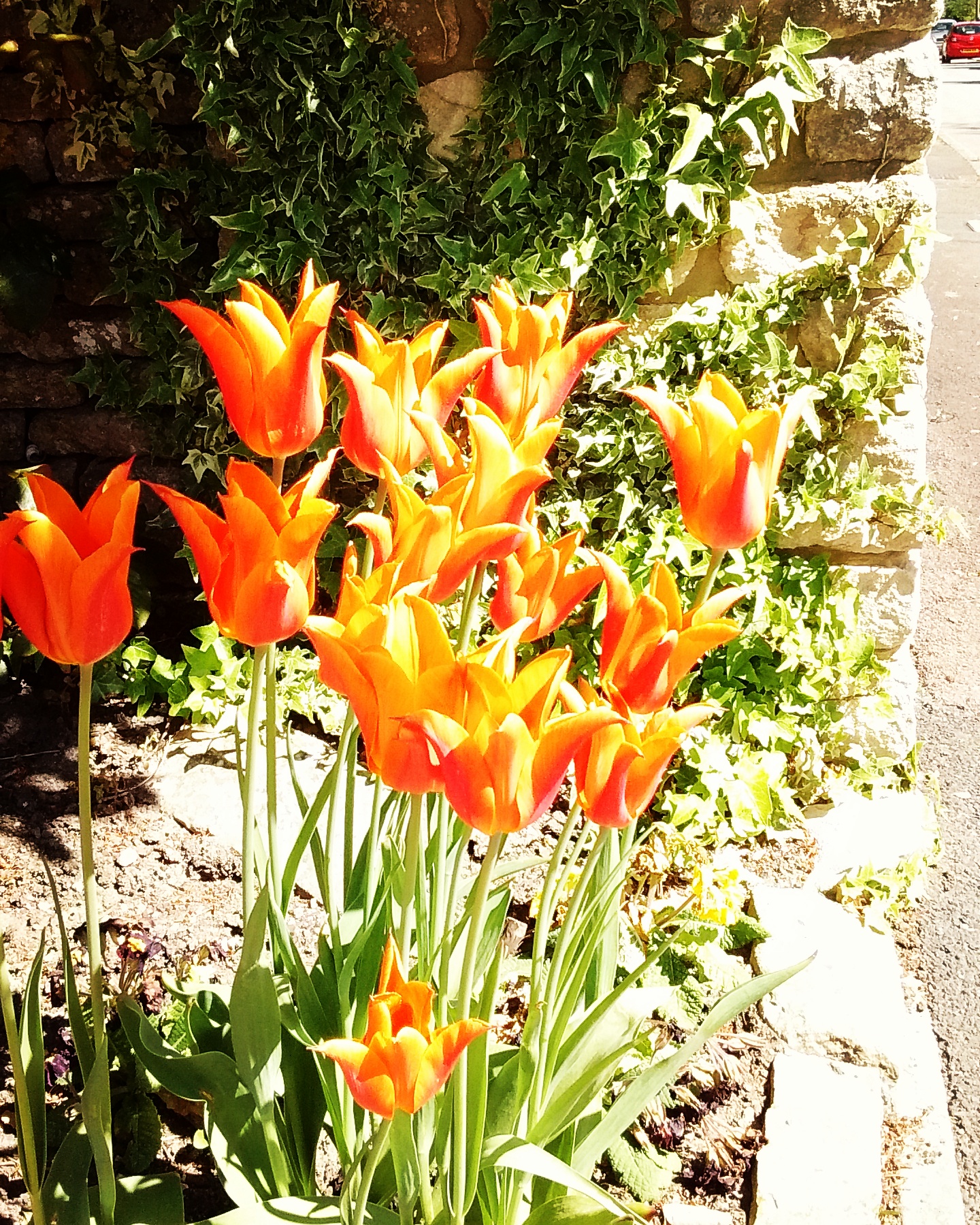
Tulips in Hawkesbury Upton
Tulips in Hawkesbury Upton.

While the speakers reassured her that basic, respectful communication (Good morning, isn’t the sunshine lovely today?) probably won’t bother anyone, the woman decided her point hadn’t been fully made. She wasn’t getting the help she wanted.

‘But you’re communicating for your daughter right now!’ she informed Jo. ‘She’s clearly not able to respond without you.’

Now, that’s crossing a line. I could see where the first question came from, misguided though it may have been. But how can someone insist that a person right in front of them is unresponsive, after being told that’s disrespectful and untrue? Jo and Jess had been answering in tandem, and let’s not forget that there are nonverbal means of communication.

‘Everyone’s Disabled’

So there was more backlash to that one. The panel kept impressively cool. Another lady in the audience, pink-cheeked and breathlessly earnest, stated, ‘I would like to suggest that we’re all disabled, we’re all restricted in some way.’

The audience liked this, and murmured assent. I wish I’d caught the panel’s faces at that moment, because the well-intentioned sentiment bothered me, and I imagined it might have bothered them.

Certainly, we all have problems. That’s why we need empathy! But a disability or chronic illness is a specific type of challenge. We wouldn’t say to a widow or widower, ‘Well, we’ve all lost somebody.’ We wouldn’t tell a refugee, ‘Well, we all have to relocate at some point.’ Okay, a few people might. But I don’t think that lovely woman would say those things.

So let’s not appropriate other people’s problems in perhaps an effort to diffuse our embarrassment or sense of survivor’s guilt.

How Can We Actually Help?

Buy and read books from all sorts of writers and listen to their Own Voices. Jo Allmond worked with another of the speakers, Joy Thomas, to publish Silent Voices, a wonderful volume of poetry from often overlooked people coping with disability. Thomas Shepherd’s book Mr. Tumnall sounds clever and intriguing. Check out Dan Jeffries’ memoir of coping with a rare medical condition, and don’t miss the children’s series Jess Hiles created, Jess the Goth Fairy. Follow Dan Holloway’s incredible Dandelion Project. Read Debbie Young‘s blog and books to see how a talented writer with first-hand experience depicts the journey of her family members with Type 1 Diabetes.

Stone pig statue and milk bottle outside Hawkesbury Upton door
A small town still life outside a Hawkesbury Upton door.

And as always, when we write let’s use well-rounded characters, and let them drive the story rather than be single-issue flagposts. LISTEN, observe, research. We should be doing that anyway, with any issue.

In my stories a few people happen to have mental illness or disability. Those are just parts of them; they have completely unrelated experiences that delight and move them. Because I’ve spent so much of my working life close to amazing people who cope with these challenges, it’s inevitable they’ll appear in my writing.

In The Wrong Ten Seconds, for example, the main character’s wife, Harriet, is paralysed and speechless after a stroke. He and his daughter struggle to care for Harriet’s physical needs while treating her mentally if nothing has changed. It’s a difficult balance, and one that writers about difference try to carry out. As the daughter says: ‘If we keep pretending Mum’s not in the state she’s in, don’t we risk minimising what she’s going through?’

Finally, let’s not seek a simple answer or a quick reassurance on this issue. Disabilities are tough–thankfully, the people who cope with them are often tougher. The balance between including diverse characters and appropriating those experiences from diverse writers never should get easy, so we need to maintain high sensitivity, and keep listening.


Liberal Arts: Where Do All the Bleeding Hearts Go?

This Week’s Bit of String: Crosses made of sliced cheese

For Easter when I was in kindergarten, my mother cut slices of processed cheese and bologna into crosses, chicks, and egg shapes to share with my class. The school found this contribution offensive. I remember her crying over it, as she hung up laundry. We lived in a very small, seemingly homogenous New England town, but it couldn’t accommodate her humble gesture of religious expression.

As writers, we hate feeling voiceless, we hate for minorities to feel voiceless, and we should hate for religious communities to feel voiceless. I’m not endorsing the narrative of the American ‘War on Christianity.’ There’s no comparison to what a lot of BAME or LGBT people have suffered. But have you noticed a dearth of well-rounded religious characters in literature? Could this absence be feeding the fear we ‘liberals’ have of conservatives? Could it be curtailing our empathy?

Perpetuating Literary Stereotypes
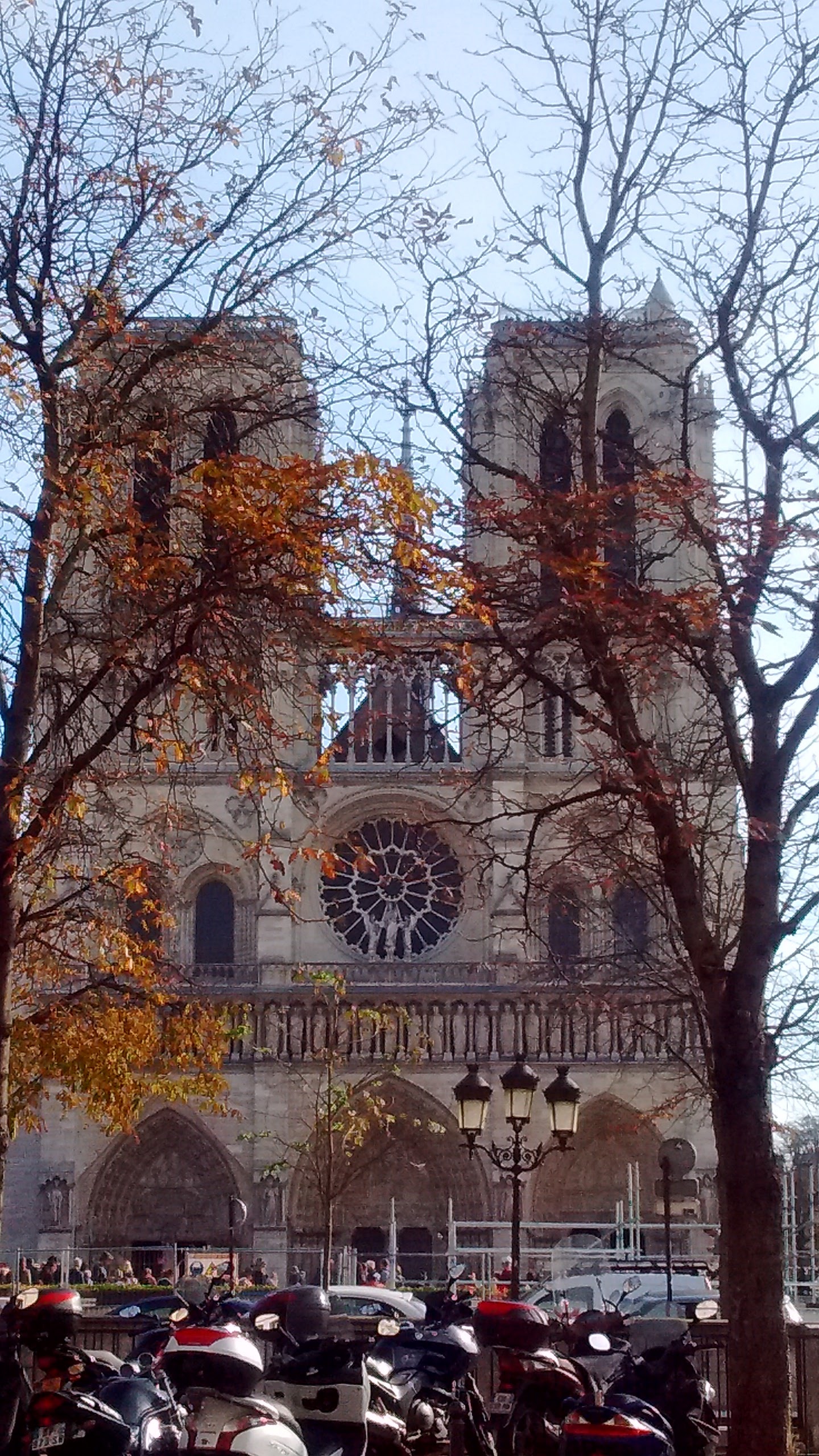
Notre Dame Cathedral
Notre Dame Cathedral, October 2015

I’d like to see characters like my mother in literature. Someone with unparalleled patience, raising the four children she gave birth to in five years, and working for over two decades with special needs students, often at least sixty hours a week—while dutifully living out beliefs some might view as intolerant. Someone who believes abortion is murder but who was devastated by Christian leaders’ support of a racist President who condoned sexual assault.

Instead, it feels as if religious characters in fiction are generally incarnations of Archdeacon Frollo in The Hunchback of Notre Dame. Hugo’s villain, tormented by hidden lusts, was probably a shocking revelation at the time. I’m not sure the prototype still is. In films and books, do we not at this point expect the Republicans and evangelicals to be baddies?

Admittedly, there have been appalling religious figures throughout history. One can understand the rage against clergy in, for example, Irish fiction such as The Glorious Heresies, or The Secret Scriptures. And in America especially, Christian culture, perhaps partly out of a sense it’s not welcome in the mainstream, has isolated itself to produce its own books on its own presses.

This isolation becomes cyclic. The church is the kid on the playground who has to keep his clothes clean, so he doesn’t join in football. The other kids assume he doesn’t want to play anyway—especially if he tells them they’re getting too dirty—and he resents them carrying on without him, and the gulf widens. So mainstream literature and heavily conservative, Christian literature may seem to prefer the separation. But if we consider ourselves liberal, should we ignore a whole subset of our culture?

Studies on Liberalism Versus Conservatism

Before justifying the alienation by saying Republicans are ignorant, are overly attached to their beliefs, and probably hate us too much to engage, consider these intriguing studies.

Research shows that conservative minds are more attuned to fear. Is this a cause or a symptom of conservatism? Scientific American describes how mounting scientific evidence of conservative risk awareness could explain their stereotypical attachment to rules and even nationalism.

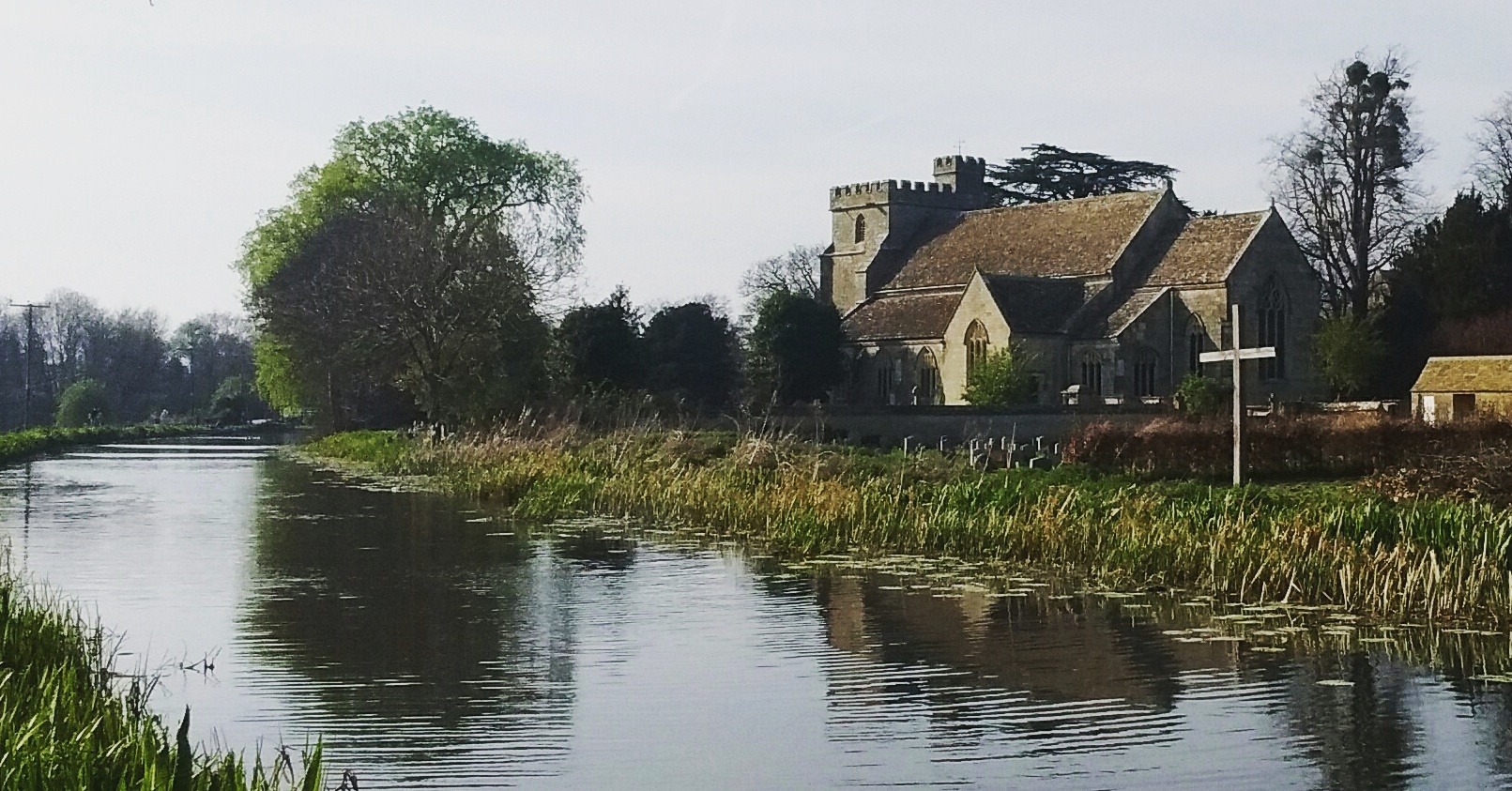
St. Cyr's Church on Stroudwater Canal
St. Cyr’s Church on Stroudwater Canal, Palm Sunday 2017

It also explains their tendency toward idea-driven storytelling. While some conservative commentators like this one on The American Conservative website remind their fellows that using literature to mould public morals ‘leads to art becoming a mere tool, a means to an end, rather than an end in itself,’ a group will find that irrelevant when they perceive themselves under threat. Republicans (who got eighty percent of evangelical support in the presidential election) are completely in control of the American government, but fundamentalist Christians believe in Heaven and Hell. The majority of people they meet are eternally damned. If they have any compassion, they’ll try and save them with everything they do, every word they write. How could they care about trivial things like character development and artistic expression?

Here’s another surprise from a wonderful study described in The Guardian, in which literature professors researched thousands of Goodreads profiles and found over four hundred books which conservative and liberal readers frequently liked in common. Encouraging, but when they looked at the reviews, they found conservative readers were ‘more generous’ and used ‘less negative or hateful language’ than many of the liberal reviewers. We liberals can be snobby and cynical—who would have thought?

In Twitter discussion, science fiction writer Grace Crandall observes that we tend to detect biases against us: liberals see conservative bias, while conservatives see liberal bias. We’d all rather be wronged than in the wrong. But we have to rise above that as artists, and try to understand each other, as she suggests.

What is Conservatism, Really?
Church and phone booth
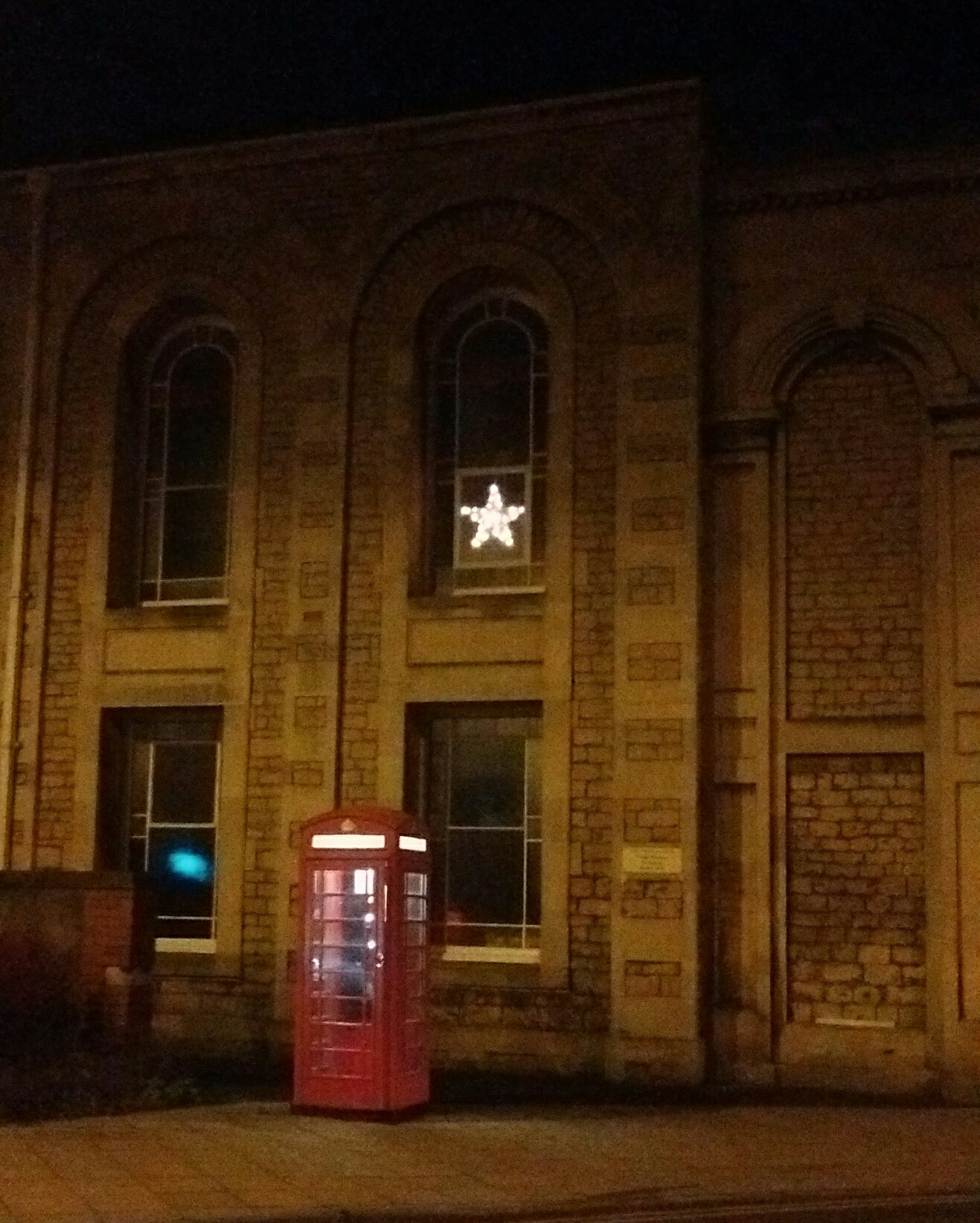
Juxtaposition in Dursley, Christmas 2016

Everyone’s conservative about some things, and liberal about others. We all have things we don’t want to change, and things we seek to explore and improve. Micah Mattix, in the American Conservative article, reminds us genuine conservatism is ‘deeper than a political orientation; it is a temperament, one that looks to the past with reverence and the future with trepidation, and which believes that human nature is not easily changed or improved.’ Skepticism of contemporary culture is not exclusive to Republican-leaning authors.

Indeed, when we write we should examine any stereotype, even the idea that Republicans are always grouchy old white men. We write to conquer fear, perhaps our own fear of being voiceless, and it’s always worth finding characters to give voice to. There are Republicans and/ or evangelicals who strive valiantly to live up to their own standards, even if these standards manifest themselves in ways that look strange to us. In my book Artefacts, two of the protagonists are Christians, trying to establish friendships outside the church despite being convinced their acquaintances are hellbound. Religious characters don’t always have to be so dramatic; I liked the pastor and the churchgoing protagonist in Richard Russo’s Empire Falls. They were portrayed as normal people, with normal family and livelihood struggles, who happened to have a bit of faith. That’s incredibly rare in a current book, and why should it be? We’re writers. We can take on anything.

Writers with Day Jobs, Part 3: Goodbye, Post Office

This Week’s Bit of String: Letters to Putin

If you were a cultivator of stories, working in a post office, would you find yourself quite curious about what you were helping people send? I’ve always been quite numb to the letters and parcels—professional or perhaps just zombified—but sometimes my curiosity is truly piqued.

‘I need to send this letter to Russia.’ The soft-spoken piano teacher puts the envelope on my weighing scales. His thick, square glasses glint in the fluorescent lights.

I stamp the letter. It’s meticulously addressed to the Minister of Justice in Moscow. ‘I keep seeing these today,’ I tell the piano teacher. ‘What’s going on?’

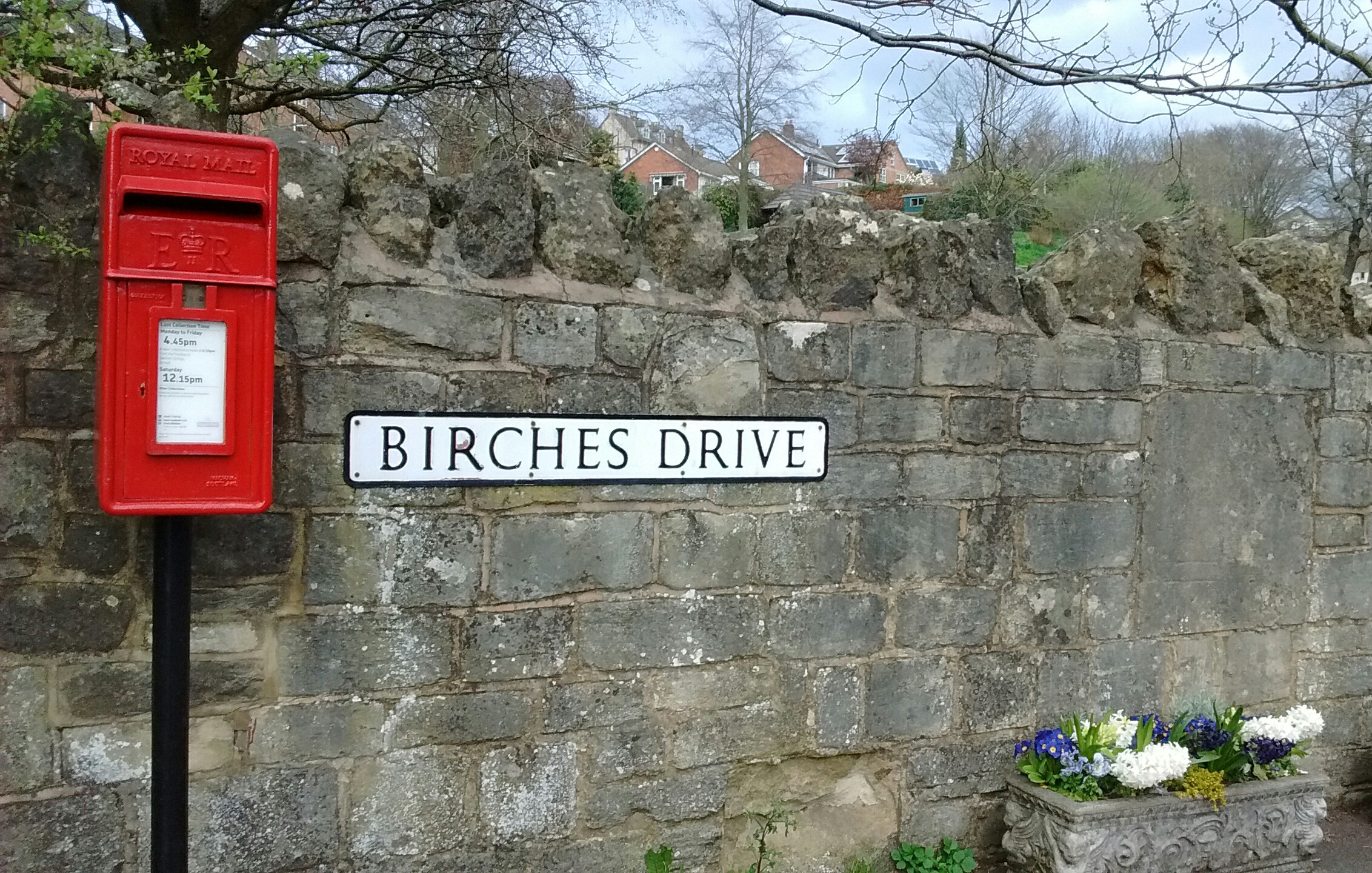
Letterbox near Park Gardens in Stroud

He informs me Russia has begun proceedings to label Jehovah’s Witnesses as extremists. So the steady stream of polite, earnest customers posting letters to Russia’s Foreign Minister, Prime Minister, Justice Minister, and even President Putin himself—are attempts to reason with the enormous state.

I had no idea. And that’s just one thing I’ve learned working at the post office. I shall take my leave with a little mess of weird but possible story threads.

Grief, Observed

A pale old man collects his pension from the post office every Monday, his fingers trembling as he tries to remember his PIN. One week he told me his wife had cardiopulmonary disease, and a bad car accident a couple months before while returning from a hospital appointment certainly didn’t help. But he smiled as he said, ‘I know all about being a woman now, since my wife’s laid up. Running about doing all the work! Tell you what, if I have to come back as something when I die, I hope it’s not a woman.’

Monday comes around again. ‘It’s beautiful out today.’ The man says as his fingers jitter, uncertain, an inch above the card reader’s keypad. ‘The sun was so warm in our garden.’

I ask how his wife is doing.

‘She passed away yesterday morning. Sixty-three years we were together. I used to call her my little ray of sunshine…’ His voice is hoarse.

I’m nearly moved to tears myself. I’ve worked in a nursing home; I’ve seen bereavement and death before. But it’s different seeing it ‘in the real world,’ watching someone stricken so recently go through the necessary motions. At the post office, I’ve had to tell relatives we can’t ship human ashes to distant loved ones (apparently it’s a fire hazard). I’ve certified copies of death certificates, and helped bereaved parents close their late daughter’s bank account—the mother quietly explaining what she needed, the father sitting in the waiting area staring straight ahead.

Stories aren’t just big moments; they’re little ones. They’re how we drag huge burdens through each tiny step.

Beyond School Doors

Likewise, I’ve seen disability before. I’ve supported secondary school students with all kinds of difficulties, who worked tremendously hard to get through the schoolday. Once again, the post office showed me a different perspective.

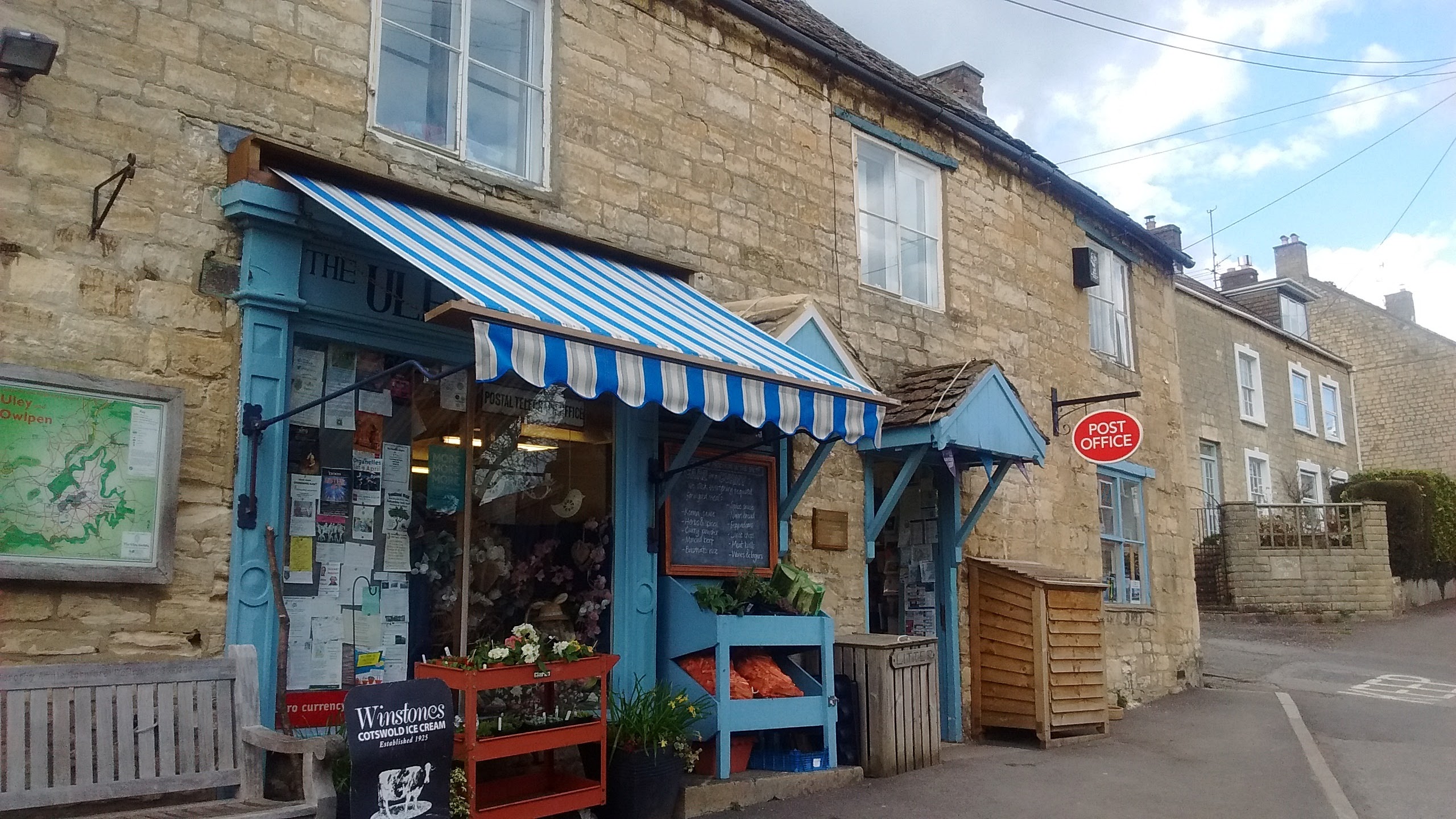
Village Post Office and shop
This is not the Post Office I worked in. But I wonder if their mini-dramas would be so different from ours.

A girl in her late teens or early twenties comes to my counter, taps her ear, and utters ‘Deaf.’ She slips a note under the heavy glass partition of my ‘Fortress’ (that’s literally the Post Office terminology for the secure cubicle). She needs a box for posting a jacket to the USA, the note explains. I take her to the stationery and show her what the shop offers for packaging. We communicate with hand motions and the odd inarticulate noise. She seems pleased with the selection.

I think about how it must feel, forced to introduce oneself in such a way; to be immediately distinguished by what some might perceive as a deficiency. What bravery and resourcefulness surround us, and we barely even realise.

My previous jobs have inspired a great deal in my stories, as I’ve gotten to know students, colleagues, and nursing home residents very well. In the post office, interactions are fleeting, but still colourful and informative. It’s a lesson in efficiency. If my imagination can be so fuelled by a two-minute encounter, maybe I could shoehorn my observations into a flash fiction piece. My notebooks bristle with label-backs and till roll fragments scrawled with funny place names: Bald Knob Ridge, North Carolina. Thistley Hey Road, Liverpool. Runaway Heights, Jamaica. Thanks to these, I could still feel, despite being locked alone in a ‘Fortress’ at the back of a perishing shop in a town classed as a ‘Rural Area of Deprivation,’ that the world was at my fingertips. Not just geography, but the realm of words, with its truly infinite possibilities.

What windows does your job allow on the wider world?

Welcome to Dystopia?

This Week’s Bit of String: The students are revolting

I used to support a class of Year 8s who rebelled Hunger Games-style during lessons. A teacher might be talking them through French prepositions or long division, when one after the other, the students would slowly, dramatically raise their hands and whistle the three notes of the mockingjay’s song, until the group was giggling and thoroughly disrupted.

As revolutionary causes go, I wasn’t impressed with theirs. The education they objected to was nowhere near as oppressive as the government from Susan Collins’ fictional Capital, nor as ruthless as many real-life governments around the world and throughout history.

You’ve probably noticed the ever surging interest in dystopian literature,  evidenced this week by increased sales of George Orwell’s classic, 1984. I find books like this fascinating, but I also wonder whether this attraction to dystopian fiction is constructive at a time like this. Are we just sensationalising our peril?

The Appeal of Dystopian Fiction

Leaving aside the amazing narrative talents of George Orwell, Margaret Atwood, Lois Lowry, Patrick Ness, Cormac McCarthy, and other authors of great dystopian tales, what do we get from these stories?

Abandoned cabin in New Hampshire
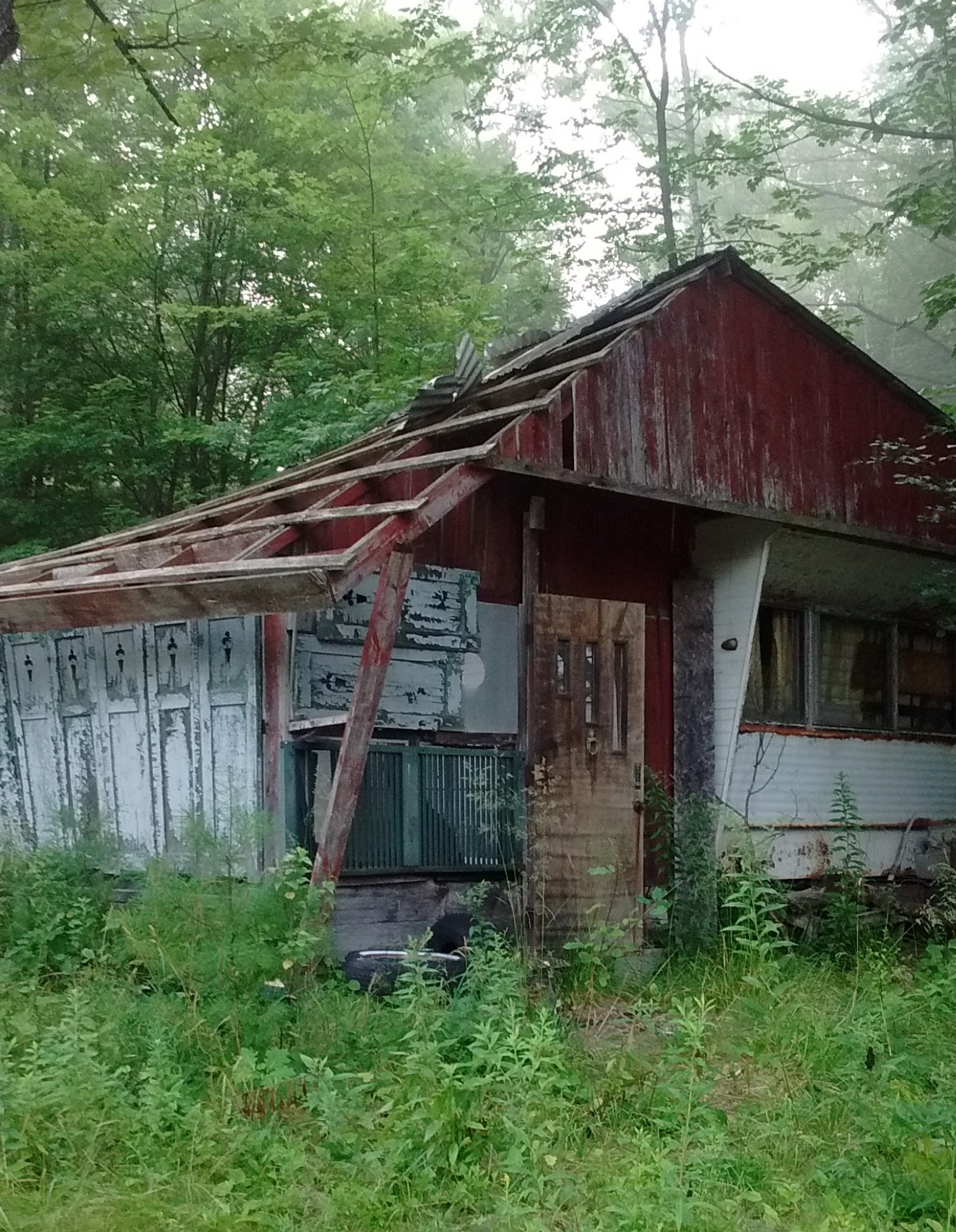
Then there’s the mysterious beauty of contemplating ruined things…

The Huffington Post published an  essay on the sub-genre’s merits. These stories warn us about the insidious ways governments and/ or technology could usurp our rights. Certainly that must have been Orwell’s intent. With Winston’s experiences at the hands of the unfeeling, super-controlling Big Brother and the Thought Police, Orwell warned not only against fascists like Hitler’s and Franco (Orwell fought in the Spanish insurgency), but also against hyper-ideological dictators like Stalin. After all, according to this BBC New Magazine article, Orwell saw his comrades in Spain killed by rival pro-Communist groups as well as by Franco’s soldiers.

Dystopian fiction arms us. It shows us scenarios in which protagonists’ survival skills are tested to the maximum, forcing us to ask, albeit with stakes much lower than those the characters face, whether we ourselves would be up to the same job.

Current Relevance

To me, it seems a bit late to be brushing up on totalitarian governments with the help of 1984. Shouldn’t people have done that before voting? And—SPOILER ALERT—it doesn’t carry a message of hope, so it’s possibly not an ideal choice to galvanise a resistance movement.

I also worry that dystopian fiction skews our perspective. Our world hasn’t gone completely mad…yet. Places like Syria and the refugee camps, and the many areas worldwide that have been corrupt and impoverished for centuries—those are dystopias.

Those aren’t reasons to stop reading the genre, though (especially since there are so many gripping stories on offer; I love the sound of John Joseph Adams’ dystopian anthology Brave New Worlds, as described at the end of this Kirkus Reviews essay). It just means we need to read it for the right reasons. We should read with vigilance and appreciation, and with enough spirit to go implement the messages given.

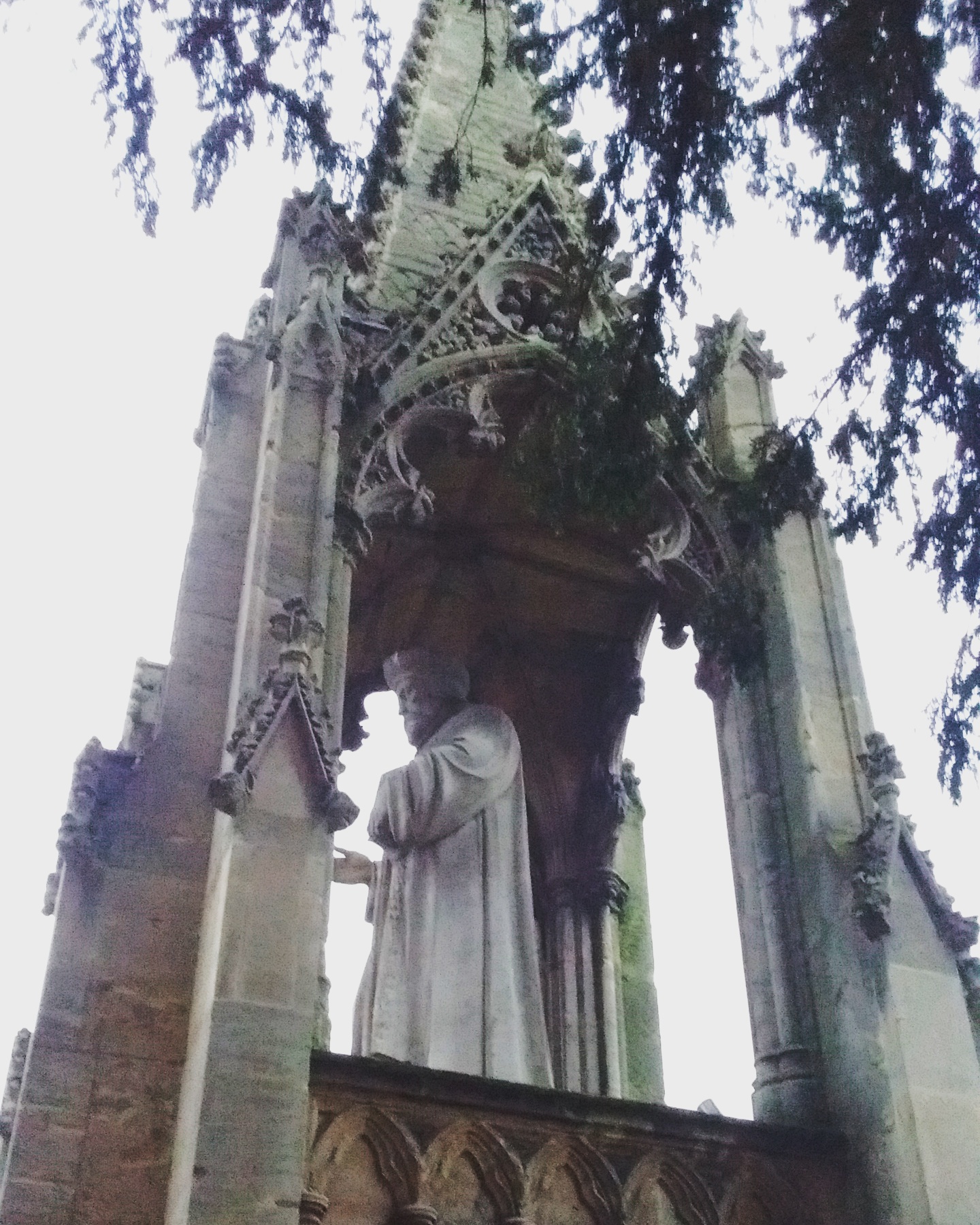
Statue of 1555 Gloucester Martyr John Hooper
Gloucester statue commemorating Protestant John Hooper,  killed in 1555 under Catholic Queen Mary. Let’s not go back to religion-ruled dystopias, please.

With 1984 in particular, I think a striking lesson is this: the regime in that book wants to be loved. It wants to control every thought. And as anyone who’s ever been a teenager will attest, the need to be loved can drive one to dangerous lengths. The current leader of the free world, with his obsession over crowd (and hand) size and his compulsive tweets, shows some of those traits. How do we combat that uncontrollable insatiability?

Writing Dystopia

Even while realising that hell hasn’t fully broken loose yet, some of us find ourselves writing in the dystopian sub-genre more. I’ve written three dystopian short stories in my life, including The Apocalypse Alphabet, and they were all products of the last six months.

I checked with other writers on Twitter to see how they feel about dystopian literature. Rita Gould shares my concern that immersion in it may ‘feed the fear.’ Megan Manzano extols its ability to kindle emotion. ‘They make us sad, hopeful. They anger us. These books show us what we can do. If 17yr olds can create change, why can’t we?’  M.K. Anders notes,  ‘Seeing it portrayed is validating, even if the good guy loses.’

All very good points. When the world seems dark, we can’t deny our artistic urge to create something, hyperbolic or not, out of it. This may involve feeling more scared for a time, while we confront worst-case-scenarios burning in our imaginations. But then we locate what makes the characters keep going, like Hannah’s love for her son Jack in The Apocalypse Alphabet, and that helps in real life.

“‘Close your eyes and imagine fireworks,’ Hannah whispers, and Jack obeys, his fingers woven together in front of his shins, his eyelids almost translucent, spidered with delicate veins.”

I emerge from writing and reading these with fresh determination. We’re not alone. People have survived worse. We have a lot worth fighting for. Right, people?

Writing Away the Winter Blues

This week’s bit of string: Moss loaves and leaf stew

Narnia-like landscape
Found any countries in the cupboard lately?

As kids, my brother and sisters and I spent our days outside, fortifying dens to protect against unseen armies or searching for faeries. We often pretended Winter is Coming (I’m cross with Game of Thrones for purloining this premise), because the additional threat of nature made it more exciting. This necessitated hoarding of bread and fish: loaves of moss scraped from boulders, and bedraggled leaves caught from the stream.

Even now, the onset of cold and dreary weather gives me a thrill and causes me to particularly relish writing time. Am I alone in being inspired by winter?

Studying the Effects of Temperature on Creativity

There are many factors in the creative process. Research seems to prove that exposure to warm temperatures, even if it’s just holding a warm cup of coffee, inadvertently encourages people to treat each other more warmly, or at least to perceive each other as less emotionally cold. People are more inclined to notice relationships and connectedness when they are physically warm.

Given that conclusion, and my insistence that empathy is crucial to the writing process (and to life generally), these studies make it seem that cold weather might be bad for writing.

However, cold temperatures foster a different type of creativity. According to the same study as above, cold weather encourages metaphor recognition and originality of response. (The latter attribute was partly tested with a pasta-name-inventing exercise. How do they come up with these things?) So perhaps it’s actually a good time to be thinking of new story ideas, building new worlds, and incorporating symbols and meaning into our work.

Advantages of Winter Writing

Resourcefulness: Some of my most unique ideas come during cold months. A story featuring dolphins on Mars, for example, and my play A Night at the Armoured Cars Sub-Division, in which a secret government agency spies on people’s dreams to solve crime. Maybe we harbour an innate response to hazardous cold, an ability to consider options beyond the usual suspects. Isn’t that rather thrilling?

winter-branch
See? Beautiful.

Fewer distractions: Sometimes I think, thank goodness it’s horrible out; I can just get on with my writing. Everything’s stripped bare, and that’s beautiful to me. The bleaker landscape makes shape and rare colour stand out, and that emerges, I believe, in my writing.

Structural integrity: Even if the drop in temperature renders it more difficult to fully appreciate the pulsing inner warmth of my characters, this could be a good opportunity to look at the mechanics of plot and retrace the structural foundations of a tale.

Creating our own heat: Further data shows that winter causes us to seek psychological warmth. People renting online movies choose romantic ones more often in wintertime. What better place to seek warmth than with our characters, preferably while huddled under a quilt and sipping some hot fruity tea?

I realise I’m lucky. I no longer live in part of the world that gets extreme weather. And in any part of the world, winter can have a terrible effect on some people, bringing depression which might dry up the very creative juices which could have sustained them. If that describes you, there are pages on the NHS website and on this useful Writing and Wellness site, which I hope might help. It’s not a problem to be taken lightly.

Taking the Weather With You

frostywebAs it turns out, both my completed novels use extreme weather as a backdrop during the pinnacle of the action. In The Wrong Ten Seconds, tensions escalate during a brutal heatwave in a small midlands city. In Artefacts, everything unravels as the New England temperatures plummet:
“I love looking at you in this spooky snowstorm light.”
“It’s not really a storm.” Helen stared at the snow swirling around a streetlamp. Every now and then, a flake was caught in a gust, and blown upward against the bulb, brilliant as a firefly.

Selecting seasonal details to enhance characterisation and plot is another part of the fun.

Do you think winter affects your creative process? How much does it impact the characters in your stories?


2016: Nothing But a Number

The general consensus seems to be that 2016 was a particularly rubbish year. It’s a bit facile, though, to assume recent international disasters sprouted randomly in response to the page-turn of a calendar.

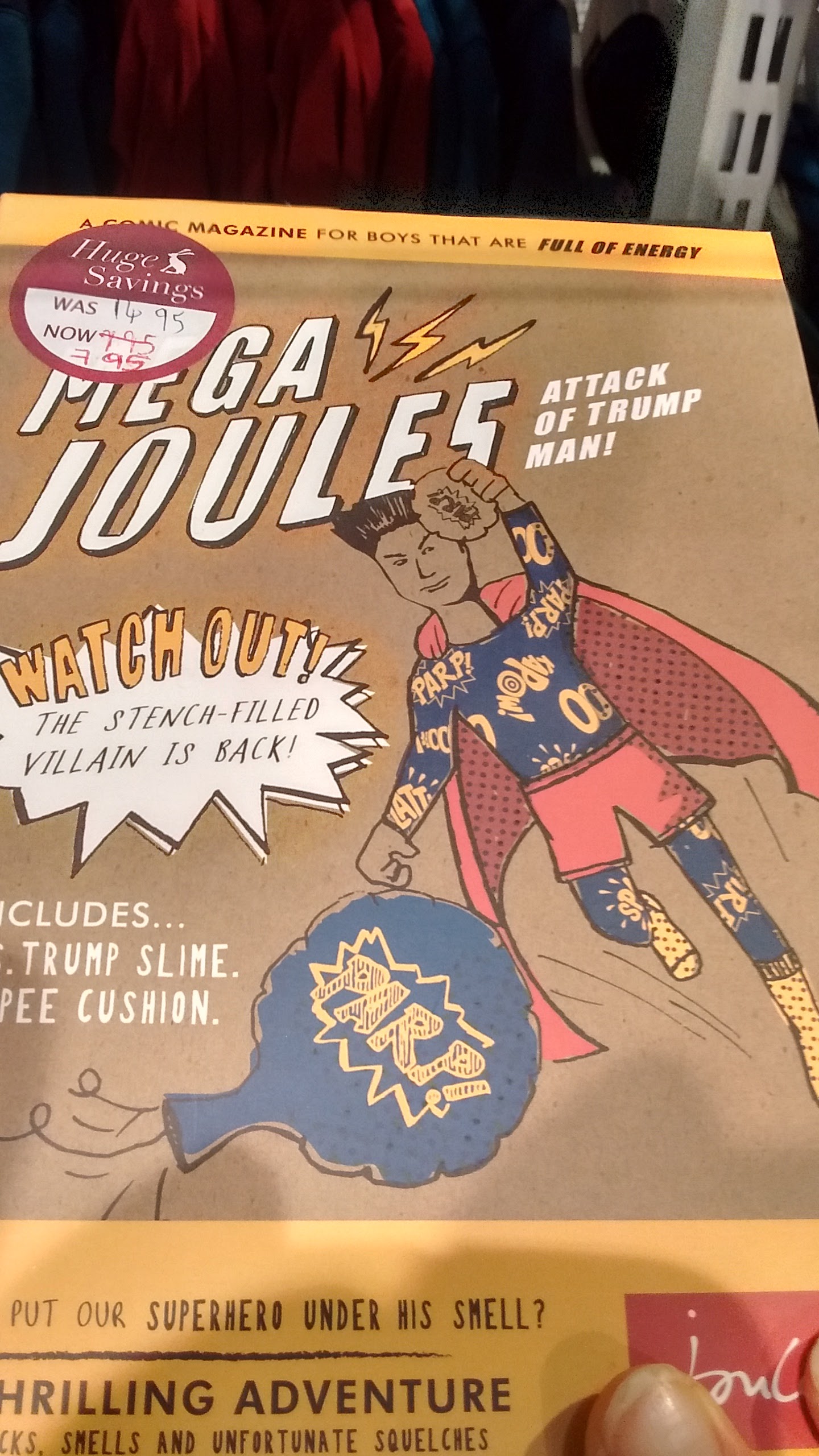
Attack of Trump Man: children's book
Saw this children’s book in a Cardiff shop at the end of 2015. Attack of Trump Man. Was it a sign?

As writers, we tend to reject such premises, and to root around for causes. With minimal detective work we can see that Brexit and the Trump election were a long time coming, thanks to economic disparity, normalising of white supremacist ‘alt-right’ rhetoric, mainstream media obsequiousness, the hubris of established party politicians…I could go on.

The cancer that killed various celebrities was proliferating in their cells before. The citizens of Aleppo have been suffering for years; politically oppressed perhaps for decades. Extrajudicial killings of black people and the militarisation of police was already going on, racial bias and mistrust of law enforcement existing since before the United States signed the Declaration of Independence.

I bear no ill will towards 2016. I’ve watched it be rather kinder than its predecessors to those dearest to me. But I feel trepidation at saying I’ve had a decent year, because who knows what strife or loss germinates as I write this. The same is true for all of us. I only hope the hard work I’ve done this year, particularly in my writing, will later blossom into more success. (Although unfortunately, hard work in actual paying jobs seems to guarantee me very little security, particularly this year.)

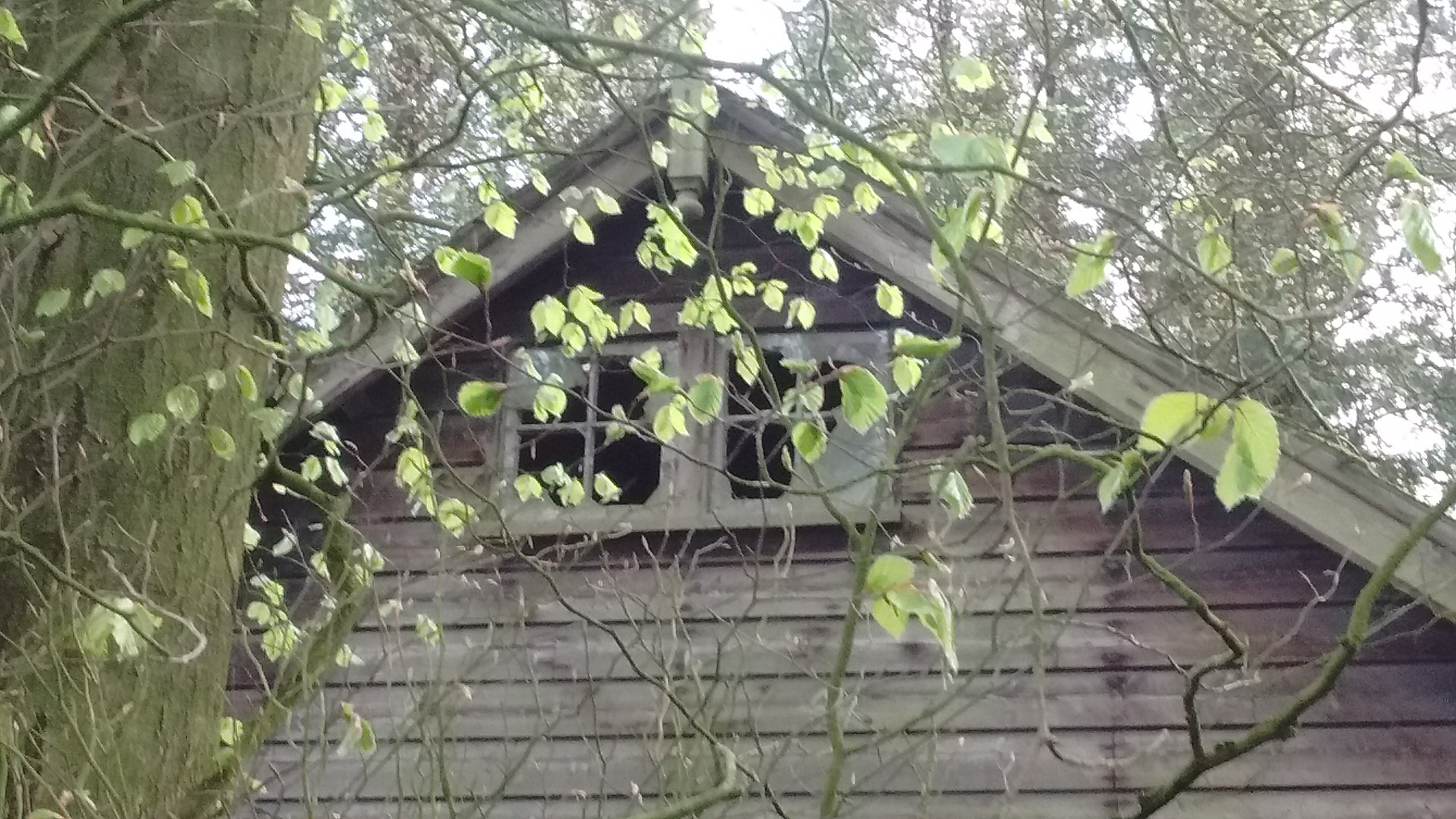
Spring leaves and broken windows
Looking from the broken windows of 2016 to the fresh leaves of 2017…Or maybe I just liked this picture.

I’m always fascinated by stories which use the tiniest misstep to accelerate into a wicked tango of tragedy. Stories such as Atonement, Nicholas and Alexandra, and the novel I finished reading the other day, Sebastian Barry’s The Secret Scripture. These books give me a sense of awe as I contemplate their what-ifs. In my own work, I’ve laid out a similarly inevitable, escalating path in my novel Artefacts, as characters’ niggling insecurities feed off each other until they reach monstrous, crippling stature.

This year I wrote a new novel, The Wrong Ten Seconds, in which a man’s reckless deed becomes a viral video. Disaster ensues—not chaos, because it’s a particularly sequenced chain of events as other characters are drawn in. I’ll be editing my quite rough draft of The Wrong Ten Seconds in spring 2017, aiming to tighten up that chain.

Next year’s other plans—not goals, because I’m actually going to do these things—have their roots in projects from this year. I’ll finish my current novel, Society of the Spurned. I wrote the first half during November for NaNoWriMo. After editing The Wrong Ten Seconds, I’ll research and query agents.

A Night at the Armoured Cars Sub-Division cast
The amazing cast for last September’s production of A Night at the Armoured Cars Sub-Division

Then I’m going to expand my one-act play, A Night at the Armoured Cars Sub-Division, to a full-length one. That’s the bit I’m most excited about. Starting to explore playwriting last January and February, developing an unconventional but exciting premise, and then having it performed in September in its current short form, were highlights for me this last year. Reading at the November Stroud Short Stories event was another exciting moment.

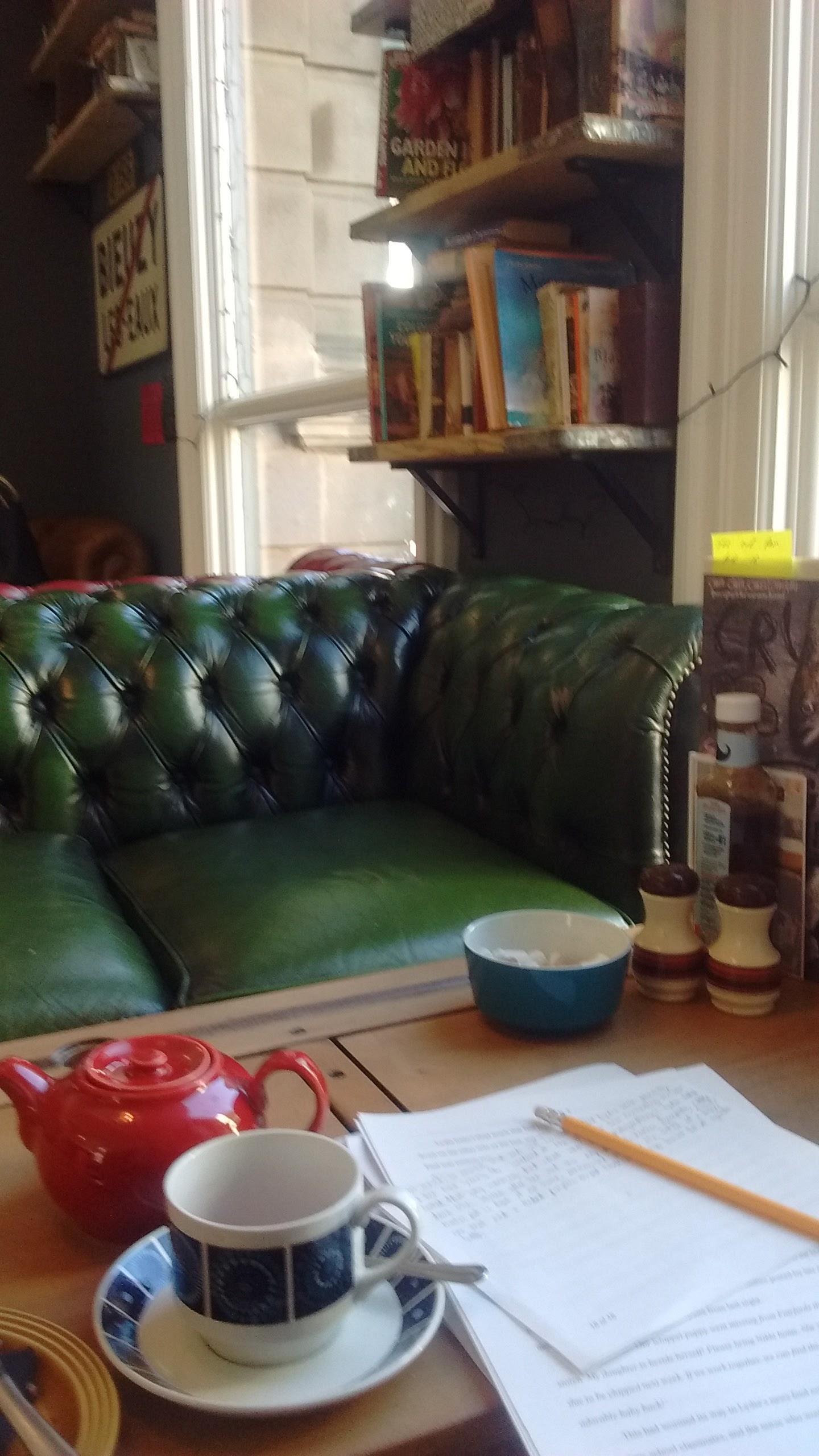
Bank Cafe, Dursley
Preferably, I’ll be working relentlessly while sitting on a comfy couch scoffing posh cups of mint tea and the occasional brownie, such as here in Dursley’s Bank Cafe.

There have been plenty of rejections. I will need to work relentlessly, to read and improve and network. I’m fortunate to have support from my extremely discerning brother—my number one reader—plus a warm and talented local writers group, loads of inspiring connections on Twitter, and a husband who knows how to set up websites.

And of course, I have my beloved characters to motivate me. For example, Charlie’s expression of my general philosophy, in The Wrong Ten Seconds: ‘Suffering adds a whole new depth to beauty.’

And the words of Helen’s brother in Artefacts: ‘Sure, we all make our own beds. But we don’t have to lie there forever! If we don’t like the bed we’ve made, we can jump on it. We can throw the covers off and tear up the sheets!’

The possibilities are endless. I just have to keep my eyes and ears open, to gather bits of string until I find myself entangled in the next project. What threads will you be pursuing in the new year?

GCSE Curriculum: Is It Literature?

This Week’s Bit of String: A Student’s Holiday Mix-Up

‘Miss, aren’t you excited about Christmas? Remember, Jesus died then!’

It was one of those teaching moments when you need Rewind and Slow Down buttons. ‘You mean He died just before Easter,’ I said.

‘No, He was born at Easter; that’s why there’s eggs everywhere, and baby animals. We celebrate Him getting killed at Christmas, by hanging stuff on trees.’

My student, in his first GCSE year at the time, had misinterpreted these symbols and traditions. But he legitimised it with evidence.

The real reason dinosaurs went extinct...
There’s a sign like this in our school library.

These days we hear of fake news, false equivalency, and other such ‘post-truth’ terms. Dangerous as those are in the political realm, the literary world has operated on a somewhat post-truth basis for some time—with the essential caveat that you cite passages to support your claims.

Evidence-gathering and interpretation are essential skills we get from studying literature. Interpreting characters’ motives, which builds empathy and social skills; plus interpreting the culture and time period the author belongs to.

In the UK, Year 10 and 11 students (aged 14-16) must earn a General Certificate of Secondary Education in Literature. The national exam board offers a limited range of literary works for students to be tested on: one of six selected Shakespeare plays, one of seven nineteenth century novels, one of twelve dramas or novels written since 1914 (by British authors only), and one themed ‘cluster’ of fifteen poems. Adolescents spend two years studying these four works, and then take the exam.

The list of literature options changed controversially two years ago, dropping American classics such as Of Mice and Men, and To Kill a Mockingbird. After the fuss kicked up over the changes, do the remaining options qualify as literature?

Interpreting Characters
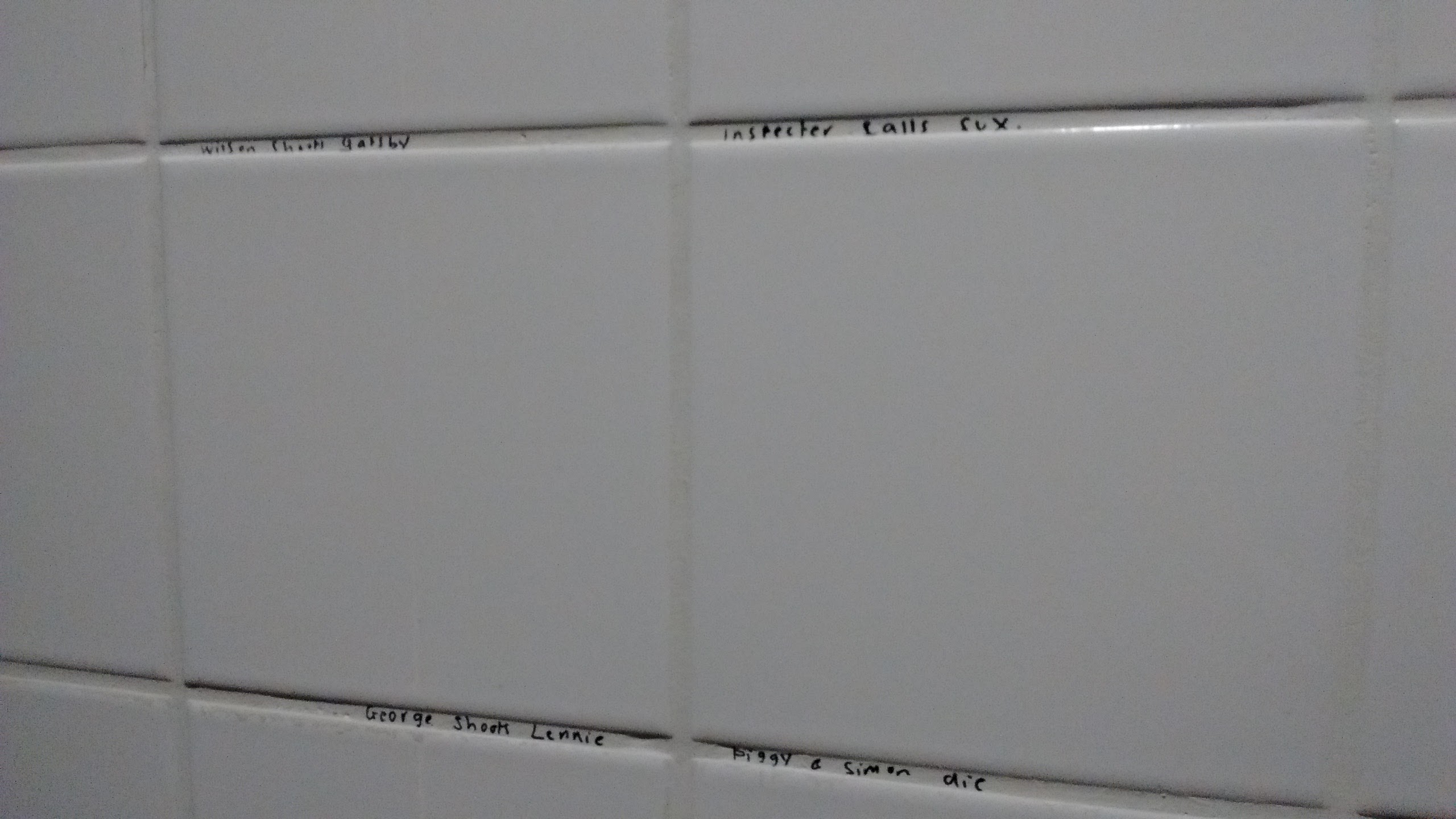
school-bathroom-graffiti-spoilers
Found in the girls’ toilet in the Art/English corridor. ‘George shoots Lennie.’ ‘Piggy and Simon die…’

To me, several of the GCSE offerings lack character depth. I haven’t read all of them, and I don’t dislike any of them. I’m just not sure they’re literature. An Inspector Calls and Blood Brothers share upper class villains, while several other books such as Animal Farm, Lord of the Flies, and Dr. Jekyll and Mr. Hyde have quite clear-cut ones as well. Scrooge and Mr. Darcy undergo transformations, but their paths are quite obvious. There’s not a lot of mystery on why they change; students need do no serious detective work to examine it.

The most interesting characters are probably the plethora of bystanders and enablers in these tales: Mr. Bennett neither humouring nor challenging his wife’s ridiculous behaviour and Mrs. Lintott apparently looking the other way regarding her beloved co-worker’s paedophilic tendencies; the animal subjects of Animal Farm and the other boys on the Lord of the Flies Island.

Probing the motives of those who get caught in the action and end up almost unwittingly serving as catalysts is particularly relevant today, as far-right factions take hold in more governments. What drives a Macbeth and a Dr. Frankenstein? Let’s hope the exam board will encourage that sort of discussion.

Interpreting Culture and History

I don’t think Americans are going to suffer for no longer being represented in the GCSE curriculum; we’re not exactly a silent, repressed minority. The requirements for modern literature include stories by second-generation immigrants, and some about immigrants, too, plus Curious Incident, about a boy on the autism spectrum. And there are plenty of plots that highlight (sometimes glaringly, as in the aforementioned Inspector Calls and Blood Brothers) issues surrounding class and socioeconomic status.

It’s a decent start. Each one has its own argument to pick with the world, as I previously noted Salmon Rushdie said books must do. Each one attempts to harrow us a little bit, with various degrees of effectiveness.

books-fight
Spotted in an alley in Lewes. That’s right: books fight.

Teacher Tom Payne, writing in The Telegraph (which also, being The Telegraph, gave Conservative then-Minister of Education an opportunity to defend the changes in literature choices), raised this concern: ‘does this [rule that post-1914 literature studied must originate from the British Isles] mean that the question of Britain and its former empire has to be examined from the perspective of these islands? After all, much of the best literature on the subject comes from the lands Britain colonised: the Empire writes back.’
This is a good point. The removal of OMAM and TKAM disappointed me because I’d seen white students infatuated with the ‘n-word.’ Often, their perspectives matured after reading Of Mice and Men, as they realised the actual conditions from which the word derived its power; the threat and malice behind it. It’s important to keep those issues present in the literature we teach adolescents, because recognising others’ suffering, often at the hands of our own governments and even at benefit to ourselves, is an essential argument to keep putting before the world. And as fake news proliferates, the classics set a standard for us that’s not easily misinterpreted.

Let There Be Dark

This week’s bit of string: Fourteenth century ploughing techniques

Stories are like a box of chocolates; some of us can’t resist the dark ones. I don’t mean dark as in using horror elements, but rather the darker aspects of real life, from brutal struggles and current events.

I sometimes fear that writing ‘dark’ stories may put off readers who seek literary escapism. How do we justify putting serious issues into our work?

Dark stories need tough heroes/heroines to blaze through them. After all, fiction is only as sad as its characters, just as life is only as sad as we feel.

Utilising Juxtaposition

There are so many elements to a story: plot, setting, characters, tone, dialogue… And there can be different degrees of darkness to each element. For example, Catch-22 has a horrific wartime plot, but the tone is humourous. Cruel deeds may unfold against a bright summer setting, as in L’Etranger (one of the bleakest books I’ve ever read).

We don’t use these contrasts to dilute the message. Rather, the idea is to illuminate and emphasise it. Interweaving tragedy with comedy can sharpen it with the shock of the unexpected.

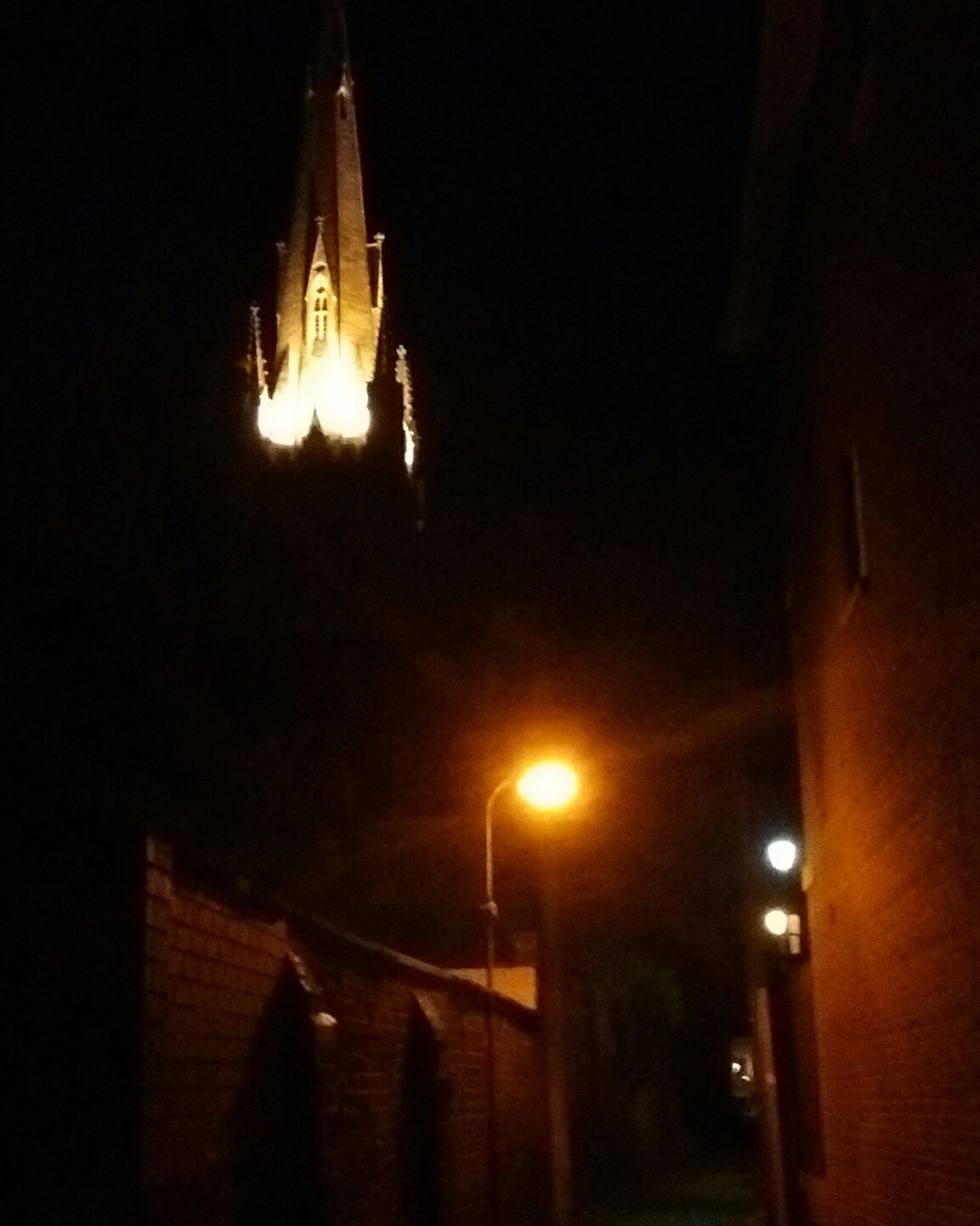
Church steeple glowing at the end of a dark alley
I don’t think this church steeple would have looked nearly as impressive if I hadn’t approached it through an abandoned dark alley.

We can create characters that suffer terribly, but perhaps they have a sense of humour about it. We all know people like that in real life.

My first published story, ‘The Meek Inherit,’ portrayed a small snapshot of Haiti’s devastating 2010 earthquake. But I used a fiercely imaginative, independent Haitian girl’s point of view, which imbued it with a sense of hope. Through her, I could bring attention to Haiti’s misfortunes, but also to the resourcefulness of its people. ‘How dull reading would be,’ Robert Burdock commented in his review, ‘if every story had a Disney ending.’

Instigating Change

After I read my story The Apocalypse Alphabet at Stroud Short Stories’ event recently, a couple of very talented writers spoke to me afterwards and described the story as harrowing. I began to apologise, but they said, ‘No, no, it’s important to be harrowed sometimes. If that’s a word!’

Harrowed is a word, as it turns out. The word harrow comes from a medieval Dutch word for rake, and a harrow, thusly, is a spiky tool that pulverises soil before planting. A painful process, no doubt—which then contributes to yielding useful crops.

Good fiction has the power to shake us up, jolt us awake, and change our habits. I can think of two books I’ve read in recent years that have altered my thought patterns. Marina Lewycka’s novel Two Caravans honestly and wittily brings attention to the plight of migrant workers in the UK, including some working under dreadful conditions at a chicken packaging plant. Since reading this novel, I only use free-range chicken products, because it made me realise: companies that mistreat animals for profit will most likely mistreat human workers, as well.

The second book was James Baldwin’s Go Tell It On the Mountain. This tormented, semi-autobiographical book about an adolescent boy desperate to win his religious father’s approval honed my awareness about the legacy of slavery for generation after generation of African Americans. I was struck by the fact that Baldwin’s grandmother had been a slave, and her first children had been taken from her and sold. His writing made me consider the devastating impact this would have on a person’s ability to love and form familial bonds later on—and this would then impact her children, and their children, and so forth.

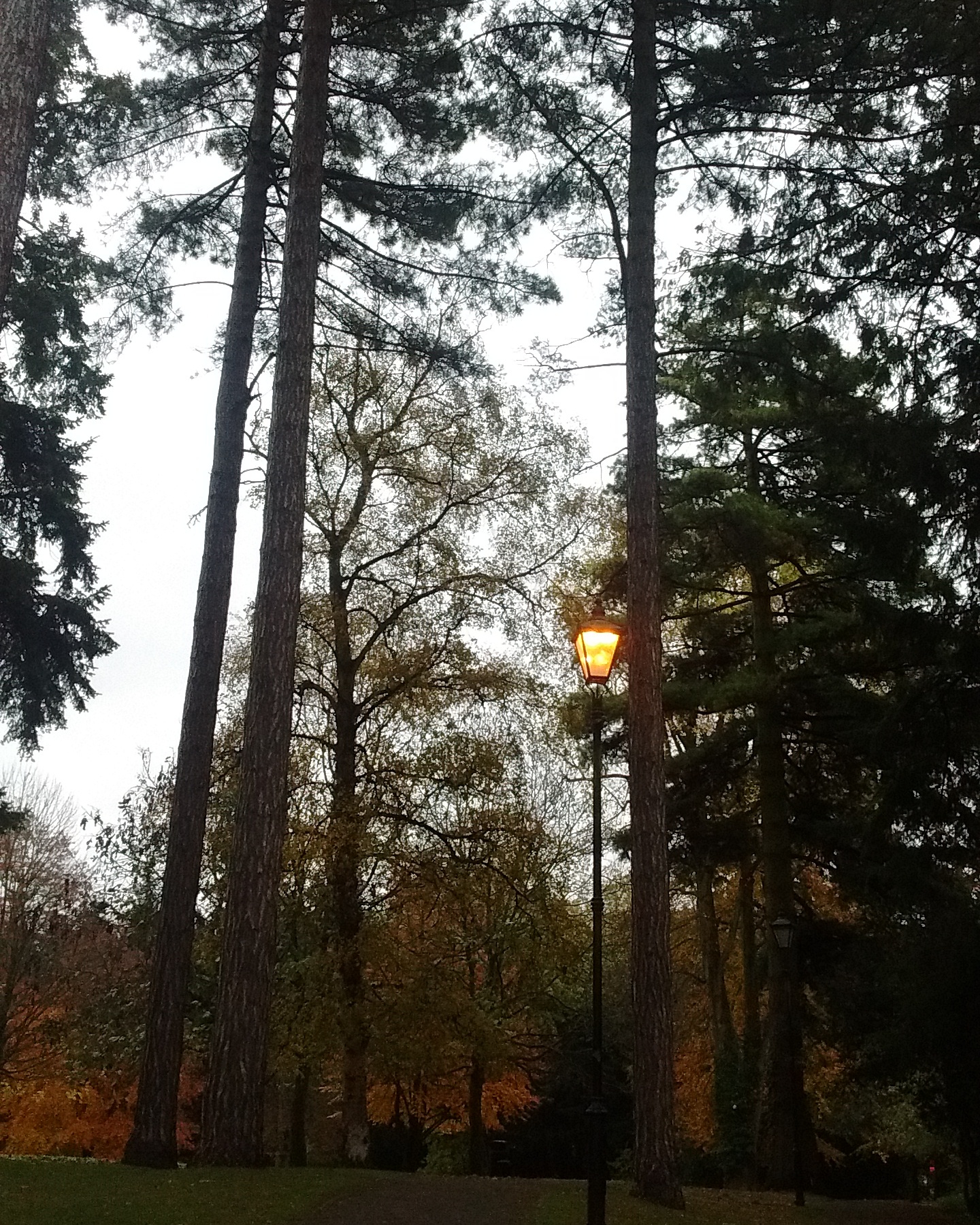
Lamppost illuminated in wooded park
Let there be dark, that the light may show up against it. Stratford Park, Stroud

It’s not easy to be shown the dark underbelly of the bloated, overfed privilege some of us enjoy. But I believe we can learn from it. And fiction is particularly placed to do that, because it opens up our imaginations. Imagination doesn’t merely lead to escapism, it can lead to empathy as well, which as I’ve previously discussed, is the key to changing the world.

So, what books have harrowed you to the point of growing new crops, so to speak? How much dark reality do you find acceptable in a story?  Personally, I’m a realist. I like any happy endings to come out of a recognisable version of the world. I love Margaret Atwood’s novel The Blind Assassin, in which a man tells his mistress a tale with various dark twists involving slavery and sacrifice, but sets it against a dazzling background of an ancient city on a distant planet.

His lover whispers, ‘”Why are you telling me such a sad story?”’

‘”I tell you the stories I’m good at,” he says. “Also the ones you’ll believe. You wouldn’t believe sweet nothings, would you?”’