Filling Spaces

This Week’s Bit of String: Dragons and evacuees and musicals, oh my…

Confession the First: In second grade I had to write a complete story for school, and I sort of stole it from a computer game. I didn’t know how to invent whole new ideas, and my family had been working through Sierra Entertainment’s King’s Quest games 1 and 2. They were monochromatic with blippy music, but loads of fun. I couldn’t get them out of my mind.

In turn, the games themselves borrowed fairy tale elements, so while I felt as if I should have come up with something original, I also figured borrowing stuff was allowed.

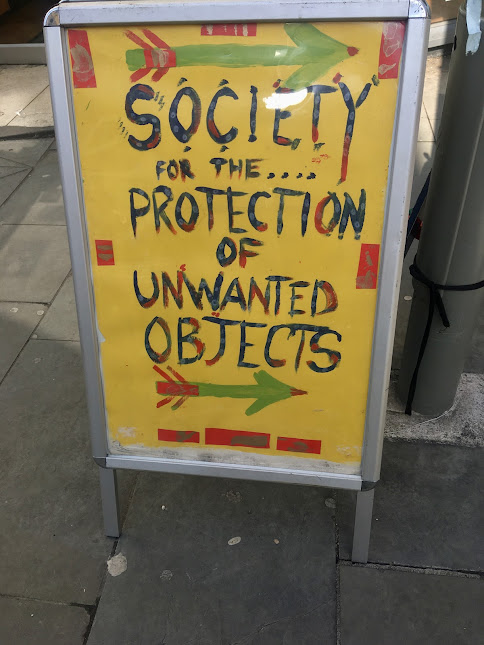
A story starts out as a bunch of objects. Why not begin with whatever ones we want?

I was already skilled at pastiche. Before even starting school, I’d assign my stuffed animals roles based on Narnia characters or von Trapp children from Sound of Music, to enact and sometimes remix my favourite tales. Less than a decade later, I devised a series of novels set during the holocaust. I had a plot but didn’t know enough people to inform strong characterisations (particularly of the male variety; middle school does not offer a rich seam of girl-boy friendships).

So, once again, I borrowed. I had characters based on Uncle Tom’s Cabin, Anne McCaffrey’s Dragonriders of Pern, and other books I liked. I’ve mentioned this before. They weren’t pristine or even recognisable copies, since I was putting them in different circumstances with different companions. But it helped me to carry on creating when I had a picture in my mind.

Just for the Moment…

In the first King’s Quest game, released in 1980, if you tried to turn your character a certain way in certain frames, or if you generally attempted something not in the programming, a message would pop up on the screen: “You can’t do that—at least not now!”

Sometimes, writing is like that. We have some of the ingredients for a full story, but are missing others. And you have to just put something in as a stopgap, in order to keep going.

At work I’m helping students prepare for exams. Every Year 11 in the country has to take the same subject exams, regardless of special needs or life circumstances. If they don’t pass at age 16 they must keep taking them each year. (I could pour my hatred of this system into several blog posts, ranging in temperature from grouchy to scathing, but I won’t trouble you with it now.) Most of my students have processing issues and biological literacy challenges that impair their ability to even understand the questions, which are set to trip students up anyway.

Still, we tell them to try. If it’s a Maths paper, put down whatever calculations you do and write something for the answer, even if it’s a guess. For the English papers, write as much as you can think of. Just put something down in those blank pages, to increase your chances of a pass.

In standard writing practice, we do something similar. A common exercise to get thoughts and words flowing is to free write for 5-15 minutes. You must keep writing the whole time, and you’re instructed, if you can’t think of something to write, to keep your pencil moving anyway. You can write “I don’t know, I don’t know, I don’t know,” or “blah blah blah,” but keep writing. Fill in the blanks.

Purloined Persons

Confession the Second: I haven’t written new fiction in almost a year. I have written hundreds of pages, scribbling about my daily life and the odd fleeting idea. I’ve done blog posts. But I haven’t created, I haven’t added building blocks to a story. Lack of time, headspace, energy, you know how it is.

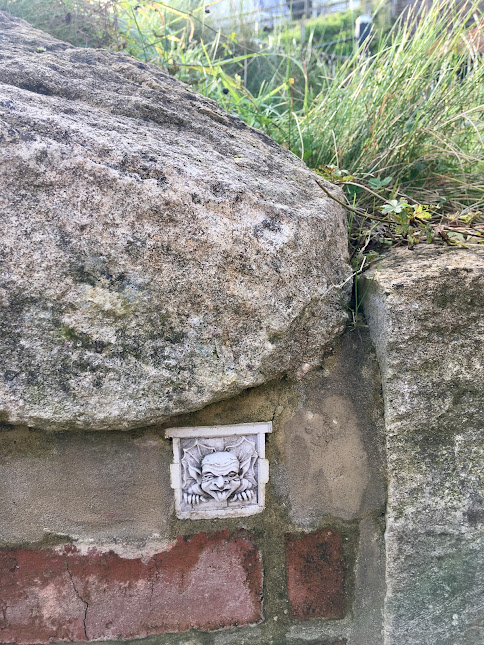
All kinds of building blocks to make this wall.

With the Easter holidays beginning, I decided to give it a go. After all, the longer you wait to do something, the more you believe you’re doomed to fail. Have you found that?

I unearthed a pretty decent story opening. I don’t entirely know what’s meant to happen in it. I’ve not been able to pull advances out of thin air. Why not borrow something, then? What if I take someone I know a little bit about, unpick the thread of a distinguishing characteristic or background detail, and then weave those into some gaps in my story?

It sounds kind of ruthless. Callous, perhaps, to borrow a person’s attributes. I don’t usually consciously do this. But sometimes you just have to fill in the blanks, and once you add to the ingredients you’ve already got, it’s all going to change anyway.

Sometimes a song or a picture will unlock a key element we need for our work. Other times we need a stronger nudge. Having come up with this plan, I managed to write 700 new words in just an hour and a half, even while frequently running off to check on dinner cooking. It’s still my own story, I just needed a bridge from reality into my long-unaccessed imagination. Already, now she’s got some words behind her, the character is finding her voice to tell me all sorts of things distinguishing her from her inspiration. And a story gets reworked so many times, characters evolve drastically.

What tricks do you have for filling gaps? Have there been things you loved so much, they may have shown up in your work, one way or another?

Illuminating Literary Women

This Week’s Bit of Spring: Tears of a teenaged girl

Student J is crying. She’s had to stay after school for personal tuition as her GCSE exams approach. Her boyfriend, whose hoodie she carries with her and cuddles at every lesson, has gone to hang out with friends who happen to be girls. J is 16 and convinced this dooms her relationship of nearly a year.

I have another 16-year-old student who sometimes comes in exhausted, saying she can’t sleep because of anxiety that her boyfriend will cheat on her like an earlier boyfriend did. The doubts circle in her mind and she can’t shake them.

We tell the girls it’s fine, look how much he likes you, of course he doesn’t want someone else. Now let’s do a bit of coursework. But truthfully, it’s not likely these relationships will last. I’m not disparaging the feelings young people have for each other, I’m just not convinced these two particular guys are that great. The girls will find new opportunities as they get older and probably, hopefully, better partners to share them with, plus other possibilities to try along the way.

Should we, instead of just placating, be stealthily building up young ladies for themselves so they’re not utterly devastated if and when they’re on their own for a bit? Pondering this made me wonder if I do that enough in my writing.

A Woman, Herself

Many of us know now about the Bechdel test for movies. Are female characters integral and autonomous enough within the plot so there are two named ones who converse about anything other than men? Think about it—this is rare.

In fact, when I considered it, it felt so rare I worried my own stories don’t pass the Bechdel test. Does it count if a novel or short story is told first-person by a female character? That way, we’re hearing her thoughts which are definitely not just going to be about men. (Sorry guys, you’re not quite that all-consumingly important.)

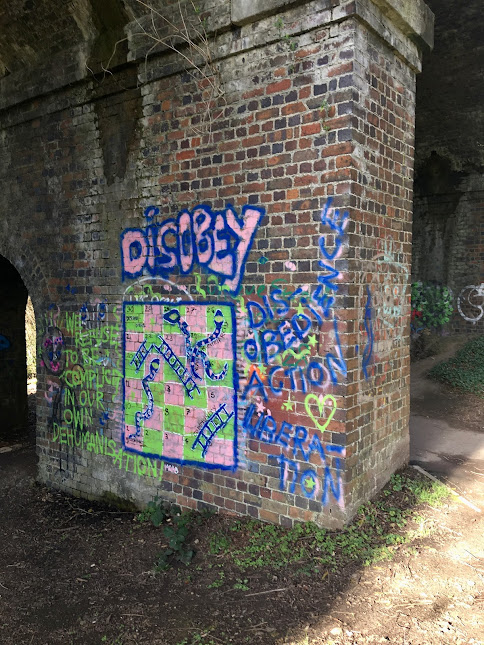
Disopedience–Action–Liberation graffiti in Stroud

Books and short stories are different from films—we can’t use the same feminism test on them. That’s why there’s the slightly more complicated but really useful Johanson analysis. Named for the critic MaryAnn Johanson, who writes on the FlickFilosopher website, it measures books or films in 4 main areas to see if they adequately portray and represent a gender which makes up half the world’s population.

Does the story grant centrality to a female character? Does she have her own arc somewhat independent of the male characters?

Is she able to influence others or is she merely influenced by them? Are female figures given authority and is that at least partially shown in a positive light?

When introducing or describing female characters, is more attention given to their physical appearance than anything else?

Are women (and characters identifying as women) defined by more than tropes or family roles?

These are really good questions, which I think my work mostly satisfies. I’ll definitely be keeping them in mind during my rewrites though, particularly since checking characters’ trajectories and making sure they actually develop as humans is always high on my list.

Let’s Talk About Relationships

Feminism isn’t Fight Club, so far as I know. We’re allowed to talk about all sorts of things and view them from a feminist angle. That includes men and our relationships with them; after all humans do crave relationships whether we want to or not. Most guys I know talk about relationships a lot. It does not diminish their identities, and nor should wanting a partnership diminish women’s individuality.

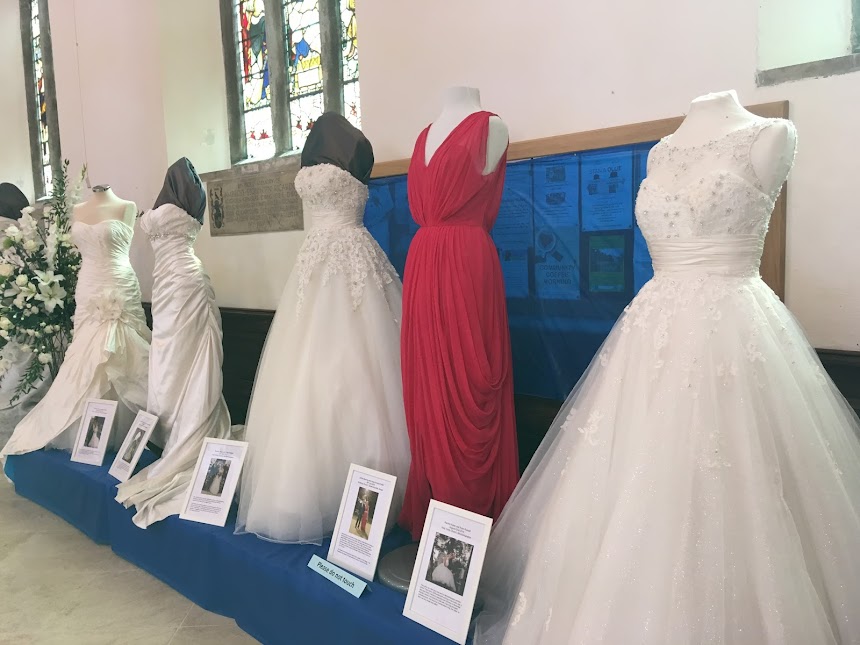
Wedding Dresses through history display at a local church. Women’s history isn’t just marriage, but marriage is part of our history.

When we meet up with friends, don’t we spend a fair bit of time discussing our families? Or discussing work. (I think work is more dehumanising than marriage, for most of us.) Being a mum is the most important part of my identity, even more so than being a writer, and I don’t think that makes me backward or less feminist. That’s what drew me to the novel I’ve lately been working on, The Gospel of Eve. In a feminist way, it gives Eve a chance to tell her side of the legend, and as she’s sometimes referred to as the first mother, it’s also an opportunity to explore various relationships.

Obviously we don’t want art or literature in which supporting and talking about men is the sole purpose of a female’s inclusion. But penalising books about relationships would affect a lot of work, by female and male writers, and beloved by readers of all kinds.

If we discouraged the young people in our care from talking about their relationships because it’s unenlightened, we’d shut ourselves out of something really important. We would be unable to support them when they might need help. As educators, role models, guardians, and writers, we want to explore all things, from relationships to our core individual selves.

For further reading on feminism in literature, Roxane Gay wrote an excellent essay on it in Dissent Magazine. Here’s her guiding definition: “A feminist novel illuminates some aspect of the female condition and/ or offers some kind of imperative for change and/ or makes a bold or unapologetic political statement in the best interests of women.”

What literature has illuminated something for you? What bold statements have you found inspiring, and do you have thoughts on creating your own?

Book Review: The Shadows We Cast by Sarah Tinsley

Blazing a trail for literary women to get angry

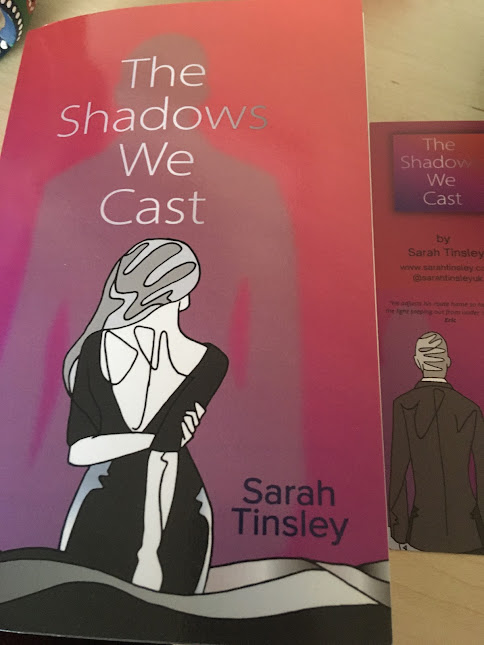
New year, new literature: after an array of great reads in 2021, I kicked off 2022 with Sarah Tinsley’s debut novel The Shadows We Cast, available from SLR Publishing. This book made me realise how many frontiers are still available for literature to explore. Unflinching but nuanced, this dual narrative of a sexual assault feels powerful enough to start changing the world.

Sarah puts the content warning right in the blurb on the back of the brilliantly designed book jacket. Here’s what it says:

What if you couldn’t recognise the violence in others? Or in yourself?
Nina refuses to accept the role of passive victim after being sexually assaulted. She becomes obsessed with an online vendetta that risks her job, her friendships, and her sanity.
Eric thinks, if anything, he’s too nice. But when he takes advantage of a stranger he is forced to confront the kind of man he really is.
The Shadows We Cast is a dark novel about consent and control that unsettles ideas about victims and villains.

A fast-paced read with deeply drawn characters

Sarah is a friend of mine and has helped me a great deal with my own writing. (She can help with yours, too–check out her wonderful workshops here.) I was excited when she announced her book deal and what The Shadows We Cast is about, knowing she would give it deep, honest treatment. But I was a little scared too. Because of previous experiences, I find it hard to read about sexual assault. Nightmares come more readily, and I feel more exposed while paradoxically the world and my current life seem more distant from me.

Actually, it’s like this line from page 9 of Sarah’s novel. After being attacked the protagonist, Nina, experiences “dreams that made her feel blunt and smudged. She feels like an echo.”

This book doesn’t build up to the rape. As Sarah herself noted during her book launch, too often rape is used as a plot twist, or maybe a dramatic reveal in someone’s backstory. The Shadows We Cast has twists and wields dramatic irony deftly, but it’s very honest about sexual assault. That bit’s already happened. The whole book deals with the gritty aftermath—not just the aftermath for Nina the victim, but also for Eric, her assailant.

And here’s what I found really scary. While taking Nina through the utterly altered landscape of her life following this trauma, Sarah allowed her to get really angry, and to act on that anger.

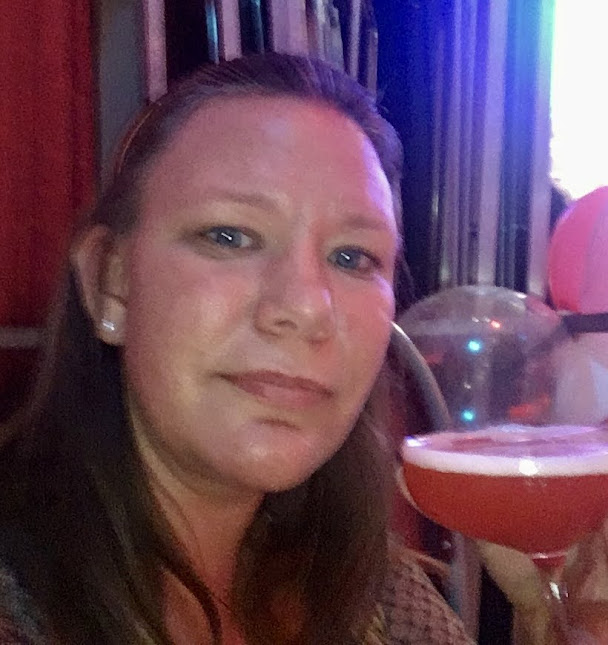
Sarah invited us to bring cocktails for the virtual book launch, because as she rightly pointed out, honesty even about dark subjects deserves celebration.

How often, in literature, mythology, or even in real life do we allow women to do angry things? From Clytemestra to The Taming of the Shrew to Mrs. Rochester in her attic, no matter what befalls them women are meant to do no harm. The character arc of an angry woman will be that she learns to forgive; she’ll be subdued by love or she’ll face drastic punishment as the villain. Yet in this novel, Nina’s anger is quite powerful and drives her to be truly destructive.

It’s a bit worrying that reading about Nina’s rage disturbed me more than the unflinching catalogue of the injuries she sustained during the attack, or the blurred lines (see what I did there?) in Eric’s mind as he considers what he’s done. This aversion to anger must be a societal effect on me rather than just a personal issue, and now I wonder: have I been depriving my own characters, particularly the female ones, of the right to rage? Is our world ready to acknowledge this now?

I did some research after reading through The Shadows We Cast. It’s a real page-turner, and the ending was quite satisfying. I found an interview about angry women in Greek mythology, the differences between the domestic and political spheres. Thinking about Shakespeare’s heroines, I read this article about the newfound popularity of Measure for Measure, and to top it all off here’s a reading list featuring angry women, because after all this time, why not?

Of course, the reading list was produced before Sarah launched The Shadows We Cast. I definitely recommend checking that one out first, and you can purchase it here. Plus, you won’t want to miss reading more about Sarah and her other work on her site. Please let me know what you think, and whether you have tips on allowing characters to follow their rage. I might need a few of those!

2021 Reading Round-Up

This wasn’t my most prodigious reading year, but I’m incredibly grateful for the books I did get to read. There were some long-anticipated hits, and some delightful surprises. In my top ten alone, there’s quite a range from comics to inspiration to memoir with of course plenty of forays into fiction.

As always, I’m including a favourite quote from each book. That’s the best bit! Previous years’ top ten lists are here, here, here, and here.

Things I Don’t Want to Know by Deborah Levy

This is a quick read, meandering through episodes of Levy’s writing life. From the riveting opening sentence through travels in Majorca and flashbacks to Levy’s childhood in apartheid South Africa, I was engrossed in her reflections. As she crosses geographical borders, she also investigates the borders between secrecy and sharing. How deeply can women writers afford to feel?

I read The Midnight Library while visiting London after Christmas

“Smiling was a way of keeping people out of your head even though you’d opened your head when you parted your lips.”

The Midnight Library by Matt Haig

An exploration of the multiverse that can result from a single life, Haig’s popular novel is like having someone read you a choose-your-own adventure book. The protagonist gets to pick different volumes off the shelves and read herself into alternate lives. It culminates with satisfying vibes of “Merry Christmas, you beautiful old broken down Building and Loan!”

“She had shrunk for him, but he still hadn’t found the space he needed.”

Solutions and Other Problems by Allie Brosh

Another volume of her irreverent, candid, hand-illustrated memoir. My whole family loves Brosh’s work. I laughed hysterically reading about how she raided her neighbour’s house as a child, and then later in the book I cried at her struggles. She champions her uniqueness while also being incredibly relatable.

“Because that’s intimacy, Buckaroos. Somebody who understands exactly how weird you are, and you understand how weird they are, and you’re sort of in a mutually beneficial hostage situation.”

Brick Lane by Monica Ali

One sister stays in Bangladesh and tries to earn her living in a garment factory and then as a household servant, while the other comes to London as a Muslim bride, speaking no English. Multifaceted characters, perfect descriptions, a plot spanning two continents and volatile periods in recent history.

Finished Brick Lane while headed north to the Lakes District in the summer.

“Outside, mist bearded the lampposts and a gang of pigeons turned weary circles on the grass like prisoners in an exercise yard.”

The Art of Possibility by Rosamund Stone Zander and Benjamin Zander

This is a pivotal read for shaking up your routine, challenging yourself, and making the most of life. It helps you believe in the positives—not just in yourself, but in others. I loved the “Giving an A” chapter, promising students an A in a college course provided they write a detailed letter at the start on what they’ll do to earn it, and then follow through.

“It is only when we make mistakes in performance that we can really begin to notice what needs attention. In fact, I actively train my [music] students that when they make a mistake, they are to lift their arms in the air, smile, and say, ‘How fascinating!’ I recommend that everyone do this.”

Such a Fun Age by Kiley Reid

An award-winning debut novel tackling race and class, and having to grow up. I loved the depictions of friendships, and child-rearing. The main characters are a baby-sitter who loves her charge so much it brought tears to my eyes, and a mum who is still not comfortable enough in her own skin to genuinely care for a pre-schooler who may have the same insecurities.

“‘You get real fired up about what happened that night in Market Depot. But I don’t need you to be mad that it happened. I need you to be mad that it just, like… happens.’”

The Invention of Wings by Sue Monk Kidd

This is also a dual narrative about race and class, but it’s set in the American South before the Civil War and Emancipation. The enslaved characters try to keep their culture alive and their family bonds unbroken. I read it fearing for their safety, but also admiring the spirit of the main character, Handful.

“You come from your mauma, you sleep in the bed with her till you’re near twenty years grown, and you still don’t know what haunches in the dark corners of her.”

Elinor Oliphant is Completely Fine by Gail Honeyman

A mystery, almost a thriller, as well as a fictional journey of self-discovery. The narrative voice is so compelling, you feel for her and want to protect her even as she self-sabotages her quest for companionship by being harsh with those around her. It’s uplifting to read about Elinor coming to terms with not being completely fine.

“These days, loneliness is the new cancer—a shameful, embarrassing thing, brought upon yourself in some obscure way. A fearful, incurable thing so horrifying you dare not mention it; other people don’t want to hear the word spoken aloud for fear that they might too be afflicted, or that it might tempt fate into visiting a similar horror upon them.”

Springtime back garden fun with these floofs, reading Brown Baby.

Brown Baby by Nikesh Shukla

Reading this memoir is like spending a day with your best friend. I really wanted to turn up on Shukla’s doorstep and ask to go walking together or something. This is a memoir about the sacrifices and joys of parenting, about raising a small person of colour in an unwelcoming world, about grief and making connections with the family you grew up with. He puts everything in it really, and writes with such warmth and humour.

“If you sleep when the baby sleeps, you have effectively given up. You live by their routine. You are pandering to their tyranny. You’re never sleeping longer than an hour anymore. And you’re wearing dirty pants.”

The Dig Street Festival by Chris Walsh

This hilarious and lovely novel comes from independent publisher Louise Walters Books, and I will be grateful to Twitter forever because without it I wouldn’t have heard about Walsh’s book. Very British and quirky, it takes an endearing, well-meaning protagonist with a Dostoevsky-ish inner monologue through Kafkaesque plot twists with a Dickensian cast of characters. Honestly, it’s just mad fun; please give it some love.

The trouble was, our minds were hard-wired to find patterns in any thing, and to lock into them like meaning-seeking missiles. Not only would we hungrily identify patterns, we would immediately adopt them, fatten them up, farm them, breed and multiply them.”

If you’ve already discovered any of these stories, let’s talk! If you haven’t read them before but decide to give one or two a try, I hope you just love them.

Language Lessons

This Week’s Bit of String: Water, chipper, calm, them.

“Miss, where are you from? America—I knew it! Do you know how to shoot guns? Say something, say ‘water.’”

I’ve changed jobs recently, emerged from a spreadsheet jungle and opted to be pelted by howls of “Miss! Miss!” as a secondary school Teaching Assistant again. Negotiating crowds of teenagers is a big change after 19 months working from home. Seeing colleagues deliver clear, targeted lessons and witnessing new provisions to nurture students’ mental health makes me feel better about the world.

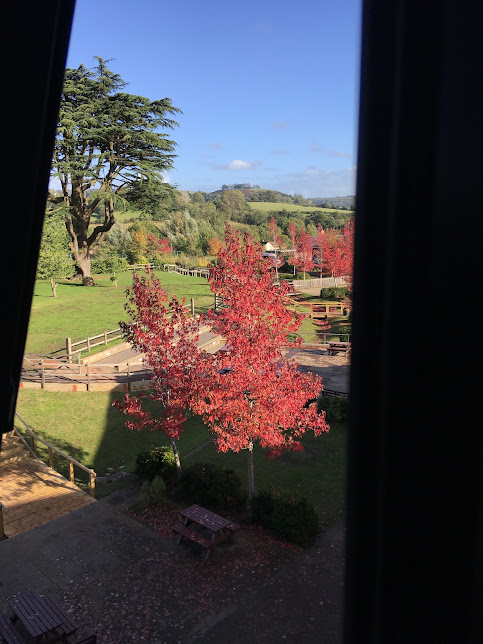
This view though… Looking out the wide open window from the TA offices

I worked at the same large local comprehensive school more than five years ago. This is a whole new group of students, slightly less mature than I remember their earlier cohorts being, because obviously they’ve had to deal with Covid disruption. Students still miss school for positive tests, teachers have long absences and our most vulnerable students can’t abide cover teachers. The windows are all open as the temperatures dip into the single digits (Celsius) so throughout the lessons we burrow into coats and scarves; a Year 11 girl shares her fuzzy white gloves so her friend can wear one while she wears the other.

Slang has evolved since I was last working with young adults. They still use “safe” and “wicked.” But there’s also “chipper” for when they want you to think they’ve understood something: “Nah, Miss, I’m chipper, I’ll start working in a minute.” And “calm” to describe someone they like. Maybe it’s just that they know they can get away with things around a “calm” teacher, but I suspect there are other ways they feel safer with him or her, too.

It makes sense that after the last few years “calm” might be one of the highest terms of esteem used by young people. And that “sick” has gone out of fashion.

Reuniting

Supporting in different lessons means I get to learn, too. In a GCSE class about Maths vocabulary, the teacher shared that “Algebra” comes from an Arabic term meaning “reunion of broken parts.” I love hearing that stuff. The kids were busy sharpening rulers under the table or doodling or exchanging gloves or peeling labels off glue sticks, but with gentle prompting they got a few notes down, and the disparate parts came together a little.

The pandemic seems to have given my school cover to broaden its aims from academic achievement to include more nurturing and tolerance. While the government was forced to acknowledge that students couldn’t be expected to pass the same rigorous exams due to lockdown disruptions, there was more leave to consider their mental state. Consequently, more students have Time Out options, to spend a few minutes cooling down in an alternative classroom designed for that purpose. When I last worked at school, students would get an official warning and be one step closer to detention if they didn’t have a pen. Now, all teachers have equipment to loan.

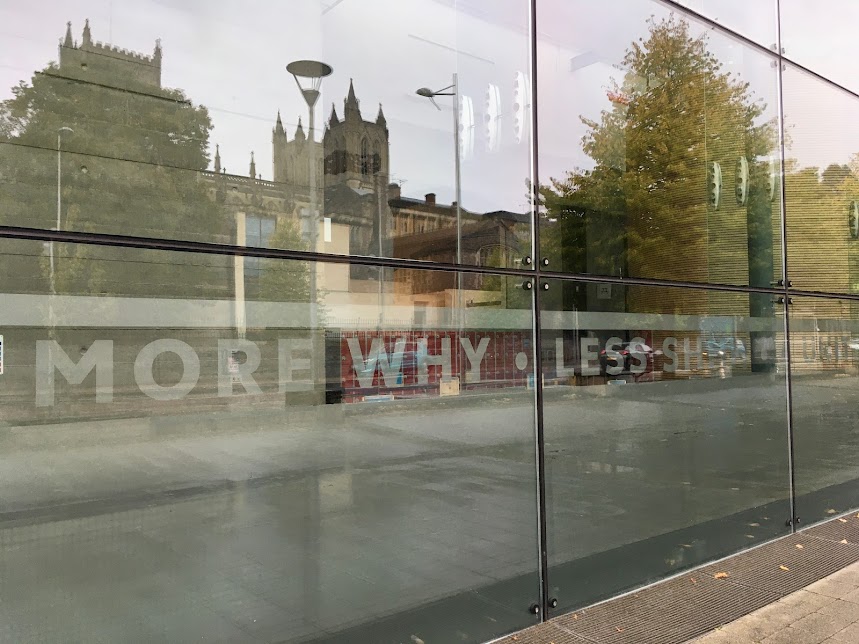
“More why, less shhh.” I love this slogan from the We the Curious museum in Bristol.

The fact that I’m American serves a similar purpose. My slight accent piques their curiosity, forces them to acknowledge I’m here, lets them make fun of my pronunciation and feel more comfortable. “Water” is a giveaway for an American accent. I can try to make the T more clipped, less like a D, but it sounds ridiculous and forced. When I first emigrated our street was called Water Lane and my accent embarrassed me every time I told my address to local people. I oblige the kids when they want to hear it, though. They like to feel superior in something, even if I have lived on this Small Island longer than they’ve been alive.

I have a stash of writing utensils too, of course. Lessons start much better when I can quietly check with a student that they have the equipment they need and lend what’s necessary, rather than them instantly getting into trouble.

“I bet you still say ‘water’ funny.”

“I’m afraid I haven’t quite got rid of all my Americanisms.”

“Oh, that’s okay, Miss.”

So they get to play the part of being generous and hospitable, too.

Retraining

One successful result of the school’s efforts to support well-being may be the diversity accepted within the student population. While it’s a rural area and not very multicultural, students support their friends of colour and Black Lives Matter. I also got to have a discussion with a Year 11 prefect about her witchcraft practice, and of course the crux of my job is to support students with various disabilities.

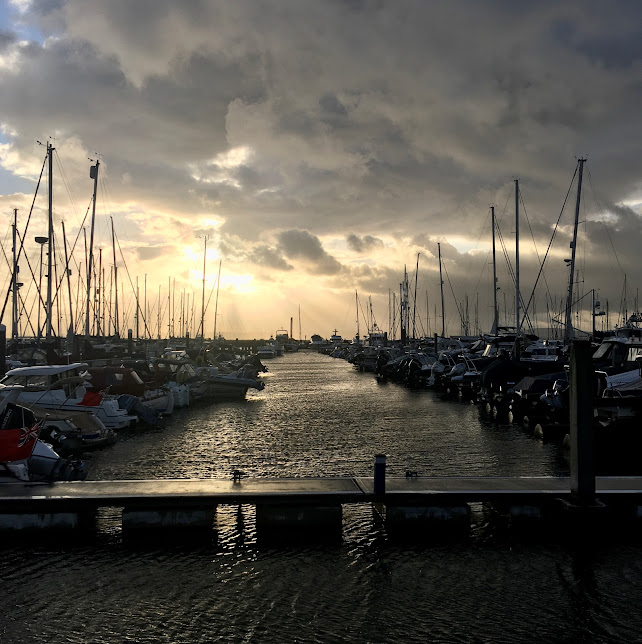
Sunrise on a new adventure. We’re not expecting fully calm seas, and that’s ok.

With a designated unisex bathroom now on site, other students are able, more and more, to inhabit more comfortable roles. Previously it was agony for certain teens to deal with bodies that were developing in an unwanted direction while their thoughts and preferences veered a different way, and everything around them reminded them how they ought to be. There’s a student in most of my Year 11 lessons whom I’ve tried to remember not to apply gendered language to, but I slip up sometimes since my ways of referring to subsets within the group are old-fashioned.

“Here you go, ladies.” I hand out the GCSE Language practice paper to the two students in the back.

“Non-binary,” corrects one, without even looking up.

“Of course. I’m so sorry, I’ll try to keep doing better.” They shrug and get on with the work. I hope that they’re always around people they can safely express their identity to. People who are, one might say, “calm.”

After all, I’m feeling more and more free to say “water” in my slightly redneck American way. That’s one word I won’t convincingly be able to fix, but I can work on a few others. Having to mind my language puts me in a much more writing-centred frame of mind than when I was dealing with billing and numbers. Have you been picking up any new lingo lately?

The Stopover

This Week’s Bit of String: Four and a half hours in Dublin

A couple metres to my right, a nun is counting a somewhat alarming quantity of 50-Euro notes under her table. A couple metres to my left, a very small girl is alternating between blowing noisy raspberries into the back of her chair, and drowning herself in a lidless juice cup. You guessed it, I’m in an airport.

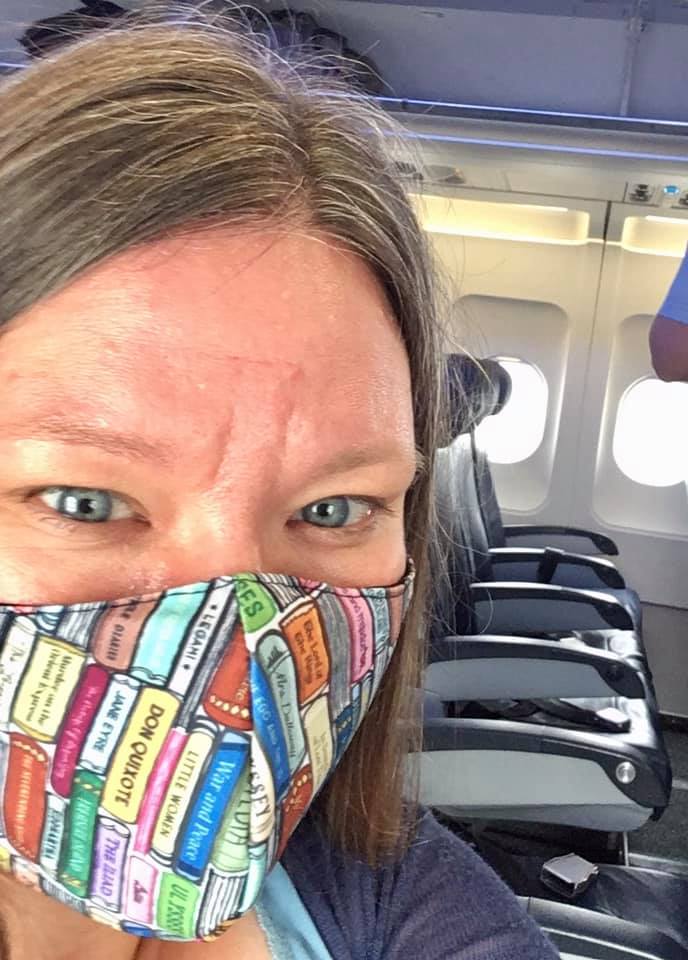
People-watching is great and all, but so is an entire row of empty seats on the first flight.

Over the years as an immigrant I’ve learned a few tricks, and one of them is to fly from our local airport, stop in Dublin, then on to America. The US has a customs and immigration point in Dublin, so during the stop, we get fully processed and then can just step out of the airport in Boston without spending more time queuing for border control after we’ve arrived. It means less time wasted, and brings us closer to home.

This time, my first flight in a long while and my first opportunity to see my family in over 2 years, the stopover is 4.5 hours. A bit on the long side. Even with going through American passport checks, I’ve got 3.75 hours left.

I don’t mind it too much because this also happens to be my first solo airline excursion in two decades. I don’t have to worry about whether anyone else is comfortable or entertained. I can hang out with a sandwich and do some first class people-watching as a third-class passenger.

Part of the Journey

he tiny, now very sticky girl at the neighbouring table has been instructed to clean up her mess and is wiping the table quite capably. Then her mum has her stand on her chair, and wrangles her into a new outfit. “Not everyone can just change their top in an airport,” the mum tells her, “but you can.”

The nun has a mobile phone pressed to her ear and I can just hear the voices sounding off to her. She needs it close to hear over Queen’s “Don’t Stop Me Now” on the airport radio. (Yes, I love that this is the song playing here while I am fleeing the country after so long.) I think it’s an audiobook the nun is listening to, and I’d love to know what it’s about.

There are no small adventures, only small adventurers.

With all this going on, it doesn’t feel like wasted time. These hours aren’t getting me closer to home, but they’re reminding me that being around people, anywhere, can be an adventure.

If the pandemic has taught us anything, it’s that we don’t have to change location to go on a journey. The last 16 months have been an adventure, wouldn’t you agree? Just trying to get groceries could be a monumental quest.

The word adventure, it turns out, doesn’t just mean to wander or travel, but also to take a chance. To “risk the loss of.” Heck, many of us don’t need to venture outside to strike up something a bit reckless. Anything we say to another person risks rejection or misinterpretation. Every seed planted, every page we poise our pen over. You never really know how it will turn out.

Taking Off

Of course, when it comes to actual travel, especially these days, there are quite big risks. As much as I want to spend time with my family, I have had to weigh the likelihood that I might carry over a virus that could hurt them. There are a lot of factors to put our minds at ease about this: the vaccine, strict testing requirements, social distancing and hand sanitiser stations all over the airport.

The lakes of home…

I look at the other people waiting around me and wonder what risks they’ve taken, how badly they want to get to their destination. Are they going home, or coming from it? Are they a bit like me and they don’t know which side of the ocean is truly home?

Every Christmas during my marathon viewing of the Extended Lord of the Rings films, I am struck by the line at the end, “You cannot always be torn in two.” But I think most of us are, and probably wouldn’t have it any other way. In our world with so many connections and crossings—how do you choose just one place, just one group of people? It is hard, it’s a painful tearing, but nonetheless both pieces are always with me in some way. Leaving my home country, I still believe, was a risk that had to be taken, as right and necessary as returning when I can.

Loving one home over another would be like doing only one writing project at a time (I know others must be able to relate to this). Or like telling me to ignore either the nun or the tiny girl. Thank you, I’m quite taken with both. So here I am, between my two places, just breathing behind my mask and relishing some non-useful time.

Resolving

This Week’s Bit of String: View to a sundown

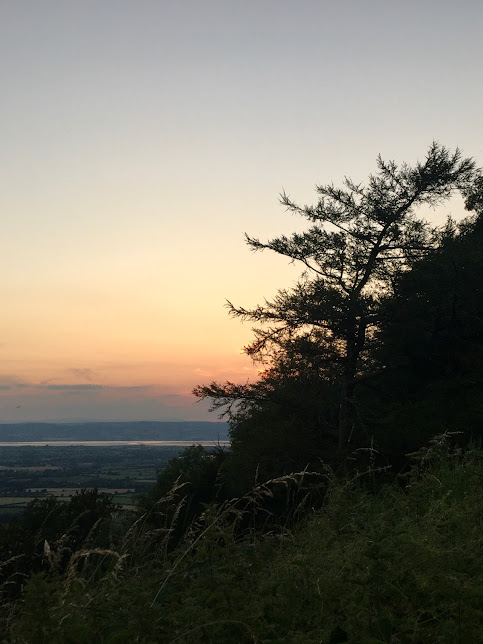
During the recent heatwave, we went out for a late evening drive, finding ourselves at a viewpoint on a local peak. The large car park was almost full. Students in pairs or trios enjoyed the views, family groups packed up disposable barbecues, friends took stock of the situation while balancing MacDonald’s cups on their car roofs.

We wandered to take in the sunset, while dragonflies patrolled the scabia and thistles, and kids laughed and the tractor haying in the pasture below turned on its lights. It was the eve before all restrictions would be eased (despite covid cases rocketing to the same levels as January) and, whether intentionally or not, people were keeping their distances.

We came here in the beginning: March 15, 2020. My husband and I went to a local film festival to see the silent movie Beggars of Life accompanied by a live bluegrass band. There were quite a few empty chairs in the theatre, as people started withdrawing from events, but we thought we’d go, try something a little different, fully knowing it might be our last night out in a long time.

After the movie, we stopped at the same viewpoint and looked at the stars filling in the gap between peak and ground. It felt precipitous.

Unfinished Business

Most people I know are worried about the timing of lockdown’s end. The delta variant of covid seems so contagious; every day we hear of more people having to isolate. The sun has not set on this pandemic.

Even if cases were way down, I think I’d still feel… anticlimactic, perhaps, about lockdown ending. Some people sorted their lives out during that time, it seems. I fear mine is in more disarray than when we started, and I can’t be the only one.

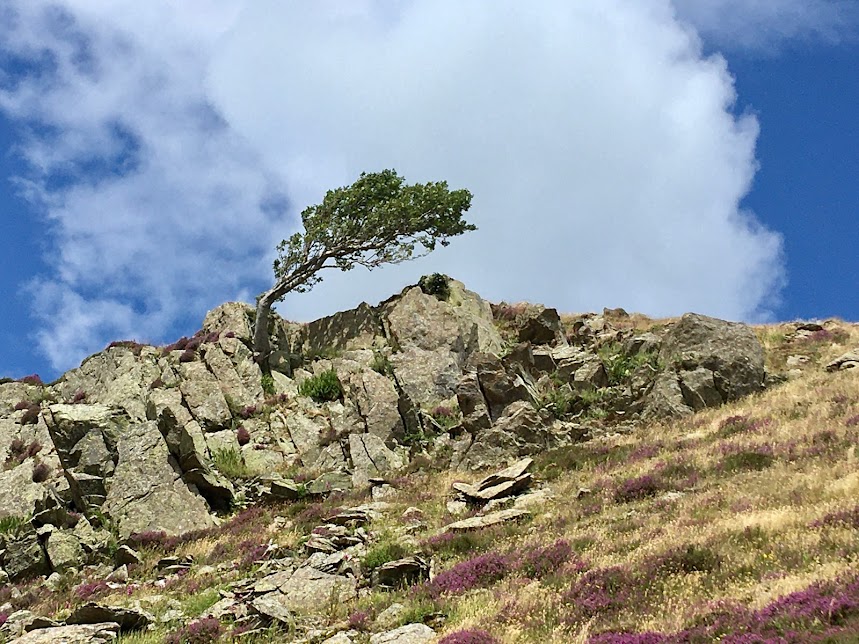
We are all this wind-shoved tree. Still standing…

My son’s first year at uni was a bit rubbish with all the restrictions; now he doesn’t know what he wants to do. Still working full-time, my husband and I didn’t accomplish any stunning DIY feats. We didn’t even have a clear-out since the charity shops and tip were closed. When the toilet and shower leaked under the floor, we peeled the laminate away revealing splintery, water-stained boards, but we couldn’t figure out what to do beyond that. Any further solutions would involve turning the house water off for a while, and we had no other place to go.

I took a lot of good walks—and also got plantar fasciitis and tennis elbow which made many of those hikes quite painful. I finished a handful of stories, and even found publications or events for a couple of them. But I haven’t had the energy or support or just the time to myself to properly tackle rewriting my novel. The loneliness of being an immigrant was more acute than ever. Maybe survival is the one thing I have achieved through lockdown.

Survival Mode

Let’s not underestimate the importance of surviving these times. And let’s not discount the monumental effort of it. When we’re spinning in a frenzy, we’re not going to make an accomplished journey. One about-face and then another don’t really equate to coming full circle.

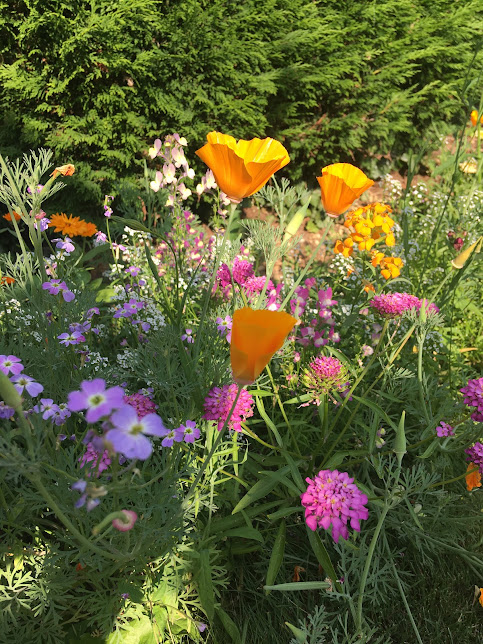
A strip of wildflower seeds in our garden has brought us as much joy as our carefully planted roses and veggies. Chaos can be ok.

Most stories are written to show character development parallel to event progression. I’m not sure real life is like that. We are constantly challenged, and sometimes it’s not until the next really big test that we might notice what we learned from the last. Getting time to process something is a myth, at least in my existence.

So we emerge, reminded that time and family are incredibly precious. I don’t really care how little I’ve written for publication in the last 16 months, I have notebooks full of daily scribbles on how my husband and son were doing and what small things we did for each other. The clutter in my house hasn’t stopped me working lots of overtime right next to it, from a corner in my dining room; the injuries I had didn’t stop me going out for my alotted local exercise.

We’ve all learned what we can push on through, despite being cut off from others. Very likely, we’ll be doing that some more in the near future. This chapter is ongoing, even if the format’s changed. There’s no resolution yet, but we have resolve to keep working toward one! How are you getting through it all?

What to Notice

This Week’s Bit of String: That ship has sailed

There’s a house I walk past on my early morning hike each day, with a round window like a porthole under the steep roof’s apex. The pane covering it boasted a stained glass sailing ship.

Only it’s not there anymore. I noticed recently, the porthole now has normal glass. Nice glass, with a whorly navel in its centre, but it’s not an adventuring ship. I did not approve this change.

During lockdown one gets attached to certain things. While unable to leave town for months on end, the sights on my limited range of local hikes became my safety network.

Wouldn’t a ship look nice in that window?

Blossoms and blackbirds, shop displays and creeping cats, the church rubbish bin with a fish symbol painted on it just in case the name and location aren’t identity enough. Footbridges and milk deliveries. The man with two huskies who wears a neon vest asking for space, and always smiles Good Morning when I give it to him. The young guy who strides down to the construction depot at the new housing estate and takes position outside the gates to aim a thermometer at the foreheads of entering labourers. The patched and re-patched bit of pavement which my son always said looks like a guitar, insisting we make suitable sound effects every time we walked over it.

So it shook me to realise a little mainstay of mine, something my gaze sought out while I hustled uphill from town, had disappeared. When did I see it last? What if the window was changed a while ago and I didn’t notice?

Missed Signals

I’m not sure if monotony is better or worse for noticing things. We might notice the slightest change, or we might have started tuning out. Even now that lockdown’s over, I use the same 3.8 mile route most mornings because I don’t have to expend energy on decisions.

Baby Georgie.

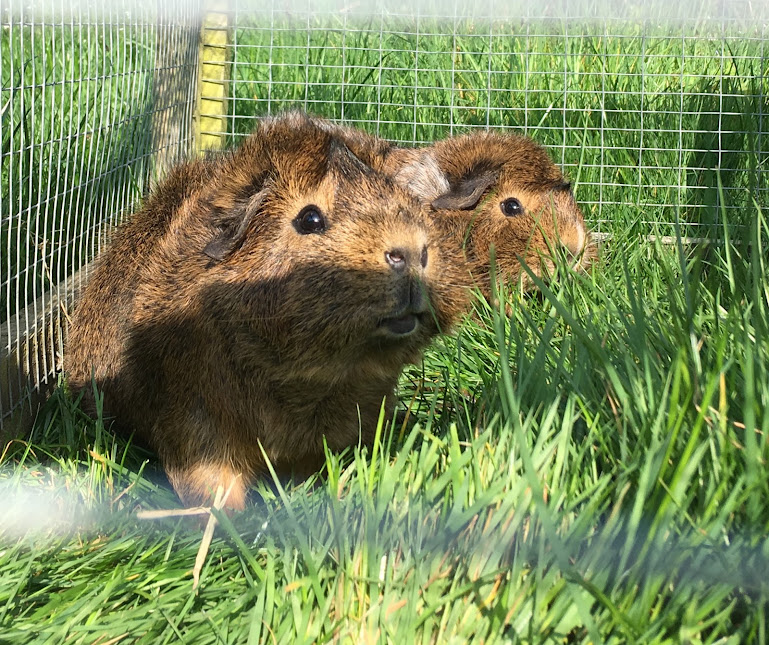
We need choices sometimes, though; to confront us into consciousness. A couple of weeks ago, one of our guinea pigs got sick, after 4.5 years with us. After multiple attempts to dropper water into him, we took him to the vet, and sadly George died there in the night. Had I noticed his discomfort too late? Should I have put him through the trauma of a vet visit earlier? You can bet we’ve been watching his brother extra carefully. I’m not sure Fred is pleased with the spotlight; he prefers food to affection.

I assume other people struggle as I do to be more present, less dulled by the daily grind. As parents we’ll always be trying to catch up with what we miss, and as writers it can be even harder to notice things, even while we’re the ones who should be super observant.

Taking Roll Call

The thing is, writers have an observing, idea-gathering mode, but also a developing mode. When we notice something that snags our interest, our body moves on but our mind is snared in what ifs, and character-building. While it’s nice to be consumed, to have that momentum, we don’t want to miss too much.

Infinite story possibilities in a rusty ship’s nail

Here’s what I’ve been reminding myself to stop and look out for, even while in the midst of plot problem-solving:

  • Multi-sensory check. Every now and then pause and concoct a quick description for each smell, sound, sight, taste and texture around you.
  • Revel in the wrong. I recently saw a typo in a Missing Person notice, describing a “balding man with a bear and glasses.” This transformed a sober paragraph about a man with facial hair to an imagined adventure with an ursine companion, and my imagination hadn’t had such fun in a long while.
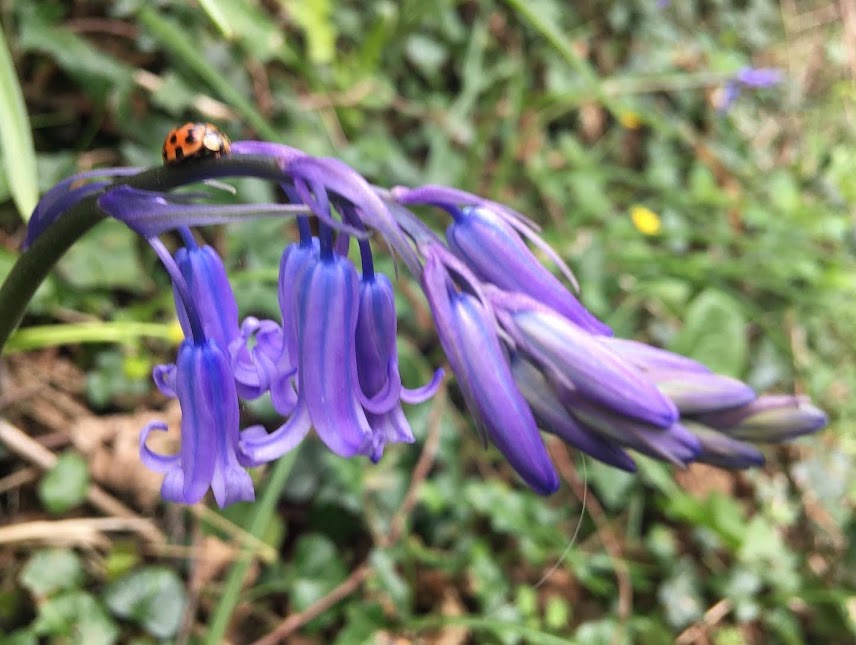
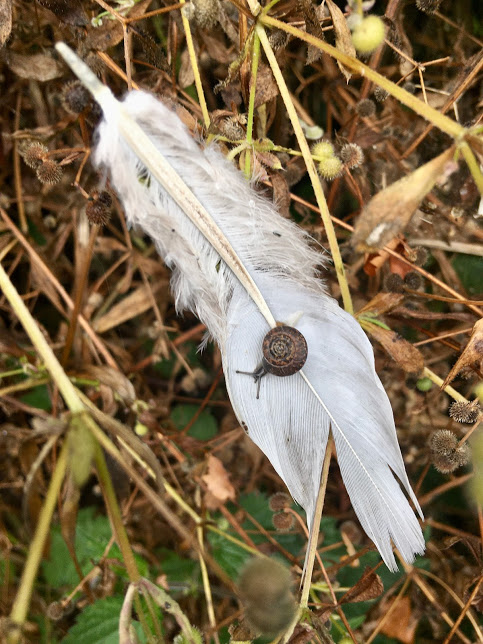
  • All creatures great and small. A ladybird straying across the work desk, snails curled around lavender stalks, their shells listing blissfully sideways, judgmental rooks and feline drama queens. It’s fun to make inferences about all their behaviours.
  • Sift through the remains. Any found object in your travels could tell a story, from a dropped shoe or stuffed animal to a grocery list. A badly repaired square of pavement, allegedly guitar-shaped, brings me happy memories of walks with my son, so truly inspiration can be anywhere.
  • Shameless use of prompts. Every day I try to come up with, for example, a sky description. Or a description of something in relation to the sky. This derives from when I used to use a sentence starter, “The sky today…” and it became habit to look out for the sky and how to portray it.
  • Keep an eye on your people. I have kept up with daily journal scribbles, primarily to leave myself reminders of thoughts and experiences shared with my family. For years I didn’t want to keep a journal, reserving any precious writing time for “real work,” pieces that might be published. Now, I’m so glad I recorded some interactions. These are the last things I’d want to miss.

What have you been noticing lately? Do you have any suggestions on how to keep observational skills sharp and make the most of the moment?

Restarting

This Week’s Bit of String: How to begin a writing day
Battle-scarred fellow traveler

Let your brain drag you out of bed.
It will have jolted you awake several times already, nervous, excited, random, clamouring to achieve release.
It’s been asking, Is this really allowed, is your partner genuinely ok with you spending a whole weekend day on writing work, will you be able to keep up with everything else, is your kid all right too (always is your kid going to be all right), am I smart enough, do I have the stamina, the wit, the imagination to get anything done?
And you’ve been telling your brain, you’ll have none of those things if it keeps waking you.
But this time you must get up, get outside, have some fresh air while there aren’t too many people for you to slalom around.
You have to feel as if you’re ready. You exercise your body to get permission to exercise your mind.
You don’t need the hoodie. No one cares if your frame is visible, if it’s gotten bulkier.
You have been working hard. You have the right to slice through space as bluntly or as sharply as you like.
The same goes for the page. You have the right to be heavy-handed in your first draft. Anything you say can only be used against you when you are ready to reveal it.
Swerve around the mud-spattered fallen geranium and poppy petals.
Nod a greeting to the other early morning travelers: determined snails and industrious blackbirds.
Indulge in the futile summoning of every cat you see, haughty after its night out.
Your legs are stretched. Your brain has been pounded into a rhythm. It has been lulled into focus.
You are prepared with snacks. Fruit and nuts, a politically incorrect tuna sandwich and some chocolate-coated pretzels.
You are an ambitious squirrel, you are a reckless, rule-flouting heathen.
You are a person of great imagination and careful planning, who has reserved fuchsia socks with penguins on them for this occasion.
The blinking cursor awaiting words on your document isn’t taunting you, it’s jumping up and down with excitement for what you’ll come out with. It adores you.
Give the page what it wants, open the cage door and pour your mind into its arms.

Back to the Projects

It’s been a while. The lockdown of 2021 was a tough one, and I haven’t had time to write for submission. After a long lapse, after constant flirtation with exhaustion, I wondered if I had the concentration for it anyway. I booked myself a writing day, using Writers HQ’s online retreat (which are wonderful and free, by the way, try them out here).

Bit rough, but the way through is visible.

There are ideas to work on. There are even plots. My goal was to finish one story, rewrite another, and edit a final one. Submissions will happen once again! It’s hard to contemplate the emotional roller coaster of submitting work when isolation has knocked you down. That was part of my issue, not to mention a dearth of submittable work, and I’m sure I wasn’t the only one. So I am building up my arsenal of stories, as well as my perseverance to once again plough through the inevitable rejections en route to some kind of success. It takes a lot of rearranging around the weekend chores and the weekday job, but I’m excited.

Daily Words

Despite my inability to write for possible publication, I have been writing every day, in my journal. Each notebook lasts 2 or 3 months, filling up with observations from my walks, reflections on current events, and details from family life. In each notebook cover I write something I want to remember for the period.

The inner jacket of the notebook I started just after Christmas says: “Small steps, long pauses, unlimited restarts are allowed.” And there did come a pause. I’m glad I told myself it was allowed. There was enough stress without beating myself up for not publishing anything.

Now I’m ready to fit in a bit of creating again. If you’re not, I hope you enjoy your break.

There’s a lot in life we can’t do over. But with writing, we can! We can stop and come back to it as many times as we like. Readjusting our balance doesn’t mean we’re not writers, any more than reworking a piece makes it less of a story. If you have to focus elsewhere for a while—let yourself. We know you’re a writer. Your work knows you’re a writer. You will meet again, in better times.

I started my latest journal a couple of weeks ago, and this time the cover has a line from an Avalanches song, “Frankie Sinatra.” It’s highly inappropriate, but I am a sucker for a catchy tune. The lyric goes, “Like Frank Sinatra bitch I do this shit my way.”

Folks, it begins.

Counting Mental Calories

This Week’s Bit of String: Full bellies, empty legs

The first time I remember eating way too much was the summer when I was 9, at a barbecue with rarely-seen, well-off relatives in Long Island. So much food we wouldn’t normally have at home, and on such a scale. My sister and I were about to start puberty, approaching the “empty leg stage” as one family friend described the ever-hungry growth spurt. But our appetites were no match for what we consumed at that barbecue. We were so full, we swore we would never eat again.

Reader, we did eat again. And speaking for myself, I have overeaten again. Sometimes, the only way to stave off despair seems to be Bournville chocolate, even though I know my heart will race and my brain will fog up.

A lot of things we think of as treats aren’t really what we need. That’s one reason I dislike the term self-care; some people apply it however and whenever they like. It’s such a vague principle. If we have an opportunity to treat ourselves, does this mean catching up with a friend or curling up for a nap? Does it mean a pint of Ben & Jerry’s or some lentil soup?

Varying Metabolism

“Self-care” wasn’t invented when I became a parent. Or maybe it was; certainly the remedies associated with it existed, but none of them were available to low-income single mothers just out of their teens. Even having self-care in our vocabulary is a privilege. Strategies ranging from socialising to yoga to massages to a decent night’s sleep are completely inaccessible for many people.

Nice smells and warm glows working from home. Gotta love multitaskable luxuries…

I often wonder how people keep going who can’t afford or schedule the things I now think of as treats. For example, what about mums from disadvantaged communities who look after kids poisoned by their drinking water while constantly campaigning to fix the problem? Aren’t they proof that I should be doing even more, not less?

I know, comparing ourselves with other people isn’t seen as healthy. It’s important to note all perspectives, though, and be aware of our privilege.

A Balanced Mental Diet

I’ve started thinking about self-care as more mental than physical, considering the mind in similar terms to the body. Perhaps mental calories are a thing. We must feed our brains in order to get motivation and inspiration. We need thoughts and stimuli from diverse sources, or we’ll suffer a deficiency. But we also need to burn off some of what we take in. If our minds get overcrowded, we struggle to function.

Views that nourish the mind

Different people will have different mental metabolisms. Some might shake things off easier than others. And at times we ourselves will need a higher mental intake or a more thorough clear-out than we’ve needed previously.

If we had mental nutritional pyramids, like the physical ones that used to appear on American cereal boxes, what would yours look like? Mine has rows for keeping up with my job and housework, family time and exercise (though physical it’s absolutely essential to my mental health). Some people are fine doing less each day. When I skip one thing, even if it’s to do something other people find necessary (like meet up with friends or stay in bed past 7), I will be too stressed, struggling to catch up on subsequent days.

Appreciating others’ artwork helps suspend the mental burden of trying to create my own.

And because there’s so much to manage on a daily basis, I have to burn off some of these brain calories, too. Daily scribbles, fresh air, reflecting on art or music or literature, make me feel mentally fitter, a bit more agile and able to cope. Life has been tough lately, so I need to experiment with what else might help.

By considering whether I need more or fewer mental calories, maybe I can tell what sort of “treatment” I need and when it’s genuinely required. It’s tricky though, isn’t it? The lack of real, in-person stimulation during the very long lockdown has skewed my mental metabolism. Tedious things like work and worry make my mind feel full, but not sated. I suspect a cognitive vitamin deficiency of some sort.

What do you think of self-care, and the idea of mental calories? Any suggestions for balancing it all out?