How to Not Give Up

This Week’s Bit of String: Blue inked sunshines

My 16-year-old student and I turn the page in her practice Maths paper to be confronted with a range of fractions. Mixed and mismatched fractions, including a negative number; this problem has everything you don’t want to see.

“This disgusts me,” she says.

I tell her we can do it, it’s not as bad as it looks, let’s take it one step at a time.

Before we begin, she draws a sunshine at the top of the page, peeking over the rim of that box you’re not supposed to write outside of on an actual exam.

When we finish, and I compliment the heck out of her efforts, she beams and sketches a smiley face, slowly adding fangs until it’s “like something out of a horror film.”

It fits in well with these fractions, then.

My student is preparing to resit her GCSE exams because she couldn’t pass the first time. As someone with processing and learning difficulties, it’s very difficult to pass the same exams everyone else has to take. She feels as if she will never get the required grades, yet she spends almost every free lesson going over past papers, reading, completing Maths exercises, and then doing more at home.

Her resilience inspires me tremendously.

Unfavourable Odds

Much of what we want doesn’t seem particularly possible, and a lot of what we must do isn’t pleasant. If we long for a publishing contract, even a competition shortlisting, so does every other writer and there are only a few available. Maybe we want a house that doesn’t smell as if the toilet is emptying under the floorboards and where black mould doesn’t grow by the bed. Maybe we have to regularly appease people who don’t want us around.
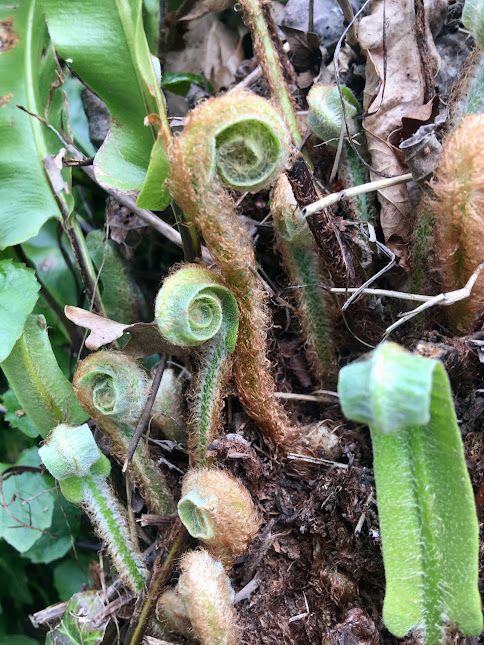
A thing doesn’t have to be complete to be wondrous

There’s no way except to persist. This isn’t news; we all have our struggles and our strategies. But inspiration can come from unlikely sources–eg from teenagers.

I like my student’s idea of putting a friendly doodle at the top of a hostile page. I print out pictures of our next camping destination and put them on the kitchen noticeboard to keep me company through yet another round of washing up. Surround yourself with small brightenings. Plants, stickers, novelty mugs. Wear jewellery from someone who likes you when you have to deal with those who, no matter how you’ve tried, really don’t.

Equally, denouncing something with a hyperbolic statement even as we get down to work on it is a valid coping mechanism. “I think this is the devil speaking,” my student says as she sounds out a word problem. If you want to know whether writers do this sort of thing, just Google “Writer synopsis memes.” (Or go here.)

Make sure there’s plenty of praise in your diet. Hope of success is the best motivator—not fear of failure. Pop into Twitter to do some of the daily writing hashtags, and thrill when people like samples of your work. Join a local writing group or an online one, such as Sarah Tinsley’s Scribbles workshops. When there’s no one around, please, at the very least speak kindly to yourself.

When to Give Up
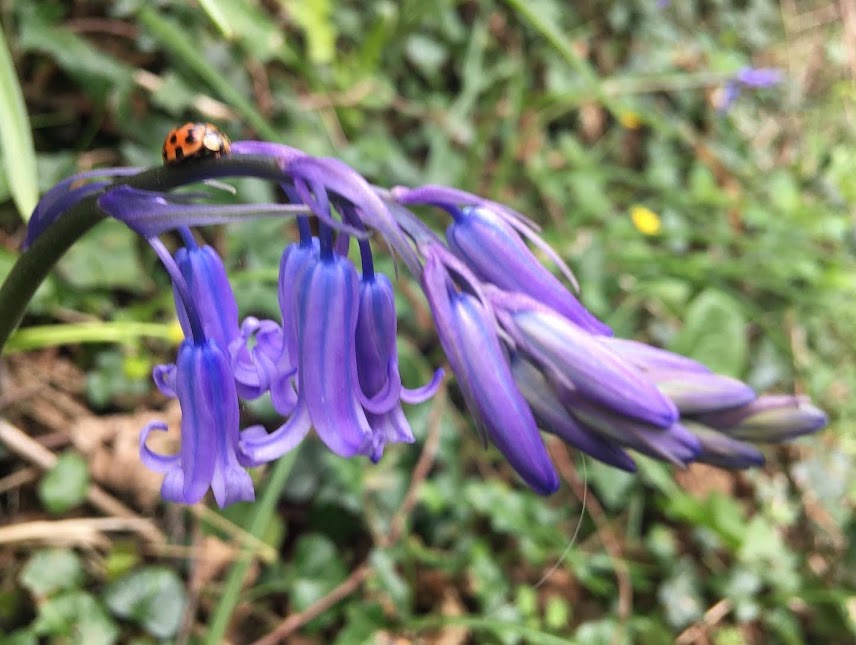
Two small brightenings, at once!

Not everything will be worth it. Don’t write something if it’s not exciting to you (unless you’re genuinely getting paid). We’ve all had situations where the right thing to do is end the job, the relationship, the torment. There’s no shame in trying something different instead.

I have a number of ideas and scribblings that I know are too cliched, too blah, and I’m never going to use them. I’m proud I tried, I picked at the thread, and maybe someday I’ll use some clever sentences from it or find a better way to write it. But starting a new project, having a go at something new, is better than sitting, stuck, in front of the old.

I think we call that moving on. Don’t we? (Side rant: have you noticed that “giving up” is what society accuses young people or people not accepted in the mainstream of, and when anyone else does it it’s called “moving on” or even “self-care?”) Without infinite time and energy, we have to leave some endeavours behind.

When it comes down to it, not giving up on life is commendable. So many things are tough—we deserve credit for just getting through the day. What little comforts (or irritated rants) help you persevere?
Filling Spaces

This Week’s Bit of String: Dragons and evacuees and musicals, oh my…

Confession the First: In second grade I had to write a complete story for school, and I sort of stole it from a computer game. I didn’t know how to invent whole new ideas, and my family had been working through Sierra Entertainment’s King’s Quest games 1 and 2. They were monochromatic with blippy music, but loads of fun. I couldn’t get them out of my mind.

In turn, the games themselves borrowed fairy tale elements, so while I felt as if I should have come up with something original, I also figured borrowing stuff was allowed.

A story starts out as a bunch of objects. Why not begin with whatever ones we want?

I was already skilled at pastiche. Before even starting school, I’d assign my stuffed animals roles based on Narnia characters or von Trapp children from Sound of Music, to enact and sometimes remix my favourite tales. Less than a decade later, I devised a series of novels set during the holocaust. I had a plot but didn’t know enough people to inform strong characterisations (particularly of the male variety; middle school does not offer a rich seam of girl-boy friendships).

So, once again, I borrowed. I had characters based on Uncle Tom’s Cabin, Anne McCaffrey’s Dragonriders of Pern, and other books I liked. I’ve mentioned this before. They weren’t pristine or even recognisable copies, since I was putting them in different circumstances with different companions. But it helped me to carry on creating when I had a picture in my mind.

Just for the Moment…

In the first King’s Quest game, released in 1980, if you tried to turn your character a certain way in certain frames, or if you generally attempted something not in the programming, a message would pop up on the screen: “You can’t do that—at least not now!”

Sometimes, writing is like that. We have some of the ingredients for a full story, but are missing others. And you have to just put something in as a stopgap, in order to keep going.

At work I’m helping students prepare for exams. Every Year 11 in the country has to take the same subject exams, regardless of special needs or life circumstances. If they don’t pass at age 16 they must keep taking them each year. (I could pour my hatred of this system into several blog posts, ranging in temperature from grouchy to scathing, but I won’t trouble you with it now.) Most of my students have processing issues and biological literacy challenges that impair their ability to even understand the questions, which are set to trip students up anyway.

Still, we tell them to try. If it’s a Maths paper, put down whatever calculations you do and write something for the answer, even if it’s a guess. For the English papers, write as much as you can think of. Just put something down in those blank pages, to increase your chances of a pass.

In standard writing practice, we do something similar. A common exercise to get thoughts and words flowing is to free write for 5-15 minutes. You must keep writing the whole time, and you’re instructed, if you can’t think of something to write, to keep your pencil moving anyway. You can write “I don’t know, I don’t know, I don’t know,” or “blah blah blah,” but keep writing. Fill in the blanks.

Purloined Persons

Confession the Second: I haven’t written new fiction in almost a year. I have written hundreds of pages, scribbling about my daily life and the odd fleeting idea. I’ve done blog posts. But I haven’t created, I haven’t added building blocks to a story. Lack of time, headspace, energy, you know how it is.

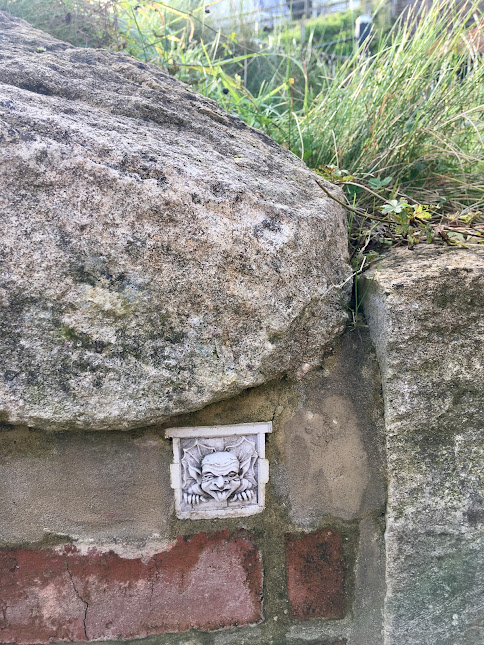
All kinds of building blocks to make this wall.

With the Easter holidays beginning, I decided to give it a go. After all, the longer you wait to do something, the more you believe you’re doomed to fail. Have you found that?

I unearthed a pretty decent story opening. I don’t entirely know what’s meant to happen in it. I’ve not been able to pull advances out of thin air. Why not borrow something, then? What if I take someone I know a little bit about, unpick the thread of a distinguishing characteristic or background detail, and then weave those into some gaps in my story?

It sounds kind of ruthless. Callous, perhaps, to borrow a person’s attributes. I don’t usually consciously do this. But sometimes you just have to fill in the blanks, and once you add to the ingredients you’ve already got, it’s all going to change anyway.

Sometimes a song or a picture will unlock a key element we need for our work. Other times we need a stronger nudge. Having come up with this plan, I managed to write 700 new words in just an hour and a half, even while frequently running off to check on dinner cooking. It’s still my own story, I just needed a bridge from reality into my long-unaccessed imagination. Already, now she’s got some words behind her, the character is finding her voice to tell me all sorts of things distinguishing her from her inspiration. And a story gets reworked so many times, characters evolve drastically.

What tricks do you have for filling gaps? Have there been things you loved so much, they may have shown up in your work, one way or another?

What Moves Us

This Week’s Bit of String: Possible planetary shift

“Miss, is it true that moving the earth even a centimetre out of orbit would basically destroy everything?” 

I’m not certain, Year 11 child who’s supposed to be completing a textbook-based cover lesson on greenhouse gases in the last period of the schoolday. 

If I’d thought critically about what an orbit is, and the way it represents the equilibrium of attraction between two planetary bodies, I would probably have confirmed the student’s query. A change in orbit could trigger sudden prolonged extreme temperatures or just cause the earth to plummet into the sun which, come to that, would be a particularly prolonged temperature change. 

But it’s hard to properly consider an extra theory when you still have remnants of covid brain from less than two weeks ago, and you’re trying to prepare teenagers for exams while fielding queries from cover teacher and students alike, such as: “Did you find Jacob?” and “Miss, what’s your opinion about amputees?” (Kids are just weird, ok?)

A perfect orbit

Anyway, once I was home and the dust of my thoughts settled, I channeled them into a new wormhole. I researched what would happen if the earth’s orbit skewed, if its tilt altered, and also looked into the calculations being done to check the feasibility of moving the earth further from the sun

All interesting and fairly unlikely, but what intrigued me was what, I suspect, intrigues a lot of us readers and writers. How a tiny change can make a big difference, how a slight tick of motion can catalyse vast movements.

Being Moved

My most recent (and utterly wonderful) read was Nicole Krauss’s The History of Love, in which a character mentions being “moved” by a book. “It moved me in a way one hopes to be moved each time one begins a book. What I mean is, in some way I’d find impossible to describe, it changed me.” 

I thought, couldn’t they have come up with a better verb for such a significant impact? “Move” is stretched wearily over many meanings. But as I reflected on our use of move, I warmed to the term. Sometimes having multiple uses is appropriate. It allows a word extra levels.

We talk about moving up or moving out. We move house and move away, dream of moving mountains and possibly moving the earth’s orbit. There are chess moves and symphonic movements and moves to proceed or to adjourn. Aristotle even came up with a theory referring to God as the Unmoved Mover.

A book (or other work of art) is an Unmoved Mover. It didn’t spring up out of nowhere, but by the time we hold it in our hands, it is standing on its own, detached from its maker. Its power is only what we can take from it, yet it gives so much.

Roots and Tongues

The oldest known version of the word move comes from the proto-Indo-European root meaning “to push away.” There are undoubtedly books that knock us slightly out of orbit. Our temperature heats up, and we proceed with a certain rawness. It’s often, as Krauss writes, impossible to point out a concrete change in our lives. Yet who can say what we notice, how we react, that comes down to our sensitivity being pricked by a book?

The challenge of capturing motion

While thinking about our use of this word in English, I consulted the gloriously warm and talented poet Elizabeth M Castillo. She is fluent in several languages, and let me know about the word “ému” in French, which is deeper and longer-lasting than “moved.” I suppose it’s a bit like our word emote, but in English that sounds sort of… clinical.

“Affect” or “inspire” are a bit vague, whereas I’ve come to like the physical, visceral implications of “move.” A story can be touching, but to say a book “touches” me feels uneasy.

In Spanish, Castillo says, there’s “conmovido,” which is different from their word for physical movement. It “implies something or someone is doing it to you… bringing you along into a feeling.” A bit like an Unmoved Mover, again.

Stories on the Move

I feel as if the best reads can be Unmoved Mover books that give you a shove, or companion books that move along with you, or paper boat books which do the moving for you. Elizabeth M Castillo’s poetry book Cajoncito is one of the latter. Reading her poems, I feel relieved, as if someone’s unlocked sentiments I hadn’t managed to untangle yet, and set them afloat. It’s on sale through Amazon, and honestly the first poem alone is worth the price. 

It’s not just books, of course. Would I have made it through my teen years without accompaniment from Tori Amos and the Les Miserables soundtrack? Have you ever had the lights go up from a live stage production and felt your life as you knew it is over; you’ve been elevated to a different plane and your trajectory has inevitably, if not definably, swerved? In the end, have you come up for a better word to describe the general experience than… “moving?”

Illuminating Literary Women

This Week’s Bit of Spring: Tears of a teenaged girl

Student J is crying. She’s had to stay after school for personal tuition as her GCSE exams approach. Her boyfriend, whose hoodie she carries with her and cuddles at every lesson, has gone to hang out with friends who happen to be girls. J is 16 and convinced this dooms her relationship of nearly a year.

I have another 16-year-old student who sometimes comes in exhausted, saying she can’t sleep because of anxiety that her boyfriend will cheat on her like an earlier boyfriend did. The doubts circle in her mind and she can’t shake them.

We tell the girls it’s fine, look how much he likes you, of course he doesn’t want someone else. Now let’s do a bit of coursework. But truthfully, it’s not likely these relationships will last. I’m not disparaging the feelings young people have for each other, I’m just not convinced these two particular guys are that great. The girls will find new opportunities as they get older and probably, hopefully, better partners to share them with, plus other possibilities to try along the way.

Should we, instead of just placating, be stealthily building up young ladies for themselves so they’re not utterly devastated if and when they’re on their own for a bit? Pondering this made me wonder if I do that enough in my writing.

A Woman, Herself

Many of us know now about the Bechdel test for movies. Are female characters integral and autonomous enough within the plot so there are two named ones who converse about anything other than men? Think about it—this is rare.

In fact, when I considered it, it felt so rare I worried my own stories don’t pass the Bechdel test. Does it count if a novel or short story is told first-person by a female character? That way, we’re hearing her thoughts which are definitely not just going to be about men. (Sorry guys, you’re not quite that all-consumingly important.)

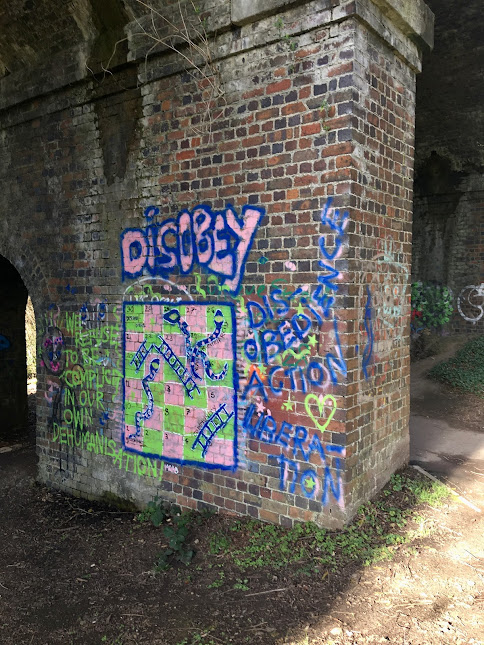
Disopedience–Action–Liberation graffiti in Stroud

Books and short stories are different from films—we can’t use the same feminism test on them. That’s why there’s the slightly more complicated but really useful Johanson analysis. Named for the critic MaryAnn Johanson, who writes on the FlickFilosopher website, it measures books or films in 4 main areas to see if they adequately portray and represent a gender which makes up half the world’s population.

Does the story grant centrality to a female character? Does she have her own arc somewhat independent of the male characters?

Is she able to influence others or is she merely influenced by them? Are female figures given authority and is that at least partially shown in a positive light?

When introducing or describing female characters, is more attention given to their physical appearance than anything else?

Are women (and characters identifying as women) defined by more than tropes or family roles?

These are really good questions, which I think my work mostly satisfies. I’ll definitely be keeping them in mind during my rewrites though, particularly since checking characters’ trajectories and making sure they actually develop as humans is always high on my list.

Let’s Talk About Relationships

Feminism isn’t Fight Club, so far as I know. We’re allowed to talk about all sorts of things and view them from a feminist angle. That includes men and our relationships with them; after all humans do crave relationships whether we want to or not. Most guys I know talk about relationships a lot. It does not diminish their identities, and nor should wanting a partnership diminish women’s individuality.

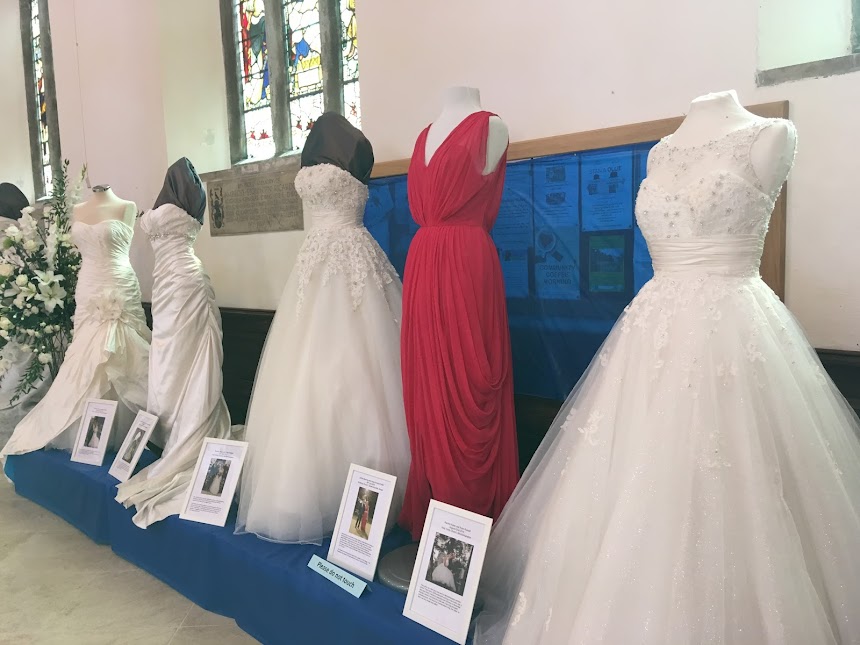
Wedding Dresses through history display at a local church. Women’s history isn’t just marriage, but marriage is part of our history.

When we meet up with friends, don’t we spend a fair bit of time discussing our families? Or discussing work. (I think work is more dehumanising than marriage, for most of us.) Being a mum is the most important part of my identity, even more so than being a writer, and I don’t think that makes me backward or less feminist. That’s what drew me to the novel I’ve lately been working on, The Gospel of Eve. In a feminist way, it gives Eve a chance to tell her side of the legend, and as she’s sometimes referred to as the first mother, it’s also an opportunity to explore various relationships.

Obviously we don’t want art or literature in which supporting and talking about men is the sole purpose of a female’s inclusion. But penalising books about relationships would affect a lot of work, by female and male writers, and beloved by readers of all kinds.

If we discouraged the young people in our care from talking about their relationships because it’s unenlightened, we’d shut ourselves out of something really important. We would be unable to support them when they might need help. As educators, role models, guardians, and writers, we want to explore all things, from relationships to our core individual selves.

For further reading on feminism in literature, Roxane Gay wrote an excellent essay on it in Dissent Magazine. Here’s her guiding definition: “A feminist novel illuminates some aspect of the female condition and/ or offers some kind of imperative for change and/ or makes a bold or unapologetic political statement in the best interests of women.”

What literature has illuminated something for you? What bold statements have you found inspiring, and do you have thoughts on creating your own?

The Right Mix

This Week’s Bit of String: A seating plan reshuffle

You know it’s time to amend the classroom seating plan when sitting through an English exam practice question results in two students pelting empty drinks bottles at each other, clipping a staff member’s ear, and unabashedly informing the teacher they’ll f each other up as soon as the bell sounds.

In this case, the teacher begrudgingly typed up an incident report but tried to make me write the new seating chart in my unpaid after-school time.

“Make sure students a, b, c, d, e, f, g, h, and i are nowhere near the windows,” she ordered. There are 3 window seats. There are 15 kids in the class.

She wanted at least 6 of them right in the front, but no one next to each other. Consign to some unreachable corner the special needs ones I’m there to support. “It’s a shame,” she said. “Most of them have been working well enough, but we’ll have to move everyone around in order to be fair.”

Rewriting a short story the following weekend felt like staring at the paper on which I was meant to draw up a new seating plan. Where to even start? So much I like, must I really chop and change the whole thing?

Outnumbered

For years since I first worked in the local secondary school, whenever I have to do something hard I have a recurring image in my mind. A dark-eyed little Year 8 slumped over basic arithmetic problems, throwing his head back and groaning, “This is so looooong!”

Long is a big insult from a student. Long is NEVER permissible to them.

Rewriting can feel long. Long and not particularly well-illuminated.

So it is with rewriting, in more ways than one. It takes a really long time, and I’d forgotten that because it’s been several months since I was free to sit down and fully overhaul a project. You think creating, yanking plot and character and language out of thin air, is the hardest bit. It should be quicker tidying things up, but it’s not.

It took hours of painstaking line-by-line work to shrink the word count by 40%, and that’s only the first go. Just as we make our Year 11s do more than one practice paper before exams, it’s going to take multiple versions before I get this story right.

The piece I’m working on is told by a mother of young kids. She has a terrible back injury and her husband’s disappeared. It’s funner than it sounds, because the kids are cute and the woman has a wry sense of humour. However, as with many tales, I have to balance out pain and hope, despair and wit.

Seating Plans Versus Story Drafts

There are a few similarities between helping run a classroom and pulling together a narrative.

No aimless gazing out the window: We want focus in the classroom (easier said than done) and definitely in a story. Every word and exchange should be trained toward the story’s purpose. No diddly passive verbs or excess prepositional phrases, no meandering side glances or navel-gazing either.

Long = Bad: This isn’t always true of course, but we don’t want anyone to feel something’s a slog. We give students various quick tasks to build different skills, and likewise with a story we can vary the tempo. Once I’ve made a major round of cuts, I look at the shape of the paragraphs on the page—are there too many rapid-fire dialogue lines, or excessively dense thickets of description? Where possible, I distribute these and alternate them.

Don’t forget the back row: The first page is like the classroom front row: curated with special care to set the tone. Because so much expectation rests on those initial words, I go over the beginning loads of times. But I also work backwards at some point, line-editing in reverse so my scalpel is sharp at the end for this round of cuts, rather than always sharpest at the beginning.

A little cold round the edges can bring the general shape into sharper relief

Maintaining balance: Move over Hamlet, the REAL question in life is do we lump the bad together so we get bigger swathes of good, or try to pace it out? In schools we often inflict a beastly child upon a lovely one in a seating plan. Otherwise the “bad” kids sit next to each other and form a whole beastly herd in Row 3. As a writer, I don’t want to present readers with unrelenting woe (I mean I’m not Thomas Hardy), so I emphasise warm relationships where possible and sprinkle humour throughout.

Make space for addition: When deep-diving into a rewrite, the immersion lasts beyond the hours of Post-It rearranging, pen slashing, and sitting at my laptop. I’ve reentered the world of my story and it takes a while to find the exit. In my dreams, on my walks, while I’m cooking dinner, I think of things I want to add. Parallels to be drawn more clearly perhaps, quick descriptors to enhance the mood.

Not ideal when trying to reduce word count to meet a competition’s maximum requirements. It’s like unleashing a kid fresh from the Internal Exclusion Room into a previously settled classroom. Will this knock everything off balance? But newcomers, whether people or words, deserve a chance.

Above all, when I’m editing I just wish someone could give me the answers. Does this go here? Am I allowed to keep this? Is something more needed there? I lucked out with the seating plan at school, because the other teaching assistant and I convinced the teacher it wasn’t our job to do it, and that little was required anyway. “You can keep most of the students where they are. It’s not as if it’s a secret why we have to move two or three of them.”
What are your tips for rewriting? Do you enjoy the process or do you find it… long?

Book Review: The Shadows We Cast by Sarah Tinsley

Blazing a trail for literary women to get angry

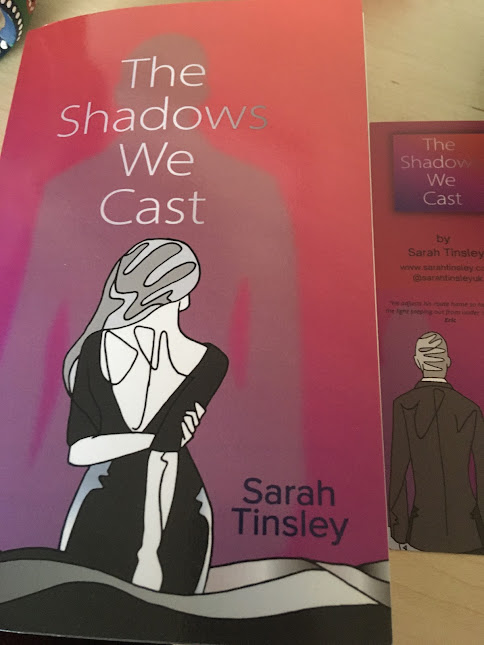
New year, new literature: after an array of great reads in 2021, I kicked off 2022 with Sarah Tinsley’s debut novel The Shadows We Cast, available from SLR Publishing. This book made me realise how many frontiers are still available for literature to explore. Unflinching but nuanced, this dual narrative of a sexual assault feels powerful enough to start changing the world.

Sarah puts the content warning right in the blurb on the back of the brilliantly designed book jacket. Here’s what it says:

What if you couldn’t recognise the violence in others? Or in yourself?
Nina refuses to accept the role of passive victim after being sexually assaulted. She becomes obsessed with an online vendetta that risks her job, her friendships, and her sanity.
Eric thinks, if anything, he’s too nice. But when he takes advantage of a stranger he is forced to confront the kind of man he really is.
The Shadows We Cast is a dark novel about consent and control that unsettles ideas about victims and villains.

A fast-paced read with deeply drawn characters

Sarah is a friend of mine and has helped me a great deal with my own writing. (She can help with yours, too–check out her wonderful workshops here.) I was excited when she announced her book deal and what The Shadows We Cast is about, knowing she would give it deep, honest treatment. But I was a little scared too. Because of previous experiences, I find it hard to read about sexual assault. Nightmares come more readily, and I feel more exposed while paradoxically the world and my current life seem more distant from me.

Actually, it’s like this line from page 9 of Sarah’s novel. After being attacked the protagonist, Nina, experiences “dreams that made her feel blunt and smudged. She feels like an echo.”

This book doesn’t build up to the rape. As Sarah herself noted during her book launch, too often rape is used as a plot twist, or maybe a dramatic reveal in someone’s backstory. The Shadows We Cast has twists and wields dramatic irony deftly, but it’s very honest about sexual assault. That bit’s already happened. The whole book deals with the gritty aftermath—not just the aftermath for Nina the victim, but also for Eric, her assailant.

And here’s what I found really scary. While taking Nina through the utterly altered landscape of her life following this trauma, Sarah allowed her to get really angry, and to act on that anger.

Sarah invited us to bring cocktails for the virtual book launch, because as she rightly pointed out, honesty even about dark subjects deserves celebration.

How often, in literature, mythology, or even in real life do we allow women to do angry things? From Clytemestra to The Taming of the Shrew to Mrs. Rochester in her attic, no matter what befalls them women are meant to do no harm. The character arc of an angry woman will be that she learns to forgive; she’ll be subdued by love or she’ll face drastic punishment as the villain. Yet in this novel, Nina’s anger is quite powerful and drives her to be truly destructive.

It’s a bit worrying that reading about Nina’s rage disturbed me more than the unflinching catalogue of the injuries she sustained during the attack, or the blurred lines (see what I did there?) in Eric’s mind as he considers what he’s done. This aversion to anger must be a societal effect on me rather than just a personal issue, and now I wonder: have I been depriving my own characters, particularly the female ones, of the right to rage? Is our world ready to acknowledge this now?
I did some research after reading through The Shadows We Cast. It’s a real page-turner, and the ending was quite satisfying. I found an interview about angry women in Greek mythology, the differences between the domestic and political spheres. Thinking about Shakespeare’s heroines, I read this article about the newfound popularity of Measure for Measure, and to top it all off here’s a reading list featuring angry women, because after all this time, why not?

Of course, the reading list was produced before Sarah launched The Shadows We Cast. I definitely recommend checking that one out first, and you can purchase it here. Plus, you won’t want to miss reading more about Sarah and her other work on her site. Please let me know what you think, and whether you have tips on allowing characters to follow their rage. I might need a few of those!

Seven Wanders of 2021

Most of my favourite outdoor adventures last year happened in places I’ve been before. After all, we were locked down for 2021’s first five months. Our later travels were to see family, so the places we revisited took on special value even if they weren’t new and exciting. I felt lucky to deepen my knowledge of beautiful locations.

Sometimes, the company kept on a walk—even just the songs you listen to—cranks up the wonder and lodges it in your memory.

Previous years’ lists of unmissable explores are here, here, and here.

Cam-Dursley-Uley, Gloucestershire

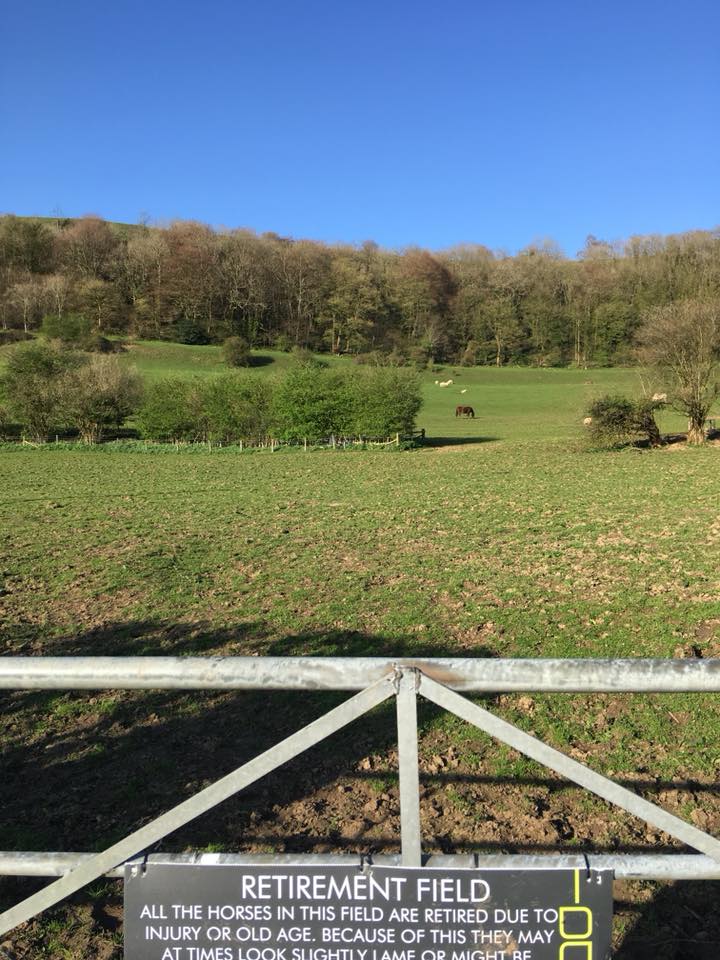
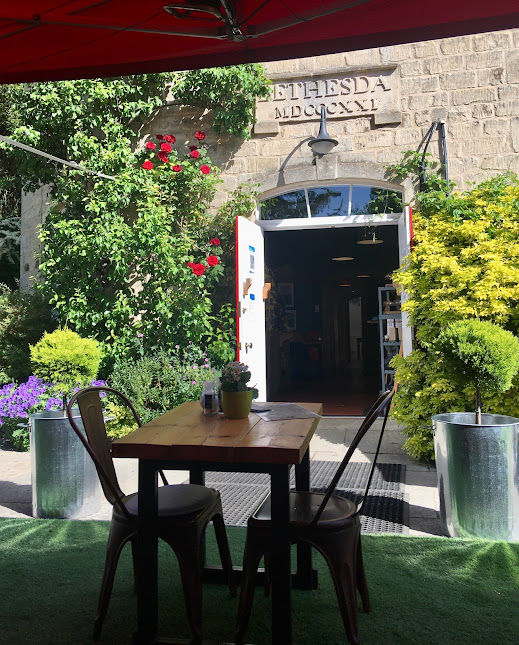
This is my local 7-mile circuit. I go up through winding, quiet lanes, past curious goats and a howling cattery and sweeping, peaceful “retirement fields” for old horses. There may be brunch at the wonderful Vestry cafe in a church-turned-arts centre, with macaroons to take away. (To find the Vestry, turn into the road by the house with vintage petrol pumps in front.)

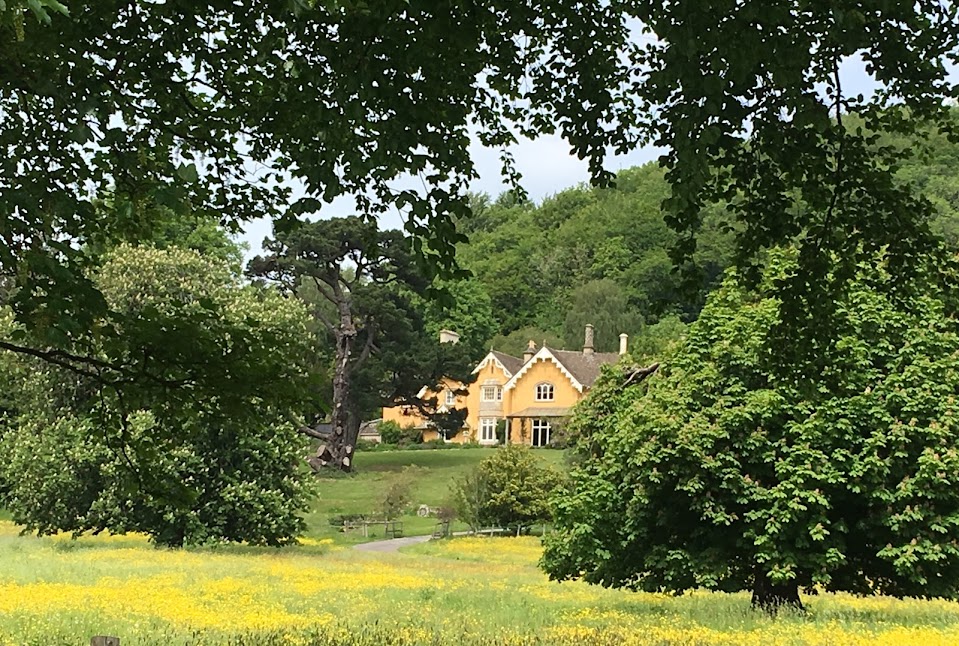
Then back along the road because it may be noisy, but it gives some lovely views of fields, purple flax in the spring, and nice houses, including Angeston Grange with its gingerbread trim.

Mascoma Lake, New Hampshire

My 7-miler when I’m in the USA staying with my family. I follow the rail trail through the town, where it’s still trying to resurrect after the mills shut down, and then I go round half the lake. Crossing the long bridge that spans it, I often see or hear the chequered loons, or glimpse an otter darting over the rocks, or tread nervously beneath the imperious gaze of an eagle on one of the lampposts.

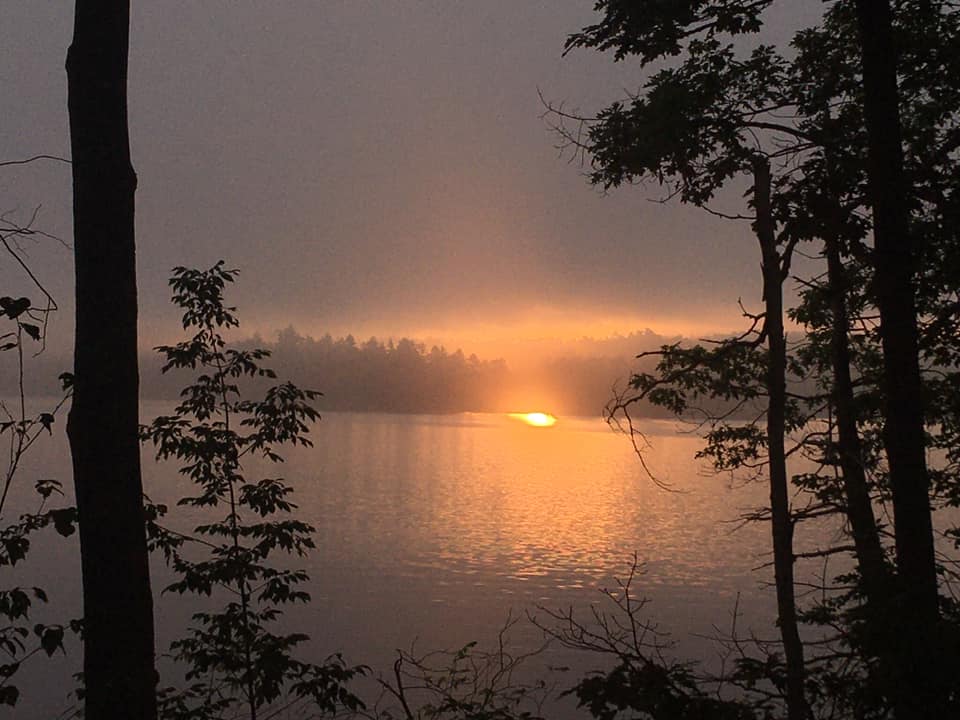
Traipsing along the roads from the bridge all the way round the water back to my parents’ house, often in 98% humidity even at 6 in the morning, I see the sun rise above moored sailboats. The big stone Shaker barns are softened by mist; the Catholic shrine opposite is quiet, its thousands of Christmas light bulbs hibernating through summer. Then I pass miles of lake houses: some grand, some old and rickety with more lawn ornaments than floor space.

Lymington, Hampshire

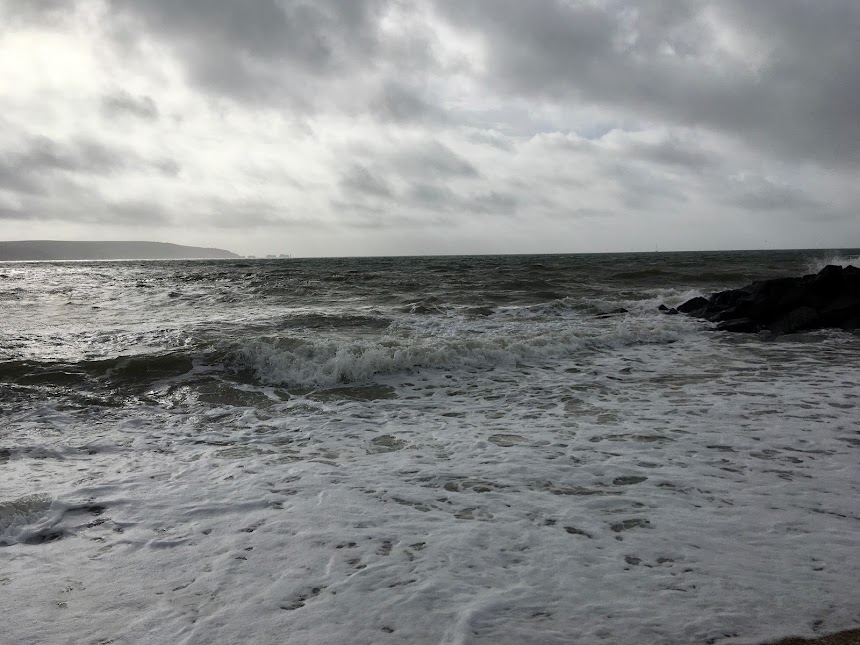
Spending a little time on England’s South coast with my husband’s family, I took the opportunity early in the morning to hike my weekly Friday Five Miler in a different location. I navigated with Google Maps to the marshes of Lymington Nature Reserve, protected by an earth wall from the sea. Then I followed the coast back toward our holiday house.

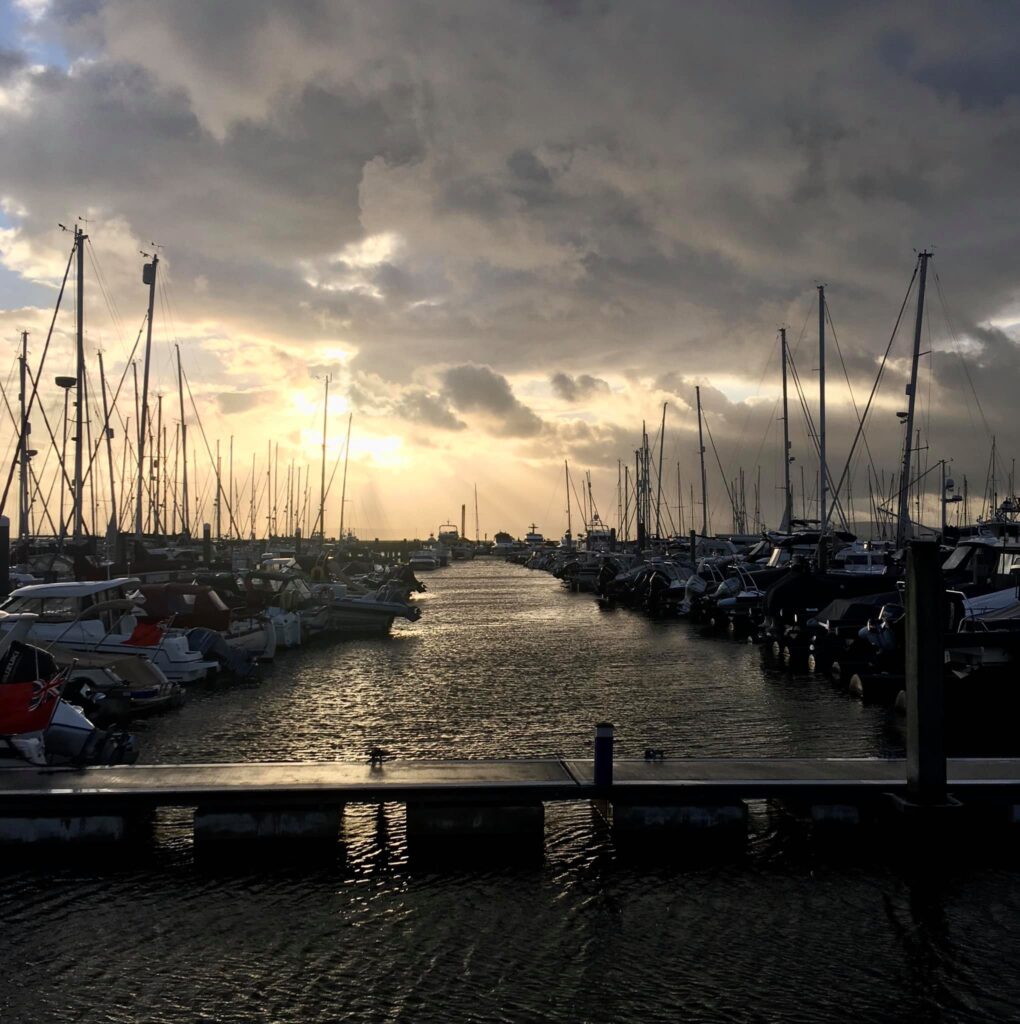
This was one of those walks where the songs plus the weather equalled perfection. In overcast, hedgy lanes I bit back tears listening to “She Used to Be Mine” from Waitress, then I came out onto the built-up coast in a sudden deluge. The ocean wind blew raindrops so forcefully into me that I had little red welts on my skin. But by the time I came around to the marina, the rain stopped and sunlight broke through, gilding the sailing masts while “Blinded By the Light” played in my earbuds.

Rye Beach and Little Boar Head, New Hampshire

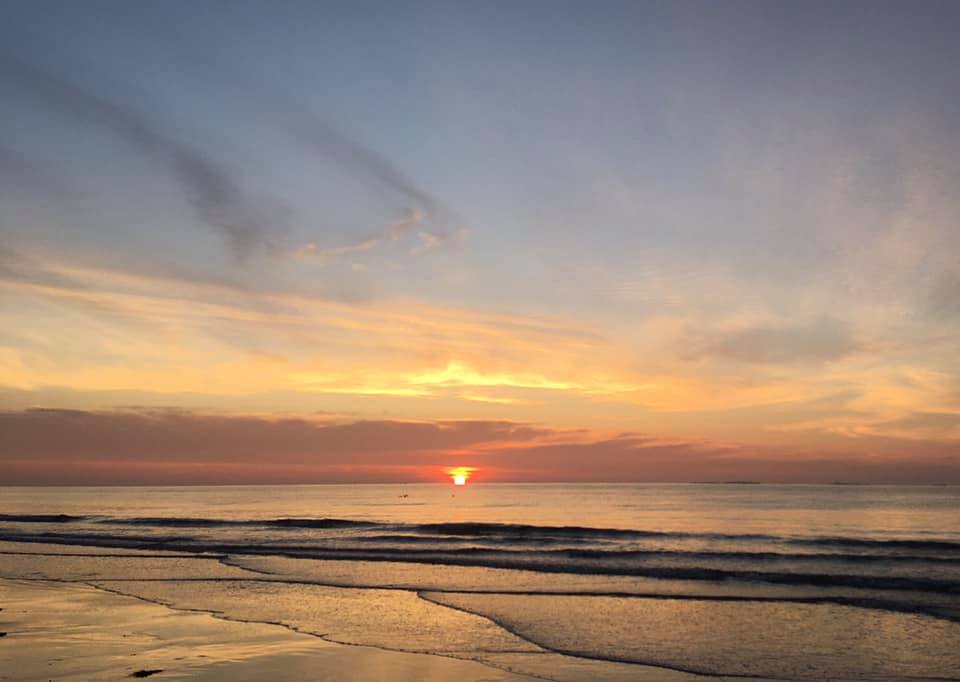
My two sisters and I took a sunrise trip to New Hampshire’s seacoast during the summer. We started at Rye Beach, a beautiful sandy stretch. At 5:45 there were already surfers riding the waves, gold-rimmed as another hot summer day began. A John Deere tractor motored over the sand and we walked barefoot around gull feathers and knotted halos of seaweed.

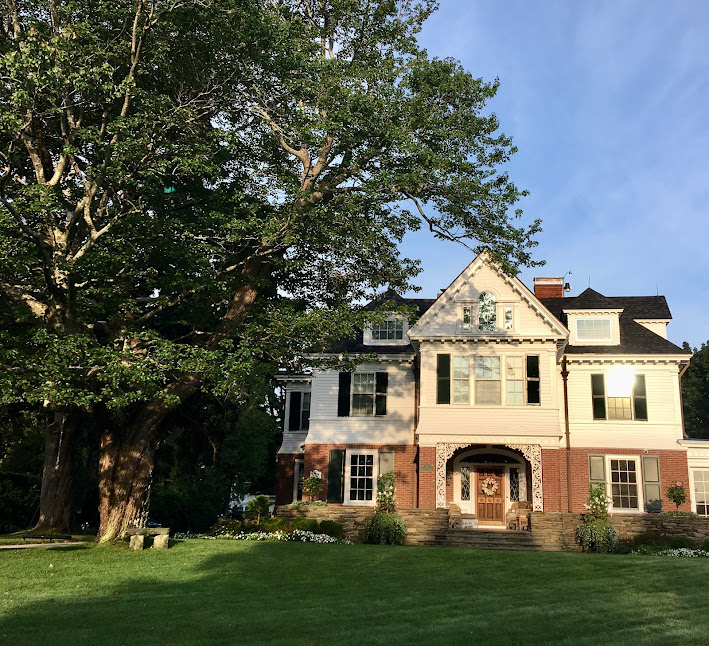
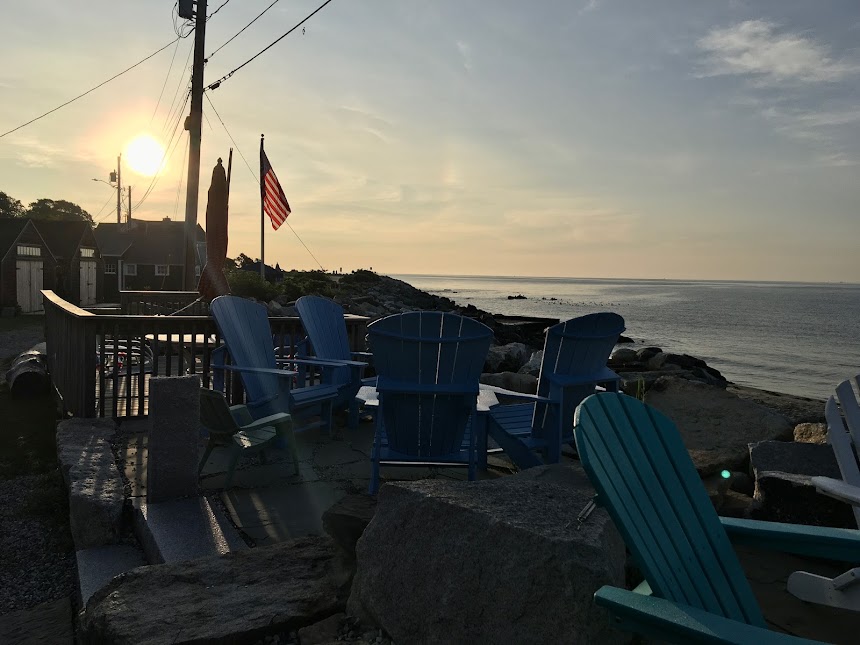
We then drove to Little Boar’s Head, where a path winds between the ocean and the mansions of Willow Drive. Wild roses grow on the banks and old fishermen’s huts, now coveted summer boltholes, line the entrance to the path. Off the shore, cormorants perched on rocks to air their wings.

Festive London

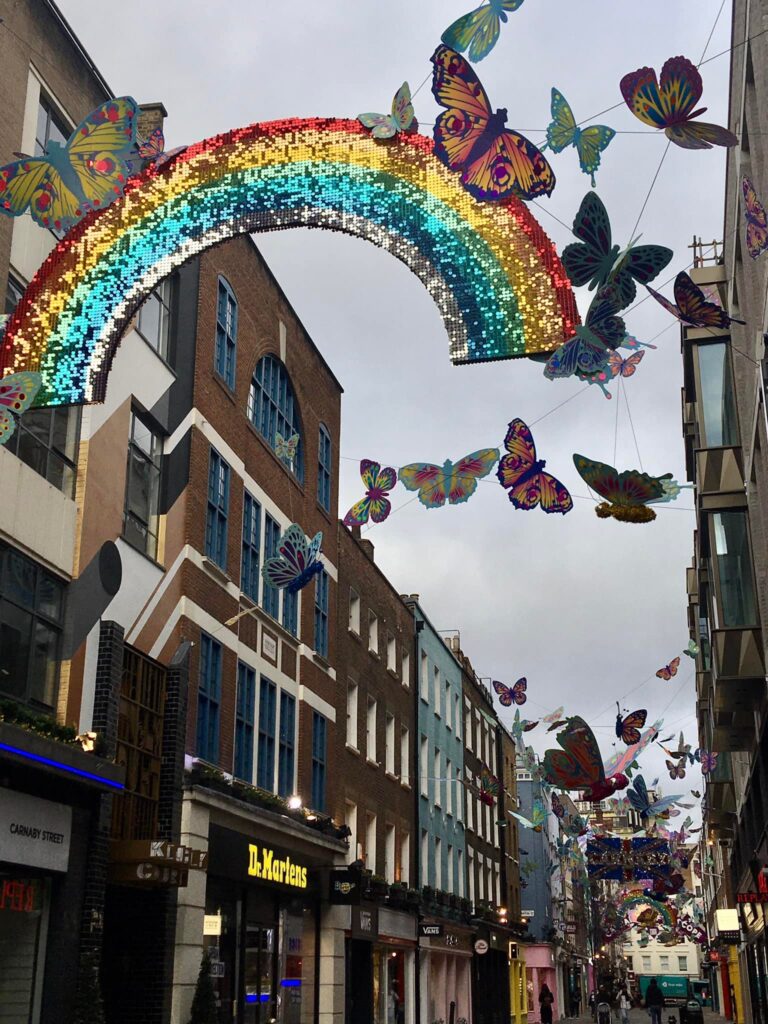
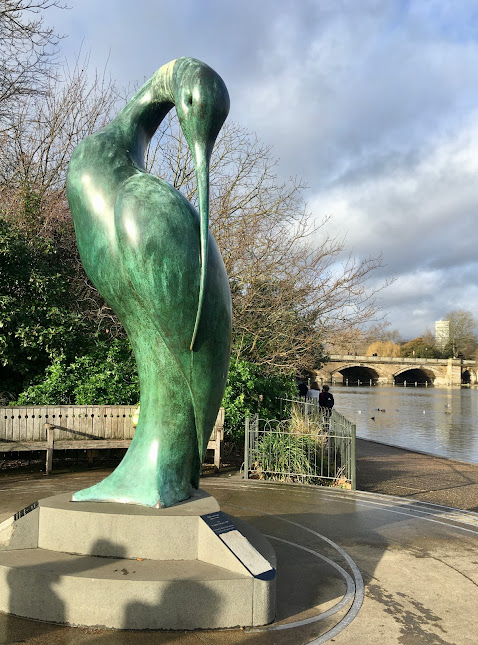
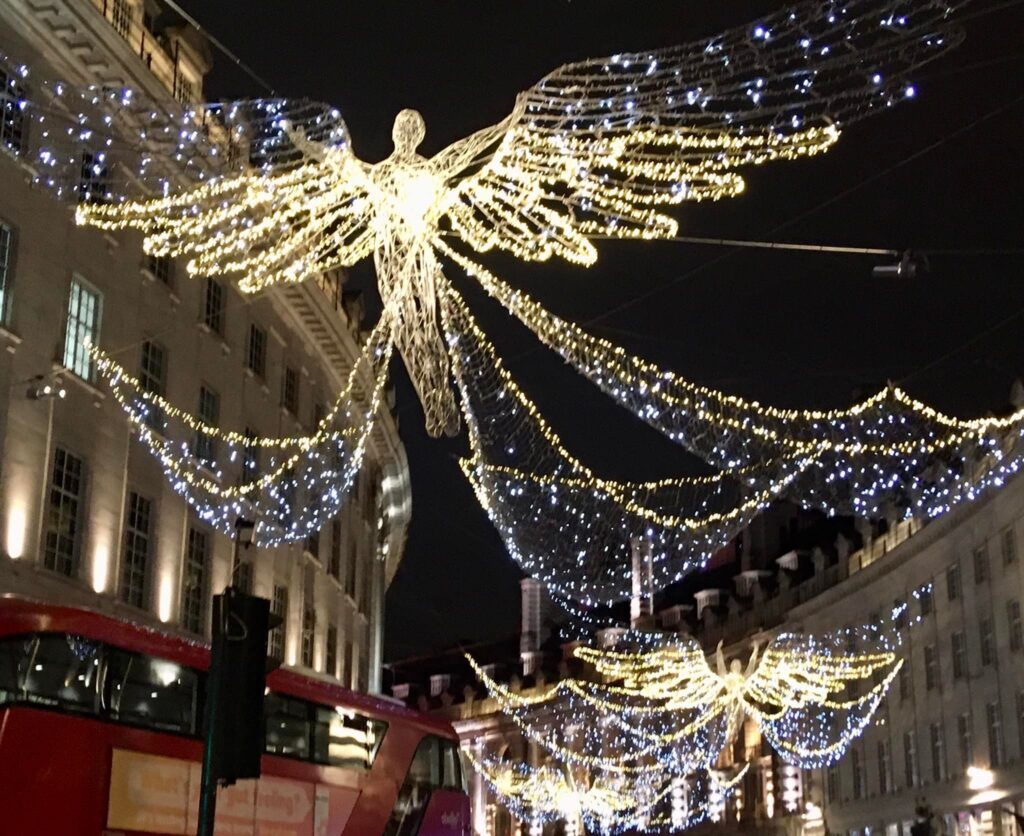
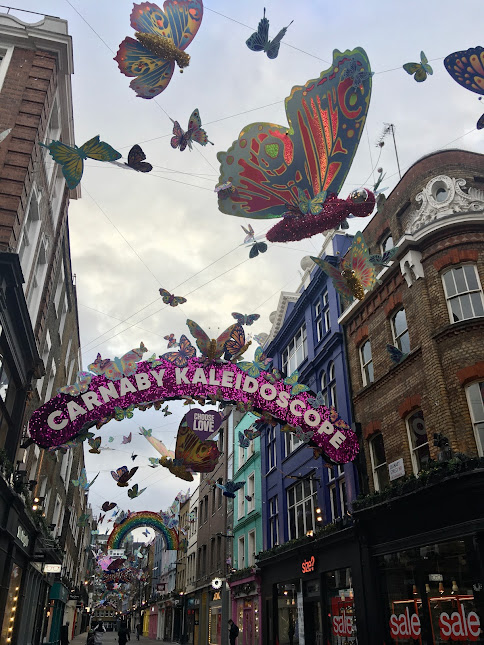
Wearing masks and Covid testing frequently, we went to London over New Year’s 2021-2022. My husband and I met in London, so I’m quite attached to it, but we hadn’t visited there together in almost a decade. We went for long walks taking in Hyde Park and its river birds, South Kensington and the embassies where our son could identify all the flags, and London Zoo. I was enchanted by all the Christmas lights of Mayfair and Oxford Circus, the butterflies and rainbows of Carnaby Street.

We tromped off to Notting Hill also, where at 10 pm on New Year’s Day we got delicious gelato at Amorino, scooped out in flat petals and pressed together like roses. We ate our ice cream as we walked along, admiring quirky window displays. I took a picture of one house with a mural on the front, while in the upstairs window next door, a man leaned out cutting his fingernails into flower boxes, looking utterly bored.

Aria Force and Gowbarrow Fell, Ullswater

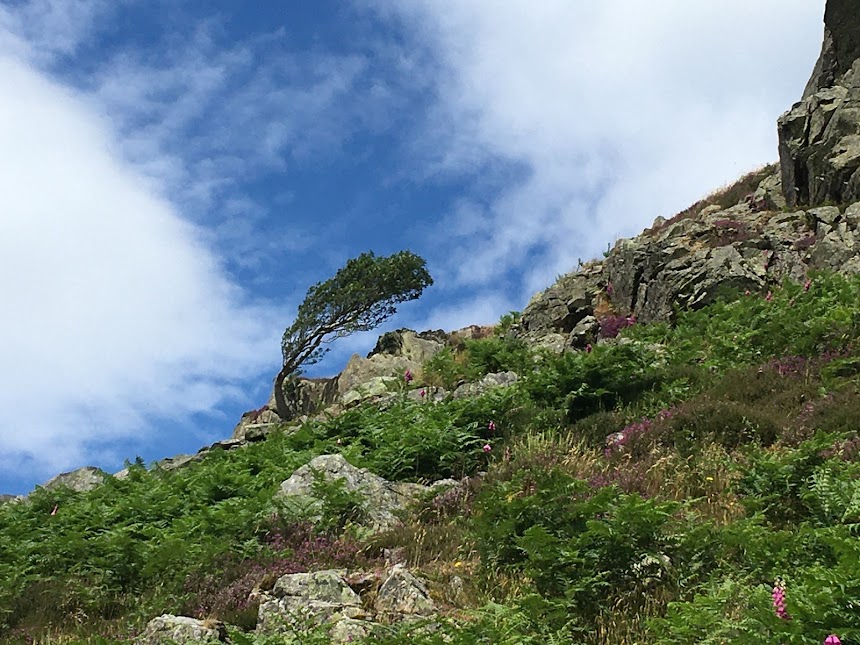
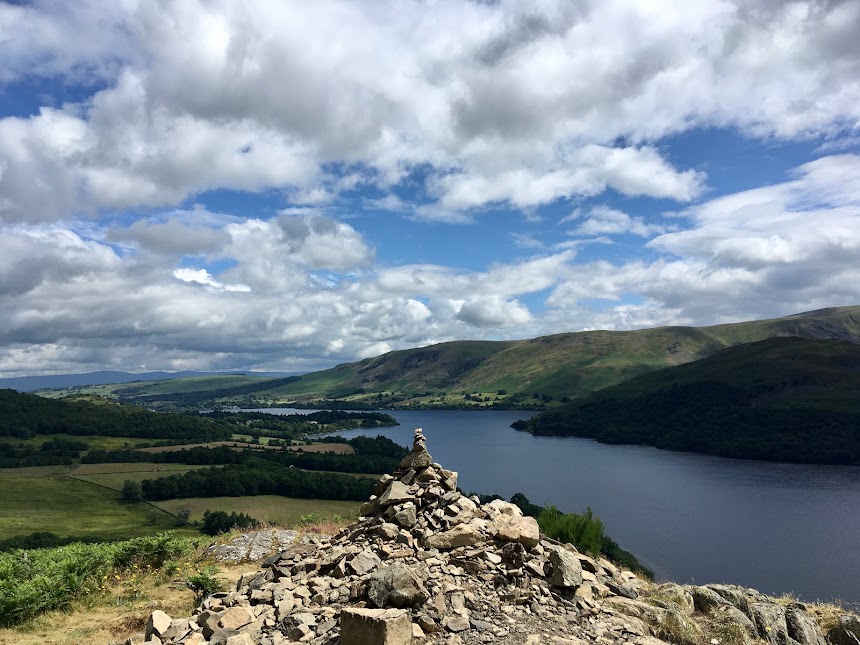
We got to go back to the Lakes District this summer, visiting some of the favourite places from last year, and exploring extra ones too. This year we fit in a visit to the waterfall trail passing Aira Force, a 65-meter waterfall. The path was under construction nearest the Aira, but further up we could climb around and play in series of terraced torrents, and peek past ferns and foxgloves at steep, moss-furred drop-offs.

We turned away from the becks (cascades) to climb Gowbarrow Fell, which felt a bit steep since we’d been ascending the whole time leading up to it. The views were gorgeous though—fields and byres and pines and more fells (peaks). From the summit we could see the steamer-scythed length of Ullswater Lake. Circling back toward Aira Force car park, we kept the lake in our sights, through trees and heather and tendrils of dog rose, their creamy heart-shaped petals falling on the path while bees trumpeted around.

Groton State Park, Vermont

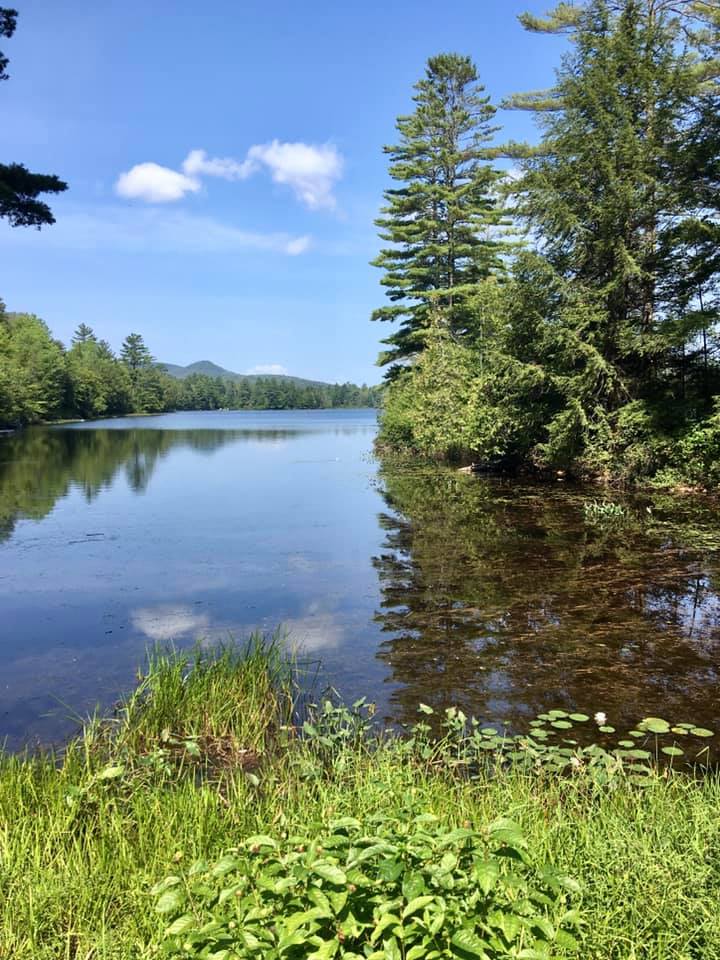
Vermont state parks are awesome. We camped in a lean-to (three-sided shelter) near Rickers Pond, part of Groton State Forest. Lake Groton and the surrounding ponds were formed at the end of the Ice Age when some of the melting water got trapped by the gravel it carried, and the area is studded with boulders called “glacial erratics.” There are lots of trees, and bluffy mountains with asymmetrically sloping summits like overdone meringues.

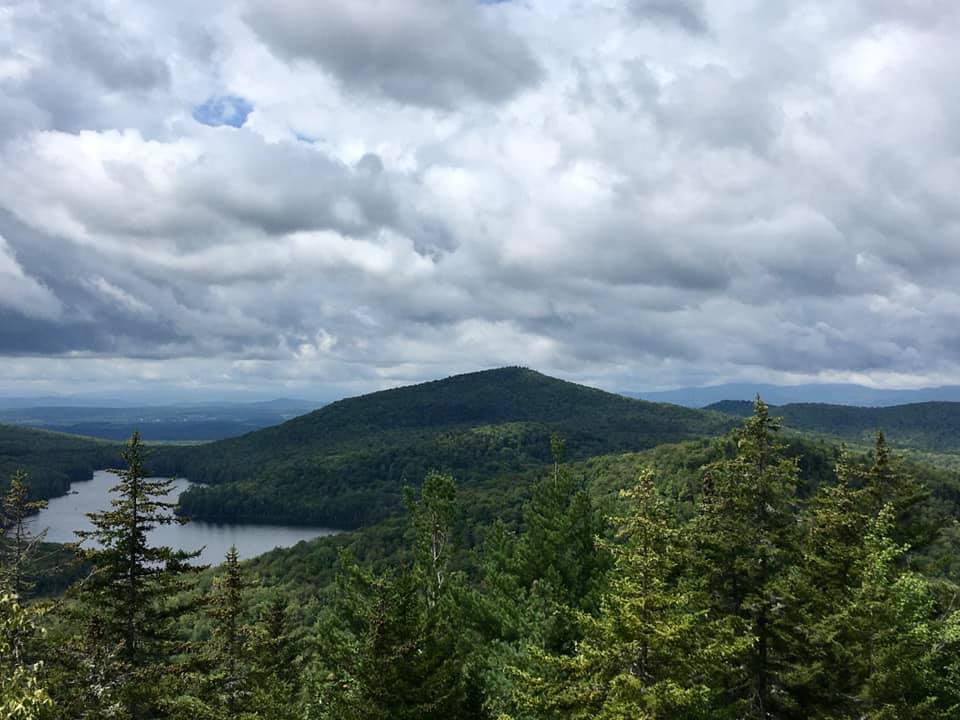
Apart from the natural beauty of pristine water and quirky little towns, mountain views and greenery, Vermont makes it clear it cares about its parks. We encountered such lovely touches as free suncream dispensers, and convenient toilet blocks and firewood stations. We swam at Lake Groton’s Boulder Beach and stretched out on the soft, freshly-raked sand. We hiked up Owls Head, a short mossy path to a beautiful lookout point with an eagle circling overhead, and we spent a lot of time at Rickers Pond, swimming in it and then “brooksploring,” following a brook off of it leading toward the Wells River. We liked watching the mussel trails, a whole herd of freshwater mussels in the shallows, approaching the shore and leaving their curlicue tracks in the pond’s bottom. The loons were bold at the Pond, diving right near us. I also hiked a couple miles of the Cross Vermont trail, perhaps something I will revisit more completely one day.

Are you familiar with any of these locations? What were your favourite outdoor adventures from the last year?

2021 Reading Round-Up

This wasn’t my most prodigious reading year, but I’m incredibly grateful for the books I did get to read. There were some long-anticipated hits, and some delightful surprises. In my top ten alone, there’s quite a range from comics to inspiration to memoir with of course plenty of forays into fiction.

As always, I’m including a favourite quote from each book. That’s the best bit! Previous years’ top ten lists are here, here, here, and here.

Things I Don’t Want to Know by Deborah Levy

This is a quick read, meandering through episodes of Levy’s writing life. From the riveting opening sentence through travels in Majorca and flashbacks to Levy’s childhood in apartheid South Africa, I was engrossed in her reflections. As she crosses geographical borders, she also investigates the borders between secrecy and sharing. How deeply can women writers afford to feel?

I read The Midnight Library while visiting London after Christmas

“Smiling was a way of keeping people out of your head even though you’d opened your head when you parted your lips.”

The Midnight Library by Matt Haig

An exploration of the multiverse that can result from a single life, Haig’s popular novel is like having someone read you a choose-your-own adventure book. The protagonist gets to pick different volumes off the shelves and read herself into alternate lives. It culminates with satisfying vibes of “Merry Christmas, you beautiful old broken down Building and Loan!”

“She had shrunk for him, but he still hadn’t found the space he needed.”

Solutions and Other Problems by Allie Brosh

Another volume of her irreverent, candid, hand-illustrated memoir. My whole family loves Brosh’s work. I laughed hysterically reading about how she raided her neighbour’s house as a child, and then later in the book I cried at her struggles. She champions her uniqueness while also being incredibly relatable.

“Because that’s intimacy, Buckaroos. Somebody who understands exactly how weird you are, and you understand how weird they are, and you’re sort of in a mutually beneficial hostage situation.”

Brick Lane by Monica Ali

One sister stays in Bangladesh and tries to earn her living in a garment factory and then as a household servant, while the other comes to London as a Muslim bride, speaking no English. Multifaceted characters, perfect descriptions, a plot spanning two continents and volatile periods in recent history.

Finished Brick Lane while headed north to the Lakes District in the summer.

“Outside, mist bearded the lampposts and a gang of pigeons turned weary circles on the grass like prisoners in an exercise yard.”

The Art of Possibility by Rosamund Stone Zander and Benjamin Zander

This is a pivotal read for shaking up your routine, challenging yourself, and making the most of life. It helps you believe in the positives—not just in yourself, but in others. I loved the “Giving an A” chapter, promising students an A in a college course provided they write a detailed letter at the start on what they’ll do to earn it, and then follow through.

“It is only when we make mistakes in performance that we can really begin to notice what needs attention. In fact, I actively train my [music] students that when they make a mistake, they are to lift their arms in the air, smile, and say, ‘How fascinating!’ I recommend that everyone do this.”

Such a Fun Age by Kiley Reid

An award-winning debut novel tackling race and class, and having to grow up. I loved the depictions of friendships, and child-rearing. The main characters are a baby-sitter who loves her charge so much it brought tears to my eyes, and a mum who is still not comfortable enough in her own skin to genuinely care for a pre-schooler who may have the same insecurities.

“‘You get real fired up about what happened that night in Market Depot. But I don’t need you to be mad that it happened. I need you to be mad that it just, like… happens.’”

The Invention of Wings by Sue Monk Kidd

This is also a dual narrative about race and class, but it’s set in the American South before the Civil War and Emancipation. The enslaved characters try to keep their culture alive and their family bonds unbroken. I read it fearing for their safety, but also admiring the spirit of the main character, Handful.

“You come from your mauma, you sleep in the bed with her till you’re near twenty years grown, and you still don’t know what haunches in the dark corners of her.”

Elinor Oliphant is Completely Fine by Gail Honeyman

A mystery, almost a thriller, as well as a fictional journey of self-discovery. The narrative voice is so compelling, you feel for her and want to protect her even as she self-sabotages her quest for companionship by being harsh with those around her. It’s uplifting to read about Elinor coming to terms with not being completely fine.

“These days, loneliness is the new cancer—a shameful, embarrassing thing, brought upon yourself in some obscure way. A fearful, incurable thing so horrifying you dare not mention it; other people don’t want to hear the word spoken aloud for fear that they might too be afflicted, or that it might tempt fate into visiting a similar horror upon them.”

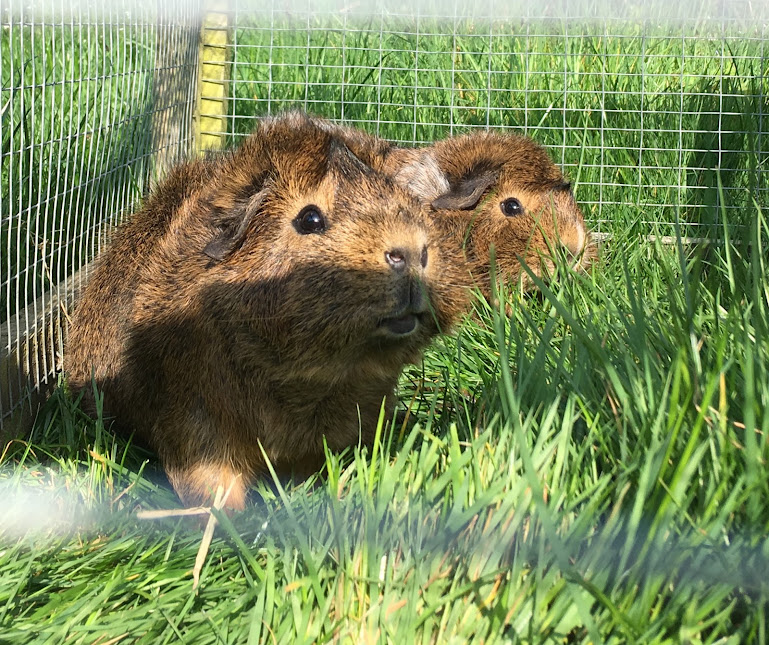
Springtime back garden fun with these floofs, reading Brown Baby.

Brown Baby by Nikesh Shukla

Reading this memoir is like spending a day with your best friend. I really wanted to turn up on Shukla’s doorstep and ask to go walking together or something. This is a memoir about the sacrifices and joys of parenting, about raising a small person of colour in an unwelcoming world, about grief and making connections with the family you grew up with. He puts everything in it really, and writes with such warmth and humour.

“If you sleep when the baby sleeps, you have effectively given up. You live by their routine. You are pandering to their tyranny. You’re never sleeping longer than an hour anymore. And you’re wearing dirty pants.”

The Dig Street Festival by Chris Walsh

This hilarious and lovely novel comes from independent publisher Louise Walters Books, and I will be grateful to Twitter forever because without it I wouldn’t have heard about Walsh’s book. Very British and quirky, it takes an endearing, well-meaning protagonist with a Dostoevsky-ish inner monologue through Kafkaesque plot twists with a Dickensian cast of characters. Honestly, it’s just mad fun; please give it some love.

The trouble was, our minds were hard-wired to find patterns in any thing, and to lock into them like meaning-seeking missiles. Not only would we hungrily identify patterns, we would immediately adopt them, fatten them up, farm them, breed and multiply them.”

If you’ve already discovered any of these stories, let’s talk! If you haven’t read them before but decide to give one or two a try, I hope you just love them.

A Christmas Glossary

This Week’s Bit of String: Unexpected roots

Shortly before last Christmas, we heard of a place in Gloucester called Gaudy Green. Bit odd, we thought, so my husband looked it up. Apparently it comes from the city’s Roman days. The Latin term gaudium means “joy.” That’s how we learned that gaudy doesn’t have to be bad–nice to know when you’re about to deck your halls.

That revelation inspires me this year to look more deeply at common words of the season. What can we find by studying certain well-used terms?

Gaudy

We often use this term derisively about something that’s a little too much. A bit overdecorated, maybe cheaply, or maybe overused gold. But in addition to sharing an etymological Latin root with “joy,” gaudy may also draw on the old French word for the weld plant, also known as dyers’ weed, for its yellow dyeing properties. So “gaudy” has links to the colour yellow, and to joy and gladness. Why not, then, revel in what glitters?

Licensed to gaud.

Festive

Sure, this links to feasts and food. But what atmosphere and mood befits this term of the season? Proto-Italic and Proto-Indo-European root words hint at the sacred, with connections to temples and the divine. At the same time, there’s the old French term feste which means “religious festival, holy day; holiday; market, fair; noise, racket; jest, fun.” As pleasant as quiet time can be, it’s refreshing to think that a properly noisy, clamorous family dinner is also completely appropriate for a religious holiday.

Merry

The Germanic root for this pleasant term is murg, meaning “short-lasting.” It’s thought that the meaning evolved based on the principle that time flies when you’re having fun. Anything that doesn’t last (like Christmas, I guess) must be good. More interestingly, during the late 1700s merry developed into slang for sexual activity, such as: “Merry-bout, an incident of sexual intercourse.” Someone tell the Fox News crew that when they insist on wishing everyone a merry Christmas whether they celebrate or not, they’re also wishing them a sexy Christmas. 

Comfort

The word comfort is a bit like the term self-care, and makes me wonder about what’s genuinely comfortable. Is it curling up in a ball or stretching our legs? Helpfully, a look at the Latin root word tells us it comes from the phrase “to strengthen.” Of course–fort is related to “fortify.” When we take comfort, we should be deriving strength. When we give comfort, we should be providing strength. Comfort is not an end, but a means. A rest stop, or a build-up; whatever’s needed.

“A rosy dawn settles all around…”

The angels said Christmas is meant to be about comfort and joy, and those have broader meanings than we realise. In light of that, let us be grateful for what strengthens us, whether noisy or quiet, and for what bring us joy, gaudy or not. Short-lasting though it may be, Christmas contains many moments. We will stow the sad ones to use in future creations, and cherish the happy ones.

Deck your halls as you see fit, friends, and draw strength. 

The Value of Women’s Time

This Week’s Bit of String: The dregs of a ketchup bottle

Sometimes I think about the consistency of time, as if it were a physical thing. With my last job, doing billing and customer management, time was like bottled ketchup. The tasks could be so tedious that time just sputtered and dripped languidly, then a deadline approached and time spurted past leaving a mess.

Now I’m back working in secondary school classrooms, time is more like sand in an hourglass with a particularly generous funnel. Each moment is a grain tumbling through, some with more jagged edges than others, but mostly very fast and after just a couple of hours you get a quick tea break but you’re sifting through the grains to ensure you didn’t miss something really important. A student in crisis, a quiet success, a useful tip for helping someone learn.

Imagine how it would change the flow of a year if Christmas was in January. Would it all be an uphill slog from there? Instead it comes at the end of the year, like a stone in a river, and makes time accelerate and leap around it.

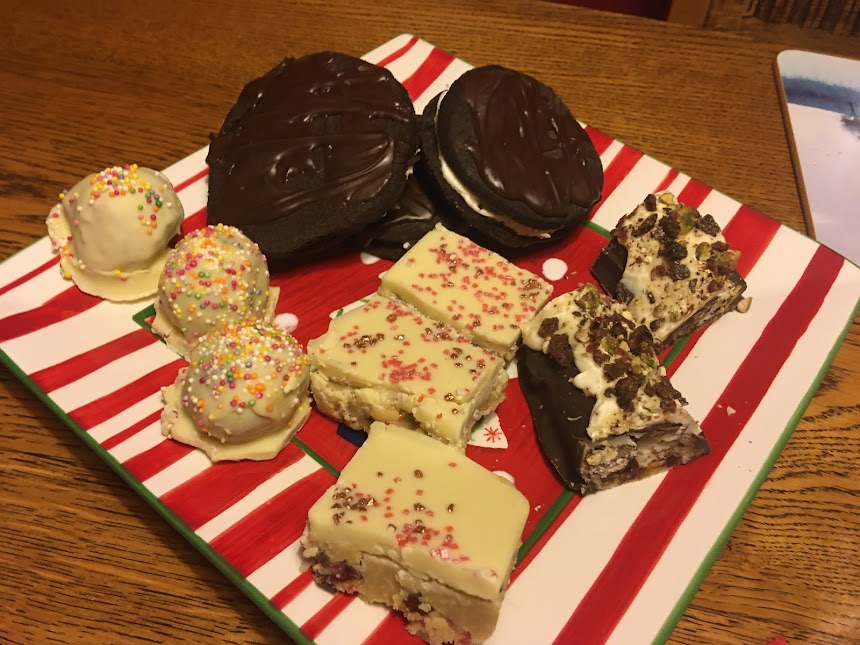
O come let us eat cookies. Baking is a big project for me each year but I love it, as a sort of meditation, a chance to practice other skills with delicious results.

Suddenly it feels as if we’re racing to year’s end, and we have to hold so much aloft as we plunge. We should make the house nice and bake fancy things and organise travel plans, deal with the crescendo at work (supporting students through mock exams, for example), put in cheery appearances at dinners and parties and concerts, secure Christmas gifts for all our family, and the family we grew up with, keeping it as environmentally friendly as possible, and I suspect as a wife I’m not alone in having to sort all the presents for my in-laws as well, plus being the contact person everyone comes to asking, “What does so-and-so want?” And down the cascade we go, still cheering because at least in my case, I quite like Christmas despite the madness.

Supply and Demand

I am lucky to have so many reasons to be busy, to have people I care about enough to work hard and make Christmas special. Some things even work out a little bit like I might have hoped. But I do sense that women generally adapt a wider range of duties year-round than many men do by default, simply by our awareness that they exist.

There are exceptions and even for our men who get a little more free time than we do—we know you have your own challenges, and we’re happy to help. But for many women (including people identifying as female, including those who don’t have children or partners), we have extra people relying on us in weightier ways than men do, and we are stretched in more directions.

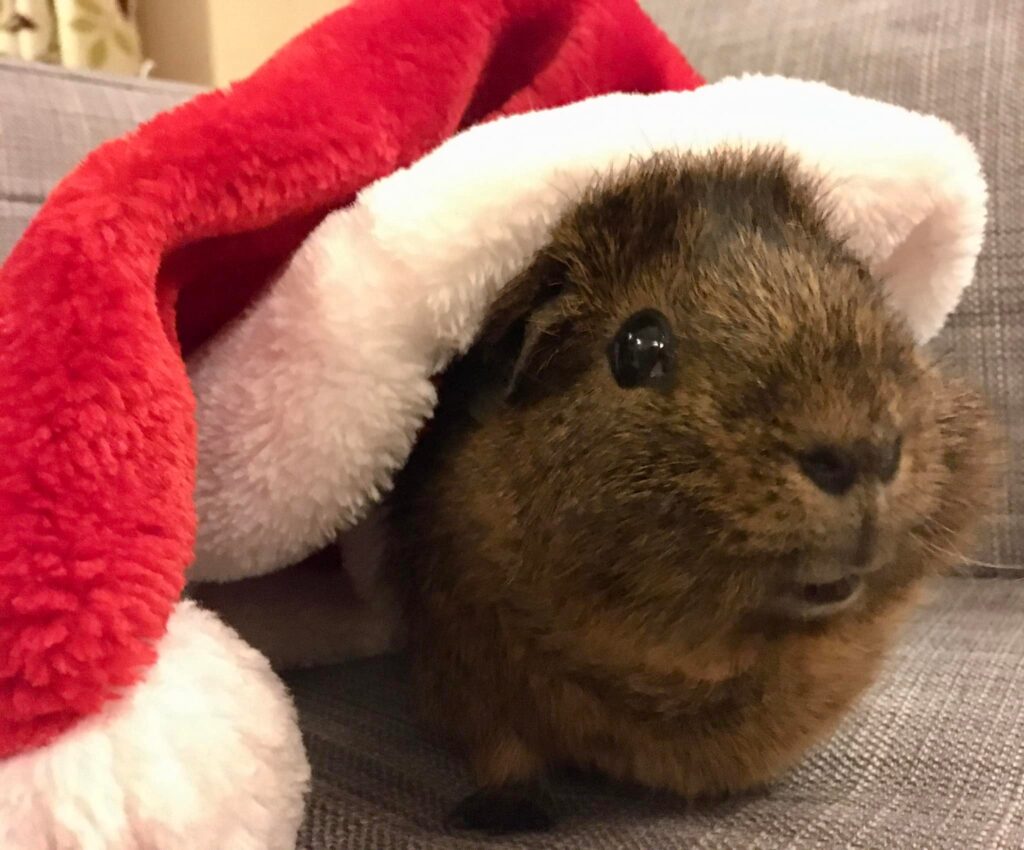
As long as this guy gets some carrot, maybe a sprout or two, we’ll be ok.

This year we’re hearing about supply chain problems around the world. Covid slowed manufacturing down, various factors slow down transport, so there may be fewer goods available and the prices will be higher corresponding to reflect the lack of availability. Anything in high demand that therefore suffers scarcity gets priced at a premium. Since women have so many demands on our time—doesn’t that mean it has a higher value?

Our pay doesn’t usually reflect this. Because of family obligations, we often have to take part-time work, low-paying jobs, and/ or jobs without very good benefits. I like that in the UK you can actually look up pay gap statistics for companies employing over 250 people. There’s even advice for companies on how to address the problem.

Overtaking

With frequently undervalued jobs and with off-duty roles which men might not even imagine exist, we have to learn to value ourselves. We facilitate everything from hot meals to regular dental check-ups to artistic endeavours to excited Christmas mornings. Where would this world be without us?

Any spare time we have is a rare commodity and you’re allowed to treat it as such. Guard it by saying no to a last-minute obligation. Insist on its high price. I’m paying a little extra to have groceries delivered this week, because it frees me up to join my Writers Group Christmas gathering, in person for the first time in two years. Or, getting a few minutes to read by candlelight could be worth the price of making someone else wash the dishes for once.

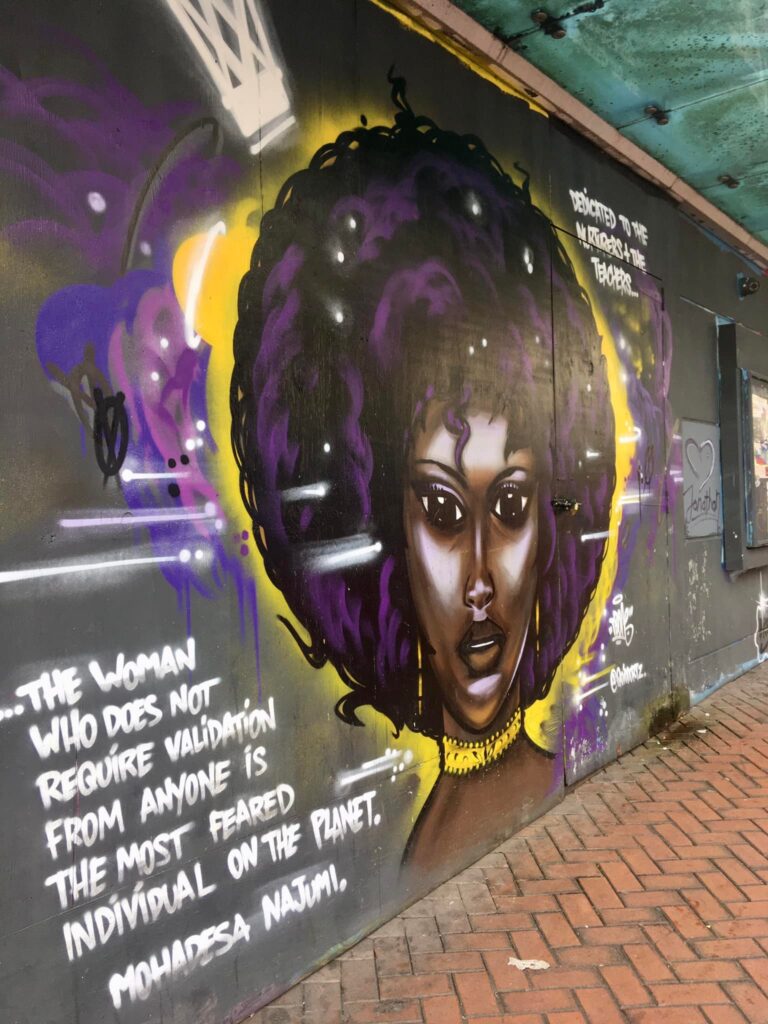
Street art, Birmingham

We can also claim our time by allowing ourselves to go faster. Recently I was pounding along on an early morning hike when I encountered the nightmare scenario of Polite People Everywhere: a man walking very slightly slower than I was.

I thought I’d better slow down to avoid the awkwardness of passing. Men can get defensive if overtaken by a woman. But slackening my pace even a little risked throwing my whole schedule off. I might have to wait longer to get into the family bathroom for a shower; I might encounter more traffic when trying to cross the street on my walk to work. On the other hand, if I sped up, I could begin one of the many jobs on my list for the day.

Reader, I overtook him. We should dare to overtake sometimes, since we have a lot on our plates. Maybe you don’t have a day job at the moment, maybe you don’t have kids or a partner—whatever the situation, if you identify as female there may well be extra emotional duties you’ve taken on simply because society expects it, and you’ll be feeling the burden this time of year. It’s worth acknowledging, and giving yourself credit for that.

And let’s please remember, even as we’re each super busy and missing family we’re cruelly separated from and anxious that our efforts will not be successful… let’s remember that everyone’s got something painfully pulling their heartstrings in some way. Everyone is tired and a bit sad. Check in. Express appreciation. I know, that takes up a little of our overstretched time, but it is one of the most precious uses for it.

I hope you’re enjoying the season and finding many kindnesses, however small.