Humming to Snails

This Week’s Bit of String: Summer camp workshops

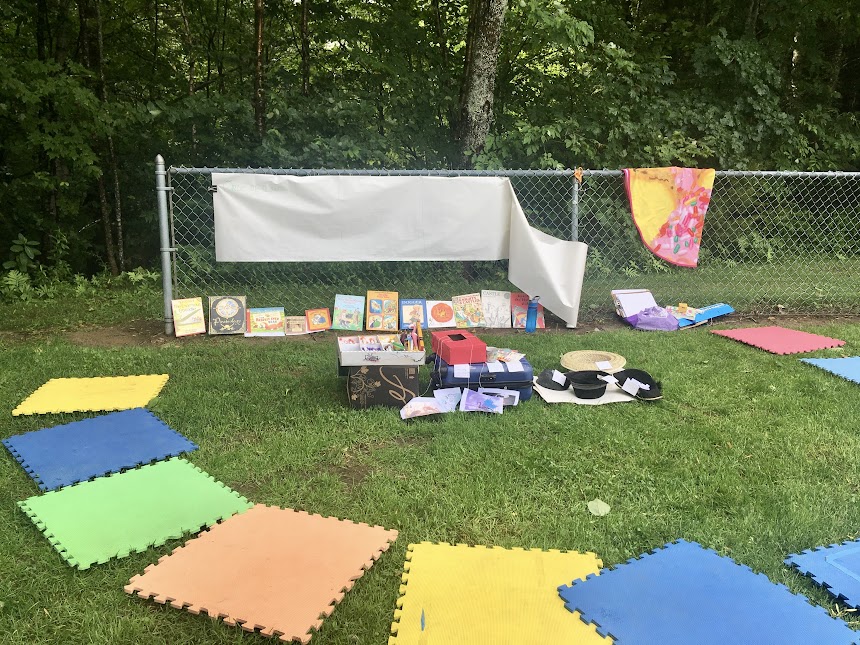
It’s humid in New Hampshire, and the grass is wet from last night’s thunderstorms. Twelve kids sit around me on coloured interlocking foam mats. I have armed them with clipboards, paper, pencils in all different shapes including dragons and flamingos and drumsticks, stickers, and mystery keys.

A trio of boys are doing Mad Libs together, mainly supplying each gap with some form of “cat” or “farting.” They like cats, and of course farts are the pinnacle of wit at this stage. The group’s counsellor is lying on his back, clipboard in the air, blissfully writing a poem. Other kids are writing stories about where their key might unlock, or comics about bunnies or bananamen.

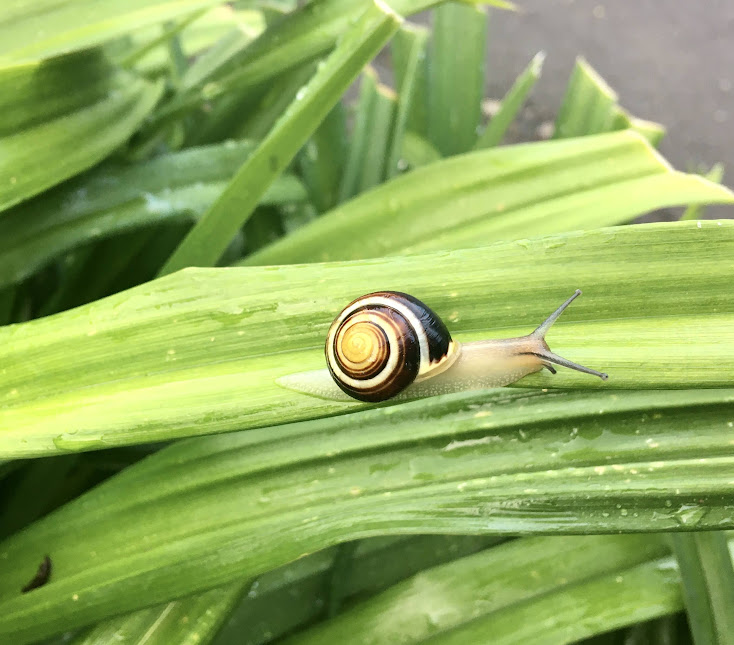
One of the mats has a little slug curled on a corner. I remark on it, and an 8-year-old boy approaches me earnestly.

Carry on, brave creature.

“You know snails? If you find one, and it’s deep inside the shell and wants to stay hiding, you can hum to it. Then it will poke out.”

“That’s interesting, how did you learn that? Did you try it yourself?”

He nods. I’m picturing him crouching on the damp ground, snailshell in his palm, leaning down to hum and watching in wonder as a squidgy creature emerges, antennae first.

Permission to Imagine

I haven’t done much like this before. Working in secondary British education, creative writing is not a curriculum priority at all. When I had an opportunity to work with the kids, ages 6-11, at the day camp where my son works, I didn’t set a rigid outcome for us but came up with a lot of different activities we might try, independently or all together, to have a little romp through our imaginations.

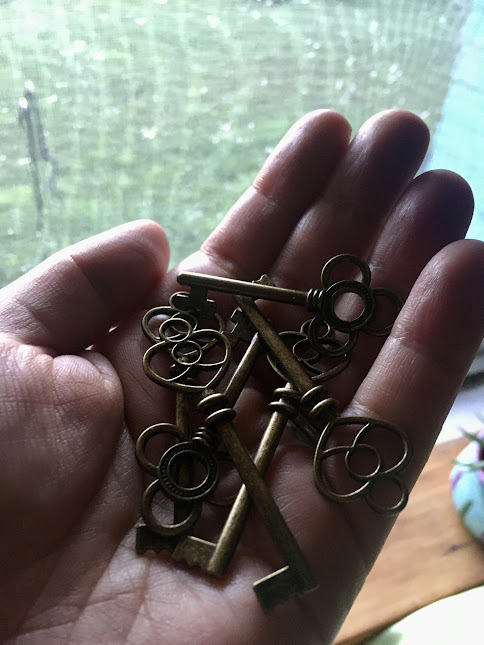
I got some wonderful suggestions and encouragement from other writers on Twitter. One of the most fruitful was getting vintage-style keys, which you can buy in packs as party favours. Kids pick one up, examine it, and write (or dictate, or draw) what the key might lead to.

The set-up.

The campers loved the keys, and they knew exactly how to put on little pleading faces to take one home. I gave away quite a few. There were stories about pirates who got scared by the key and threw it into lava, stories about locked doors guarded by snakes, and even one where it turned out the key went to a porta-potty.

I revelled in this variety. I’d used Mad Libs as a starter, having the kids volunteer adjectives and nouns and verbs as required to fill in the story’s blanks, and then reading the funny results out so they knew right away they were allowed to be silly and break rules. One group liked that so much, several of them wrote their own Mad Libs—quite good little stories where they left words out, brought them to me, and I supplied the most random ones I could think of.

Your Words Change Things

The other reason I wanted to start with Mad Libs was because I wanted to let them know, a story doesn’t have to ALL come from you. In fact, I would argue we often borrow certain elements. But once we put our own point of view, our own language and especially follow our own what-if questions, the story becomes ours.

I had brought four hats: three were for the adjectives, nouns, and verbs for Mad Libs in case some groups were too young for parts of speech or wanted to take suggestions. The other had what-ifs in case anyone wanted to use an idea for a story. What if a shark appeared in the lake across the street? What if your teacher was a Russian spy? What if you had a million dollars? What if Cinderella’s fairy godmother had poor fashion sense?

Magical mystery keys

Asking what if changes a path, using a randomly selected noun will change a sentence… our words change things. In one of my younger groups, we did a group story. This was also my last group, and I’d recognised that kids, especially older ones, didn’t want to use suggestions or try picking words out of a hat, because they felt so compelled to ensure their work was their own. But sometimes they got stuck. So with this group, I offered hats right away to choose words for Mad Libs, and they liked it a lot. Everyone wanted to pick a word from a straw hat, or a feathered pirate one, or a beret.

When we’d finished the Mad Lib, we did a couple of group stories, penning them on the paper I’d rigged up across the chainlink fence. We’d pick a noun from a hat, like spaceship, then describe that and give it some detail as we chose. Next we drew another noun to see what our noun would interact with, then a couple of verbs for extra suggestions what they might do. Thus we ended up with a farmyard on Mercury, with big fans to keep cool and three-eyed alien animals that said Oom instead of Moo, discovered by a nice family that visits space every first Sunday of the month.

I so enjoyed meeting the kids and hearing their ideas, but I’d also had fun while working hard to prepare. It made me happy thinking of exciting words and questions to put in the hats. What if I used them in my own writing? What if we got a little crazier with our ideas?

It’s like holding up a snail shell, wondering how we can see and befriend the creature inside. Unless we try humming to it, we won’t know what works.

Summer Bucket List

This Week’s Bit of String: Can we fit it? … Yes we can

Packing time! 48 hours now till I’m on my flight to New Hampshire, to my son, my parents and siblings and childhood home, friends and haunts. To lakes and mountains and trees, to root beer and Dunkin’ Donuts.

I’m already getting distracted. My point is, time to decide what goes in my suitcase. They’ve changed the allowance from 23 down to 20 kilos maximum. This should be ok; I know by now what not to bring. I don’t need much in terms of dressing up or fancy footwear. I don’t need many books for myself because I often don’t get time to read; it’s all I can do to find moments for daily scribbles so I don’t forget all I’ve seen, what was said.

Busy bee.

Concurrently with my packing, and with cleaning the house and weeding and trimming the garden before I go, I’m going deep with novel edits. This is only my second pass through my story of Eve. It’s familiar territory but not quite as much as an Aer Lingus flight from Bristol to Boston. I’m still learning what I really need and what I might not. It will take me a few more journeys to figure that out, I suspect.

The Days are Just Packed

Even more than keeping my suitcase light and my writing clear and engaging, planning the time while I’m away is a huge challenge. Thanks to working in school and getting a longer summer holiday, I have three weeks in my native country, but that isn’t much when it’s also one of my only chances to Mum for the whole year.

One thing I’ve learned as a writer—and parent—is that the worst thing we can do is tell ourselves there’s plenty of time. It sounds a bit sad, but most people I’ve discussed this with seem to feel the same.

If we are busy, we know we have to dedicate time to something. If we have more free time, we develop a more cavalier attitude and assume we’ll get to everything we want to do.

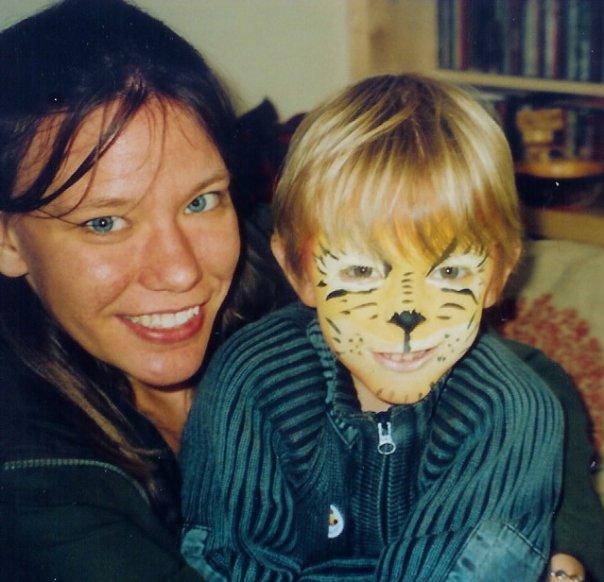
ALL of it… Photo from 2007.

There’s so much fun I want to have with my kid, and with the rest of my family. We’re hoping to try tubing down a river with rapids and a covered bridge. I’d love campfire chats, board games, kayak sessions, listening to music together, maybe get him to build/ squash a sandcastle or two for old times’ sake. But he’ll also be working, so I’m looking forward to joining him at summer camp for writing workshops, and cooking some of his favourite dinners for when he gets home. We have things we need to troubleshoot together; job applications to fill out and things like that.

Being apart means I feel ready to appreciate even the work of it. Baking in a hot kitchen, coming up with cover letters for prospective employers. It’s not what everyone looks forward to doing when on vacation, but I will feel privileged to do it when I’m finally around more people I love.

Summer Goals

Do you have any aims for the summer? The Internet is rife with reading lists and exercise recommendations. I find them daunting. I just want to read and exercise daily and I’m going to have to be flexible about that.

Exercise: I’ll keep up my daily early morning hikes. No choice; I’m addicted. But I’ll also be incorporating 10 minutes of stretches, at least every other day because the last term at school viciously made me feel my age and then some.

Self-care: Also, I want to have a bath and soak the stiffness out. We don’t have a bathtub here in the UK but my parents do in the US, and on this matter my sister holds me very accountable. She’s already on my case. I’ve got the Lush bomb for the occasion. That’s it, that’s the goal.

Reading: If I can read almost every day, I’ll be happy. So far so good, since school ended last week. What utter bliss, once a morning hike has been completed, and then a bunch of chores and visits sorted, to stretch out with a book for an hour in the afternoon. I’m hoping to keep that routine going while away, and clear five books from my own, personal TBR list this summer.

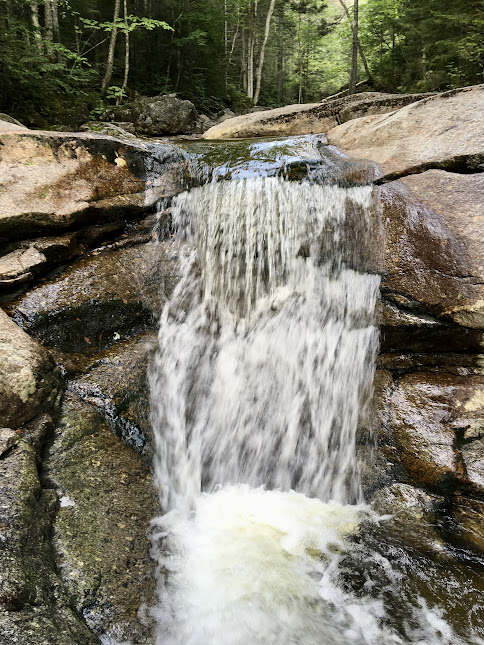
White Mountains, New Hampshire. Just go with the flow, man.

Writing: There are my daily scribbles, of course. I’ve got a luscious thick notebook for observations, memories, exchanges, ideas. It should last me the weeks I’m away, and keeping up with everything I want to remember is a big commitment. However, I’ve also been pushing myself this summer to sit down and put focused effort into a writing project, for a couple hours maybe four times per week. I had lost the habit of that, since I could only write in small windows of time. It feels so good to stretch my concentration muscles again, to sit editing and not letting myself get distracted. I’d forgotten I was capable of it!

Parenting: My number one priority for the next three weeks. Anything that makes me feel like a mum again will do. Hearing complaints face to face instead of reading a Facebook message. Teaming up to show his dad Field of Dreams so he knows what we’re quoting when we say things like, “Peace, love, doooope!” All of it.

My goals are probably a bit more open-ended than targets are meant to be, but I prefer the term feasible. I advise a slightly gentle approach, because you never know what crises might come up. Do whatever it takes to enjoy each moment, whether it’s relishing a challenge or making yourself relax for once.

Weathering the Extremes

This Week’s Bit of String: Melting paint on a cemetery fence

After freshman year in high school, I got a state-funded job with other local teens to help out around the community. We were a bunch that had, shall we say, sometimes got in trouble, and this might keep us on the straight and narrow for the summer. There was a lot of volleyball in downtime, and trips to the corner store for Cool Ranch Doritos.

On the hottest summer day, we were in the sun repainting a cemetery fence. The metalwork was rusty and the old paint was peeling, but we went right over it. It was 103 Fahrenheit. The paint didn’t dry, it congealed, green and sticky. I remember the smell of it, and through the bars all the flowers wilted, perishing against the gravestones, cicadas strumming frantically like overstressed refrigerators. Our Doritos did not feel very cool.

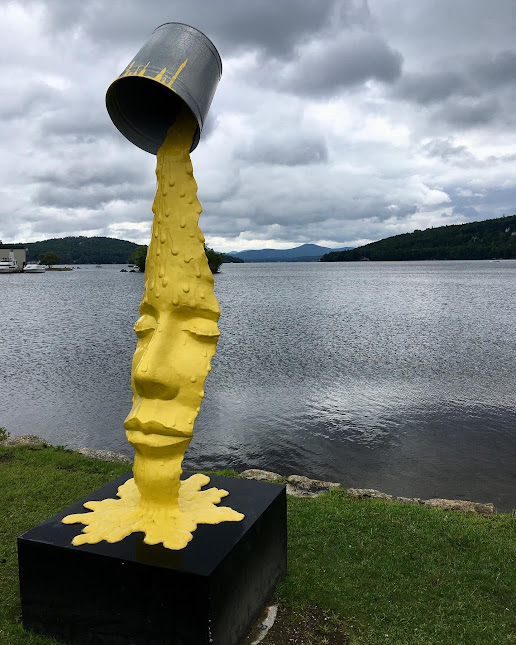
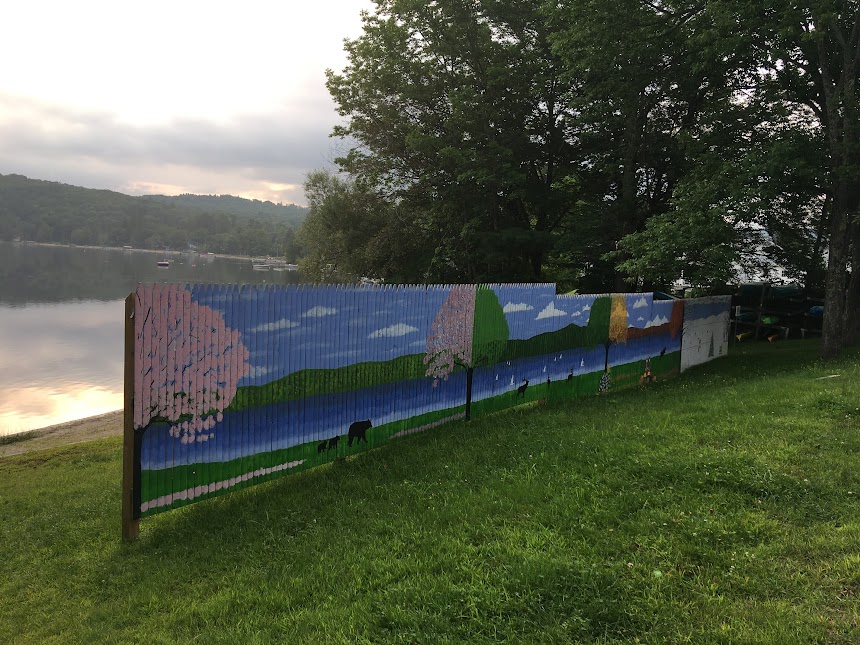
Painting the fence: A seasons mural by my local lake back in New Hampshire

The following week we learned that a classmate died that day, of heat stroke at Easter Seals camp. Those memories are bundled together for me: that sweet boy, the stultifying heat, the sticky paint, the graves.

Whether accompanied by tragedy or not, extreme weather can serve as bookmarks in our memory’s manuscript. Can you quite easily recollect and recreate your most stifling or humid moments? And your iciest ones, or the ones when you got caught in downpours?

Literature to Cool Off By

You can probably name some great books that incorporate weather, too. Recently, I was thinking of The Siege by Helen Dunmore and how cold I felt reading that. Another chilling one is Smilla’s Sense of Snow by Peter Hoeg, set in Greenland. Tales of Shackleton’s journey, the cold, miserable mud of the front in World War I that oozes in at the end of A.S. Byatt’s The Children’s Book.

Maybe you’re like my husband and you insist a hot cup of tea will cool you down. There are plenty of high-temperature reads, from the jungles in Louis de Berniere’s trilogy starting with The War of Don Emanuel’s Nether Parts, to the suffocating false politeness of small-town Missouri in Gillian Flynn’s Sharp Objects, to the powerful storms for which Zora Neale Hurston named her novel, Their Eyes Were Watching God.

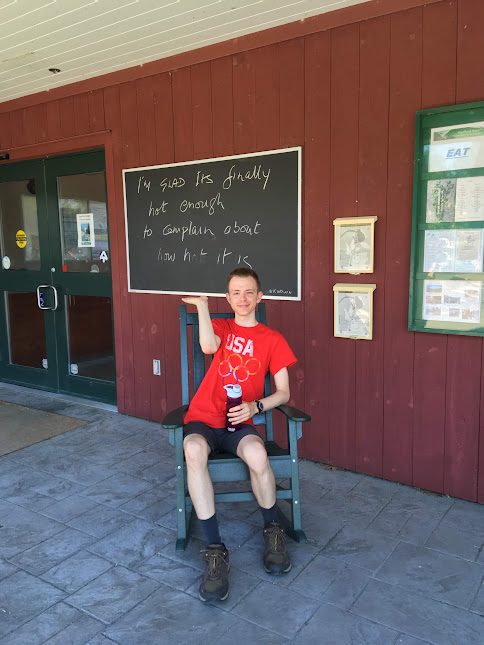
My kiddo with this excellent sign at Quechee Gorge Vermont State Park: “I’m glad it’s finally hot enough to complain about how hot it is.”

I find that weather helps to mark out stories in my writing, too. When working on short stories, imagery is such an integral part of the whole. Using particular climate and setting conditions can launch us into the mood of a piece. It’s easier to get creative describing something extreme than something ordinary, so if you had a bit of a rant or therapeutic scribble while you were hot this week, see if you can put it to use in a story one day.

My first published story, in the Bristol Short Story Prize Anthology 2010, was about a little girl in Haiti, before and after the earthquake in January of that year. To invent the character and her life, I relied not only on research but also on memory from my own visits, seared into my mind by the heat. Dusty roads, cracked skin, ceiling fans powered by generators through rolling blackouts, springtime temperatures at least as hot as the July fence-painting ones in New England. Once it clouded over, but the rain seemed to shrink as it fell and evaporate before hitting the ground.

Braving It

Weather can inspire us beyond just prose development. It forces us to build resilience. I’ve started wearing shorts in public, and shedding even my lightest cardigans. If I can be brave enough to show my somewhat un-toned arms and un-tanned legs, what else can I find the courage to attempt?

During the hottest days this week, our parched British region very nearly reached 100 Fahrenheit, and the upper floor of the comprehensive secondary school where I work DEFINITELY reached it. We couldn’t cancel school because there is no county provision to do so. We relocated classes, cramming all our students into the lower 2/3 of the building. The administration generously allowed them to wear PE kits instead of full uniform if they wanted.

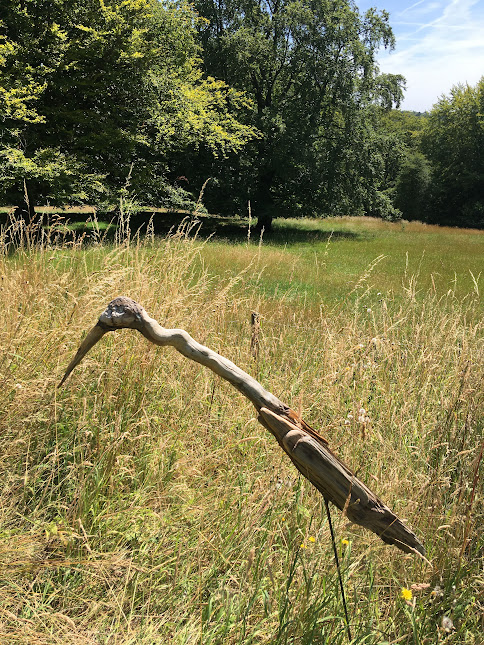
Parched. Driftwood sculpture at Miserden Gardens, Cotswolds.

There was little relief downstairs, though. I resigned myself to living in a constantly-replenishing fountain of sweat. There was no way to look my best around teenagers who can sometimes be harsh critics. I don’t think anyone cared, though. We were all in it together. They weren’t exactly looking or certainly smelling like roses, themselves.

At the end of each boiling schoolday, I walked home in the blazing sun, grateful that at least I was in open air. Then I parked myself in front of the fan, curtains firmly drawn, and compiled editing notes for my novel. Being all about Eve and taking place in the Fertile Crescent of the Middle East, it’s got some high-temperature prose, but I was listening to the Frozen soundtracks which I think helped.

In one of Sarah Tinsley’s Scribbles virtual workshops recently, the theme was Heat, and I reflected in my notebook on how our emergency procedures for hot days might match our methods for interacting with the world: Rise very early when it’s quiet, open all the windows and doors to let the cool air in. Then shut everything down as soon as the sun starts to get through. Complete all tasks in darkness. Don’t venture out in search of an oasis because if we were entitled to one, it surely would have appeared already.

But what’s the worst that could happen, if we let in the sun? We might slow down, lie motionless, expose what we deem undesirable. We’d risk being seen, and falling behind. If everyone else is just as hot and tired though, who is there to judge, or to pull ahead?

Just a thought. I hope you’re able to take these opportunities to, if not feel more brave and inspired, at least feel accepting of yourself. We’re all doing our best, sweating through it.

Straying from the Original

This Week’s Bit of String: Ready for the close-up

To prepare for her A-Level Photography next year, I took a Year 11 student on a little expedition Thursday morning before the blue skies were completely obscured. We both had our mobile phone cameras and we found a wealth of photo ops right behind the school. 

My student is a fan of the big picture. She stands back to get everything in one photo. I’m rather the same. It’s challenging to look at a whole panorama and remember to consider whether it would be even more striking from other angles, or broken down into close-ups.

Bit like writing, really.

One of our findings.

So we were trying to get examples of low angles, high angles, and macrophotography. I found myself in a much more creative frame of mind, running around going, “Ooh, what if we tried this?”

My lovely autistic student started out not doing close-ups. I showed her examples of macrophotography, but her method was to say, “Out of the way, I’m going to take a picture!” She’d take one from really far, zoom in as much as possible, and crop after. The resolution of doing it this way is not ideal.

What the Framers Had in Mind

Framing is important. Proximity is, too. We’re working on Photography before Year 12 has officially started in order to ease this young lady into new ways of doing things. Whether we’re neurodivergent or not, we all need time to break habits and see new perspectives. 

When it comes to running a country, the United States had a real headstart. The revered U.S. Constitution is pretty much the first of its kind, and is now about 234 years old. Did you know almost every other country in the world has a constitution now, and most were written in the last hundred years?  

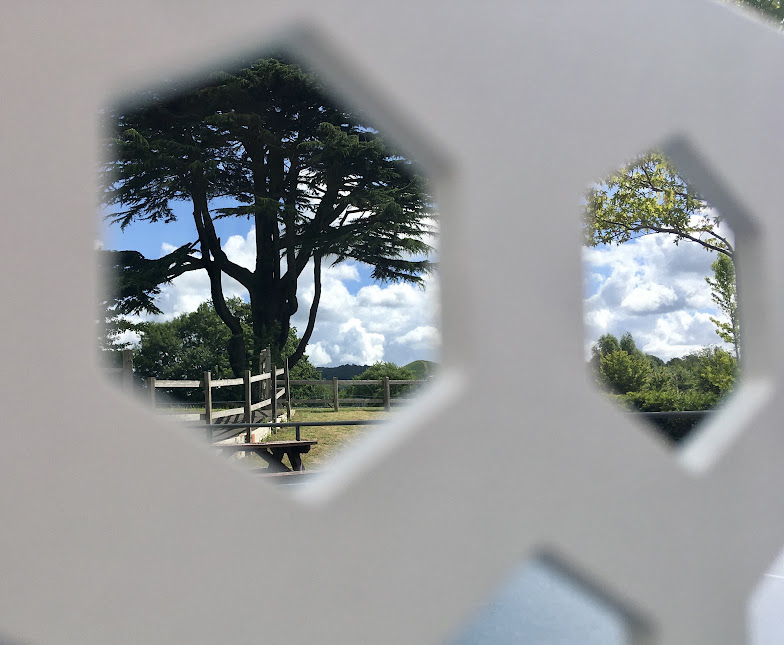
My favourite one I took. It’s through a table tennis divider.

Needless to say, that encompasses a vast array of nations with varying success at the democratic experiment. But some of those countries are doing just fine, and are not in any way less free, equal, or prosperous. Which is weird, because who knew a people could derive liberty from a document NOT written by a few white guys in powdered wigs who thought not-white and not-male humans could be property.

As ever, much Supreme Court controversy comes from how “originalist” its Justices want to be, or not. Must all US legislations still be measured against the words of the original founding documents, or is there room to grow?

The thing is, even originalism is very much up for interpretation. If a law pertains to something not referenced in the Constitution, then is that thing not allowed to exist at all? Or does it mean we can do what we want with it? And there are many angles to originalism, and different approaches have been developed over the years.

Now What I’m Gonna Say May Sound Indelicate

The Founders themselves were not exactly orginalists. They included Amendment 9 to ensure that “unenumerated rights” which they might not have known about could still be allowed to exist, much later. They also went and added 2 more amendments in less than 20 years. I wonder if they envisioned that 234 years later, a top state official would explain before Congress that he believes their Constitution is “divinely inspired.” Particularly given most of the Founders were more interested in Locke and Rousseau than they were in the Bible.

When Edison invented his light bulb, did he expect we’d still be using the exact same version a century later? Because I don’t think we are. 

I say we get a whole new Constitution. Give the thing a good edit; keep it broad yes, but maybe offer some clarity. Schedule it in for a full-on maintenance every fifty years maximum, to be carried out by a mix of scholars and ordinary people selected like jury duty. Look at the nation from new angles, get up close and see rather than continually trying to crop and fit the vision Jefferson et al. had. The resolution from how much they’d have had to zoom in to see us now, and vice versa, is just awful.

Just put a little effort in. One of my macro shots on Thursday

A new Constitution would never happen, I know. America has far bigger problems (although a lot of them stem from extreme constitutional interpretations) and too little time and money.

By the way, money features a LOT in the Constitution. Imports, duties, trade. War’s in there a fair bit. It’s true that women and God are never mentioned. Males are mentioned, and in fact Article I Section 8 mentions pirates! Ooh. So if you want to be super originalist, the Supreme Court has a lot more basis to rule regarding pirates than regarding women.

I really like some of what I’ve written, but I wouldn’t want anyone to base how they live their entire life around them, let alone how a whole country has to live. Though it’s exhausting work, the power to edit and evolve is a great relief and, well, freedom; as is the ability to learn from new people, whose voices may have been stifled before.

My student did start taking close-ups at the end of our session, by the way. She saw a single, white bindweed blossom grown up through a bush and charged right in through the branches to capture a shot of this “lonely flower.” I’m excited to see what else is going to inspire her, and learn from that myself.


Never One Thing at a Time

This Week’s Bit of String: The ultimate tear-jerker

Our GCSE students (aged 16) had their last exam this week and took their leave. For the ones we’d worked closely with, we threw a little party with balloons and refreshments. A couple of us got cards and prosecco in return.

“No one got me anything,” joked one of my fellow teaching assistants. “I’m going to cry. I will!” But she couldn’t muster the promised waterworks with us watching.

A last lingering Year 11 girl, the most reluctant to leave, offered this: “I know what will make you cry. It always works: when someone asks, ‘Are you okay?’”

This student is one of the most perceptive people I’ve ever met, let alone one of the most perceptive teens. She was spot on. We’ve all been there, haven’t we, when we’re muddling on in a lonely blur and then someone stops and asks how we are, with genuine interest. 

And there go the floodgates.

The key to these gates will vary, depending on the magnitude and current of what’s behind them. This is not just a female thing, either; guys are equally likely to get triggered by something seemingly small. 

When I first immigrated, I was so alone and the British townspeople were so preoccupied and indifferent, a rare Hello from a stranger had me fighting tears. Since then, I got somewhat inured to being away, able to bumble along preoccupied myself. But when my son moved to America a few weeks ago, leaving me separated from both my best little buddy and my whole family, that changed things.

7 weeks ago

Colleagues know better than to ask if I’m ok. They ask how he’s getting on instead, and the news is generally good. They say, you must miss him so much, which saves me from having to say it. Much of the time, therefore, I maintain equilibrium. There’s a constant ache, a horrifically deep emptiness, dulled by almost-daily messages he and I exchange and by my relentless counting down until I can go see him (5 weeks and 2 days). In some moments it has been piercing, like when I put clean sheets on his bed and wondered if I should keep the pillows how he likes them or stack them tall. Or when I went to send a care package and the post office got grouchy over the extra barcode on the customs sticker.

Triggers are necessary because they give us a choice: Hey, you know that deluge you’re hiding behind the dam? Can we try channeling it, please, before it starts to leak? Sometimes we feel we have to keep refusing, and other times maybe we can’t put it off any longer.

Literary Triggers

At a Retreat West workshop a couple weeks ago, we learned about the importance of having your book’s “inciting incident” right at the beginning, to hook readers in. This is different from the climactic showdown or the big reveal. Often, it’s one small thing that kicks everything else out of inaction.

Rather than the writer throwing a wrench into the protagonist’s works, usually the writer is nudging the protagonist into the uncomfortable realisation that their way of life isn’t really working

Great examples of this are Eleanor Oliphant is Completely Fine, or Piranesi. Eleanor would have kept on refusing any company apart from the Glen’s vodka from Tesco if she hadn’t been sent to that charity concert and developed an ill-advised crush on a singer. Piranesi would have kept wandering the statued halls of The House, recording tide times, if signs of visitors hadn’t begun to appear. 

Mind the falls.

Even when a story begins with a main character choosing to make a change, they often don’t fathom how badly that change is needed or where it will take them. This has been true of literature for as long as storytelling has existed: Chaucer’s pilgrims wouldn’t have realised how much they’d learn on their journey; Romeo had no idea how far he’d go for love when he went to the party to see Rosaline.

When we write stories, we’re not attacking our characters with suffering for the fun of it. Our imaginations have found someone who needs liberation, and we’re plotting a way to spring them free.

For Our Own Protection

In real life, incidents don’t spiral in an orderly manner. It’s not a series of clues and incremental escalation, sometimes it’s everything at once and sometimes it’s like, “Ooh maybe things are about to settle down,” and then bam, another thing hits you. Meet a friend for a catch-up, and as you recount the last couple of months you’ll be thinking, This sequence of events would not fly in fiction. Readers would be too confused.

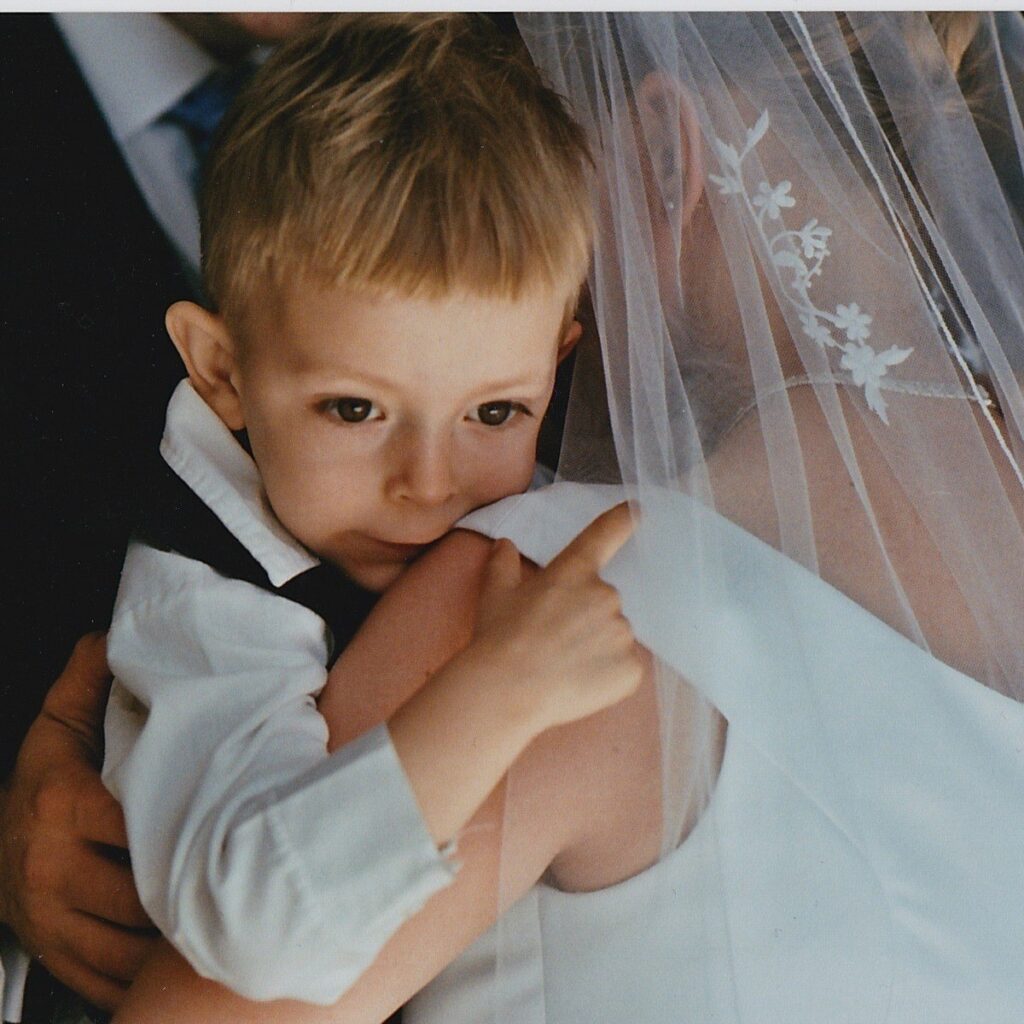
18 years ago. You never know how things will end up.

Honestly, I’m kind of glad it’s that way. Imagine if our lives progressed more rhythmically. If we were characters in a book and something went wrong, we’d have to ask ourselves, is this trying to teach me a lesson? Is this merely foreshadowing a massive climactic battle later on?

As it is, I can pour myself into work, helping students cope with their own stress and trauma, and I can write my grief into my novel instead of feeling it as my own. I need to edit this story of Eve so she more quickly learns to use her voice; learns that it is her own even if one of her ribs is not. For that to happen, stuff’s got to go wrong, to force her to wonder how she put up with everything, years after being exiled from Eden and then losing her first two sons.

While I work, and work on writing, I can ride it out, 5 weeks and 2 days. It’s already 7 weeks of separation, and there have been plenty of mini-crises to interrupt the trajectory of contemplating my new life: exams and Supreme Court decisions, viruses and injuries, something scurrying in the roofspace when we try to go to sleep. Who knows what else will come up, whether they will keep distracting me from loneliness or force me to confront it. I suspect the former; I’m grateful not to have to slow down.

What about you? Are YOU okay?

Calling All Alchemists

This Week’s Bit of String: Chemistry Revision

We’re finally down to our last two GCSE exams. Chemistry next Monday and Physics on Thursday. I miss studying for English, giving students fun writing and reading exercises. Now it’s all Sciencey stuff: alkanes and alkenes, distillation processes, waste water treatment, collision theory.

But the fundamentals, like the laws of physics and the reaction rules of chemistry, have a certain beauty in their massive all-encompassingness that inspires me and makes me think about the creative process.

A young neurodivergent student once advised me, “It’s dangerous to mix acid with hair dye, or toxic waste with gin and tonic, or potassium and mitochondria, or to put too many herbs with onions.”

Throw it all in there, just see what happens

I don’t know how exactly you would mix mitochondria and potassium if you wanted to, but with writing we do get to combine all kinds of things. Sometimes they are dangerous, but they almost definitely won’t explode. I love imagining a massive, dim chamber full of vials and beakers, some steaming and some icy, all different hues. We can grab whichever settings and character flaws and plot elements we like, mix them up, and see if it creates gold.

Later this month I’ve got a story coming out in The Phare online magazine. It’s called “The Albatross of Albany High School,” and I’m so proud and excited for it to be read. With Coleridge references and a young adult point of view, it’s made of weird ingredients, but after extensive experimentation, I think I got it right.

Back to Basics

States of matter are a revision favourite. Kids love reviewing what they already know. It’s reassuring, I suppose, like when you’re working on a draft and you keep rereading your favourite crafted dialogue.

Since making models of the different states of matter in Year 7, the students recall how particles move differently within solids, liquids, and gas. They’re not always able to name the processes that change a substance from one state to another, but I can give it a go.

Condensation: When we try to write a story, the idea is like a gas. Particles move freely, expanding to invisibly fill whatever space they’re in. It’s hard to stop thinking about it at the ideas stage, isn’t it? It bounces around your brain and will consider bonding with any random thing you hear or see.

Once we expose this high-energy idea gas to the cooling logic of a plan by simply sitting down at the computer or picking up pen and paper, the gas starts condensing into a liquid. As we start writing, whether in notes or as a draft, the particles compress enough to have shape, albeit a slippery, shifting one.

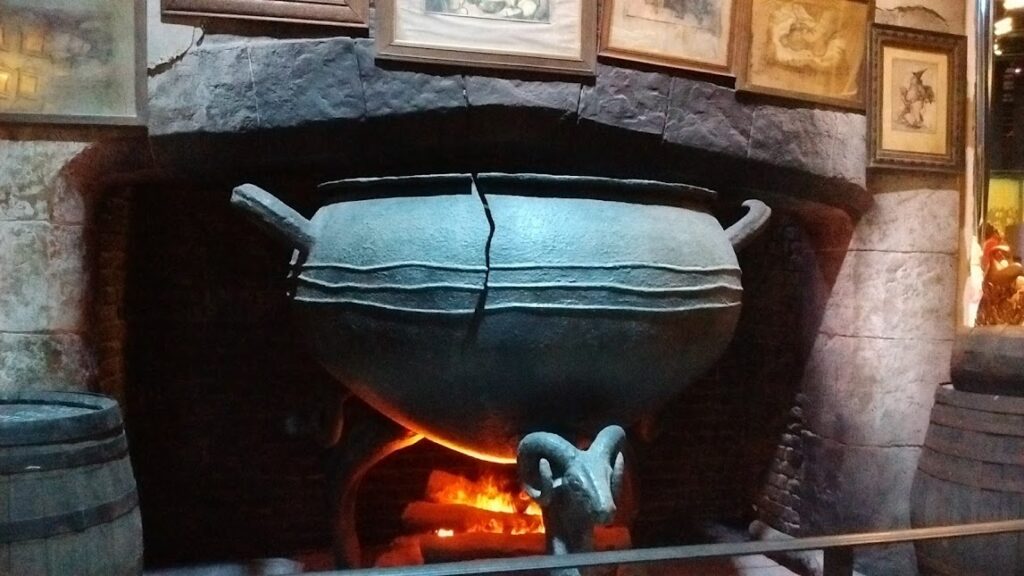
For the magic: this cauldron is from the Harry Potter experience at Warner Bros studio

There’s always a chance it will all evaporate again, and that’s ok. Some substances are best in that form.

Solidification: While drafting, the shape of our narrative settles from liquid to solid. It doesn’t mean you can’t still change the shape; we can whittle, drill, varnish, and paint. It just means the particles aren’t moving around and have finally drawn close to each other.

With less movement, a particle has less energy. But it also has a higher pressure. (As in, solids exert more pressure than gas.) I think that’s true of our creative process too; we might feel more excited as we’re snatching ideas and a bit less excited once they’ve solidified and we’re chiseling and polishing. However, this gives us an opportunity to exert pressure, to create impact.

Altering Carbon

Here’s another chemistry unit off the revision list that makes me think of writing. Any chemical reaction can be helped along by certain factors, and it’s the same with our creativity.

Temperature: This is the first thing we usually think of to speed up a reaction: heat it. It’s the first thing to consider with an idea, too. Does it spark within you, does it really excite you? When crafting a story opening, the inciting incident must be evident almost immediately. The reader needs to be drawn to the flame. Gentle warmth amongst the characters is important as well.

Concentration: The more particles you have, the more reactions you’ll get. It helps me to scribble every day in my journal and jot down anecdotes, responses, fantasies, what-ifs. Most of the ideas and thoughts won’t bond with anything enough to form a cohesive story. But the more ideas you can gather, the better your chances. Sarah Tinsley has some great articles on her blog about getting more ideas, like this one.

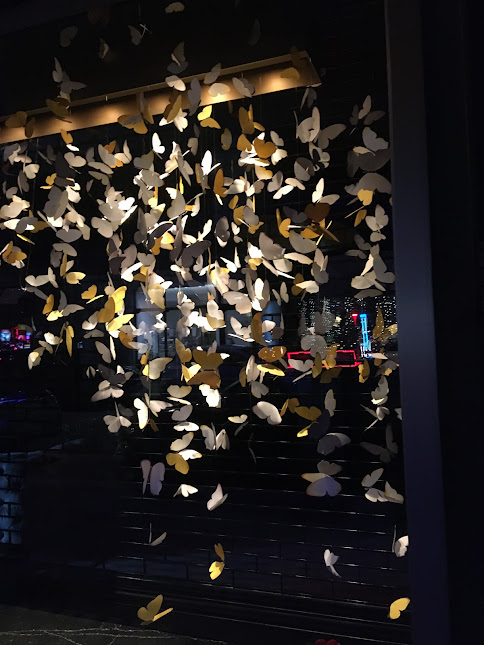
Stay gold, butterflies

Pressure: A deadline can be useful. Time goes through different states of matter, it seems… It can be a gas which expands to fill the space. When we think we have lots of time, we’re a bit aimless. But then suddenly time sublimates into a solid, and the pressure is on. Sometimes that’s where the magic happens.

Catalyst: A catalyst can be a substance or a position. With creativity, a catalyst can be a pre-existing structure. Retelling an old myth, subverting a trope, or speculating on an alternative to a historical event, can all jumpstart our process when we feel ideas have dried up.

These altering factors are part of collision theory: a chemical reaction requires particles to collide at the right angles and with the right energy. Not everything is going to work. Ideas will pass us by, and some we’ll need to pass over. The main battle I have is with energy. A lot of mine goes on work and family, and it’s hard to maintain some for condensing and solidifying stories.

What helps my energy, though, is a fresh perspective and a rare publication. Collide even chemistry with literature at the right angle, and inspiration wafts through the air. All those vials to be unstoppered, and the occasional success: a shimmering gold acceptance.

What are you concocting right now?

Imagining What Can Save Us

This Week’s Bit of String: Miners and runaways

A hundred million years ago, according to geologists, the Southwestern region of the UK was underwater, populated by sea urchins and other such creatures. As the seas dried, the remains of those little shelled beings were compressed through extreme heat into our incredible coastal cliffs.

The same coast which Roman soldiers breached a couple thousand years ago, undoubtedly bringing with them enslaved persons from various corners of their territory. They discovered the cliffs near Beer, now a lovely seaside village in Devon, and began to quarry the stone, building arches underground to access it.

From Roman times to the 1500s, the method of extracting Beer’s pale, chalky limestone didn’t evolve much. Workers picked clear the top of a chamber, a crawlspace about 3 feet high, then climbed in and, in the cold darkness for up to 14 hours daily six days per week, they picked downward to carve blocks, 4 tonnes at a time.

When the Church ran the quarry, in the Middle Ages, they even forced miners to buy their own candles. And if a block had flint or a crack in it, the miner didn’t get paid for that day.

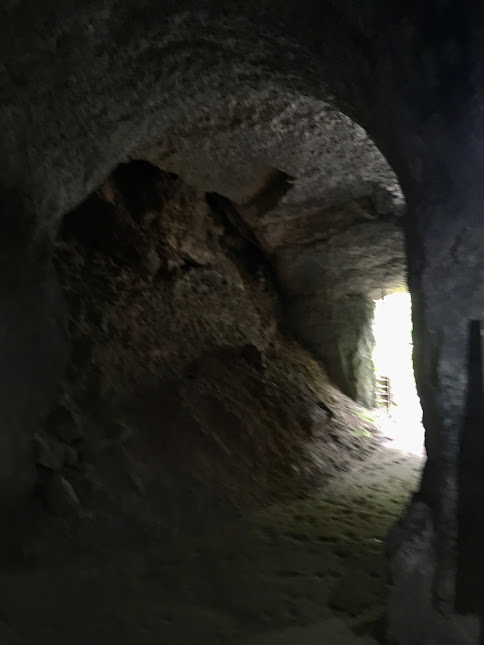
View through a Roman arch

These blocks, made of ancient crumbled seashells and dug out by men in harshest conditions, have been used in more than half of Britain’s cathedrals, and around the world.

I learned about Beer’s miners on a quarry tour last weekend. I wondered, how on earth could people keep living with such a laborious, unrewarding existence?

One answer, apparently, is that the miners drank lots of rough cider. And probably they were pretty friendly with each other even while deafening one another from the echo of their picks. Maybe they had nice families waiting for them at home.

But they must also have been picturing themselves somewhere else. It’s hard to imagine a life without imagining, isn’t it?

Of course, we are lucky now to access books, travel, music, and things that clue us in to alternative existences. Before all those, there still would have been storytelling and songs, there would have been starry skies and vast seas and the people who sail them. Even medieval people might have had something to distract them as they worked. Did they know about the Romans before them, and imagine proving themselves in a gladiatorial ring, marching into a hot ancient city to a hero’s welcome?

Descents of Fancy

The day after visiting Beer and its caves, we went toward Lyme Regis and looked for fossils. There’s a whole beach where the Jurassic layer has shifted from under the cliffs, creating the “Ammonite Pavement.” Vast slabs with prehistoric squid shells perfectly visible.

I used a short thin stone to pry loose part of a clay underlayer, with lots of little scallopy fossils. As I pounded the edges of my chosen rock, I imagined I was a miner with my pickaxe, providing cathedral material.

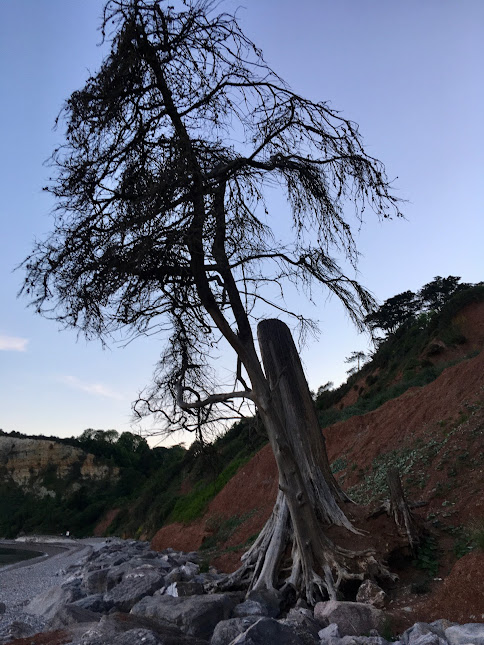
I can picture this tree lifting its roots and just shimmying down the cliff

Do other creative people sometimes imagine a tougher existence rather than a rosier one? It’s like when I was little and my sister and I pretended we were running away from a Dickensian workhouse or a slave plantation every time we packed for an overnight at Grandma’s.
By picturing ourselves in those situations, we weren’t trying to claim the suffering others went through, or minimise it. Maybe we were a little callous to inject this sort of peril to make our lives more exciting. But also, I think that spending mental time in such stories helped make us more empathetic as we grew up. Possibly, hopefully, it makes us a little less dramatic about the trials we have in our own lives.

When I chisel a fossil free, I’m just taking it home so I can glance at it occasionally, and smile remembering a sunny little adventure. It’s not going to form the grand arch of a cathedral or the dungeon stairs in the Tower of London. Those Beer miners, for all their struggles, at least were part of something great and I’m so glad their contributions are now recognised, in the Quarry tour and in our imaginations.

Building Great Things

When I think about people like those miners, or when I stand in a Remembrance Service and listen to the names read out of terrified young soldiers who died in battle, I concentrate really hard on who they might have been as humans. This is probably silly, even delusional, but I hope the waves of my empathy somehow make it back to those people. So that, for an instant, they sense they’re not forgotten.

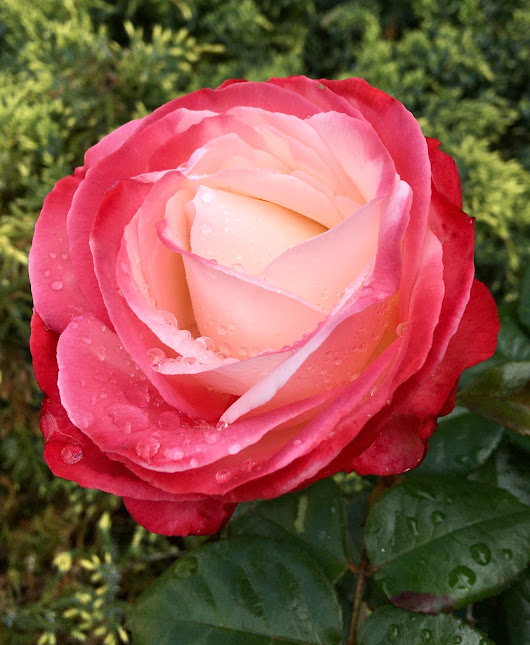
More imagination fuel–this rose must have some magical power, right?

Obviously it’s not enough to just imagine what people’s lives were like in the past; there are people struggling now and we need to donate, amplify, and vote in ways which benefit them. I think imagining is a strong motivator though.

Our ability to imagine, and then to empathise, may set us apart as a species (although, have you ever watched a cat slink around outside? I think our feline friends have some extremely melodramatic fantasies…) but at our core we are self-interested. In order to care about someone else’s plight, it helps to picture ourselves in their stead.

In the aftermath of 2001’s terrorist attacks in New York City and Washington, D.C. John Lennon’s song “Imagine” was banned from radio stations. Because if people are using their imaginations, that might not be so good for the weapons industry’s profits.

Of course, running alternate scenarios in our heads also just makes things more interesting. When I have to sit quietly with my students in their exams, I can pretend I’m actually in the Great Hall at Hogwarts taking O.W.L.S. tests. If stress is keeping me awake at night, I play a comforting memory of my Grammy’s voice. And I probably won’t use the miners of Beer in a story, because their reality feels so extreme I don’t think I could do it justice. But it’s inspiring to contemplate the many layers of history that have unfolded on the very earth beneath our feet.

What daydreams have you embarked on lately?

The Exams Rant

This Week’s Bit of String… More a tangle of tension

I despise the British system of exams. I’m not a fan of A-Levels (the exams kids take in formal education at 18), but GCSEs (the ones at age 16) are the worst, because they’re so inflexible and unavoidable.

Exams at my American high school were more like tests. Designed by your teacher for your specific class, they’re marked by your teacher, and in most cases they’re only part of your final grade. You’ll get credit for essays and projects and presentations, homework, unit tests, and even participation in classroom discussion.

None of that is true in the UK. I hate the system as a parent and I hate it even more now that I’m working in secondary education again. This week has been very stressful, as the main national exams began. Our Year 11 students, along with all the 15 and 16-year-olds across this Small Island, sat down at the same exact moment to work through papers which determine their grades for the last two years of learning.

“Learning” being a loose term when it comes to spending two years practising for a passing grade on a paper distributed and marked by a government-sanctioned external body. Because if you don’t pass, the venue you chose for your next level of vocational training or academic education might not accept you.

Coping with stress. One of the Year 11 students and I have been creating our own oil pastel versions of Van Gogh’s Starry Night and it’s been a lovely distraction.

The country has been brainwashed into believing that these exams are the only possible standard of achievement for teenagers. Even those of us who see the system’s flaws panic over what grades our students will get.

Binding the fates of every person in the whole nation to the same tests isn’t actually fair. I hate that every young human, regardless of need, interest, talent, or background, is forced to bow their head as one over a paper. Children are told they must come in even if ill. The student I’ve been working with most this year sat her first English paper on Wednesday doubled over with stomach cramps the whole time. Some go in streaming with hay fever, or fasting for Ramadan. Some go in having just been dumped by their boyfriend of over a year.

I hate seeing kids cry outside the exam hall every morning, or shake, or look miserable. I hate that the exams are so onerous, students joke about how great it would be to get a terminal illness so the exam board in their infinite mercy will tack an extra 5% on their scores. Other students are Googling, “If the Queen dies, will the next day’s exam be cancelled?”

Meanwhile, the 80% of the school’s students who aren’t exam age must spend a month being quiet at break times, moving to different classrooms, and even having their whole timetables changed in order to accommodate the national exams schedule. The teachers are all tense and terrified. They’re not trusted to assess their own students, of course.

There are special staff who monitor the students while taking exams. The invigilators. There are also “access arrangements” for students with special needs. Again, this is a loose term. A person with meticulously evidenced need may be granted access to someone who will read the questions for them, possibly scribe answers as dictated, or they may be granted rest breaks or extra time. Not super helpful for those with issues processing the questions or sitting still, and certainly nothing that helps the many students who struggle with anxiety.

More than half of our Year 11s have access arrangements. When a system must be modified for the majority of a population, maybe it’s time to assess them a different way?

I’m also making sure, no matter how drained I am, to get out at 5:45 for a good stomp in the fresh air to help me cope.

Because of the massive need for invigilating and access arrangements, I have to sit exams too. I sit quietly beside a student with only my bottle of water and my pencil case, just like her. I read her the questions and scribe her answers when asked. I can’t explain anything to her, and I can’t doodle or pick up a book and read. We’re both stuck there until the nationally mandated duration of the exam is up. I despise the sitting still, the stifling air. Students have been told that before entering the exam hall at 9 in the morning, they must decide whether or not to bring their jumpers with them. Because if they get hot in there with over 100 other people, they’re not allowed to take off their jumper and put it on the back of the chair. There could somehow be illicit information scrawled on these black uniform sweatshirts.

I hate that students spend 2 years studying just 2 books for English class, and a few poems. Blood Brothers, for example. I know it has a valid message, but using it to teach literature is like using a sledgehammer for brain surgery. Every student is taught to memorise the same quotes about being poor or rich. Every student memorises “sneer of cold command” from “Ozymandias” and “Be like the serpent under’t” from Macbeth. What a dull time grading those literature exams must be. If only students were encouraged to read widely, find what they love, and defend it.

I hate that for Science, kids are drilled on parts of the cell and the periodic table until their deduction and curiosity cease to exist. One of the questions on this week’s Biology paper was: “Why do you think there were no new cases of skin cancer among boys under age 15?” and our whole class was panicked about it after. “We never talked about boys with skin cancer in class. We didn’t go over that!”

I hate that when exams are finally done, students must wait 3 months to get their results, the anxiety hanging over them all summer as they wait to see if they’ll be able to move on in the direction they want to. I’ll be there that day late in August, telling them that whatever their marksheet says, they have tremendous value and the world still holds great things for them.

Did you do exams here in Britain and have you got any coping strategies or inspiring stories?

Punishment and Crime

This Week’s Bit of String: A 17-year-old’s options

At work, I have a student who’s not sure what to do next. He’s set to pass his exams when he resits them, but because he needed an extra year to do it, the local engineering college won’t take him. His access to transport in this rural area is limited, and so are the apprenticeships on offer.

I brought up his case with the teacher who’s supposed to be our Further Options expert. This got me a lecture on how “cold, hard reality” is about to hit our students after their “cosseted secondary school life.”

Do you remember secondary school feeling particularly cosseted? I wouldn’t have called it that. There’s exams, loneliness, bullies, hormones, plus whatever drama’s occurring at home.

Besides, it’s not the student’s fault that his family can’t provide transportation or that there are only a few apprenticeships around, and far fewer aligned with his interests. It’s not really his fault he needed more time to pass exams, considering that he has learning difficulties.

You can join the bluebells off the path if you want.

He needs more options. It’s not his fault they don’t seem to exist.

As the mum of a young adult, I’ve noticed at work and in domestic life that many grown-ups adopt a punitive attitude toward newer generations. There’s this expectation that they ought to account for every moment, and achieve relentlessly. If a young person chooses something outside the conventional rush toward adulthood, or simply takes extra time, they risk interrogation and censure. 

The Right to Choose

Our ability to make decisions is one of the main things that makes us human. But society seems to dehumanise people the instant certain choices are made. If you decide you need some time off from work, if you think university’s not for you–well, what use are you?

It’s similar with the abortion debate. Beating louder than a cluster of embryonic cells which may one day be a heart is this far-right message: If a woman decides continuing with a pregnancy or becoming a mother would negatively impact her and/ or her family, what use is she

A couple of weeks ago, a state congresswoman caused controversy by referring to pregnancy through rape as “an opportunity.” However, I didn’t see anyone calling out her message’s particularly insidious core. It’s not just that she felt women should be forced through pregnancy and birth after being forced into sex. It’s that she saw pregnancy, any pregnancy, as an opportunity for a woman “to make a determination about what she’s going to do to help that life be a productive human being.”

The implication here is that from the instant of conception, a woman’s sole focus should be contributing a new person to the world. A productive person, mind you, one who won’t have to, God forbid, resit exams or anything like that.

This idea achieves the remarkable feat of dehumanising everyone involved. Women become vessels without bodily autonomy; their babies are essential goods to enhance the “domestic supply of infants.” The men don’t even get a mention in the issue; it’s assumed they want no part. 

What We Deserve

Carrying a pregnancy to term is often framed in a similar, punitive way to how we talk to young people. “You play, you pay.” But is nine months of complete body alteration, often interfering with the ability to earn an income, and then the torture of childbirth, an excessive price for unprotected sex? 

I’m not sure the punishment fits the crime. And what does it say about conservatives’ attitudes toward children if their very existence is a punishment to wayward mothers? (Possibly a throwback to the idea that labour is a divine curse, something Eve wrestles with in my novel-in-progress.) Parenting can be pretty punishing at times, but it’s not actually supposed to be a punishment.

My kid: a truly marvelous human.

The callousness goes both ways. At age 20, I had my baby. I was alone and had terrible self-esteem, so why not just go through with it? I wanted my child, and I’m ever so glad he exists. But believing you’ve got nothing going for you so you might as well give birth isn’t the best child-rearing philosophy.

Meanwhile, no one else wanted me to stay pregnant. It took a while before my baby’s father changed his mind and we got married. I moved our gorgeous, bright little boy over to the UK so we could parent together. But when I got exhausted and homesick and asked for help, my mother-in-law pointed out, “Well, it was your decision to keep it.”

Making a choice doesn’t mean we have to keep doing the same thing all the time. We can take a little break. We can change course entirely. Rejecting an option means quelling one potential outcome, but it enables another. That’s our right as existing human beings. 

It’s tempting to trace all outcomes back to a single decision. Fun to attempt when you’re plotting as a writer; to wind your story tightly around one moment. Life isn’t really like that. You keep choosing things, and you keep getting affected by things you can’t choose. There’s no point, later on, blaming everything on one decision. The challenge of finding a local apprenticeship is not a direct result of one boy’s study habits two years earlier, and nor is a mum needing an evening to herself a complete repudiation of deciding to give birth. Let’s let people make their choices and keep giving them chances.


How to Not Give Up

This Week’s Bit of String: Blue inked sunshines

My 16-year-old student and I turn the page in her practice Maths paper to be confronted with a range of fractions. Mixed and mismatched fractions, including a negative number; this problem has everything you don’t want to see.

“This disgusts me,” she says.

I tell her we can do it, it’s not as bad as it looks, let’s take it one step at a time.

Before we begin, she draws a sunshine at the top of the page, peeking over the rim of that box you’re not supposed to write outside of on an actual exam.

When we finish, and I compliment the heck out of her efforts, she beams and sketches a smiley face, slowly adding fangs until it’s “like something out of a horror film.”

It fits in well with these fractions, then.

My student is preparing to resit her GCSE exams because she couldn’t pass the first time. As someone with processing and learning difficulties, it’s very difficult to pass the same exams everyone else has to take. She feels as if she will never get the required grades, yet she spends almost every free lesson going over past papers, reading, completing Maths exercises, and then doing more at home.

Her resilience inspires me tremendously.

Unfavourable Odds

Much of what we want doesn’t seem particularly possible, and a lot of what we must do isn’t pleasant. If we long for a publishing contract, even a competition shortlisting, so does every other writer and there are only a few available. Maybe we want a house that doesn’t smell as if the toilet is emptying under the floorboards and where black mould doesn’t grow by the bed. Maybe we have to regularly appease people who don’t want us around.

A thing doesn’t have to be complete to be wondrous

There’s no way except to persist. This isn’t news; we all have our struggles and our strategies. But inspiration can come from unlikely sources–eg from teenagers.

I like my student’s idea of putting a friendly doodle at the top of a hostile page. I print out pictures of our next camping destination and put them on the kitchen noticeboard to keep me company through yet another round of washing up. Surround yourself with small brightenings. Plants, stickers, novelty mugs. Wear jewellery from someone who likes you when you have to deal with those who, no matter how you’ve tried, really don’t.

Equally, denouncing something with a hyperbolic statement even as we get down to work on it is a valid coping mechanism. “I think this is the devil speaking,” my student says as she sounds out a word problem. If you want to know whether writers do this sort of thing, just Google “Writer synopsis memes.” (Or go here.)

Make sure there’s plenty of praise in your diet. Hope of success is the best motivator—not fear of failure. Pop into Twitter to do some of the daily writing hashtags, and thrill when people like samples of your work. Join a local writing group or an online one, such as Sarah Tinsley’s Scribbles workshops. When there’s no one around, please, at the very least speak kindly to yourself.

When to Give Up

Two small brightenings, at once!

Not everything will be worth it. Don’t write something if it’s not exciting to you (unless you’re genuinely getting paid). We’ve all had situations where the right thing to do is end the job, the relationship, the torment. There’s no shame in trying something different instead.

I have a number of ideas and scribblings that I know are too cliched, too blah, and I’m never going to use them. I’m proud I tried, I picked at the thread, and maybe someday I’ll use some clever sentences from it or find a better way to write it. But starting a new project, having a go at something new, is better than sitting, stuck, in front of the old.

I think we call that moving on. Don’t we? (Side rant: have you noticed that “giving up” is what society accuses young people or people not accepted in the mainstream of, and when anyone else does it it’s called “moving on” or even “self-care?”) Without infinite time and energy, we have to leave some endeavours behind.

When it comes down to it, not giving up on life is commendable. So many things are tough—we deserve credit for just getting through the day. What little comforts (or irritated rants) help you persevere?