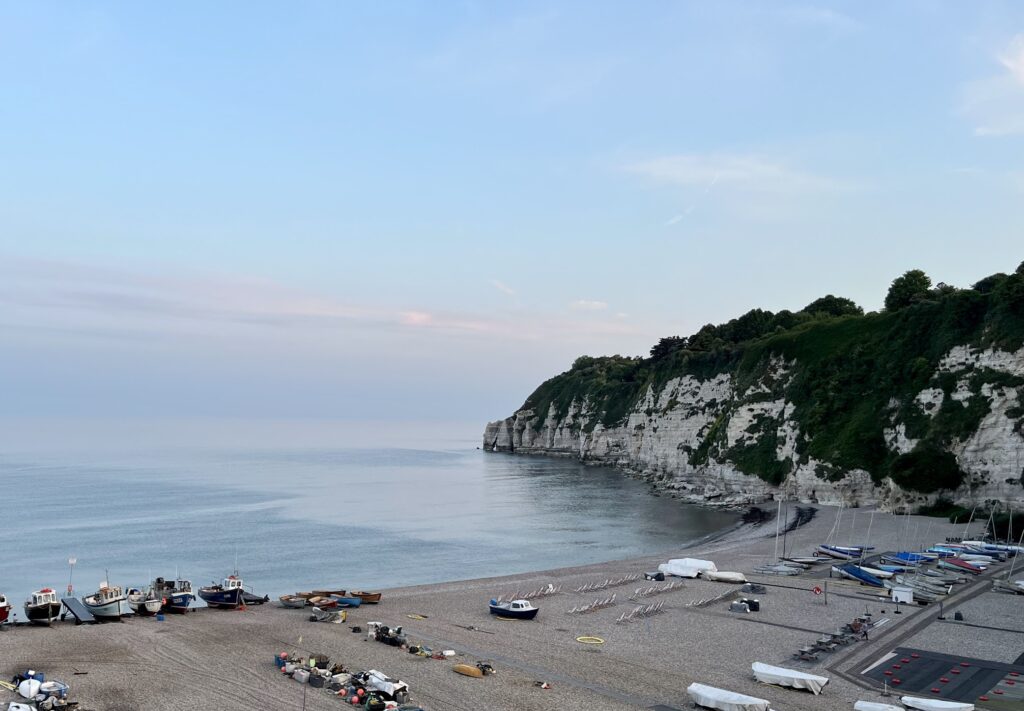
The Wow Factor

This Week’s Bit of String: First fireworks

When my little Bear was 2.5 years old, my best friend and I took them to the 4th of July fireworks in the biggest local town. The Outing Club rocketed the fireworks from their ski slope over the surrounding valley, and we were running late as ever so were just trotting down the opposite hill when they started.

The colourful explosions put a skip into Bear’s step. They cried, “Wow! Oh, wow!”

I don’t think I’d ever heard them say that before. Such excitement is to be cherished and never forgotten, and fully warrants the nearly-taboo exclamation points.

Like the time after school once, a few years later when we were settled in the UK. Bear and I were walking back from town, they were maybe 6 years old, and a harvest moon rose, big and yellow. Bear stopped in the middle of recounting some kind of ds game or Star Wars scene to me, and broke into applause for the glorious natural phenomenon.
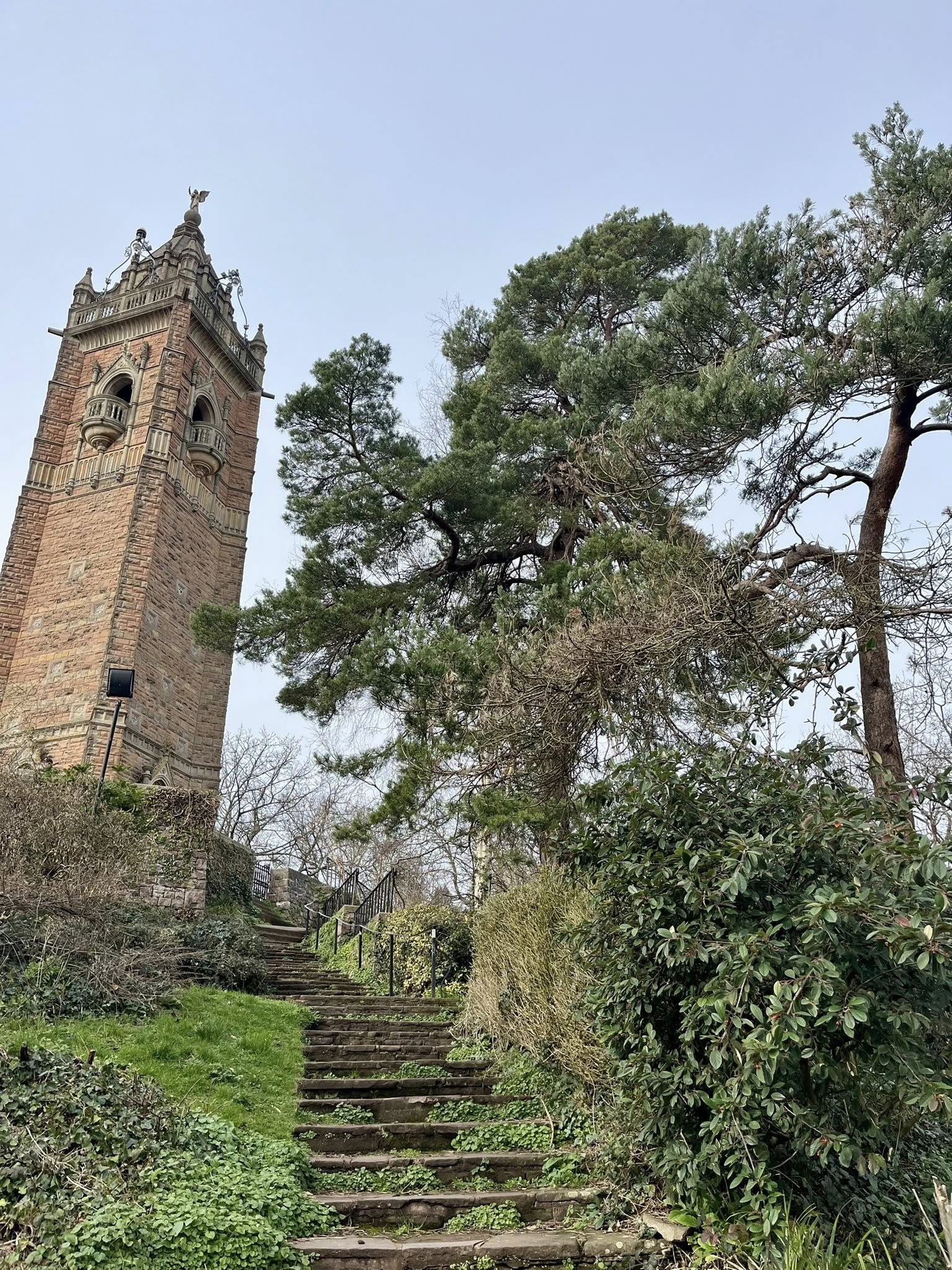
Cabot Tower on Brandon Hill, Bristol

It’s so important to put ourselves in the way of moments that produce this type of reaction, even if it’s a daily event like the moonrise. We mustn’t lose our capacity to be impressed.

During half-term this week, I’ve mostly been working on writing and reading and weeding and cleaning. But I did abscond for a day and take the train to Bristol for a good wander. I climbed Brandon Hill and Cabot Tower to look out over the city, had a roasted white hot chocolate from Mrs. Potts chocolate house, and mooched around Bristol Museum and Art Gallery. Plenty of Wow Factor there, from Assyrian tablets to ichthyosaur bones to all kinds of crystals and then more paintings and artefacts.

I could have stood for ages in front of James Tissot’s oil painting Les Adiuex (The Farewells) from 1871. The detail of the woman’s lace gloves! The clasped hands and the faces agonised by separation. But, there were other gallery visitors and it’s only fair they should see the painting as well.

Vacationing

When I was out and about in Bristol, there were lots of families trying to keep entertained there. Two siblings behind me on the train really liked the Arriva Train Care centre near Temple Meads station, with its sidings flanked by giant car wash brushes.

“That is so cool,” they kept saying.

And as I wandered at Bristol Harbour, I heard excited young people mistake the boats for the Titanic. At Millennium Square a boy on a scooter, maybe already in the early years of secondary school, freely told his friend, “I love these fountains.”

I’d almost forgotten what it’s like to hear kids enjoy themselves. At work we’re becoming pretty rundown. The students are so unmotivated and in a few cases, unpleasant. That said, my experience is mostly within the special needs area. Many of our students truly struggle, and exams ask almost too much from them.
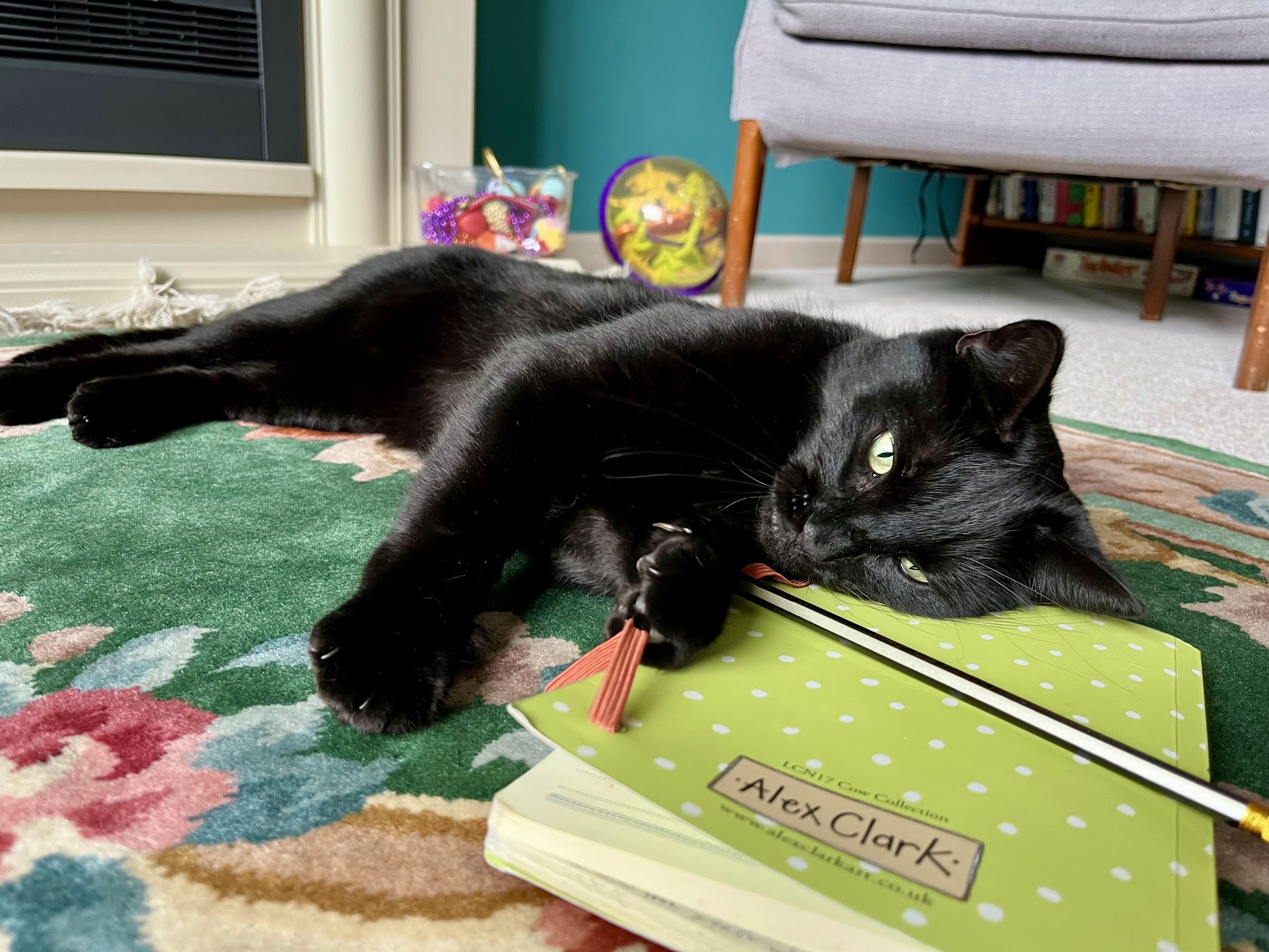
Obie, however, is ready to try being a writer and a scholar.

Other students will experience school differently. On the last day before the break, quite a few of our statemented kids were out (there’s one boy in Year 10 who is marked “ill” on the last day of every single term—intriguing, no?) so I ended up in a top-set year 10 English class.

They were reviewing GCSE war poems they first learned last year, so I took a small group to go over “Kamikaze” by Beatrice Garland. It tells the story of a Japanese pilot who was supposed to commit kamikaze. But he changes his mind, and goes home instead. He chooses life, and his family can never forgive him. His neighbours and his wife, ultimately his children, refuse to speak to him again because of this dishonour.

I read the poem to a group of 4 students I’d never met. The last lines go: “And sometimes, she said, he must have wondered/ which had been the better way to die.”

The boy next to me said, “Wow. That was really—wow. You know?”

Rejuvenation

It’s just nice to share that reaction sometimes.

Although I always have some kind of deadlines and a long to-do list, the half-term week off from my day job at school is lovely because I can do it all with a bit less rush. I can pretend that writing is my main work.
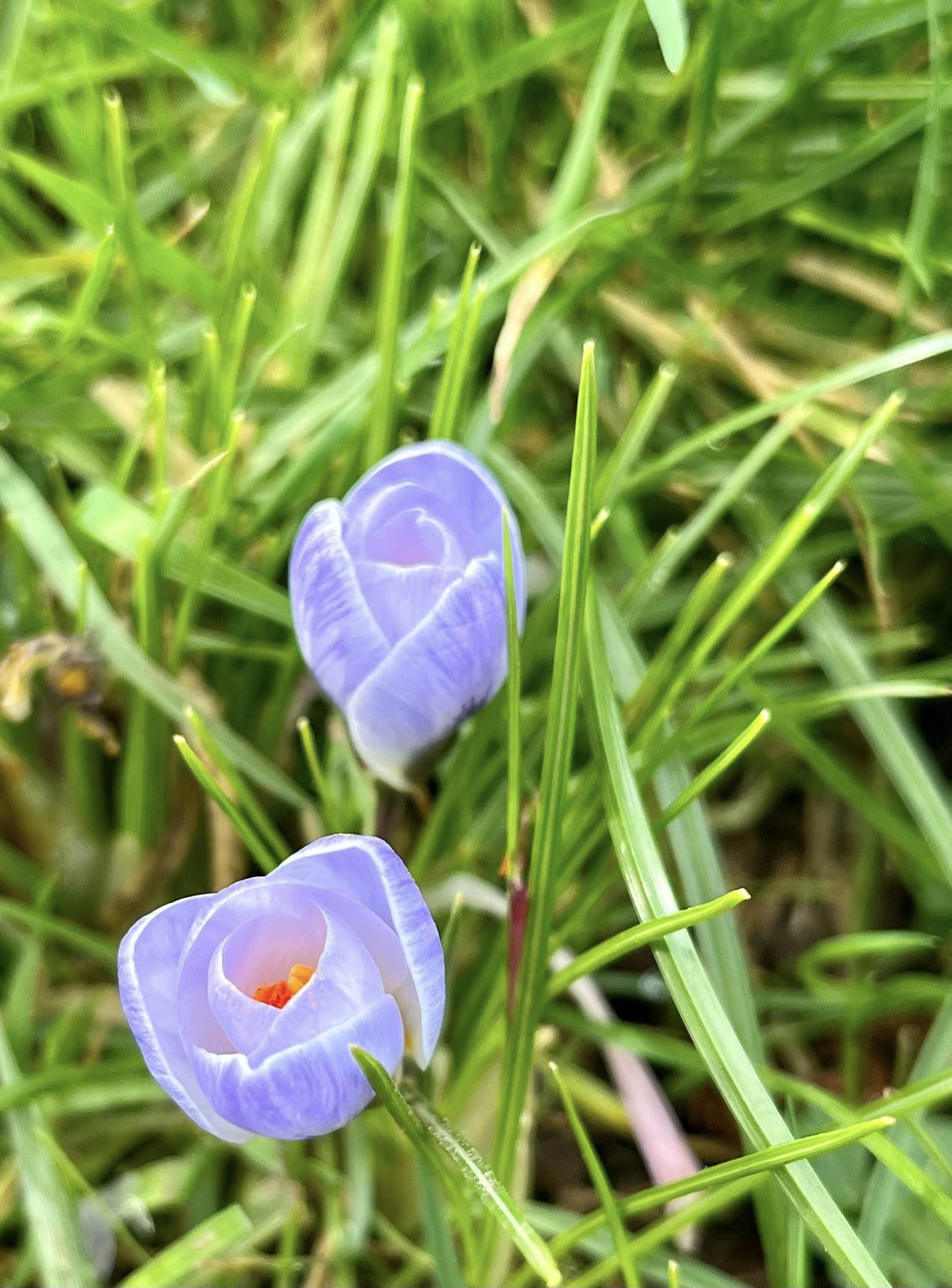
It’s like they’re glowing!

Sometimes, a lack of spare time can make us more productive. We are aware of our limits so we optimise any opportunity to write. A sudden extra helping of free time, as at half-term, might make us more reckless and we squander some of that time. There’s truth in that.

On the other hand, not being rushed can give us some creative freedom. I might enjoy writing more when I don’t have a million other chores hanging over my head, just as those poor kids on half-term can go out and enjoy themselves.

And maybe, when we all return to school tomorrow, those of us who sought and were privileged to find inspiration will have some new energy and tolerance so we can keep trying to pass it on. When I climbed Brandon Hill in Bristol, the views from the tower were pretty great, but so too were the crocuses close to the ground. It reminded me there’s excitement and beauty to be found all over—maybe we just need a little break.

What makes you say “Wow?”
New Year, New Doom

This Week’s Bit of String: Things that growl in the night

3 a.m. The cat is finished napping. Although unlike myself, Obie is naturally blessed with an ability to see (and hunt) in the dark, he doesn’t like to go downstairs alone. So every time he wants something downstairs, he scratches the wardrobe or mews chidingly, and I walk down with him. He goes to his food dish and I turn promptly around. 

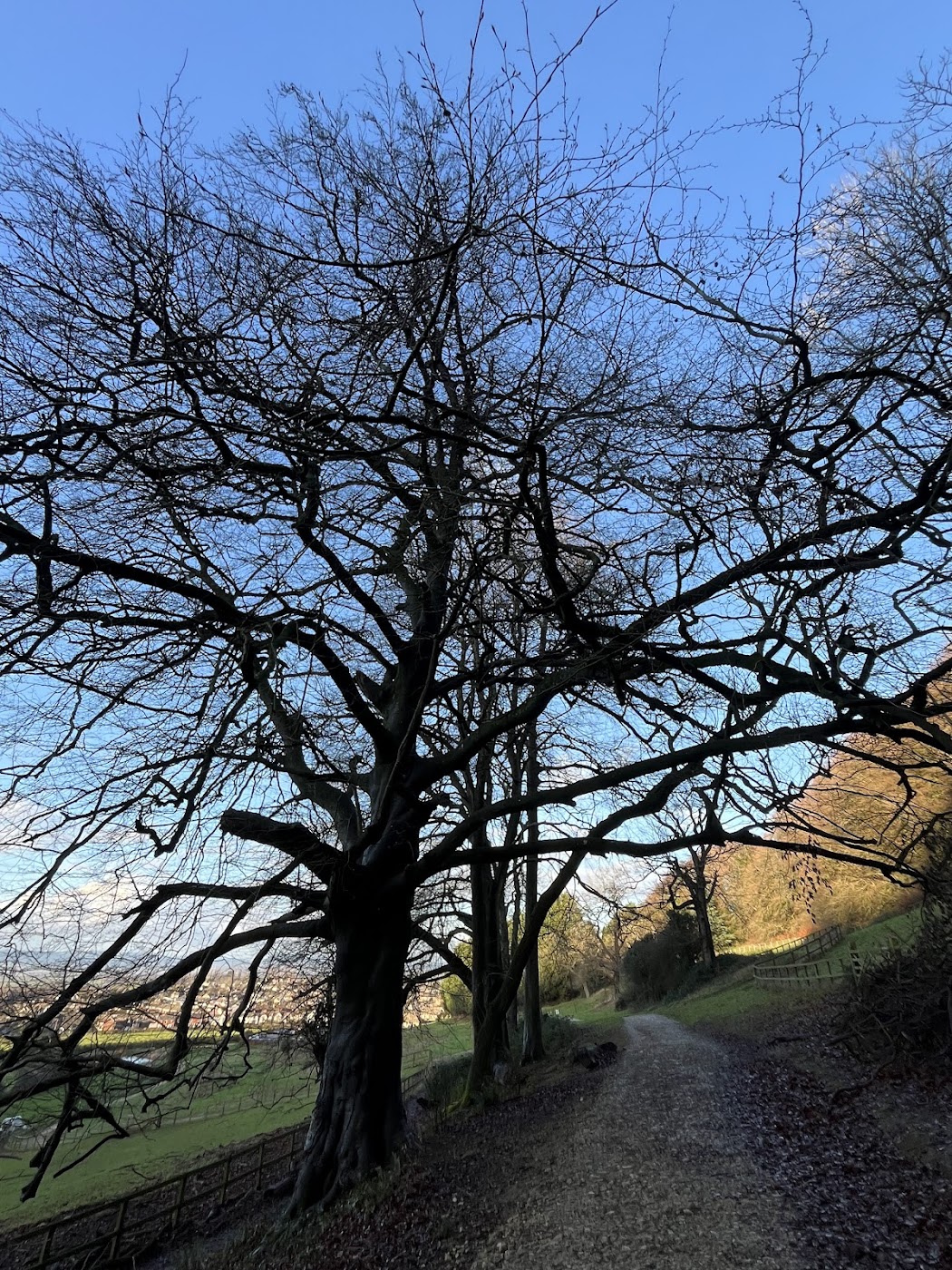
Trees by Stinchcombe Hill

But then he starts growling at the back door. He makes those feline siren calls, starting low and building to a high whine. Then come the full-throated snarls and hisses. Something out there, through the full-length double-glazed glass, terrifies him. My husband and I don’t see anything, but I am shaking violently, thoroughly spooked.

While awake for ages afterward, I didn’t know exactly what I was afraid of. What could realistically have been out there that would pose a threat to us inside? An axe murderer? Maybe the proximity of another living being’s terror was enough to drive my own without any logical reason.

Scrolling, Scrolling, Scrolling

It wouldn’t have helped that I was anxious anyway. I’d been scrolling social media before bed and even during the night while already awake. Flinching past the attempted justifications for violence against immigrants and protesters in Minneapolis, worrying about the tensions over Greenland, horrified by the cost in human lives fighting for freedom in Iran. 

2026, what is WRONG with you? I came into it excited, albeit cautiously. Looking forward to visits with my family, to working hard at writing, and especially to my own kiddo’s wedding in the summer. One reason I’m obsessing about the news is because I fear being separated. 

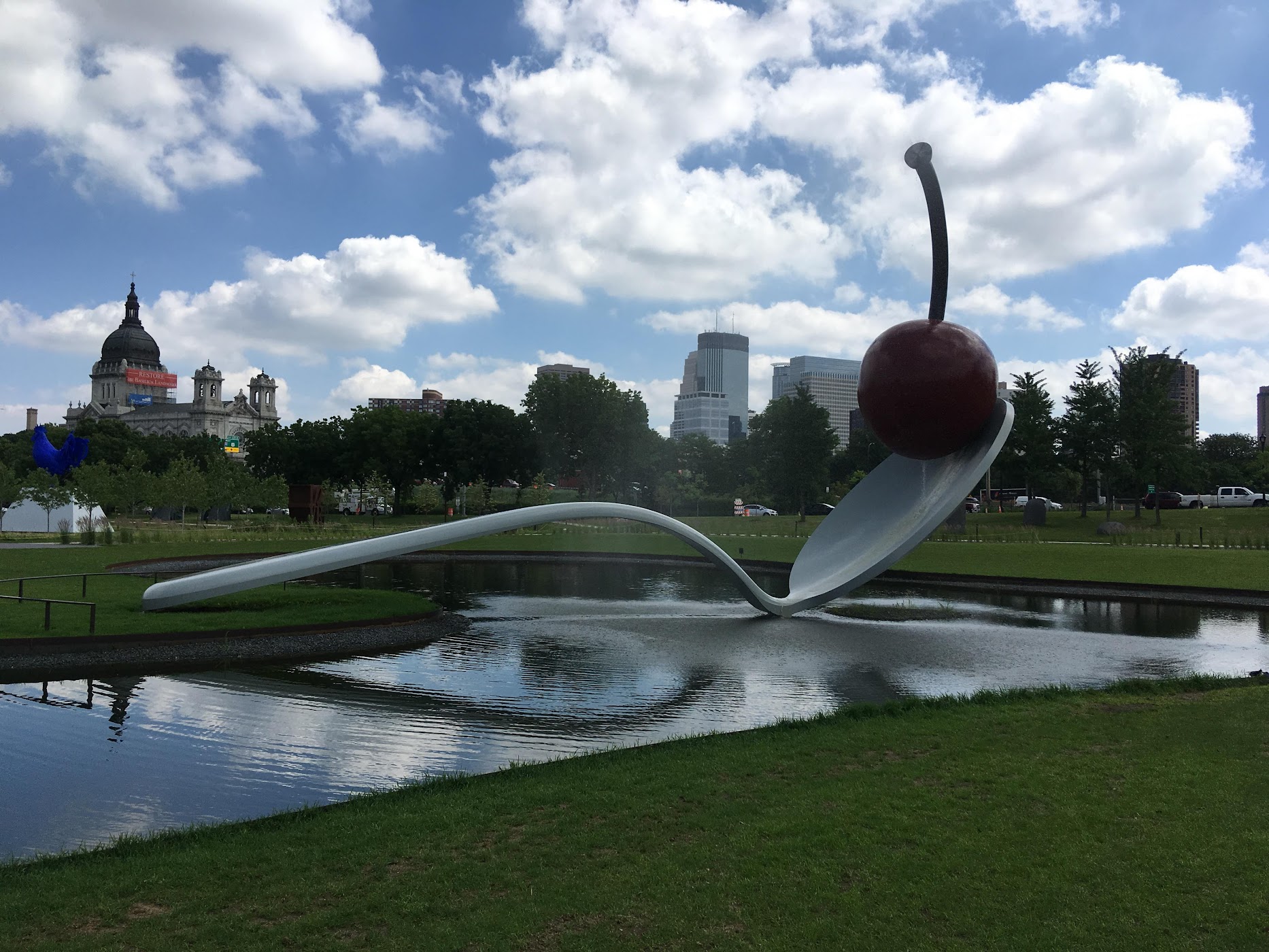
A beautiful place: the Minneapolis skyline viewed from its famous Spoonbridge and Cherry at the Sculpture Garden on the Loring Greenway

The US is planning to tighten entry restrictions even for tourists. To visit with me, my husband will have 5 years’ worth of his social media scrutinised. What if he liked a meme that hurts their feelings and they don’t let him in?

I promise you, I know how fortunate I am. My life ticks along, even if sometimes on about 3 hours of sleep per night. Our house doors are sturdy and the country where I’m an immigrant hasn’t completely turned against me. But awareness of privilege doesn’t ease fear. 

When I’m scrolling through news and social media, I’m not seeking personal affirmation. I’m looking for a sign that truth and empathy are winning. I crave universal agreement on what we see with our own eyes: that a human being with different beliefs or skin colour is still a human being, that a woman turning her car, maybe scared because some swearing paramilitary-looking dude was trying to force open her door, did not deserve to be executed. 

Looking Ahead

We’re not going to get that, though, are we? A reasonable, empathetic consensus about human rights. It weighed heavily on me last week, exacerbated by the fact that a couple of students at work are so cruel and thoughtless, they’d fit right in with the Republican cabinet.

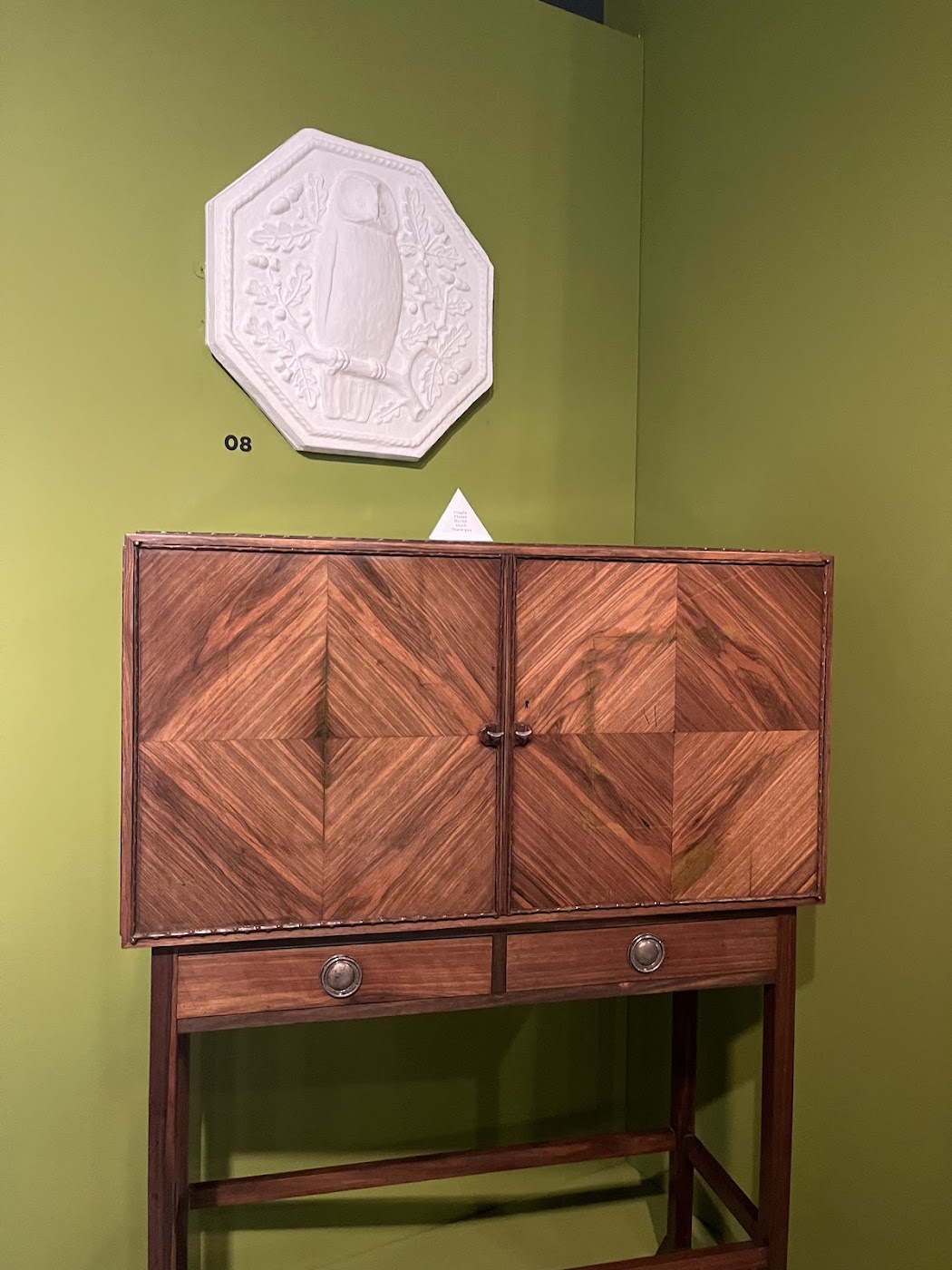
Lines of comfort, Wilson Gallery

Another little group of students had asked me about guns violence in America. Kids will often make that association, and they want to know if I witnessed any. No, but there was a shooting at my school a couple years after I left, and another shooting widowed my sister’s best friend.

“How do you go out over there when you could get shot?” one of the British kids asked.
All I could say was, “You have to still live your life.”
We’ll vote for change and share the truth and advocate for empathy. In the meantime, I’ll plant my little crops, the first wave of which sits in compostable trays all over my dining room table. I’ll work on my writing, and I’ll try to read more than scroll. Panic doesn’t serve any use, and as my cat proved, it is infectious.

I’m also making use of the somewhat hospitable British climate, where I can take walks and admire the shape of bare tree branches against the sky. My final recommendation is to take in some art. We went to the Wilson Gallery in Cheltenham. It has an exhibit on the Arts and Crafts movement, and the sight of beautifully polished wood grain soothes me like flowing water.

How are you ensuring fear doesn’t get the better of you?

All in Your Head

This Week’s Bit of String: A 160-year-old murder

Once on a Girl Scout visit to the local Shaker Museum, we learned about a murder which hastened the decline of this hard-working populace. The story stayed with me for decades, and only recently on a visit home did I confirm it.

Shakers, officially the United Society of Believers in Christ’s Second Coming, fused work and worship to delight in tasks rather than view them as punishments. This resulted in some excellent craftsmanship for which they’re known. They’re also distinct for practising celibacy. Their numbers relied on recruits.

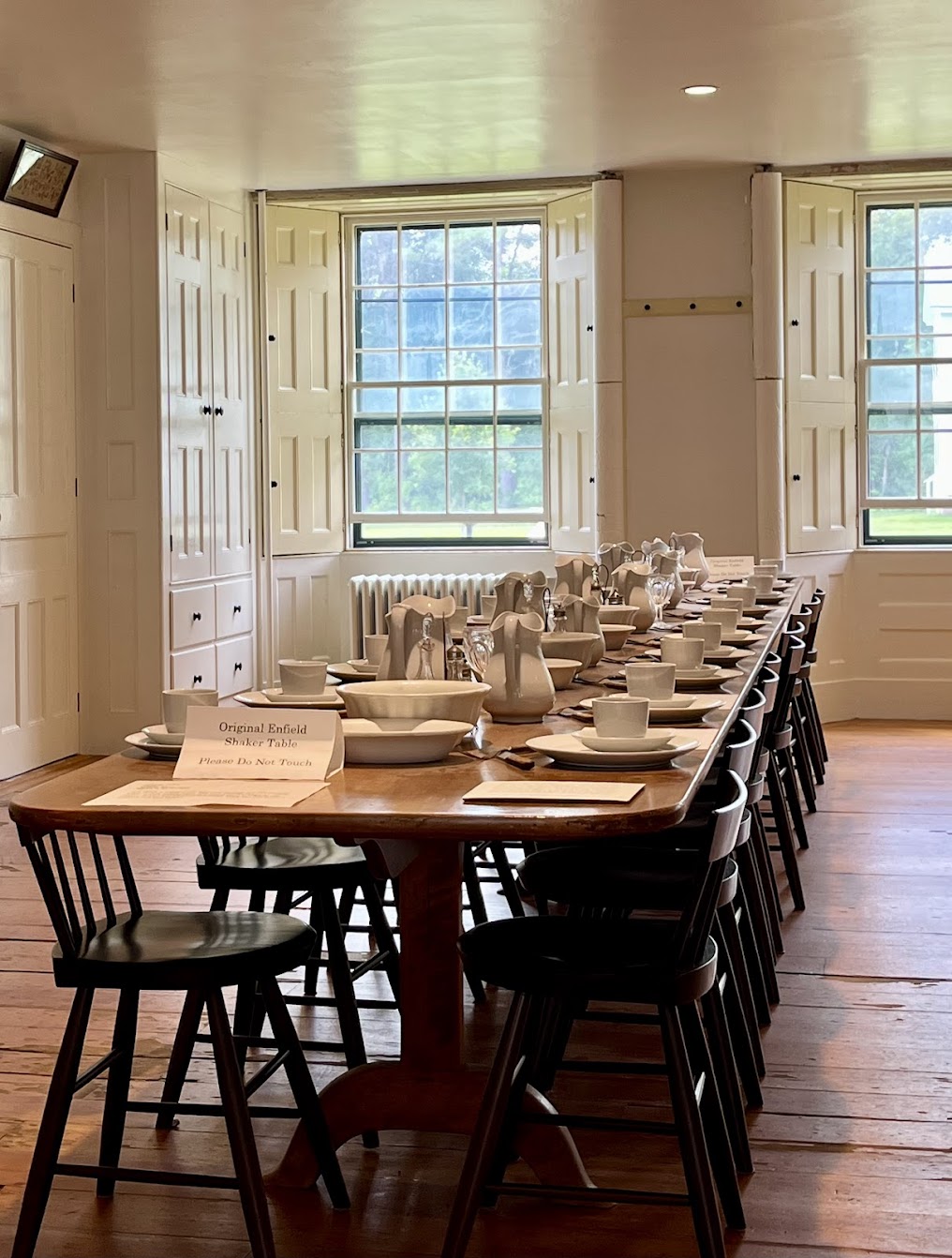
One of the original Shaker tables, where the Wier girls may have eaten their meals

Families struggling to provide for their children might sign a couple over to the Shakers, agreeing not to interfere with Shaker education. When the American Civil War started, a man named Thomas Wier entered two daughters into such an agreement. He was enlisting, and his wife was ill. It seemed the best way to look after them.

In 1863, Wier returned. He made various attempts to take his daughters back, valuing unification above the contract. His wife and older daughter tried to snatch them away during a visit, but the girls fought them. On another evening, Wier tried to visit them but the community trustee, Caleb Dyer, refused because it was so late in the day. Wier shot him.

Caleb Dyer died from his wounds three days later. As trustee, he’d been in charge of the finances pooled by the fellowship. They had invested in mills, bridges, and railways around town. However, his records of these transactions had mainly been mental and unwritten. Without him, creditors swarmed and a local mill even, apparently, fabricated debts and demanded them of the Shakers. The community lost a lot of money.

Hearing that story the first time, it fascinated me that a whole group’s fate hinged on a desperate man’s impulsive act against a seemingly, perhaps excessively, introspective one. I always wondered what happened to the children Wier was pursuing. Did they feel responsible? Where did they truly feel at home?

My recent visit did not illuminate anything on that front, so I’m still imagining the possibilities.

Life of the Mind

The tale had populated my mind for so long anyhow. In my last post, I considered how random objects can lodge in our memories, and this is even more true of stories. Their crest and ebb etch channels into our minds. For us creative types, it’s as if we’re standing on the shore wondering how to harness these tides.

How far will our creations make it?

Once we’ve diverted our gathered stories into new forms, an even bigger question is: What’s good enough to share? Which are better off eddying in our minds and which can we release?

Last week, one of my stories dried up in the wild, you might say. It was my third story to flow all the way to a major competition’s longlist, but not make it past the dam. Longlisting is good for sure, but I want better for my stories. Now I have to work out how to give it an extra shove, when I thought it was great already.

It’s panic-inducing, the realisation that most of our work will advance no further than the borders of our minds. Our desires to reap tangible benefits from all our efforts, to gain recognition and to be remembered for it after we’re gone, are all real and human. If my novels and more of my stories never get published, will all my time be wasted?

Shifting Currents

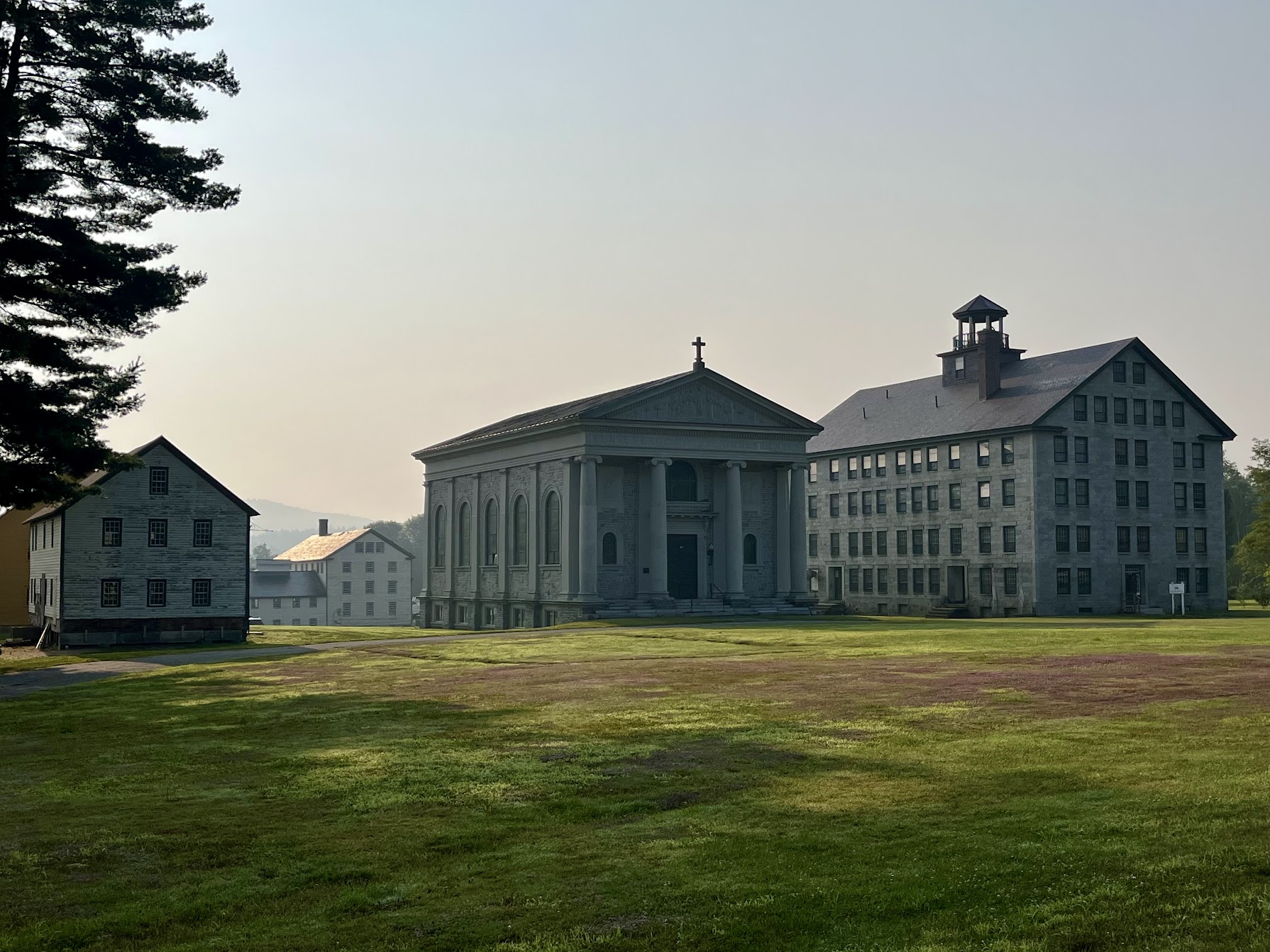
When the Shaker community started to die down and sell off their buildings, a Catholic community bought up much of the premises. They built their own shrine and chapel, and fixed up the Shaker buildings with a view to running a boys’ school.

From left: Shaker broom shop, Catholic chapel, Shaker Great Stone Dwelling

For decades the shrine kept going partly by putting up a dazzling display of Christmas lights in the snow, and receiving donations. But the funds seem to have dried up, and as of a few years ago, they couldn’t maintain the site. By this time, the Shaker Museum was established enough to buy the site back.

So, anything can happen. A draft of a story in my head could evolve into something else entirely, or get swallowed into another project. Maybe that will have more of a chance outside my imagination’s borders. Who knows.

Like the Shakers, we can’t view our work as a punishment, or even exclusively as a means to an end. Engaging with creative pursuits is challenging, but it helps us make sense of and appreciate our surroundings and the people therein. It gives us an outlet in stressful times, whether someone else ever sees it or not.

Even if our creations don’t make it far out of our heads, is that really such a bad place to be?

Dreaming Spires

This Week’s Bite of String: Noise in an Oxford museum

While I was admiring Japanese cloisonné vases in the Ashmolean this half-term week, a family came along. They had a couple of primary school-aged girls shining cheap little laser torches everywhere. The slightly older of the two girls was quietly singing to herself, but the other was shouting and running around.

“Beatrice!” her parents kept saying in upper middle class tones, ever surprised at unconventional behaviour. “Beatrice, you’re getting silly… Beatrice, we’re in a museum. It can be quiet and peaceful…”

“It CAN be quiet and peaceful,” retorted Beatrice, without slowing down a bit.

Japanese Cloisonne

Gotta love a girl no more than 6 who’s already dismantling arguments on semantic grounds.

The brief clamour enhanced my experience. I was on a solo overnight trip, and spending the afternoon in the massive Ashmolean with only myself to set the pace was a treat. I’d browse a couple of galleries, then sit and scribble about my finds, then repeat. Favourites were the ancient Assyrian and Babylonian exhibits, complementing the several Nimrud temple panels at Dartmouth’s Hood Museum in my home region of New Hampshire, and examples of Islamic and Indian geometric patterns and art.

There are exhibits predating those civilisations, and it inspires me to see how early humans, too, were compelled to preserve and create beauty. Feeding my brain on such exhibits felt rejuvenating, certainly unlike revising for standardised GCSE exams. But feasting on snippets of real life conversations thrills me, too.

Rest and Change

People like to say, “Change is as good as a rest.” It’s not strictly true; I think change enables us to push ourselves further without rest which we may need. Long-term, it’s possibly not of equal restorative value.

A little bit of reading time, Worcester Shrub Hill station

That said, it felt as if changing up my brain’s intake for a day or two rejuvenated me. In addition to visiting the museum, I read Mslexia magazine on the train rides, wandered along the canal in Worcester during a stopover, explored both the busy streets and the tranquil parks of Oxford totalling 43,000 steps in less than 36 hours, and enjoyed a theatre production of Little Women.

Seeing the literary classic on stage was the main purpose of my journey, which I learned about thanks to well-targeted Facebook ads. It was a terrific show, with energy and heart. They made use of birch trees as set pieces, and seeing those made me feel connected to New England from afar.

After the play, I went hunting for ice cream, as is my late-night, post-show wont, and I didn’t go to bed till midnight. But I didn’t leave my hotel for the next day’s explore until 10:30, and that is pretty luxurious for me.

Spending Time Well

So I took a bit of the morning to recuperate, and keep up with my daily scribbles. I have some novel-planning to work on, but I didn’t get to it; didn’t even read much. As usual when I travel, making the most of the experience involves a lot of walking and a fair bit of writing down what I want to remember.

Broad Street, Oxford

Before visiting Oxford, I’d made an effort to put all my new novel work into a Plotting Table, with columns for each character and rows for each chapter. The Plotting Table is super helpful for seeing where stakes may need to be raised for some characters, and so forth. I wanted to print this out and pore over it on paper while out of the house, undistracted by chores.

But our printer is at least 10 years old and is suffering memory loss. It no longer recognises paper. I’ll be poking pages into it and it insists said pages do not exist. Or it will pick up a sheet of paper (or heck, two or three at once), load it an inch, then suffer a fresh bout of amnesia and say it’s out of paper anyway.

I had to give up on printing my Plotting Table. I had nearly 2 miles to walk to the train station, with my rucksack of overnight necessities, and I couldn’t risk missing the train. Turns out I was a bit busy, anyway.

Like Beatrice at the Museum, I would say vacations CAN be quiet and peaceful—but they certainly don’t have to be. Just this once, I think I struck a decent balance.

Have you given your mind any change lately?

Staying Creative

This Week’s Bit of String: An accident-prone day

You know those days when everything goes wrong? Last Sunday, I had a few chores left on my weekend list. I needed to change the sheets, but inadvertently laundered a tissue with the bed linens. It avenged its fate by leaving sticky fragments all over everything.

I stepped outside to put some recycling in the bin, an opportunity also to chat with our neighbour in the adjoining half of the duplex. This brought up a fencing dispute which is provoking grief and peevishness on both sides. 

Toebeans of death

While we attempted to reach a compromise in the sunshine, I saw my cat speed round the house and dart in the open back door with a pigeon in his mouth. I spent the next 20 minutes waiting for him to finish tearing into it behind the couch, and at least as much time after that shifting the furniture, picking up pieces, hoovering feathers, cleaning the carpet, and wiping bloodstains off the lamp cable.

In the afternoon, I needed to clean the fridge. I dropped an egg, it slipped underneath the appliance, I had to empty the fridge completely and move it and clean behind it. When wiping the worktops in preparation for hoovering, I tipped a bit of water on my laptop, which has thankfully survived unscathed.

With half my chores taking up more time and aggravation than planned, I reached the evening exhausted (but with a clean house!) and thought, am I actually going to write today? I barely felt human, let alone like a writer.

The Great Humaniser

Maybe I was a walking disaster because, after a week of flu, I was still battling extra fatigue and some headaches. My husband was now in the throes of the virus so the house was generally miserable, had been for a little while, and wouldn’t be imminently abating.

Thank goodness it’s been sunny and springy or I’d have been seriously depressed.

When I’m sick, or drained after being sick, I refer to myself as “running a reduced service.” I still have to do laundry and basic cleaning and cook and if not get groceries myself, arrange for them. Have to help my family in whatever way possible, and must get back to school to do my job as hastily as I can. The result is I’m doing nothing but work and chores; no extra exercise or writing sessions. No social gatherings or outings for entertainment, or long hikes. It’s a drag and can continue for weeks because a reduced service is still fairly demanding and I’m rarely getting a decent night’s sleep. 

I don’t know if it’s the best physical remedy, but the best emotional one might be to write anyway. That’s what I did Sunday. I bashed out 500 more words of a character sketch, prepping a new novel.  I went from feeling I was barely surviving, to remembering I am capable of adding beauty and empathy to the world through what I create.

Any creative endeavour brings out our humanity and even transcends it.

Why We Write

The past couple weeks reminded me why we write (or make music, or create art). Even while I was sick, if I could get a few minutes of fresh air, and perk myself up listening to quality tunes, I could then engage in some writerly activity most days. That creative feeling fought off some of the glumness. 

Here are ways creativity elevates us:

Wearing pyjamas for the 4th day running doesn’t mean we can’t write a piquant description of the flowers sprouting outside or the cat’s sleeping position. Tip: Take 5 or 10 minutes, scribble about what you see. Write your favourite line from those scribbles on a post-it or take a picture on your phone as a reminder of your formidable talent.

My not-terrible watercolour

The more we practise bits of writing, the more we notice without trying. When an articulate description comes to mind, we feel observant; we feel less like we’re missing out on life. Even if that’s a clever phrase about how cough syrup tastes, or the pound of a headache.

We can still be part of a community. Being on Twitter isn’t always a positive experience these days, but I was running the profile for the Women Writers Network while I was poorly. My Tweet about a recent visit to Mr B’s Emporium of Reading Delights, an independent bookshop in Bath, received over 350 likes, and dozens of responses with other writerly/ literary types adding their indie bookseller recommendations. It turned into a real bright spot. If you’re low on energy, taking a few minutes to encourage and lift up others on social media can boost our mood.

When we’re forced to take a break, it knocks our confidence. I found that, though I’d kept some semblance of writing in my life, I still felt disheartened about picking up bigger projects again. On Saturday while I was feeling a bit better, I sat in the sunny dining room and did a watercolour based on a favourite place, where I’m setting my next novel. I’m not an artist and don’t have much experience with watercolour, but I made myself complete it. This took less mental energy than writing, but plenty of courage. And I don’t hate how it turned out. It reminded me it’s ok to bash out writing too. We just have to go for it.

Do you use creativity as an antidote when things go wrong? What are your tips for maintaining a creative state of mind when low on strength?

2024 Reading Round-Up

I had some ups and downs in my reading year. My first Didn’t-Finish in a few years (because there wasn’t enough STORY, dammit!) and a couple stretches of 2-4 weeks with no time whatsoever to read. But I always balance those out with a voracious spell after. It feels so good when reading time opens up again, like diving into a cool lake after overheating. Here are my favourites among all I read. I’d love to hear what you think!

The Heart is a Lonely Hunter by Carson McCullers

Direct and unobfuscating, McCullers introduces us to various misfits about town, starting with the iconic opening line about the “two mutes, [who were] always together.” The story represents the voiceless in many ways, and emphasises the need to be heard.

“The words which are surely the root of all human grief… ‘I have done those things which I ought not to have done, and left undone those things which I ought to have done. So this cannot truly be the end.’”

Parable of the Sower by Octavia E. Butler

Wintry Moomins at Octavia’s Bookshop, Cirencester

Working at a school, I’m somewhat bombarded with young people’s moods and stories, so I don’t go for too many books written in teen voice. I’m so glad I read this one, though. Lauren, the young narrator of this novel, is incredibly driven, and practical even while being compassionate. I wrote about her more in an earlier blog post because she became a favourite character of mine, and Butler’s take on empathy is an exciting one.

“Show me a more pervasive power than change.”

The Marriage Portrait by Maggie O’Farrell

A glimpse into someone forgotten by history, this resonated with me partly because of my Eve novel. It delves deeply into the Duchess of Ferrara’s story, whom Browning alluded to in his poem ‘My Last Duchess.’ We see the plight of women in Renaissance Italy, and also explore a love of art that sets someone apart from the crowd.

“She is absorbed in her work; she is her work; it gives her more satisfaction than anything else she has ever known; it intuits the need, the vacancy within her, and fills it.”

Lessons in Chemistry by Bonnie Garmus

I feel as if I’m the last to read this, but in case anyone else has yet to discover this novel: It’s excellent. There was tragedy in it and unfairness that I didn’t expect. I should have though, as the book is about an exceptionally intelligent woman trying to pursue a scientific career in the mid-20th century. Ultimately, the opposition she faces makes her later alliances and triumphs that much more thrilling. 

“Their odd, tell-all friendship was the kind that only arises when a wronged person meets someone who’s been similarly wronged and discovers that while it may be the only thing they share, it is more than enough.”

Project Hail Mary by Andy Weir

It’s got an exciting scifi premise: the world is in danger, so a delegation must be sent to space in search of a fix. Once there, the lone surviving voyager meets someone from another planet, as different as can be. They develop communication with each other, and the results are breathtaking. I’m eager to see the film once it’s out.

“Sometimes, the stuff we all hate ends up being the only way to do things.”

An artsy trip to the real Oxford, this past summer

The Goldfinch by Donna Tartt

Another book about art… This became a bit of a theme for me, and I really enjoyed it especially as I attended a couple of art exhibits at the time. Art unlocks emotion, and feeds creativity for our own art of writing. This book is a David Copperfield-style journey through a boy’s misfortunes, uncanny encounters, and striking characters, propelled all the while by a deep, tragedy-induced connection to a single painting.

“Immediately its glow enveloped me, something almost musical, an internal sweetness that was inexplicable beyond a deep, blood-rocking harmony of rightness, the way your heart beat slow and sure when you were with a person you felt safe with and loved.”

Midlife Without a Map by Liz Champion

This book made me laugh the most this year. In addition to being funny, Liz (who also has a brilliant Substack) is incredibly relatable. I love how she doesn’t hold back disclosing her highs and lows. She’ll get swept up in something but be completely honest if it doesn’t work out, and that’s rare and refreshing both online and in literature.

“But now I’m halfway up the mountain, facing hairpin bends and vertical drops with a driver who missed his Formula One calling, I’m wondering if I was ever fit and fearless. Maybe a book by the pool would have been adventurous enough.”

How to Build a Girl by Caitlin Moran

A hilarious and heartfelt coming of age story, but also a great look at art and how we respond to it. The main character, Johanna, wants to save her family from poverty, so she becomes a music critic as a teen–a scathing one. Could passionate fandom make her as much money as trashing every band she sees?

Stokes Croft, Bristol

“‘I feel like I can see the operating system of the world–and it is unrequited love. That is why everyone’s doing everything. Every book, opera house, moon shot and manifesto is here because someone, somewhere, lit up silently when someone else came into the room, and then quietly burned when they weren’t noticed.’”

Babel by R.F. Kuang

Language and revolution entwine in this speculative novel. In an alternative Oxford, colonial powers rule through silver. Once silver bars are engraved with pairs of translated words, magic imbues them, resulting from the disparity in meaning. The plot follows young trainees in this art of translation, and as readers we join them in their enchantment, and their horror as they recognise the injustice at the heart of the system.

“That’s just what translation is, I think. That’s all speaking is. Listening to the other and trying to see past your own biases to glimpse what they’re trying to say. Showing yourself to the world, and hoping someone else understands.”

The Starless Sea by Erin Morgenstern

This novel is about books, about books of lots of stories, and the stories are alive but they must be protected…It’s a stunning work to read, as all the little pieces fit together, reminding us that no story really stands alone. I found it incredibly lovely to sink into the universe of this book.

“We are all stardust and stories.”

Learning Abroad

This Week’s Bit of String: On the way to somewhere else

I’d never have got into this whole immigrant fix, splitting myself between two countries, if I hadn’t done a term abroad while in college. My major was English/ Education in New Hampshire, where contributing to class discussion was key.

In the UK, on the other hand, professors seemed flummoxed when people turned up. They didn’t even expect us to read the assigned literature: “If you didn’t do the reading for this week, I hope you do at some point in your life. It’s a great book…”

Twin American spires: church steeple and rocket

I had read each book, as it happened, and was unimpressed having it summarised in a murmur for 3 hours. Screw it, I decided. I’ll do the reading while on the train to somewhere more interesting.

And off I went, to friends in Glasgow, Bangor, Wolverhampton, and especially London. I read, and listened to new-to-me British music (Texas, Robbie Williams, Steps), survived on Kingsmill rolls and Edam cheese and Smirnoff Ice, and fell for three different guys in quick succession, the final one being my now-husband.

I also wrote a wacky but fantastic story about a girl whose heart, in the form of a cookie, is eaten for breakfast. I got an A for that class, after only attending 1.3 lessons. I did the reading!

What I Wrote This Summer

New England idyll: Billings Farm Museum, Vermont

It’s always interesting to see other writers post about their vacations in the summer. Some catch up on reading, and many are busy with their children during the holidays anyway. For me, I spend 4 weeks out of the 6-week break going to see my family in New England. There are definite vacation aspects to this—the lakes and rivers, the mountains, the ice cream.

It’s also very busy as I condense a year’s worth of interactions into 1/12 of the time. Half my family are too busy to keep in touch when I’m not there, so I run around trying to help people out and make memories. They are all I have, and they are precarious without me recording them. When not Doing Things, I’m scribbling about them.

This leaves little reading time. I have writing commitments—promised critiques, etc, and also students I check in with even in the summer, so I squeeze those in. What I do find, though, is that the travel, the hiking and driving and swimming and reflecting, open me up to learning a lot of random things. Without the more rigid structure of work and long-term writing projects, my brain relaxes just enough to sponge up new information.

What I Learned This Summer

There were my discoveries while hiking, which I researched later:
The rather formidable Argiope aurantia (ok, yellow garden spider) keeping watch from her web in the lake bridge. It’s also known as a zigzag spider because of that uniquely thick central line. The purpose of this unique pattern is still unknown to us.

Formidable, isn’t she?

The Warren Rocket: My family got together in Warren, NH, near the White Mountains. While other towns have Civil War cannons on their greens or in front of their schools, Warren (population peaked in 1860 at 1100-something) has a great big Redstone missile rocket. (Pictured at the top.) It was funded and transported by a local veteran hoping to encourage interest in space travel.

Signs around the rocket tell visitors about SS Officer Wernher von Braun, who supervised concentration camp workers to manufacture missiles that killed 1400 Londoners. After the war, Americans smuggled von Braun out of Germany to design even deadlier rockets over here, but also realise his childhood dream of sending rockets to space. I wonder what the childhood dreams of his captive labourers were, or those civilians killed in airstrikes.

You can see why the Morse Museum caught my eye…

The Morse Museum: Another early morning Warren hike discovery, a building with granite plaques advertising Curios of India and China, and African Game Trophies. Now-vacant, it was dedicated in 1928 to house the collections of Ira H Morse, a local shoe store mogul and game hunter. There’s a colourful bio online of IH and others, written by affectionate family members. They include his adventures but also quirks like how he would “ream out” uncooperative salt shakers, at home or in public.

Speaking of museums, there are a couple in the area which I like to visit.
Billings Farm, a late 19th century agricultural reenactment site. It’s great for learning about cows and dairy, edible plants and farm life (see above). When we visited this year, they were making pasta in the farmhouse kitchen. I hadn’t realised how long pasta has been a staple in the US (it’s much more recent in the UK), but in fact Thomas Jefferson sampled and loved it in Europe, and by the time of the Civil War macaroni was very popular.

Entry hall to the Hood Museum

The Hood Museum at Dartmouth College: I always stand in awe before the incredible, ancient Assyrian tablets before moving on to the current exhibits. This summer, a diverse selection of art including Musasama’s elaborate arrangement of textiles and natural objects across the floor, part of the Maple Tree Series, made me aware of the maple tree abolitionist movement. Did you know that in the 1790s, free people of colour, white settlers, and native Americans advocated substituting maple syrup for cane sugar, to starve the economy propping up enslavers?

My family creates a good learning environment, with our eclectic interests. Dinner discussions might be about what’s the oldest continuously-used language in the world (Hebrew, Tamil, Sanskrit… Lithuanian and Icelandic appear in the top 10, too). My dad found an 1884 encyclopaedia in our AirBnB and read passages out loud to us. There was no entry for childbirth, but lots of details on “Brawling in Church” and the various statutes against it.

Even though I didn’t do much writing work over the summer, the feeling of my mind loosening to hold more is not an unwriterly sensation. New stories could develop from here!

Do travel and family time inspire your writing?

Balancing the Dark

This Week’s Bit of String: Planet Buoy

On a rainy Saturday morning in St Ives, I’m shepherding 7 teens on a 2-mile walk with a seasoned photographer. We are nearing the end of our school Art residential; I’ve spent half my half-term supporting 3 very different students with autism.

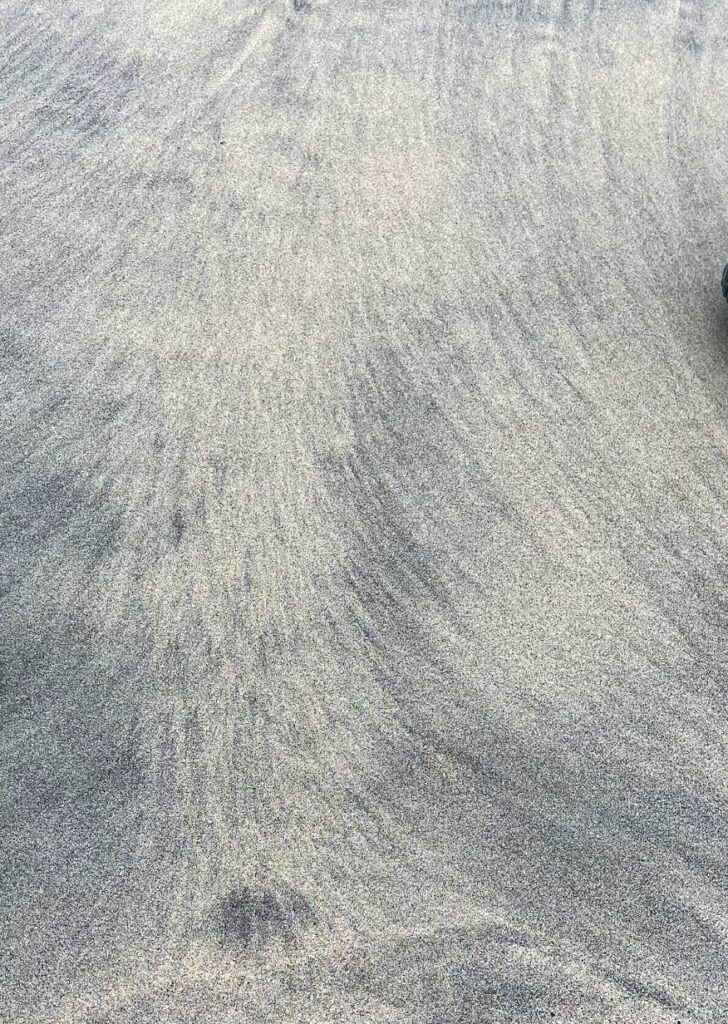
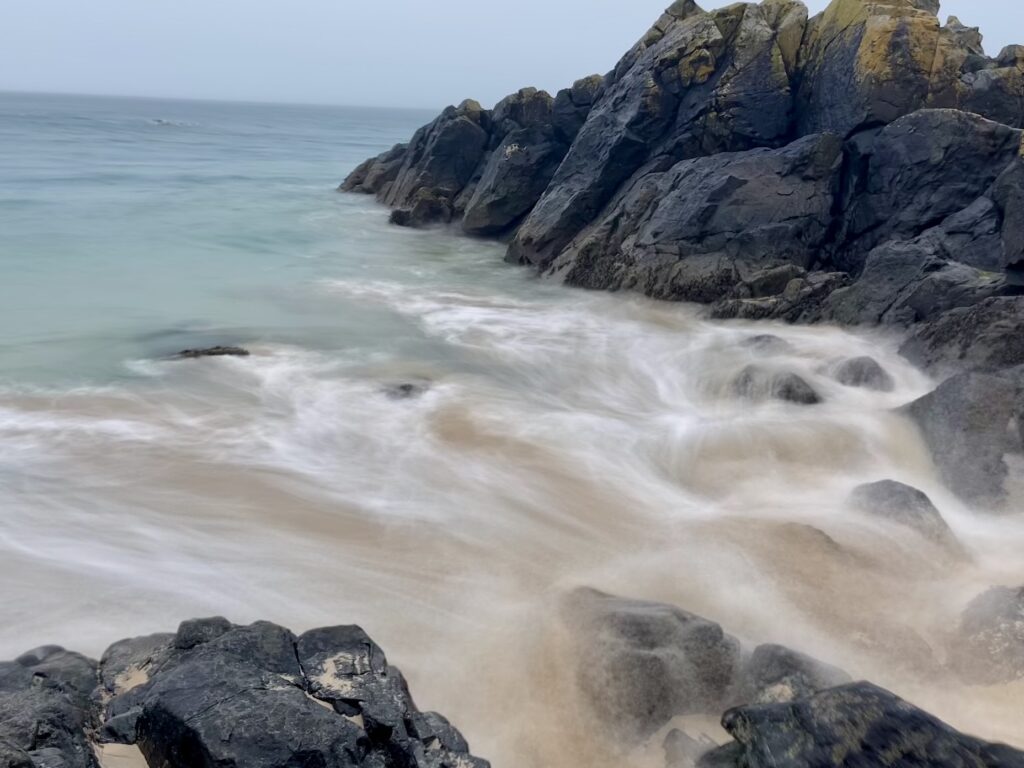
Sand feathering

The youngest one is only 14 and prefers to draw comic stories or animals in pencil, so through most activities, he’s put his headphones on and played games on his phone. That’s what he did through the photographer’s introductory talk.

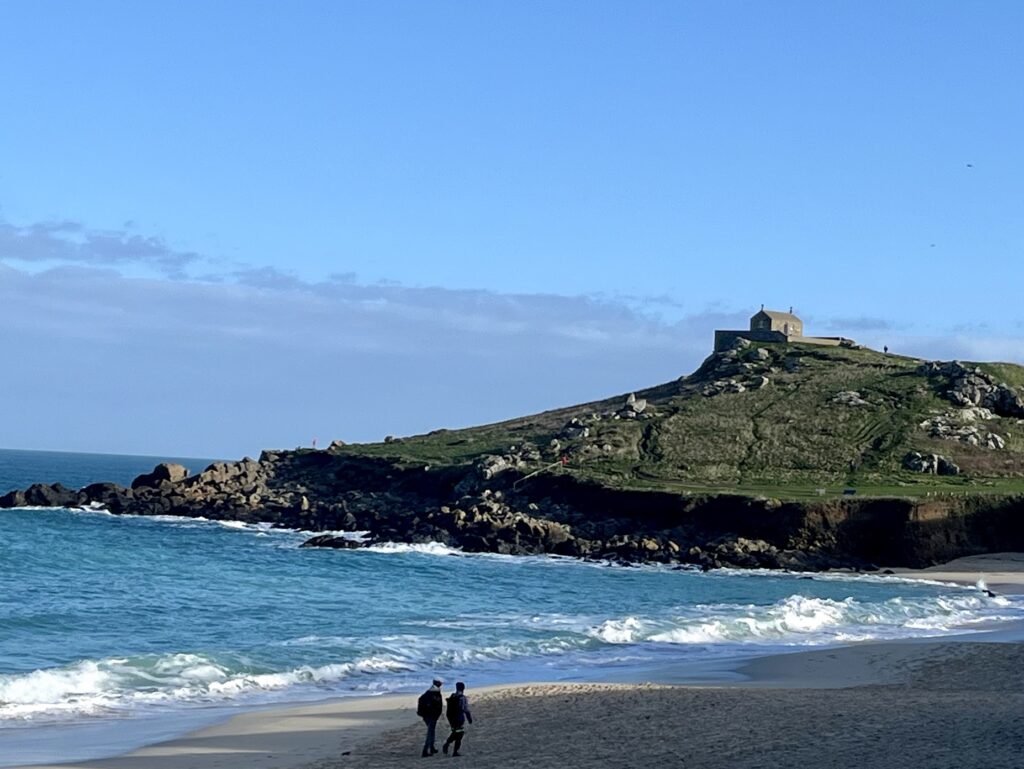
The photographer has worked here in St Ives for 45 years. He says its popularity with artists comes from the “pure, North light.” Standing on a beach he tells me, “The sand in St Ives has a sheerness, and reflects that light.”

Just then, the youngest fellow patters over murmuring, “Miss, I took pictures of the beach.” With his iPhone, he’s captured the effect the photographer talked about. The reflections of the squished-together buildings across the bay appear over the sand in his photo. I compliment him heartily, and he’s off.

He creeps toward gulls, grinning, asking, “Scuse me, can I take your picture?” He aims his phone camera through holes in stone walls that no one else has noticed, sticks it into pier crevices to capture puddle reflections. One of my older students, herself a photographer with autism, is inspired by what he’s finding and so am I.

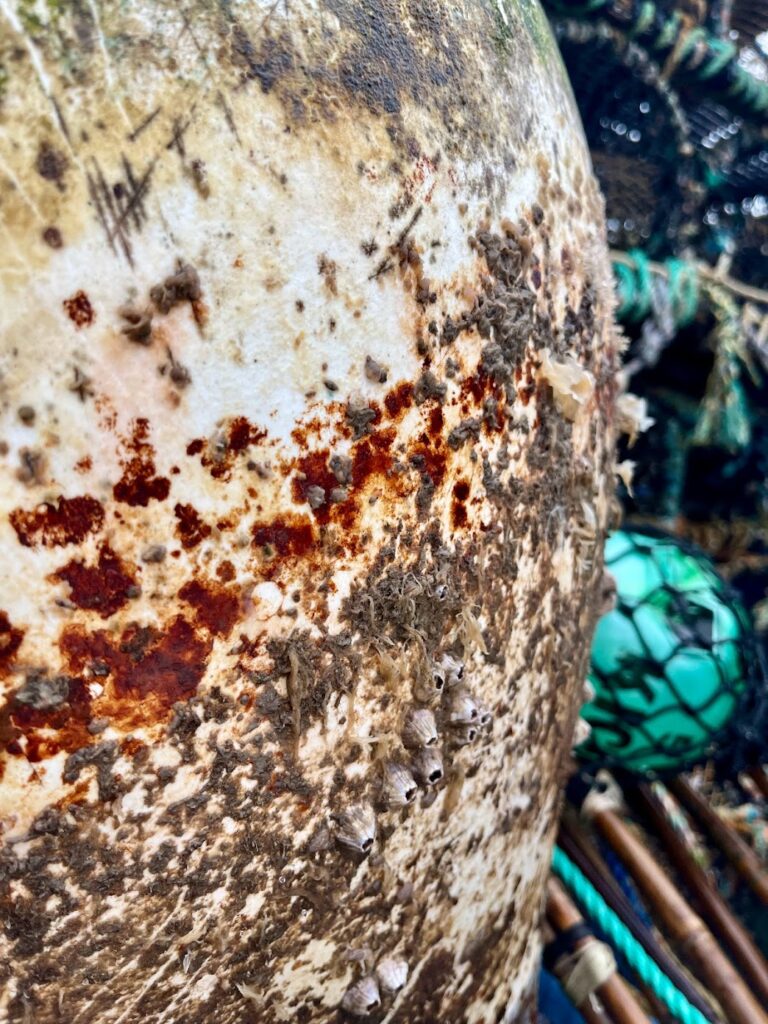
Planet Buoy

He finds a buoy, pulled up and stashed on top of lobster cages. I join him to capture its weathering with my iPhone. It’s like a planet, with rust crops and barnacle mountains. This young artist is showing what I’ve always found, that once we start looking around with a photographer’s eye, we pick up on so much more.

Balance

It’s like that with stories sometimes too. If we get into ideas mode, we find them everywhere. When I’m out and about, I take pictures partly to remind myself of strands of description for my journal later. Waves blooming around boulders, rust-fall streaming down the lighthouse, Planet Buoy.

Pure light: View toward Chapel of St Nicholas

The photographer we worked with, Chris Webber, makes me contemplate other similarities or counterpoints between the arts of photography and writing. He tells the students: “Your camera has a lot of dials and buttons, but at its heart, photography is about balancing the light. Don’t be intimidated by the camera. You control it. You decide what to shoot.”

It’s a mixed blessing to remember that amid the vast structures of a story, with so many interplaying elements we’re meant to orchestrate—we are the ones who control the pen (or keyboard). It is, ultimately, up to us.

I also wonder if a story, at its heart, might be as simple as balancing certain elements. Except that a story is balancing the dark. As storytellers we wield light and seek to not obliterate dark (because then a story might be dull or saccharine), but to balance it.

Letting in the Light

I read more about story structure and trajectory before my latest novel edits. John Yorke in Into the Woods frames this as a trajectory of knowledge (which suits my creation story retelling, since Eve allegedly plunged us all into sin by gaining knowledge). A protagonist is awakened to something, they experience doubt, they reluctantly accept, they experiment, it backfires, until ultimately there is a reconciliation of the new knowledge: a reawakening and a total mastery.

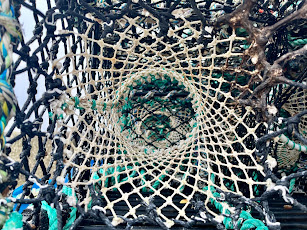
Weaving: lobster nets on Smeatons Pier

None of this happens without light, and the light would be ineffective if dark didn’t precede it. Presumably, God would never have said, “Let there be light,” if They’d already had all the light They wanted. As creators, we first shine light into a character’s situation so they have to recognise the dark they’re living in. They may react by being overwhelmed; they’re not used to this illumination. Ultimately, we mould the light into hope.

Wishing you a torrent of creativity this week.

Depending on the story, we’ll allow a pinpoint or a whole widening arc of light/ hope. Also, depending on the type of writing, we’ll show the whole landscape or do a macro shot. Chris Webber does dawn photo shoots and landscapes but also food shoots, for catering outlets. He showed my students a picture he took of a sorbet scoop: “Sometimes you don’t want your viewer to paddle, you want them to dive in.”

I’ll definitely keep that in mind while editing. Which bits are especially important for readers to plunge into? How do we direct the light while also bringing out the exciting details?

Seven Wanders of 2023

Hiking around and seeing new places inspire me as much as reading other writers’ work. I don’t necessarily end up writing new stories about the places I see, but glimpses of the spectacular keep some spark alive inside me when the rest of life seems a great stack of to-do lists.

Feeling like an adventurer in the real world can’t hurt our creative life, right? Here are some of my favourite explorations, why they ignited my imagination, and a smattering of my photos.

See also previous years’ top wanders: 2019, 2020, 2021, and 2022.

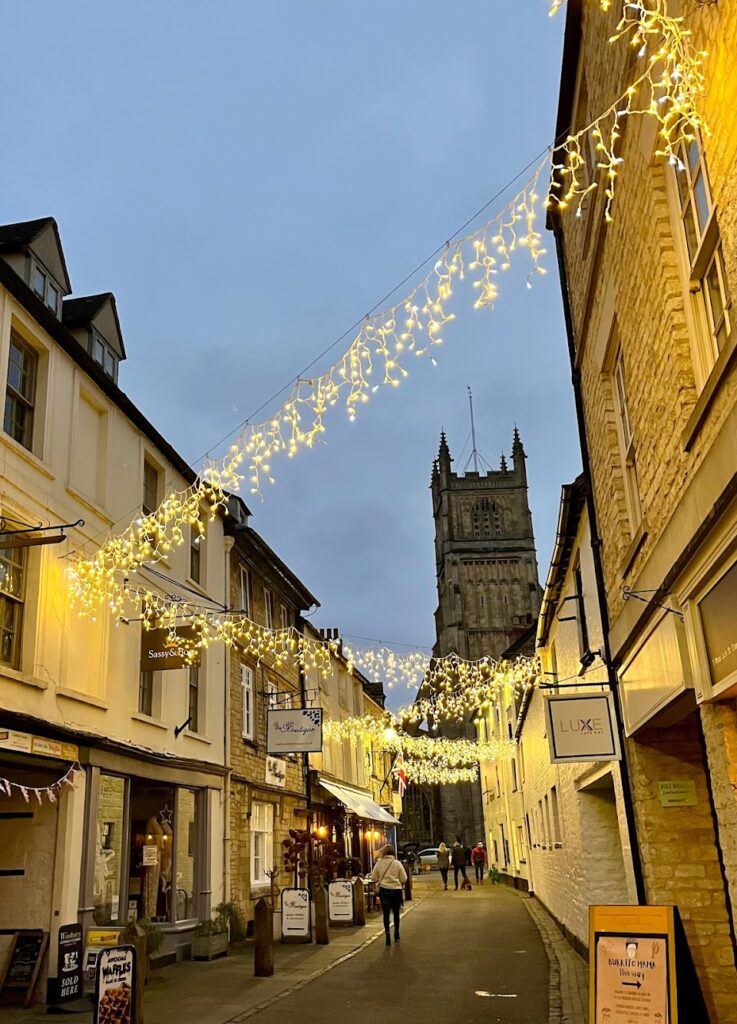
Festive Cirencester, Cotswolds UK 

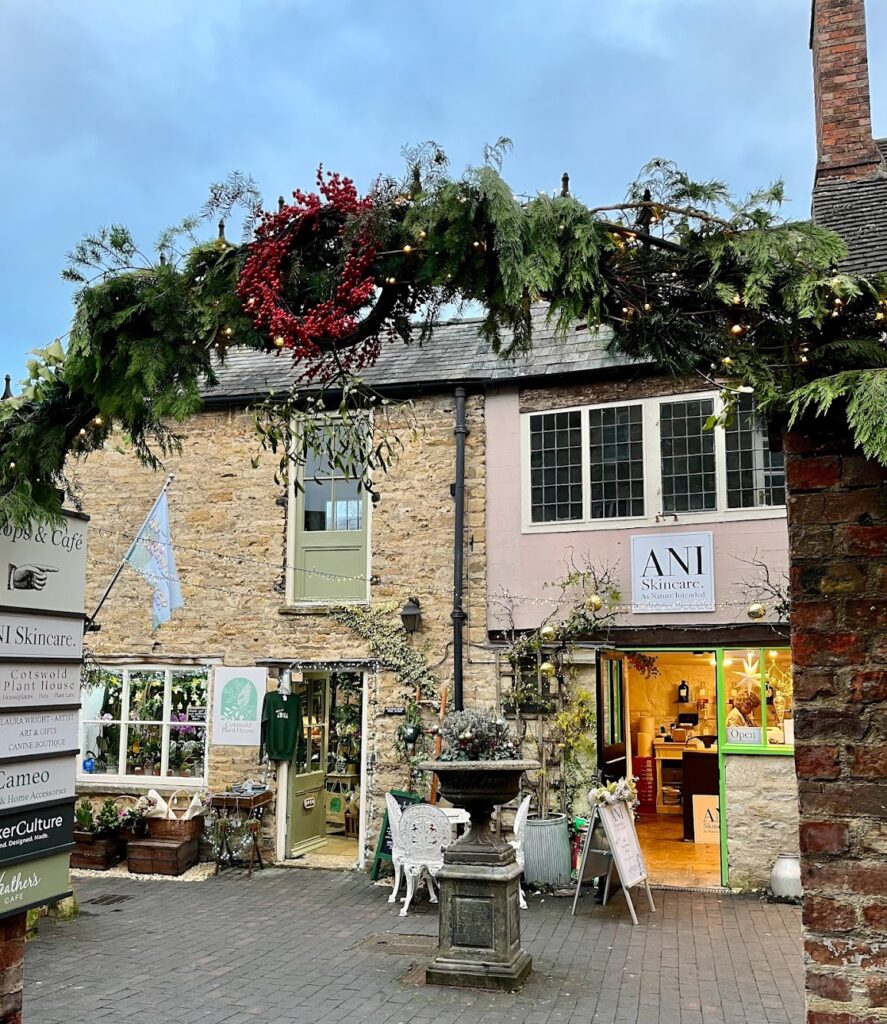
We gave ourselves a couple hours’ break between getting COVID in December and finishing work and sorting out Christmas and travel preparations. Cirencester is fairly local and its alleys and Cotswolds stone lend themselves well to the festive season. 

A wander, the purchase of a jungly fern from a back alley shop overflowing with plants, and cups of hot chocolate at a specialty chocolatier renewed the season’s sparkle.

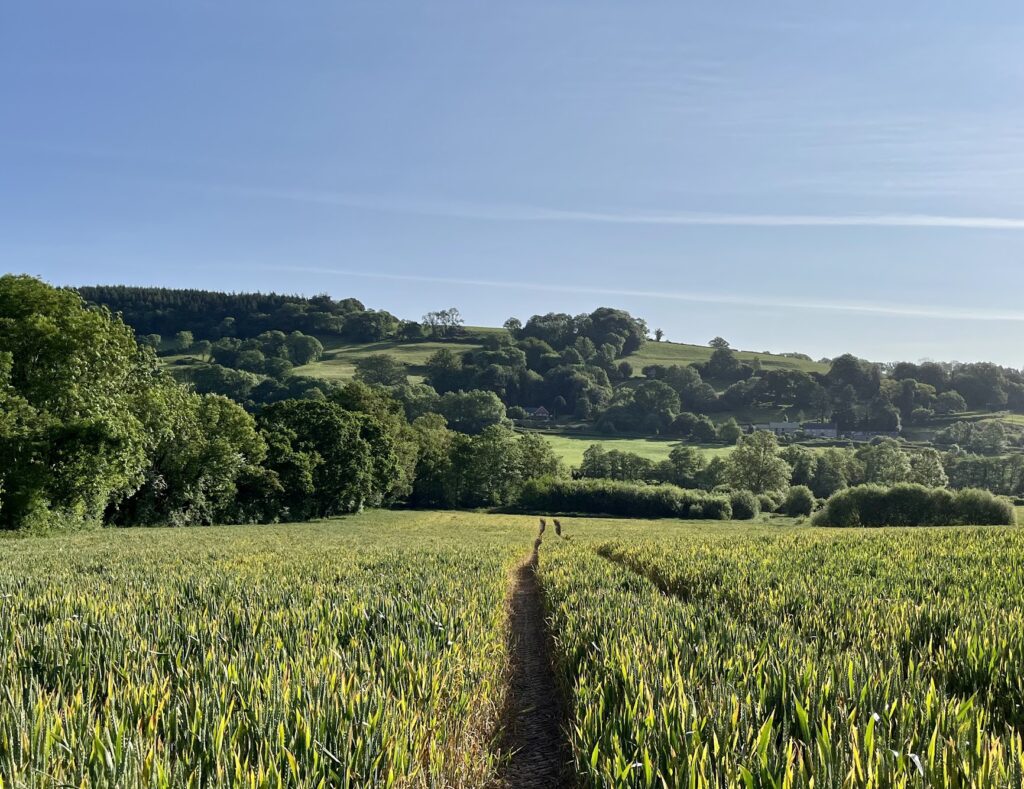
Widworthy Barton, South Devon UK

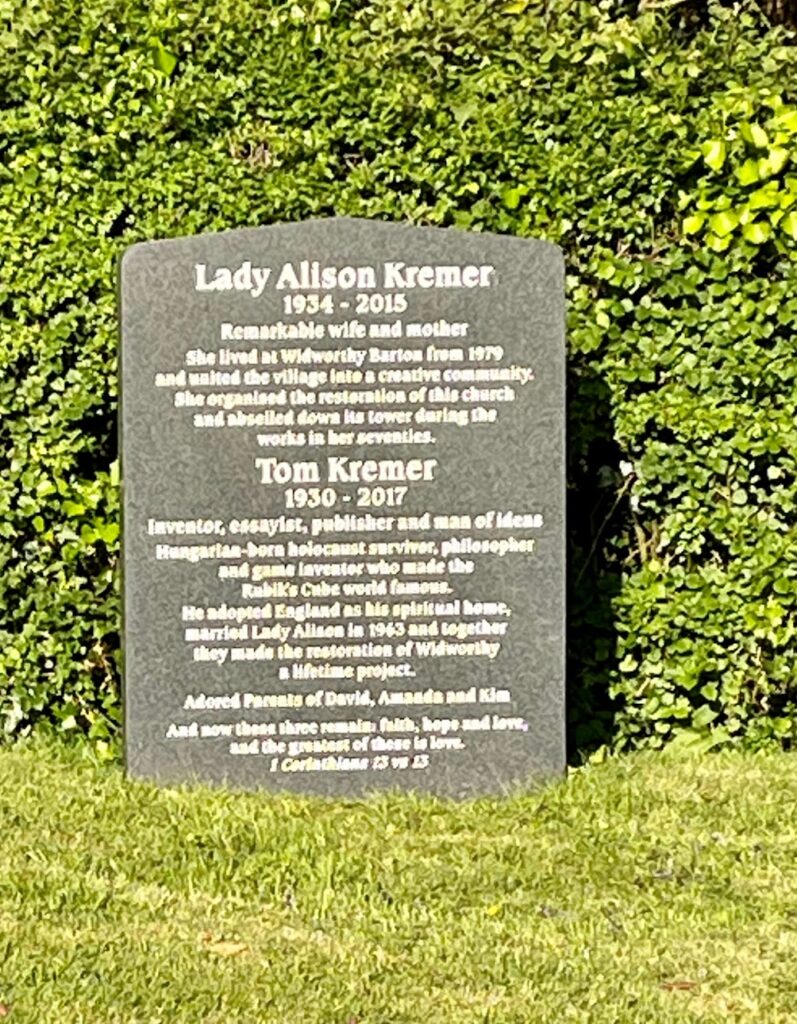
While staying near the Jurassic Coast in Southern England, I went out for exercise and discovered a fascinating little story as well. Uphill from the thatched farmhouse we’d rented, I came across an even smaller hamlet and a square-towered stone church with its graveyard. 

A lustrous black gravestone memorialised the village’s matriarch and her husband. He was a holocaust survivor and popularised the Rubik’s cube, and she bought the local manor house and revitalised the community, abseiling down the church tower in her 70s to raise money for roof repairs.

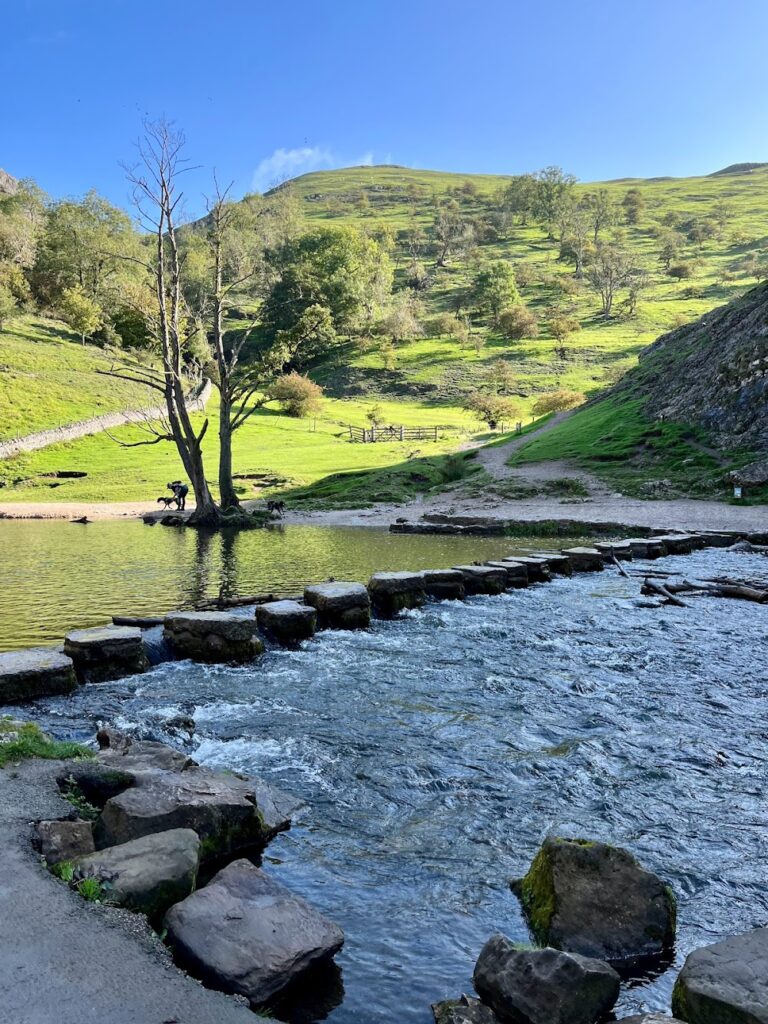
Dovedale Stepping Stones, Peak District UK

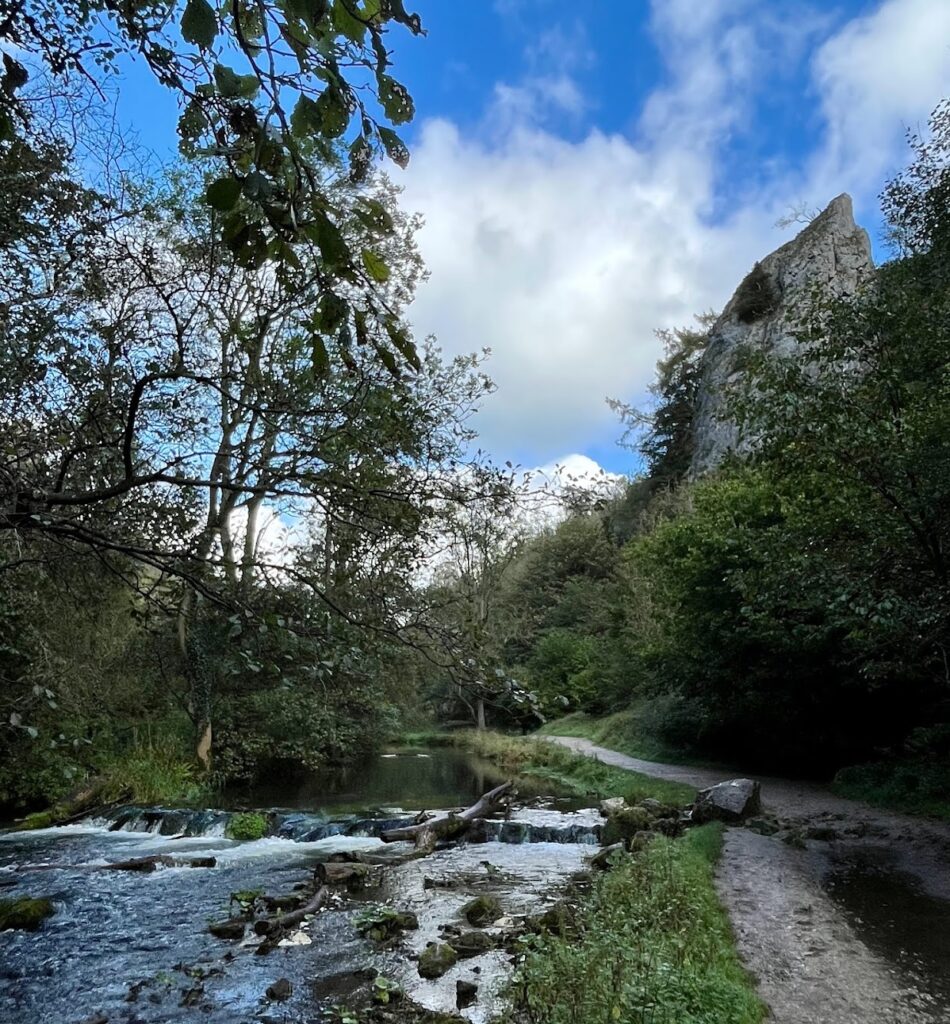
In late September we had a rather cold, frequently wet camping trip and finally explored a Peak District destination I’d wanted to see for some time. We were lucky to have a sunny morning at the Stepping Stones, casting a sharp, bright contrast between peaks. 

The stones are set firm and flat in the river like molars, and after crossing, we followed the path under trees and past sparkling reflections. There was a good climb up smooth-worn stone steps laid by Italian prisoners of war during WWII, and then a further walk along the river with pale bluffs on our other side, rising up like mighty ship hulls with dark bird barnacles. We later did a longer, more rugged walk to reach the Chee Dale Stepping Stones–those are quite scenic, too.

Newfound Lake, New Hampshire USA

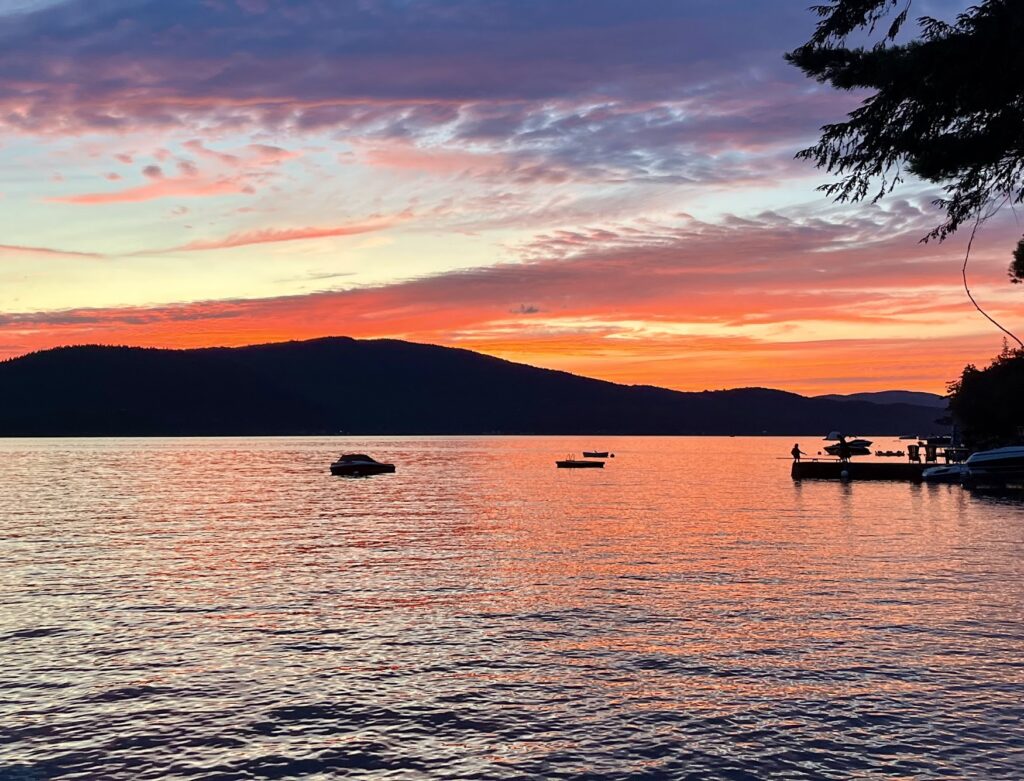
For me, summer is most blissful at a New England lake. This summer we had a few days with the entire family at Newfound Lake. It’s the third biggest lake in the state and the deepest, reaching 183 feet deep. It’s thought to be one of the cleanest in the world, and the sunsets over low-slung mountains off in a corner were spectacular, the reflections pristine.

We had the trilling cry of the loons at night and that cool lake smell in the mornings. Woods of oak and pine separated the holiday houses, but we got a glimpse when we were out on our kayaks. One house even had its own massive inflatable waterslide tower out in the water, with “No trespassing” painted all over its base.

Portobello Road and Notting Hill, London

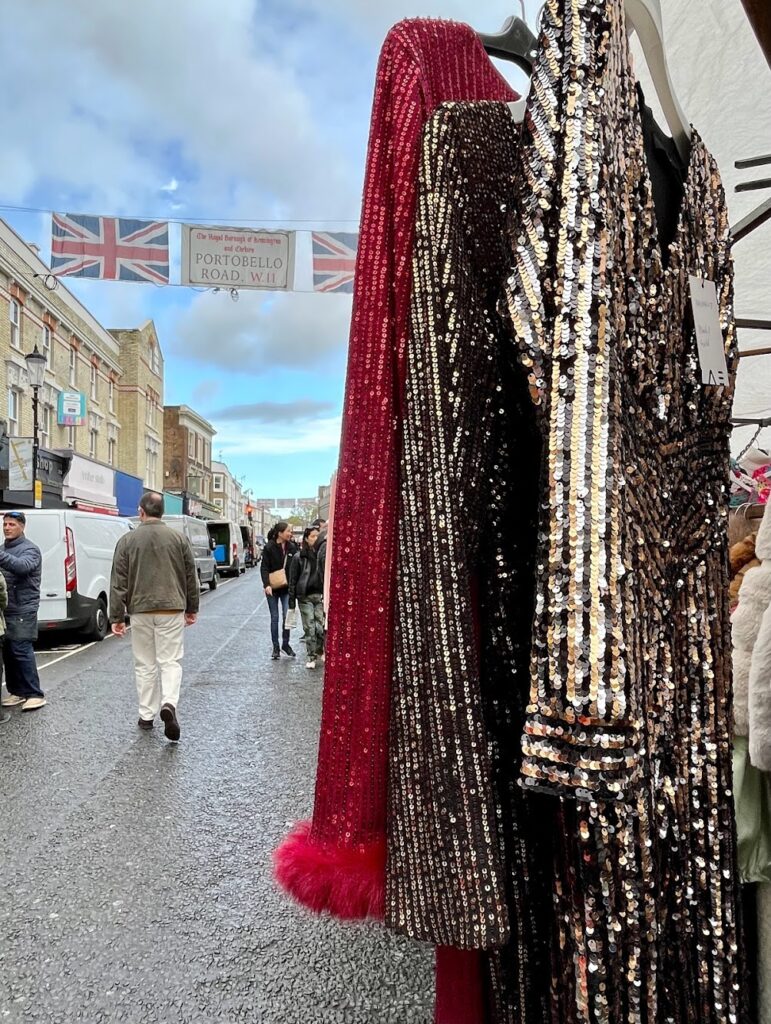
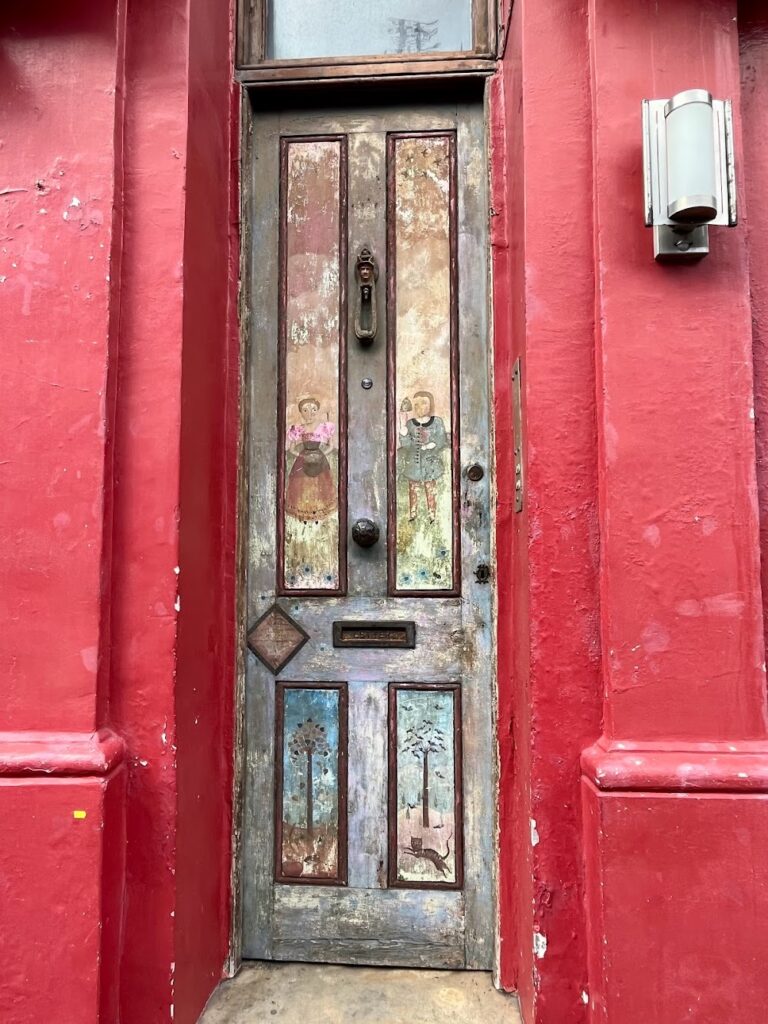
I don’t know if it’s hard for places like this to keep living up to their reputation. Do the streets made famous in Disney songs and late 90s films want a break sometimes, want to drop the facade? Well, we took a good walk along here and enjoyed the mix of shabby and cheesy and pushing the boundaries.

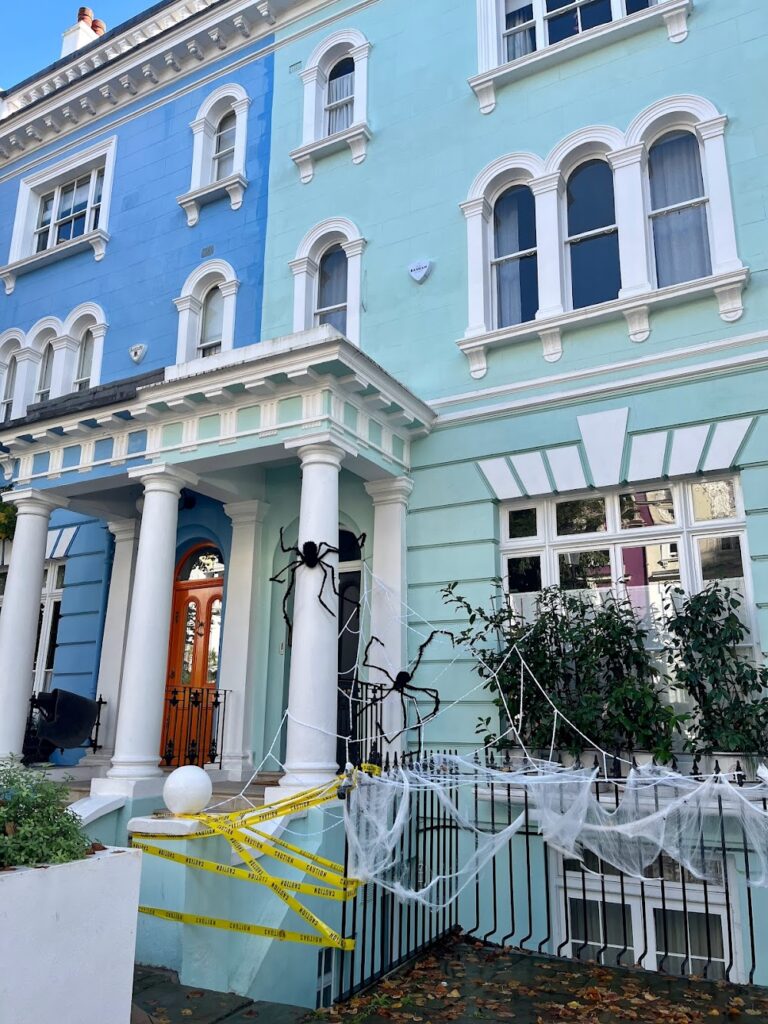
We perused stalls and shops selling everything from wool berets to sequined jackets, to prints made from photos of your iris, to last minute pumpkins for Halloween the next day, and we had lunch at a place called Egg Slut–absolutely delicious. Then we did a further loop through the posh neighbourhoods of Notting Hill, with big, pastel townhouses dripping with gauze webs and jack o’lanterns for the holiday. Imagine trick or treating here!

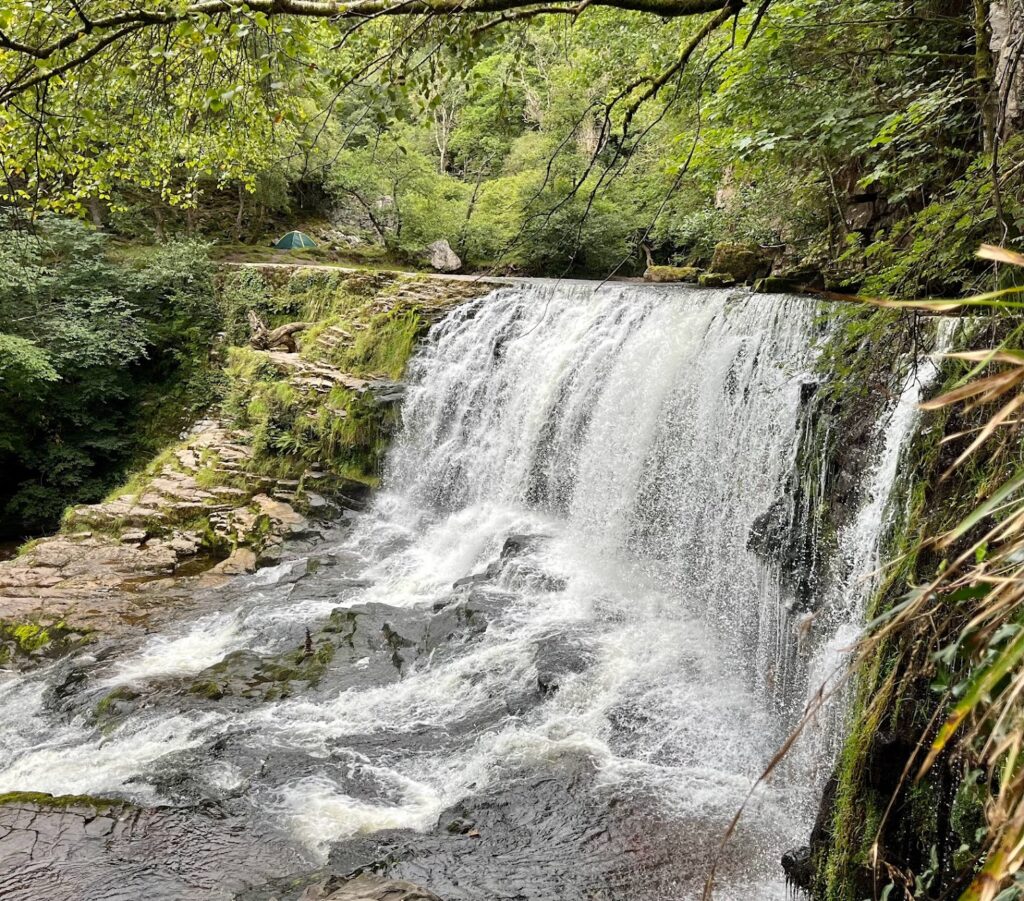
Brecon Beacons Four Waterfalls Walk, Wales UK

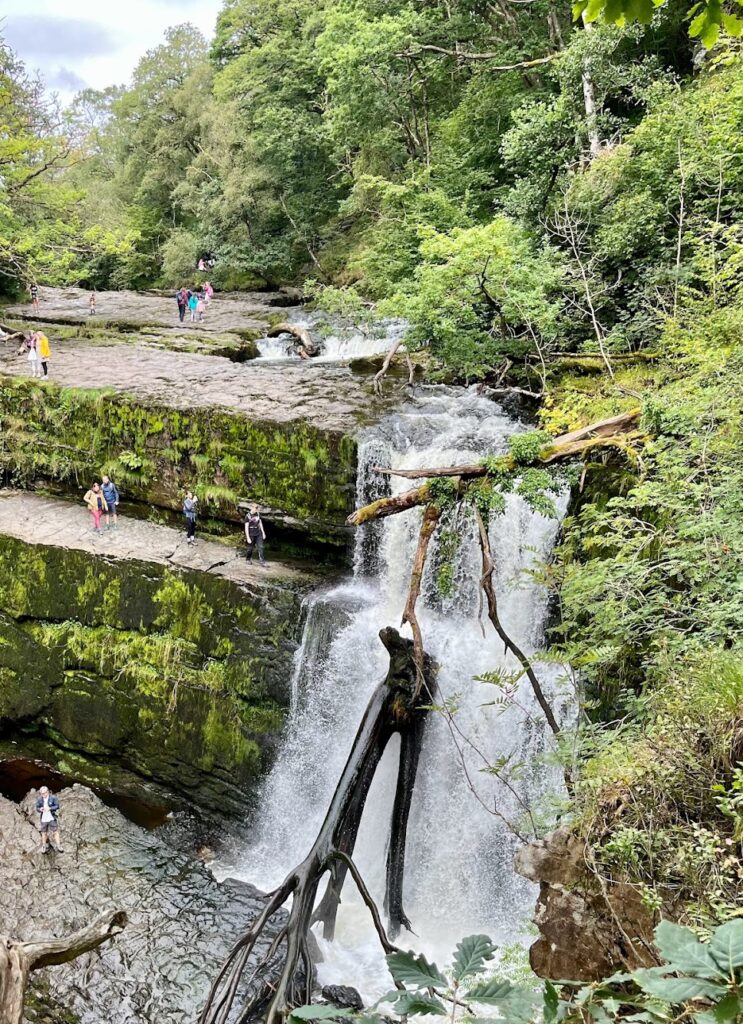
Another hike I’d been sizing up for a few years, this too proved well worth it. It was cloudy, but the falls are still quite spectacular. I guess we can thank the rather wet year for that. 

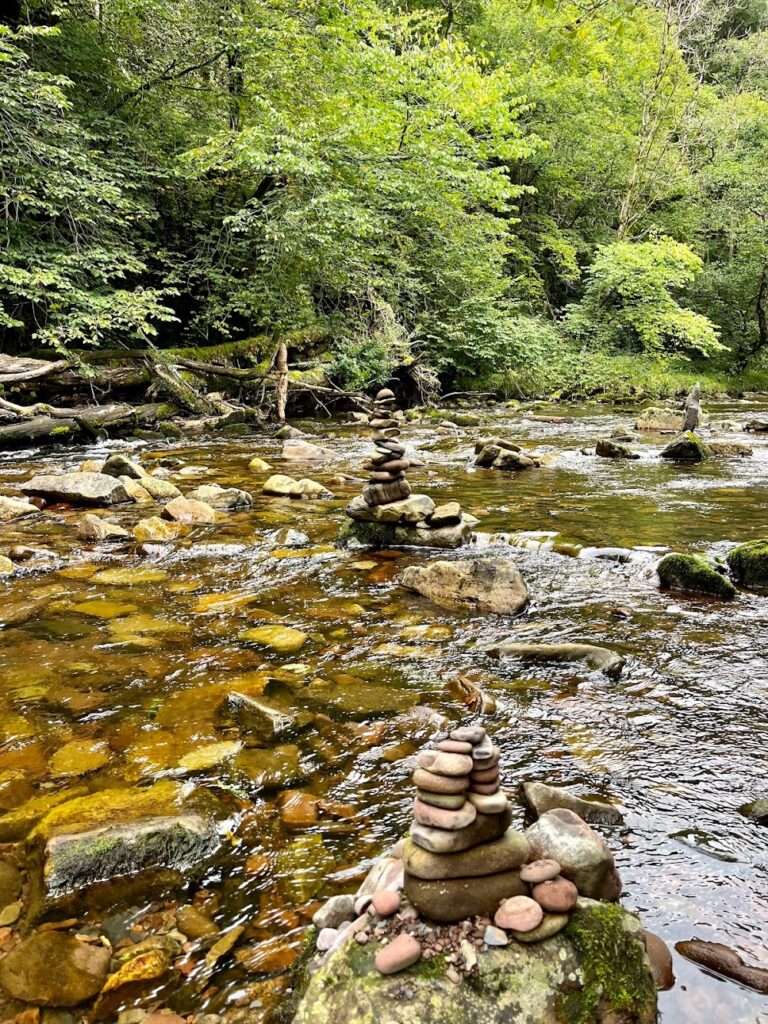
Because it’s quite a popular destination, we couldn’t always get close to the cascades, or behind them. Still, I love seeing how torrents slice through rock, and all the greenery that scales the damp cliff face around and behind the water. One waterfall had dozens if not hundreds of little rock cairns built in the stream below. 

To save backtracking the long, muddy, crowded access path at the last fall, we found a vague trail up the bank and did some rugged scaling. This earned us extra waterfall views from the top and made us feel quite intrepid. 

City Park, New Orleans Museum of Art Sculpture Garden, Esplanade Avenue, and St Louis Cemetery #3–Louisiana, USA

Did something completely different over the Christmas holidays and visited America’s deep South . We met up with our kiddo in Houston, then my husband and I roadtripped along the Gulf of Mexico and the bayou, and spent New Year’s in New Orleans.

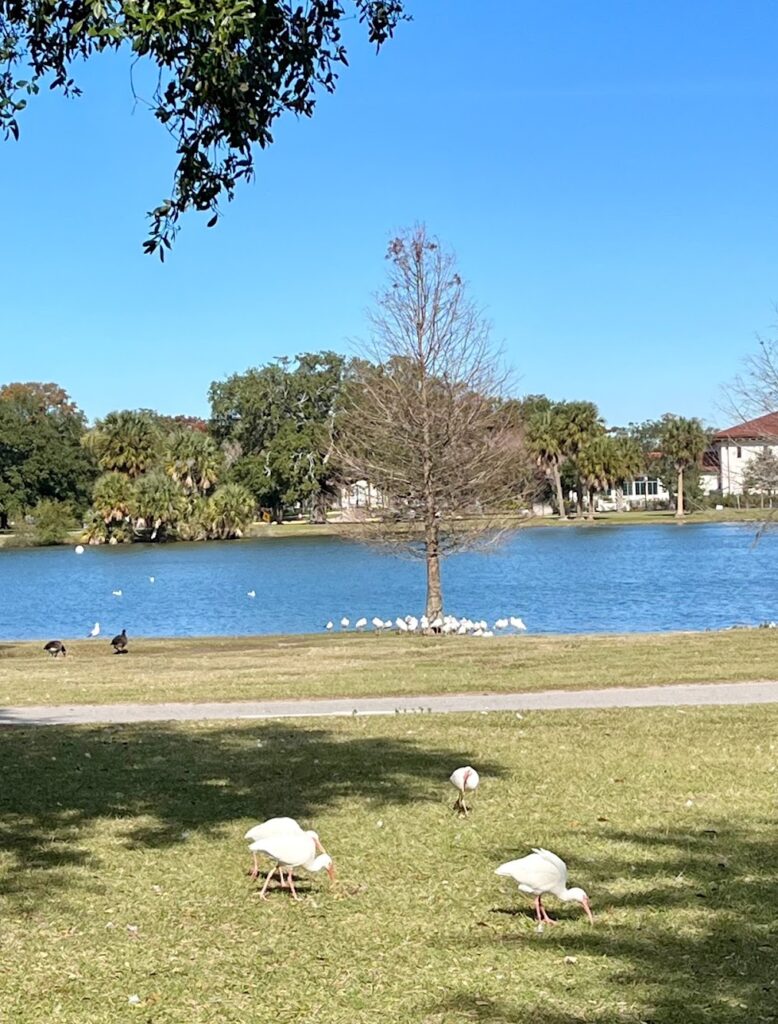
Staying in the French Quarter, we had the experience you might hope for: strolling out for morning beignets under wrought-iron balconies trailing ferns, pausing to hear jazz bands in the street. Later, we stopped at City Park, a massive public space half again as big as NYC’s Central Park.

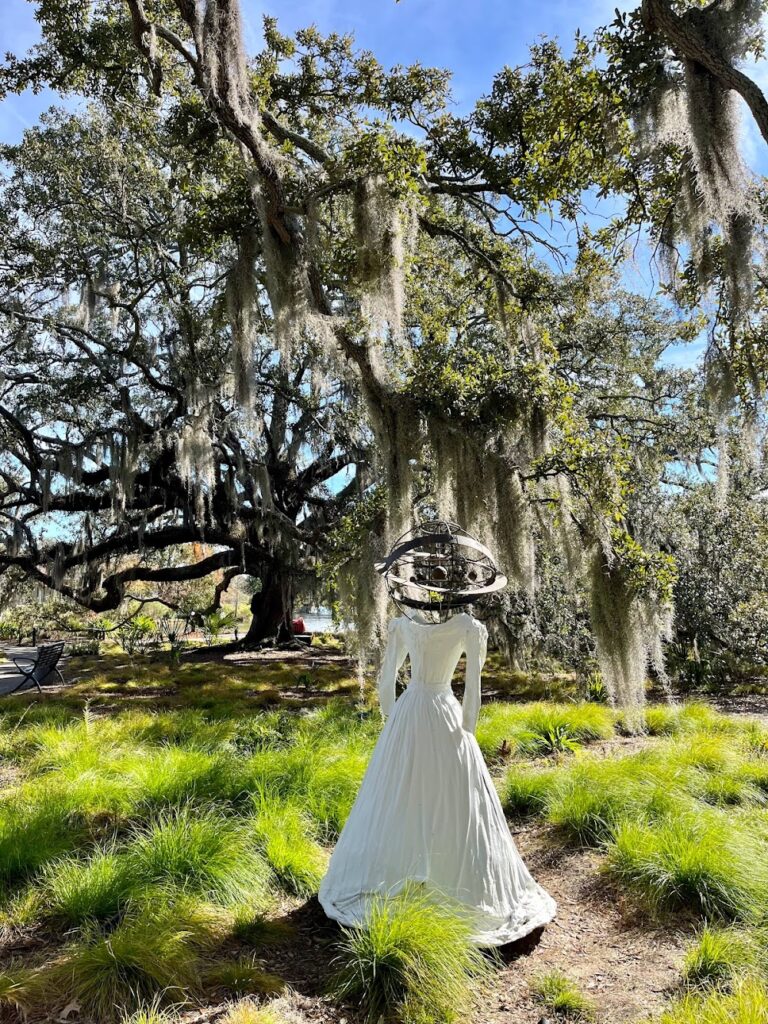
We were greeted by long-beaked ibises when we got out of the hired car, and we ambled through the Besthoff Sculpture Garden beneath live oaks dangling Spanish moss and resurrection ferns (ferns that go grey and curl, allowing themselves to survive losing over 70% of their moisture in dry spells). The statues combined cultural elements of the city’s past: a Rodin, a ghostly dress with a solar system model for a head, a conquistador helmet turned to a snail with a little boy riding its back, a glorious African woman, her garment a series of impeccably formed coils.

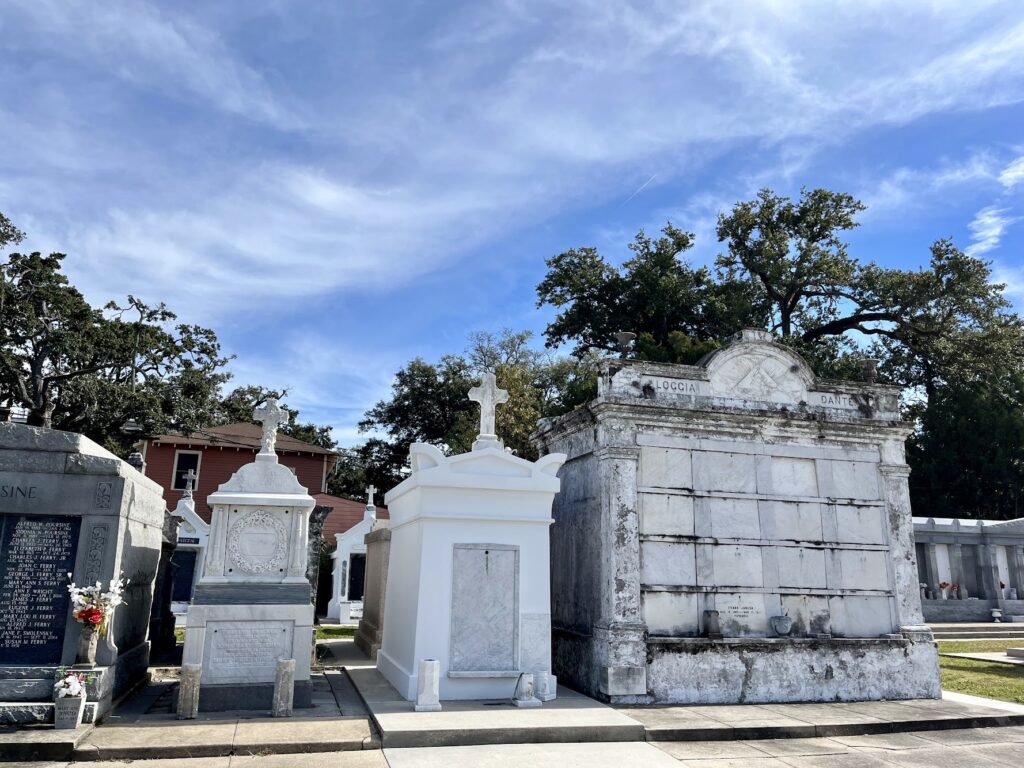
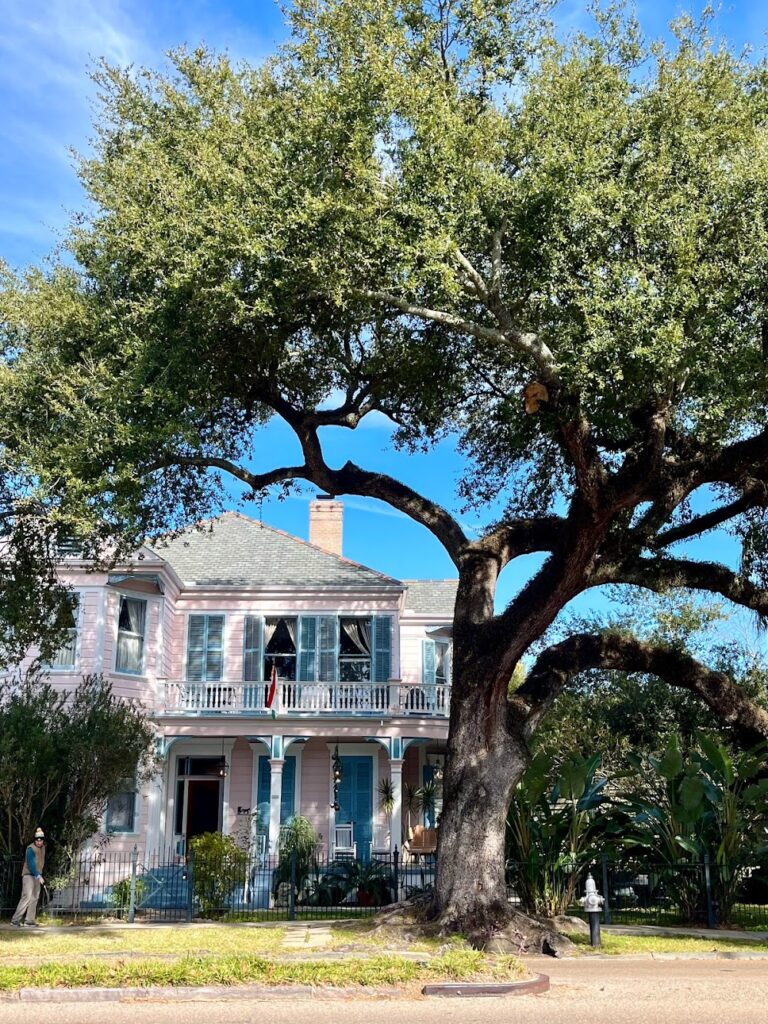
From there we walked down Esplanade Avenue, with pretty pillared houses and more live oaks, the trees so mighty they were busting up sidewalks and weighing down overhead electric cables. We came back through one of New Orleans’s famous cemeteries, with aboveground vaults since you can’t dig graves below sea level. Some vaults have lots of cupboards in them for family remains, and one had a small ornate frame fixed to it with a photo of the occupants behind a convex lens, like a locket, so you could see the faces of the African-American couple who passed away in the 1980s. It seemed a privilege to actually see what they looked like, and I wish that idea might catch on.

What were your favourite visits and meanders this year? How did you keep your spark alight?

Life Raft

This Week’s Bit of String: Comedy face, tragedy face, angry face

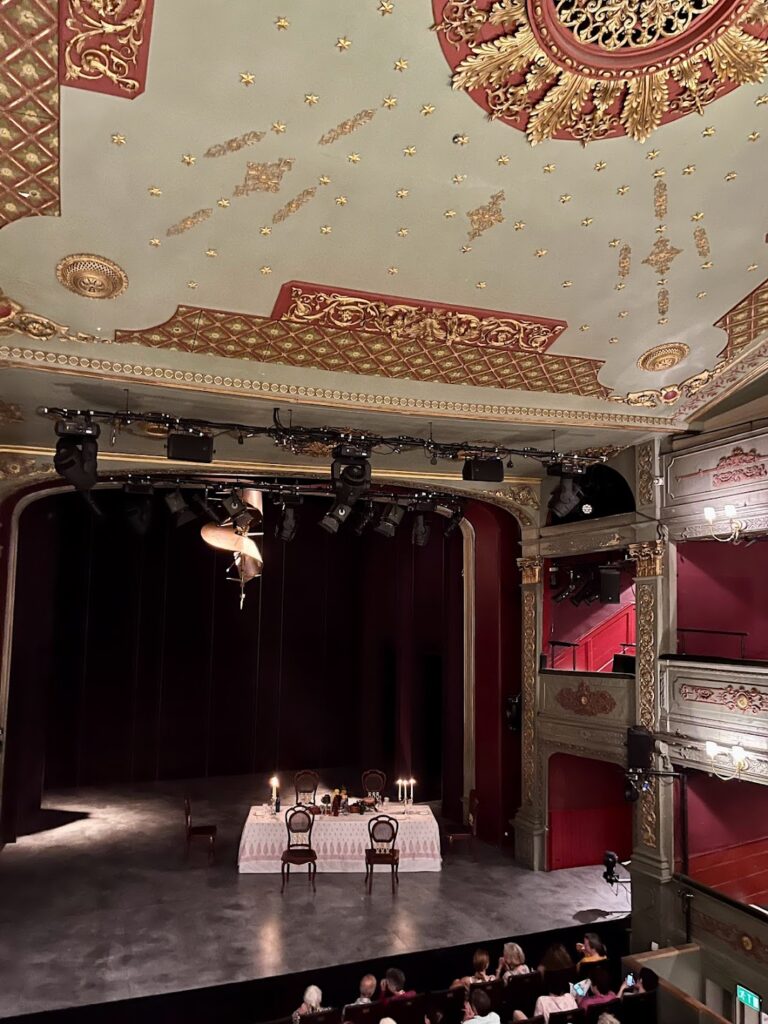
Wielding the unholy power we’ve given it, Facebook keeps showing me adverts for a play my husband and I just saw in Bristol. That’s ok, it was brilliant; I’d still be mulling it over without the reminders. I noticed, though, that someone had responded to the theatre trailer with the angry face emoji.

Someone who doesn’t like modern adaptations or diverse casts, I thought. A couple months ago, we loved the RSC’s latest Julius Caesar with women in the main conspirator roles, but not everyone approved. Our latest dramatic adventure was the Bristol Old Vic’s production of Anna Karenina, and you’re not going to adapt that epic without controversy.

I peeked at the comments though, and here was the angry one: “While everyone drowns… The height of sophistication!”

So, they were mad that people spend money on the arts during a cost of living crisis.

Anna Karenina at the Bristol Old Vic–I highly recommend it!

I am still thinking about this. I’m an empathetic person, which draws me to the arts in the first place, but I try to be pragmatic as well. Could I benefit more people with how I spend my bit of spare money?

Maybe the angry commenter is so strapped for cash they don’t realise some of us can spend money on more than one thing. I pay for shows a few times per year, but I have charity donations set up monthly. They may also not realise that people who work in theatres need money too. 

The actors and writers and crew for Anna Karenina did an incredible job, but I doubt they are earning celebrity-level amounts of cash. If we didn’t buy tickets to see their work, they might be “drowning,” too.

Bread and Circuses

I don’t go to the theatre to look or feel sophisticated. It’s not the most comfortable seating or temperature, half the time, so I’m fidgeting and worrying whether my husband is having an ok time (thankfully, he usually is).
 
I attend shows for the luxury of sinking into someone else’s story, as with reading a good book. I go for the cleansing catharsis of experiencing someone else’s heartbreak and redemption. I also go because I would hate for hard-working creative performances to go unappreciated. Not many of us get to earn income from our chosen art. I’m happy to pay so that some can.

These are the justifications I make to myself. I don’t know if they make me right.

There have been times when I genuinely, if unquantifiably, feel a performance has changed me as a person. It’s as if what I’ve seen blazed so brightly in its heartfelt declaration of humanity, a spark catches inside me and kindles a desire to love better, to create better. This might sound silly. But I felt permanently altered after seeing Miss Saigon’s 25th Anniversary show adapted for cinema, for example. Or when I watched La Boheme as a 10-year-old. 

Letting art sweep us out to sea

I can’t prove these things have made me a more compassionate, more resilient person. Even if they did, have they enabled me to benefit society as a whole? Still, there’s something much deeper here than entertainment, than a veneer of culture and sophistication. With Anna Karenina, the audience sees the perfect storm gather of misjudged desire, of lonely male domination, of a society obsessed with honour and prone to condemnation. It’s not genteel, it’s messy and raw. 

Resurfacing

I do appreciate reminders to be vigilant of all people’s needs and circumstances, and I want to always be sceptical about my practices. The truth is, anyone is at risk of “drowning” for a variety of reasons. I don’t want to act like the gossips in Anna Karenina, and judge people by trivialities such as how they spend their money. (Well… unless they’ve gained a tonne of it by shady means…)

No one has a right to sniff at how those with limited income spend their money. People who need help buying food shouldn’t be judged for spending money on, say, a smart phone. Not in these times.

Just as there are many things that can drag us under the current, there are many that might buoy us up. Maybe we need to build a righteous ark of highbrow theatre and literature, or witness an uplifting musical, or ride a wave of mass entertainment. Sometimes you just have to coast on a Disney cartoon. I’m not saying “Let them eat Shakespeare” or “Let them eat Netflix,” but I wouldn’t want to deprive anyone of those things any more than I’d deprive someone of food. 

How do you use arts to keep yourself and others afloat?