Quaint Customs

This Week’s Bit of String: A world of queens

Years ago my kiddo emerged from a swimming pool changing room and treated me to this fabulous idea: 

“The reason I took so long was because I invented a new musical. It will use the music of Queen and be all about if history had queens instead of kings.”

How would the British empire be different as a matriarchy? If there had been a Henrietta VIII, for example, would she have gone through 6 husbands? Some of the queens they did have were pretty brutal. Would they have felt less pressure to be so if they weren’t sandwiched between kings?

I suspect the ruthlessness lies not in gender but in unquestioned power, in the philosophy that there’s a divine right to rule for a particular bloodline. How then could a monarch, male or female, not believe they’re better than everyone else? Why should they genuinely take interest in what goes on for any of their subjects?
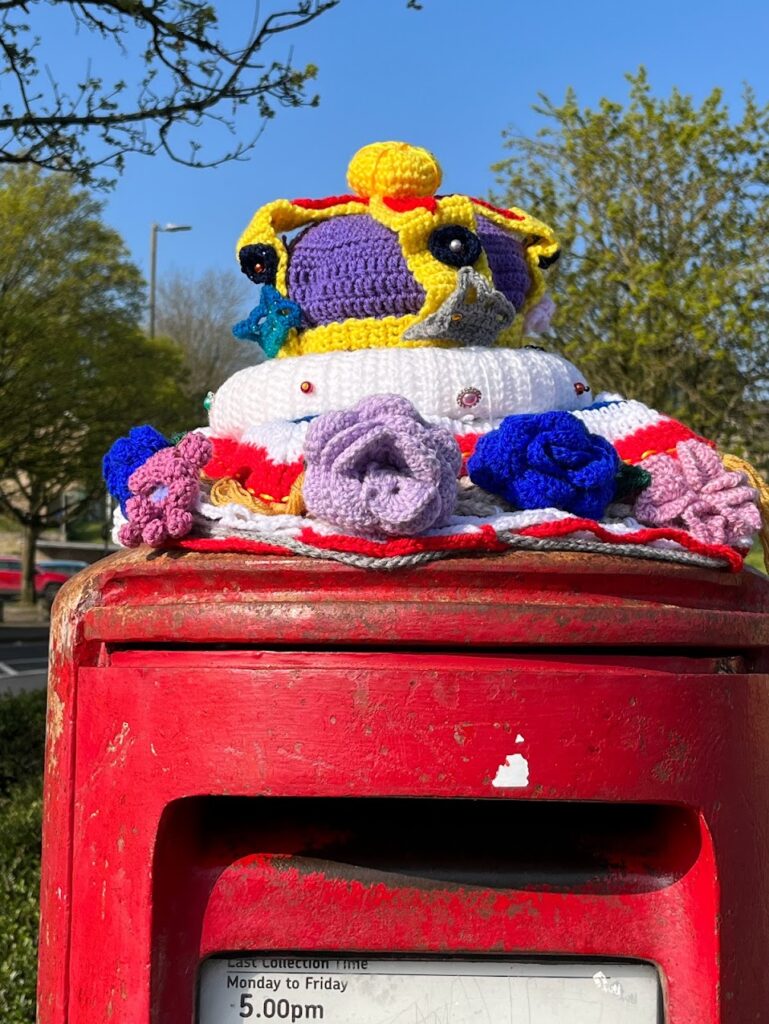
I mean, it’s fun to see something a bit different…

I can’t help thinking about these things with the coronation of the new king. It’s a rather inescapable affair. As an immigrant living in Britain, I was initially bemused by the knitted crowns on top of Royal Mail letterboxes and the bunting strung across main streets. One of my favourite cottages to walk past put up signs saying, “Party like royalty.” Cute. 

Then there were £10 souvenir brochures for sale, and you can’t get a chocolate bar without a shiny crown stamped on it, and the public are offered the “opportunity” to participate in the coronation by swearing allegiance to the king… It became unsettling. Especially considering the monarchy’s cruel legacy of colonialism and the slave trade, and the current cost of living crisis.

Class Differences

When the queen died, it was a day or two after the Conservatives made Liz Truss prime minister, and during the first week of school. When you’re running around making sure your students actually have lunch to eat, swapping in new unelected leaders for old ones does not impress you.

I don’t begrudge people whatever small pleasures they find in life. Clearly some people enjoy celebrating the monarchy. I wish they could get that feeling from other things. It’s like my Year 12 student not wanting to join a cooking class in making burgers, because she’s convinced nothing can be better than MacDonalds.
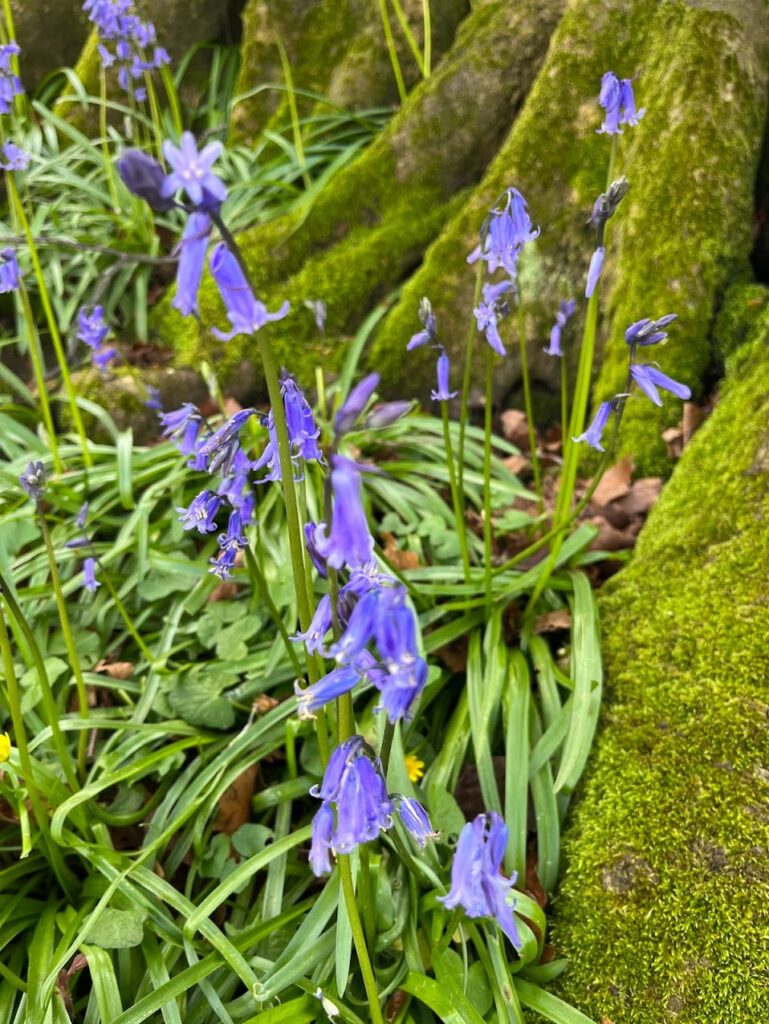
Patriotism.

Shouldn’t bluebell-carpeted woods, chips from the local takeaway, maybe a trip to a local production of ChittyChittyBangBang, make Britons feel proud of their country rather than a random guy donning ridiculously expensive headgear? 

Many are concerned about the massive cost of this event. I’m happy for the children of our parish if they enjoy the hula hoops our council decided to gift to every schoolchild to mark the occasion. I’m glad if people like getting together for town-funded street parties. But the district Child and Adolescent Mental Health Service, for example, has a waiting list of more than 200 young people with acute needs. Hula hoops are fun, but so’s cake and there’s a reason no one liked it when French royalty said, “Let them eat cake.”

Story Selection

I don’t read much about the royal family. I got fed up with it as an adolescent in the mid 1990s when Princess Di or Fergie or the American equivalent, JFK Jr, were constantly on People magazine covers. I do think it’s fascinating how being born to that level of privilege and scrutiny would affect a person and their relationships. There’s a wealth of opportunity for stories there and many have utilised it. For me though, other stories are so much more crucial.

I hope everyone remembers that the queen wasn’t the only person who sacrificed and toiled in WWII; pretty much everyone I cared for in my nursing home job a decade ago did. King Charles isn’t the only person who helps with good causes. So many unsung heroes work hard, or run food banks or volunteer at youth centres or take in refugees. 

I’ll spend much of today on housework and editing my novel’s penultimate chapter, featuring the voice of a refugee girl struggling in a new land. It is different from the chapters told by Eve herself, and I must make this extra, incredibly important voice work. I also plan to visit the swimming pool. It probably won’t be too crowded today while children are forced to sit at home near the telly. I hope they come away with wild ideas about how things could be different.

Will you be celebrating anything today?
What’s in a Name?

This Week’s Bit of String: A little baby cat

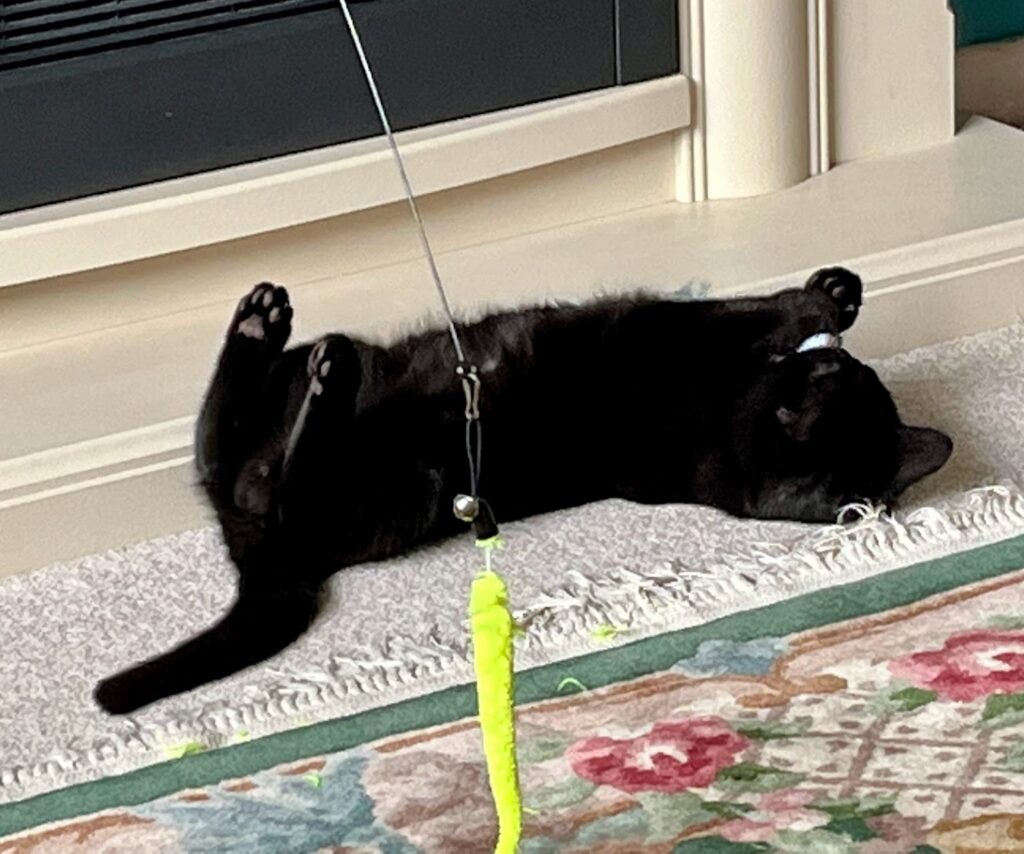
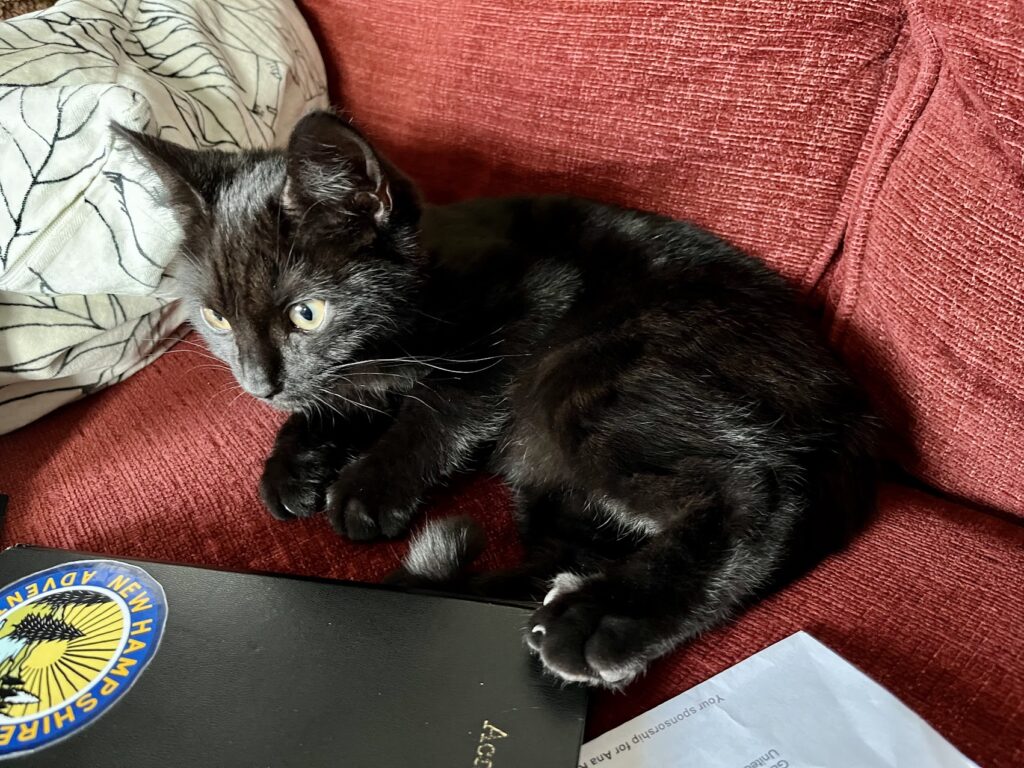
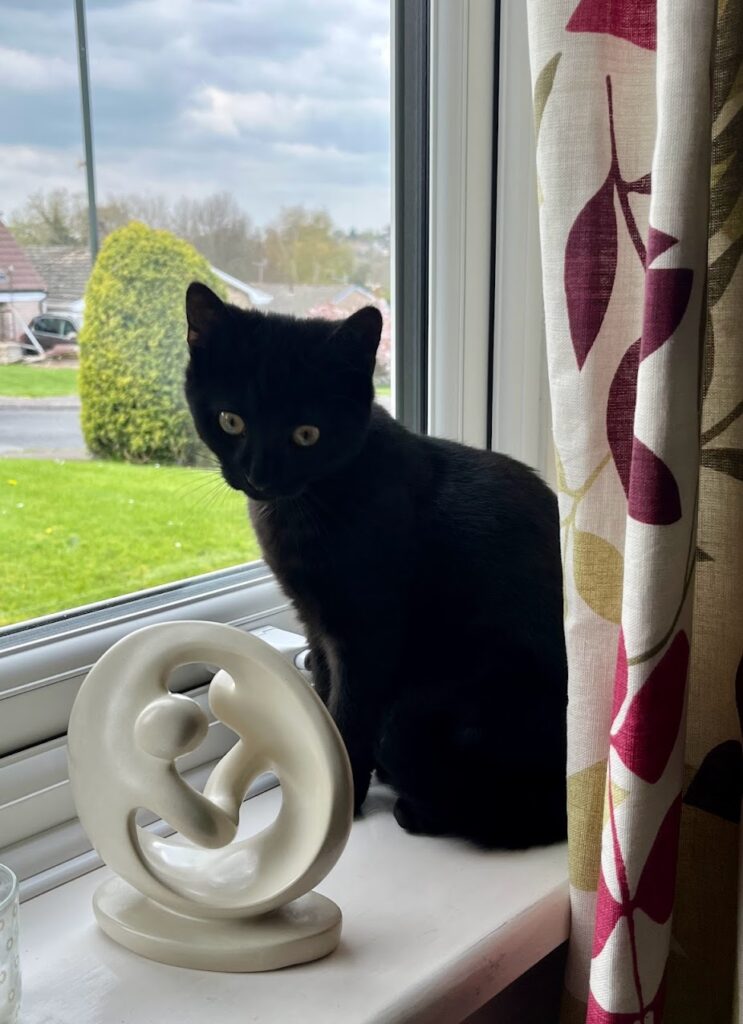
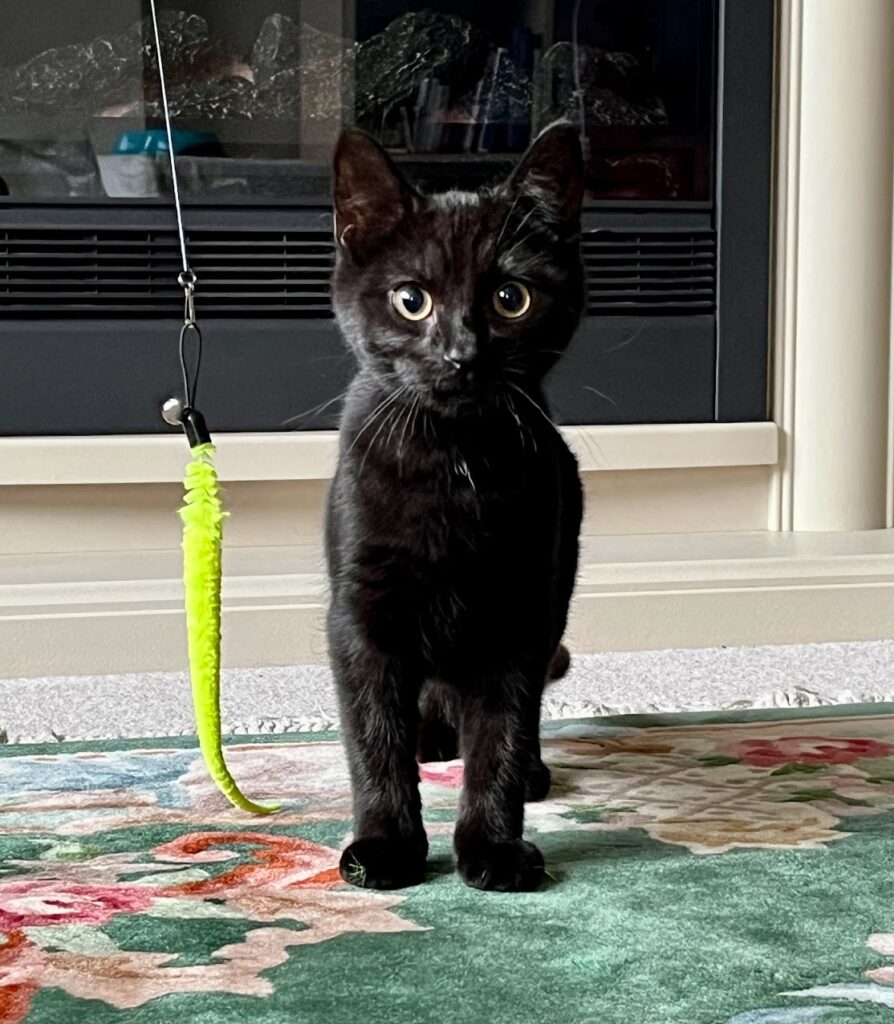
We got a 4-month-old kitten a few days ago. I will try not to go on about him too much–the photos should speak for themselves–but I’m smitten. 

Getting him relatively early means we can rename him. Goodness knows if he’ll respond to it; how powerful can a verbal moniker be compared to Dreamies and feather toys, cardboard boxes and head rubs? But the process of choosing a name was exciting and also, in a way, revealing.

I viewed this as acquiring a new family member. So the name had to fit with our family culture. That’s not something I actively think about, and this caused me to consider it. 

Naturally, our family traditions and favourites are a transatlantic mashup of American and British. Should I call the cat something to connect him with my home country? I liked the name Cricket, since he is black like the crickets in New England whose song I associate with home. And as he finds his voice, Kitty McKittenFace has revealed himself to have a crickety little chirp. But the name didn’t fully suit him.

I didn’t want a conventional black cat name, not even Inky or something with writerly implications. A literary name, that would do. A Shakespearean one even, given we just had a grand time in Stratford-Upon-Avon and the Royal Shakespeare Company theatre. No one with a tragic fate though–that eliminates a fair few of the Bard’s characters.

We settled on Oberon. The cat has a royal bearing, I think. We can shorten it to Obie, and link it to Star Wars as well if we see fit. Our Obie does have quite a stare; you’d think he was trying to use the Force on us in order to get his food bowl filled. (Scifi and adventure films are another part of our family culture.) And if he turns out a bit standoffish–which so far he is not, much to my excitement–we can call him ObeRon Swanson, for one of our favourite Parks and Recreation characters.

Character Names

Finding a title for a story can be loathsome. Nothing seems quite right… But naming characters is more painless, even enjoyable. There are so many connections you can make with a name, so many clues for readers. For example:

What: What does the name mean? Courage, humility, purity, illumination–lots of names have meanings like these and they can give a hopeful note to a character’s trajectory. I used to attach importance to this as an adolescent writer, but on the other hand everyone is brave, humble, pure, and illuminating at times, so we can’t lock ourselves or a character into any one attribute.

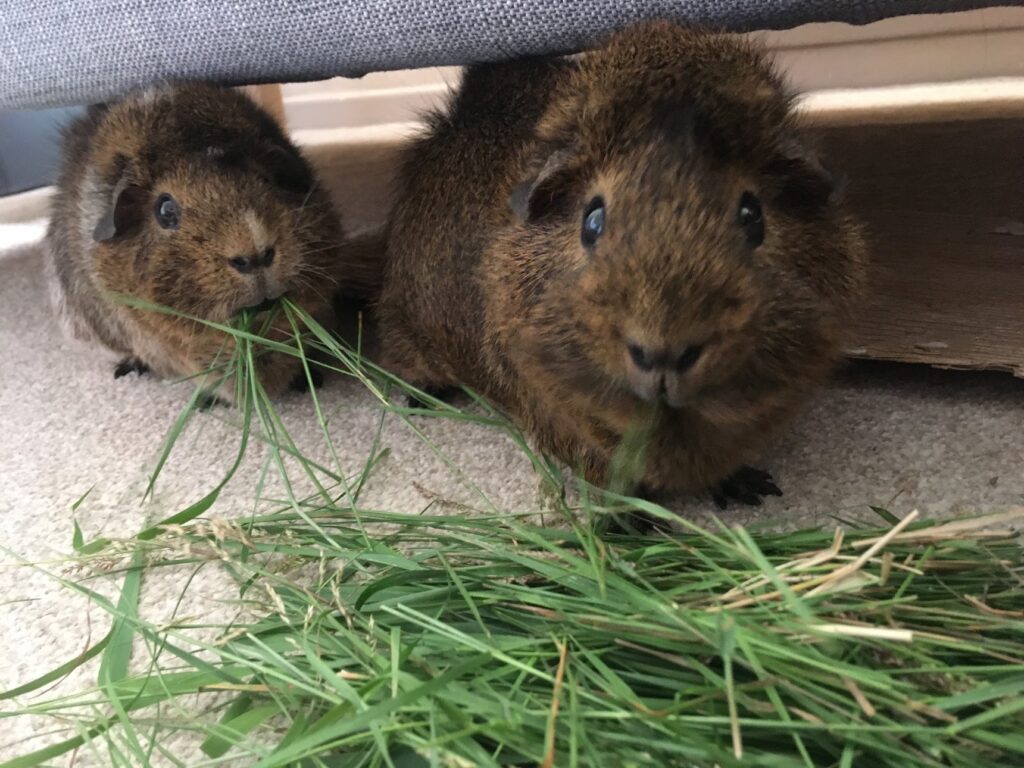
When: What does the name say about the contemporary events of the story? Is it a trendy name given by up-to-date parents, or a name that reflects indifference to fads? On the 2nd of November, 2016, we bought our last pets before this one–a pair of guinea pig brothers who took up residence in our lounge for the next 5 years. With the [now infamous] American election a couple days away, my husband and I wanted to name them Barry and Bernie, but our kiddo chose Fred and George instead. Mischief managed!

Where: Where is the name from? My name is Russian because my dad loves Russian literature. I have no Russian heritage. But it says something about the family who raised me, and introduced me to all sorts of art and literature. As I’m looking into my next project, I want one of my main characters to be an immigrant with a name that gets shortened to Nil, drawing inane comments now that she lives in the UK. I haven’t found a name that fits these particulars yet. Would it be culturally insensitive if I made one up? It’s funny, the notions we get stuck in our heads.

Who: Who else has this name? Often names come from a family history, but they might link to other figures also. I have a draft of a dark comedy story where some celebrity parents name their kids Ursula and Gaston, after Disney villains to shock people with how enlightened they are.

Why: Why was this name given to them–not by you as the writer, but by whoever named them? Writing my novel about Eve, I kept reading the Genesis account of creation. She’s only called “the woman” until after Eden. That’s not as outrageously disrespectful as it sounds though, since all Adam’s name ever meant was “the man.” If they were the first humans on earth, their species and gender would need no further specification.

How: How do others react to the name, and how does the character feel they are living up to it? I don’t usually give characters unusual names, because I have one and it complicates things. How people respond to my name reveals something about them. They might force it into something they know, like Natasha. They might immediately forget it rather than attempt pronunciation. Or they might say, “How unique. I’ll definitely remember that.” It makes things interesting… Maybe I will use such observations in a story one day.

What’s your strategy for naming characters? Are there any character names you’re particularly proud of?

Et Tu?

This Week’s Bit of String: Big wheels and street songs

We camped near Stratford-Upon-Avon over Easter weekend, our first visit there in nine years. A pretty Cotswolds town fiercely proud of being Shakespeare’s birthplace, it’s added a Big Wheel to rival the church spire and the tower of the Royal Shakespeare Company Theatre.

Just trying to have a quiet think.

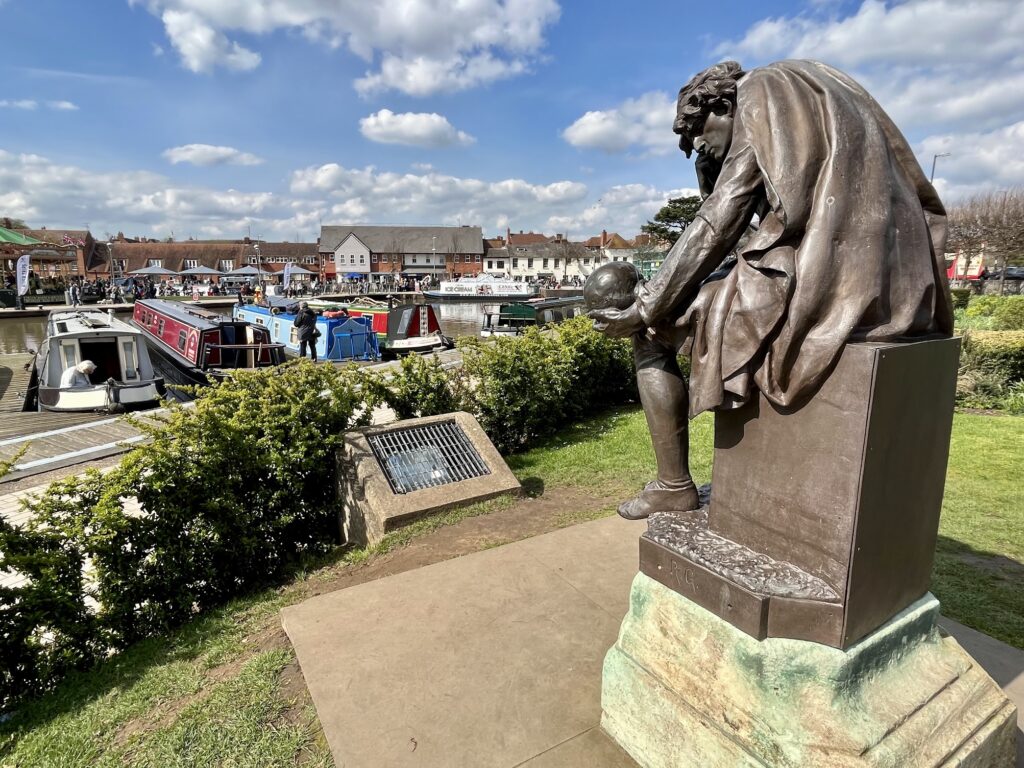
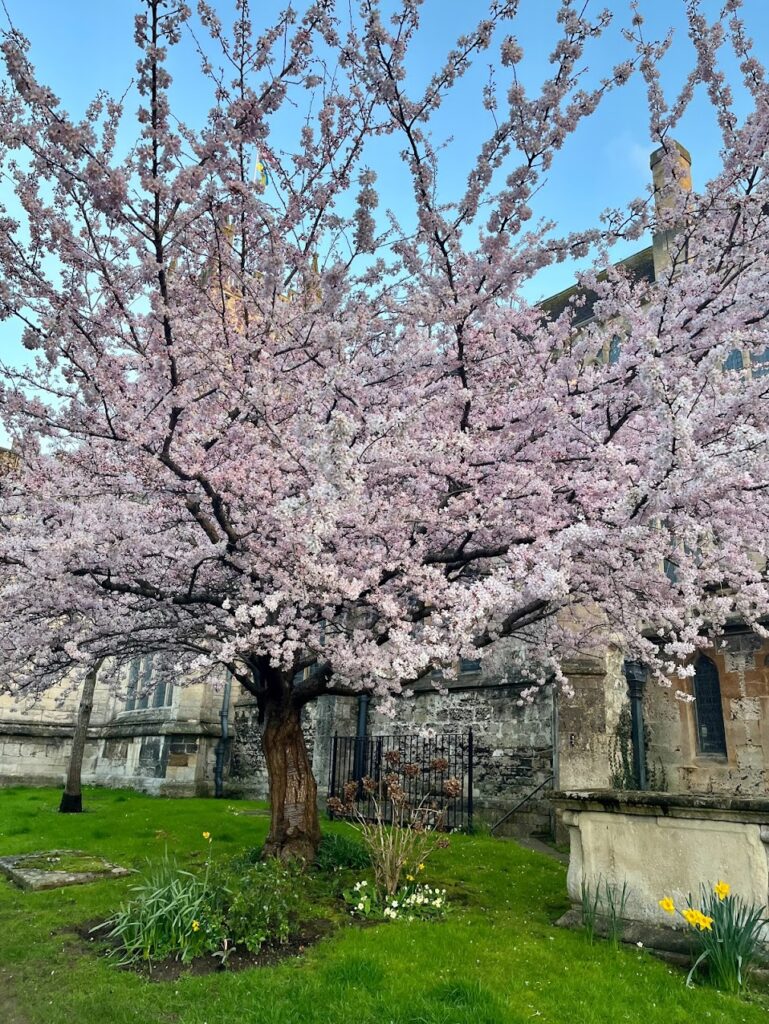
People snap selfies with the statues of famous Shakespearean characters surrounding his statue in the park. Lady Macbeth’s knuckles and the pate of Yorick’s skull are worn smooth by 150 years’ worth of tourists rubbing them for luck. Narrowboats mass on the Avon in front of them, cherry blossoms sway, and a street musician sings “To Make You Feel My Love.”

What would the Bard think of it all? I suspect he would have been okay with most developments, as long as they bring money in. And it wasn’t as if he was humourless. The range of topics he covered in his plays, he doesn’t seem completely traditionalist either.

A Theatre Trip

*Does contain spoilers for a centuries-old play about millennia-old famous historical events

My husband and I went to an RSC production of Julius Caesar while in town. It’s fascinating to me that Shakespeare chose to write this play, and frame the Conspirators with nuance and sympathy, even admiration, when he lived in a strictly royalist time. What could the preservation of democracy mean to him? This play contrasts with the anti-regicide message of Macbeth later on, for example.

We were completely engrossed by the show, although checking online later, it’s had a few sniffy reviews mixed in with decent ones. The director went for fairly plain costumes and set. There was a solemn, black-robed chorus between some scenes, just as the Greeks and Shakespeare would have intended. Between others, there were choreographed group scenes a bit like marches or parties or riots.

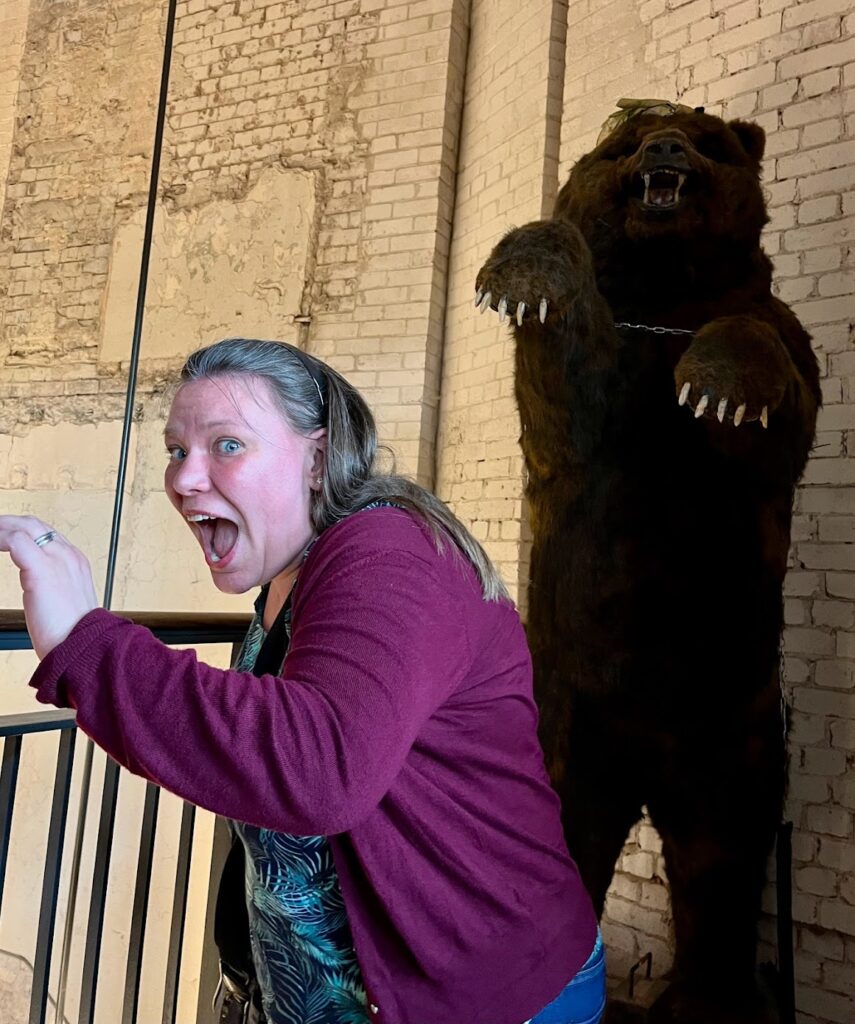
Daft, I know, but I had to get an “Exuent, pursued by…” photo with this Bear at the RSC Theatre.

This aspect was quite different and a little confusing. I’d looked at the cast list already, though, so I could pick out Brutus and see that her motions represented her inner conflict. I do wonder if some of the same people who criticise the choreographed segments as being too gimmicky, too distracting or confusing—might those not be the same people who advocate for opaque literature, for leaving things up to interpretation? So, I have interpreted it, and find it interesting, and thoroughly believe I would pick up more detail if I had the time and means to see it again.

Both Brutus and Cassius were played by women, which I felt made their friendship more moving, particularly in their parting scene. They were sisters-in-arms. Maybe I’m being egocentric and enjoying a chance to see my gender reflected more in traditional theatre. But perhaps there’s also an objective poignancy in seeing two women take on the accepted power structure, rather than two men do it.

At least one reviewer, as well as an elderly theatregoer my husband overheard, complained about how these two leads kept male character names while using female pronouns, and also kept some lines referring to the characters as men. I was not flummoxed by this. When Mark Antony repeats in his famous speech, “But Brutus is an honourable man,” it’s obvious who he’s referring to.

I wonder again if people who quibble over the lack of matching names/ pronouns/ gender language will wax lyrical about symbolism and analogy in Shakespeare. I suspect they know he’s not always literal. Maybe they just have certain buttons that get pushed when a young Black woman plays Brutus.

Death Scenes

The actress playing Brutus is Thalissa Teixeira, and she was riveting, with a cool elegance befitting an honourable soldier, and moments of passion which showed why she would have such loyal friends. She has ties to Brazil, and you can read how that influenced her portrayal of political upheaval and rebellion.

Brutus’s servant Lucius was played by Jamal Ajala, a deaf actor of colour. So some scenes at Brutus’s house were signed as well as spoken, and the director Atri Banerjee chose to have Lucius reappear in the final scenes as the friend who assists Brutus’s suicide. Brutus’s request to him and his acquiescence were completely silent, only signed. This made it much more striking.

Some juicy juxtaposition right here.

I had to read a lot of Shakespeare in my American high school and university years, much more than the strictly exam-based curriculum in Britain demands. Having been inundated mainly with his tragedies… they get a bit samey. There’s a lot of hand-wringing leading-up-to-death scenes, and this version put the hands to good use. For a taste of what I mean, here’s a video of Jamal Ajala performing Hamlet’s soliloquy in British Sign Language.

Shakespeare bestows an element of control on his characters’ deaths. People get to have little speeches and even Caesar, after he’s been stabbed by several people, doesn’t die until he’s sort of consented to do so: “Let fall Caesar!” This must have been how Shakespeare wrestled with the brutality of life in Tudor/ Jacobean times, when there probably weren’t many poetic farewells. Not during executions and plagues. I doubt he would have begrudged today’s directors and actors using his work to make a mark on society, to make it more inclusive and diverse.

What do you think about Shakespeare, and about reinterpretations of it? Is adding a Big Wheel to the literary landscape a betrayal tantamount to what Brutus did to Caesar?

Over the Rainbow

This Week’s Bit of String: A few hundred definite articles

When I was young and had energy–aged three, to be exact–I started eschewing naps. My mother would put me down for a “Quiet Time” instead, with a stack of books to look through. I knew their stories well, but I wanted to properly read them. Logically I started at the beginning, and as my mother settled me down, I asked what the first word of the top book’s title was.

It was “The,” as in The Wizard of Oz. Now able to read my first word, I went through every book I had and counted how many times “the” appeared in my books. I kept counting wherever I went, well up into the hundreds, until I noticed the word “there,” and counted those. I was in the midst of counting “thens” when all the other words started making sense and I lost count, too busy reading. Sucked into new realms.

Our copy of The Wizard of Oz was a big, almost A3-sized book with illustrations based on the film version. Since it became my first reading experience, I have a soft spot for the story–but clearly I was already drawn to it, since it inspired me to try and read in the first place.

Real Life or Dreams

One thing that bothered me about the movie was how it framed Dorothy’s whole adventure as a dream. I preferred the Chronicles of Narnia, in which all that happened was incontrovertibly real, just occurring in a different dimension (which I tried to reach through many a wardrobe). I felt it diminished Dorothy’s experiences to portray them as just a dream.

Even now, I get a bit ruffled when creators use the “But was it all a dream?” cliche. Hopefully this doesn’t make me too simplistic or uncultured, but I like reality clearly delineated. If an unreliable narrator misleads us for their own ends, or for their own survival, or if they’ve been misled, I’m all in and I have colossal respect for the storytelling (Elinor Oliphant is Completely Fine, Fingersmith, Life of Pi). But if, for example, a TV show or film implies the entire premise has only happened in a character’s mind, as one episode of Buffy the Vampire Slayer tried to do, I’m offended. How dare the whole plot be minimised in this way?

The secondary school where I work just finished an energetic, 6-performance run of The Wizard of Oz. My husband played in the band and I helped a bit with front of house and quick changes. When a production ends, it’s like waking up from a dream. There’s that sudden cessation of energy and the unwinding of a massive, intricate knot as everyone goes their separate ways.

It struck me, watching it again after a long while, that actually the way the story unfolds is just the way a child might imagine it. As a conquering hero, but innocent, with devoted friends and all sorts of magic. It’s not a diminishment of childhood experience, it’s an ode to their imagination, and I was quite moved by it.

Haunted Forests

It also serves as a reminder that even in our heads, even as children, we’re not completely safe. I don’t know any child capable of constructing a fantasy where nothing bad happens. Otherwise, how would we prove our heroism, and our comparative innocence? Dorothy tries to invent a place where there isn’t any trouble, but trouble gets in anyway.

Dreaming in colour

It’s all those anxieties about the future and those fearful spectres from our past creeping up. “Just try to stay out of my way,” they cackle. “Just TRY.”

One of the reasons I’m quite sensitive about stories being dismissed as “all in your head” derives from my experience in a psychiatric ward when I was 12. I was withdrawn and always thinking about stories. The staff wrote in my records that I seemed to be “responding to internal stimuli” and I was put on anti-hallucination medication.

“Are you hearing voices?” the psychiatrist, a toneless woman with an unfortunate resemblance to Jabba the Hutt, asked.

“No.”

“Are the voices telling you to say that?”

“No.”

But the doctors had become too entrenched in their own reality to decipher mine.

Fortunately, the pills didn’t affect my imaginings in the slightest; I could still escape. It shocks me that it never occurred to those medical professionals that a young patient would wish to imagine things outside the immediate reality of strip searches, iron-meshed windows and straitjacketed children screaming for help.

In my opinion, it should have been as obvious as Dorothy dreaming her way from black and white into colour. I suppose it proves how powerful our inner lives are; they can transport us so fully that people watching us have no idea where we’ve gone. I probably looked as if I was responding to internal stimuli when I was three years old counting “thes” and “thens,” and I go round mouthing dialogue to myself sometimes even now. I know what I’ve made up though, and what I haven’t. You can see why I’d find it irksome if someone tried to tell me otherwise.

What takes you over the rainbow? Has it ever gotten you into trouble?

Transferring Power

This Week’s Bit of String: Exclamation points and everything

Disappointment stirs among some of the A-Level Creative Media students. One of their teachers has been unwell for several weeks, and they miss her.

“She’s STILL not back!” This statement greeted me on Monday morning. Wide-eyed, the Year 12 girl explains, “And we sent her a get well card last week, so it’s just rude not to mind it. We put an exclamation point on and everything. That makes it a COMMAND.”

She’s half-joking, but I suspect they did hope their greeting would have strong restorative powers. It made me think a bit about power dynamics. When we ask someone–or even tell someone–to do something, we may think we’re wielding control, but in a way we are giving it away because we rely on the other person to comply.

Back to the Roots

Interestingly, the word “command” is rooted in Latin for to order, but also to entrust. That’s reflected, I suppose, in our English phrasing: To give a command. We extend an order to another party, but it’s then up to them if they take it. The power is not entirely with the person giving the commands.

Starting again…

This sort of control exchange is on my mind because… it’s submission time again. I only have a limited number of short stories, and I’ve thrillingly just had one accepted. (It’s super fun and you can read it here!) My semi-depraved brain only rejoiced in this for a few hours before starting to panic that this means I don’t have anything currently in the Out on Submission column of my writing spreadsheet. 

It’s time to start all over again: researching publications and competitions, editing and wondering if I’m going in the right direction at all, amending format to the exact requirements, drafting cover letters, etc. And then, waiting, very possibly getting rejected, and then repeating the whole process.

You know the drill.

Putting the “Mission” in Submission

To psych myself up for this (and maybe I can psych some of you other writers up in the process!), I looked into the etymology of the word “submit.” There are a lot of connotations to this word: religious, marital, and so on. Indeed, the Latin root means just what you might respect: “to yield, lower, let down, put under, reduce.” It does feel sometimes as if, when we submit our work in hopes of publication, we are prostrating ourselves before an almighty authority.

But separating out the sub- (under) from the -mit gives the idea more nuance. We forget sometimes how that second half of the word means to send out, to release, to bestow. While submitting our work does leave us vulnerable, it’s the primary route available in order to share our gifts with the world. 

Roots and blooms

Sure, it would be nice if acceptance were guaranteed. I remember finding it really tough to convey when my child was little that just because they used their newly-learned manners, it didn’t mean they’d get what they asked for each time. “But I said please!” they might insist, when a request to stay up later or to have more “clockit” (chocolate) was refused. As John Green wrote in The Fault in Our Stars, “The world is not a wish-granting factory.”

As writers and artists, often particularly sensitive and empathetic people, our mission tends to be deeper than getting recognition for ourselves (although given the hard work we put in, that’s definitely part of it). Maybe we want to illuminate darkness, amplify silenced voices, add beauty to the world, or make readers laugh. That’s the mission, it’s why we send forth our work into the world, and our successes are worth the many failures. 

How do you encourage yourself when it’s submission time?


Lost Darlings

This Week’s Bit of String: The adventures of Bugs and Daffy

Bugs Bunny and Daffy Duck have it easy these days. They lie about in a languid knot near the pillows of my kid’s empty bed. In years past, they were subjected to all sorts of wrestling matches. They even had a go at cheese rolling; after a family outing to this inimitable Gloucestershire tradition, our Bear was inspired to throw a Baby Bel cheese down the stairs, and toss stuffed animals such as Bugs and Daffy after it, keeping score of who got closest.

When Bear started secondary school, and we reorganised their bedroom, I asked if we should thin out the crowd of stuffies huddling at the foot of their bed. “But they’re my friends!” objected Bear.

This didn’t last forever of course, and for the latter teen years, there were only three stuffies on the bed. Bugs, Daffy, and an old one of mine, Barney T. Moose (the T stands for “the,” of course). When Bear moved across the ocean, Barney went with them. Bugs and Daffy are holding down the fort, so to speak, and the other “friends” are in a very close-knit, backroom box-dwelling community.

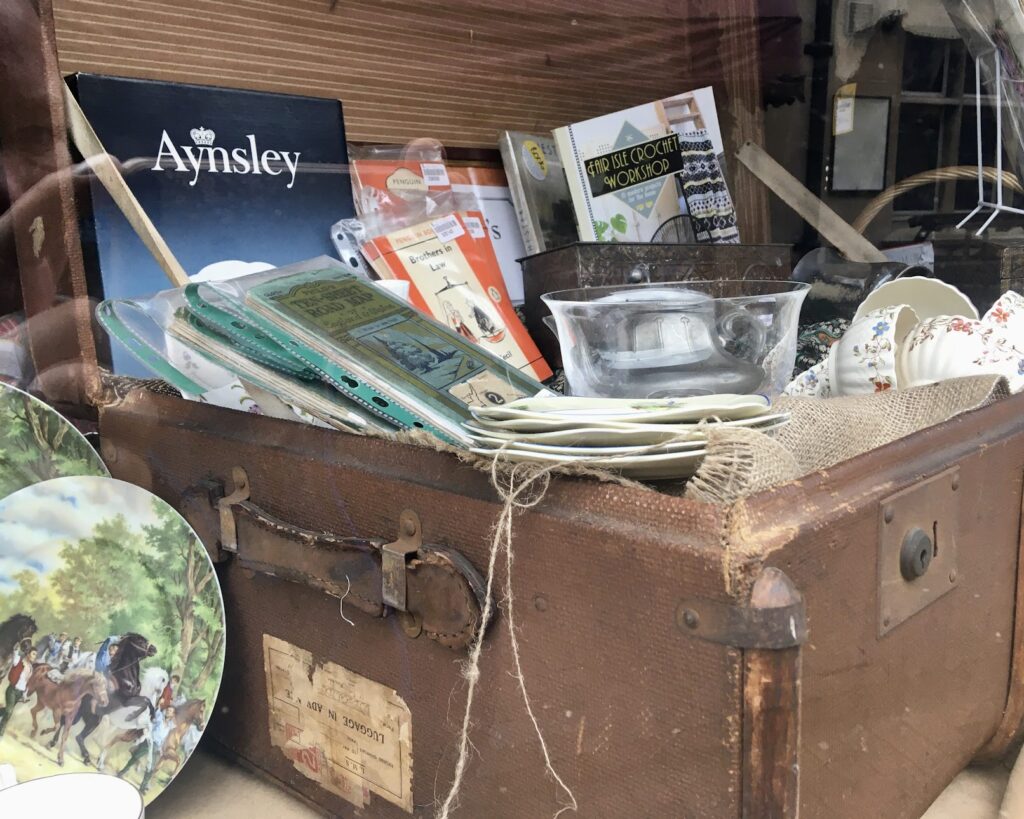
Boxed up! Treasure trunk in a charity shop window.

Great emotional upheaval precedes a clear-out. I don’t know if it’s actual grief for previous incarnations of my little Bear, or if it’s the anxiety that grief will come. But I always end up so busy that after each massive overhaul, whatever I’ve boxed up does not prey on my mind. I don’t step into their vacant room and mourn the fact that Brown Puppy and Big Baby aren’t still on the bed. Not most days. I accept that life moves on.

Ruthless

These are the sorts of things I tell myself when another editing session looms. Bits I’m fond of will get boxed away. I’ll feel anxious as I cut and paste lines I like from my manuscript into my Rejected Quotes file.

But when I go into this file, I see segments pared from the last edited piece, a year or two ago. I’ve never developed them further. I forgot they existed. Yes, they’re good lines, but by now the story’s already made it into a magazine or anthology without them.

For me, preserving cut lines doesn’t actually benefit future work. It just enables me to feel ok about removing them from the current one. It’s like a little security teddy to cling to while I do the scary revision.

Have you ever turned cut lines or ideas from one story into a whole new project? Maybe I’m just not organised enough.

We are told to “kill our darlings” when editing. Don’t get too attached to passages you crafted, because they might not turn out to be relevant to your story’s core. Simply being well-written and liked by the author doesn’t justify being in a story. I’ve written recently about making writing fun, about throwing things in like a library scene or a favourite snack or song… those things can help keep us writing, but we can’t necessarily keep them in our writing. Sometimes temporary aids or fixes are an essential but impermanent part of the work.

It’s like growing up, isn’t it? The threadbare stuffed animals, the books read down to raggedness, the forays into sports or music. For a while we think we couldn’t live without them, but they may be less vital as we discover who we ultimately are.

Balance

I’m currently editing my manuscript for The Gospel of Eve. It’s hard to put a number on the edits because there are certain parts that I’ve gone over and adjusted countless times. As a whole, it’s the fourth comprehensive, planned revision.

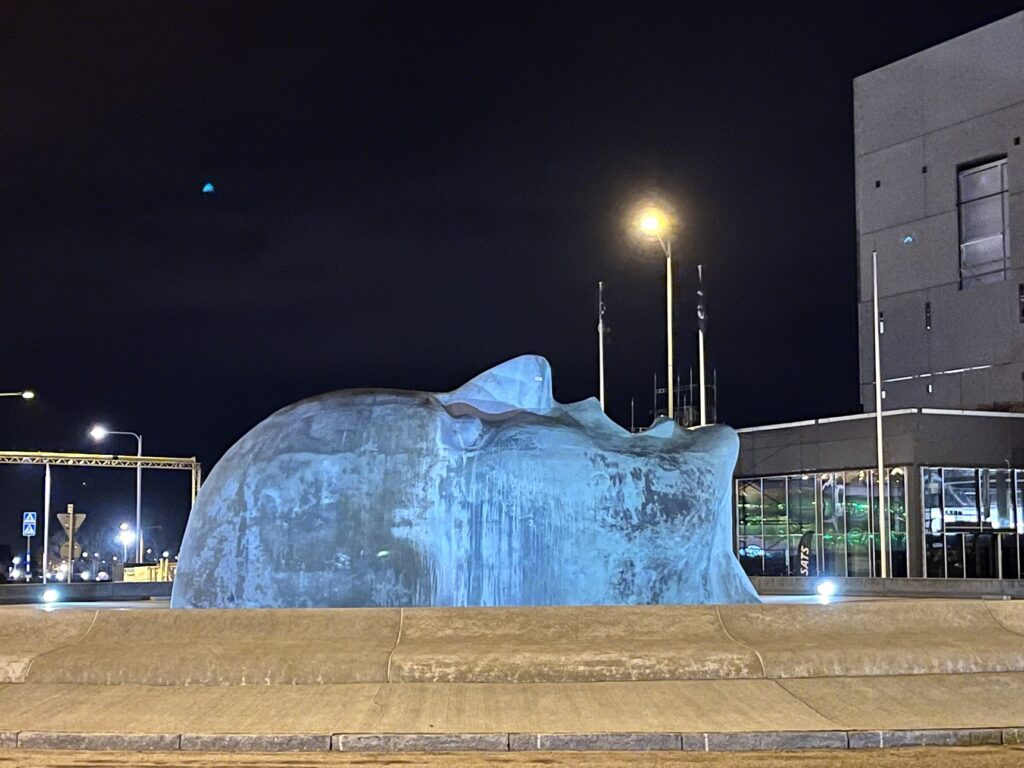
This statue in Malmo, Sweden is called “Mother.”

Usually with my first big edit, I have an eye on the word count. I can’t help it. I get so worried about excess weight, I’m seeing what I can cut. With the second, I firm up characters’ trajectories. Then I have to go through again and see if it makes sense, given everything I’ve trimmed out. This time, I am again checking it coalesces around a theme.

I seem to swing from trying to cut, then needing to add… And all the while I’m wishing someone would tell me what’s right. Am I overexplaining, or being too cryptic? Introducing too many characters too fast in my rush to kick off the action? It can be so lonely, trying to get it right with no guide.

Rather like parenting. Not that books are where near as important as people, but the creation process has its similarities to parenting. How much do we push and lead, how much do we let our kids take their time and figure things out on their own? This happens to be a central issue of my book. Eve, as the first mother with only a sometimes-terrifying God as parental model, tries to discern how much freedom to allow her children, unsure how much she really has herself.

How do you go about editing, and capturing nothing more or less than the most important part of the story?

The Value of Ordinary

This Week’s Bit of String: A blue dress in an empty village

We take somewhat unconventional holidays. They’re often centred around seeing family, since no one lives near us, or else we’ll make it to another city or even country but only find affordable accommodation in the outskirts. Most recently, we combined both these by visiting Malmo, Sweden, where our son had travelled from the US for a gaming event.

We stayed in a hotel a few miles south of the lovely old town and castle. When we hiked there, or to the sea, we passed apartment blocks. Some older, used by immigrant communities, with Ukrainian flags or halal pizzerias. Some with separate car parking space and bike lockup for each flat. We passed allotments for veggie gardens, quadrants of circles carved out of parkland. There was a whole, mid-city village of “summer houses,” too: painted huts with little shared gardens, hammocks, berry bushes, barbecue grills, all vacant for now. Some had small glassed-in porches; I saw a pretty, short-sleeved blue dress hanging in one. Waiting for a party?

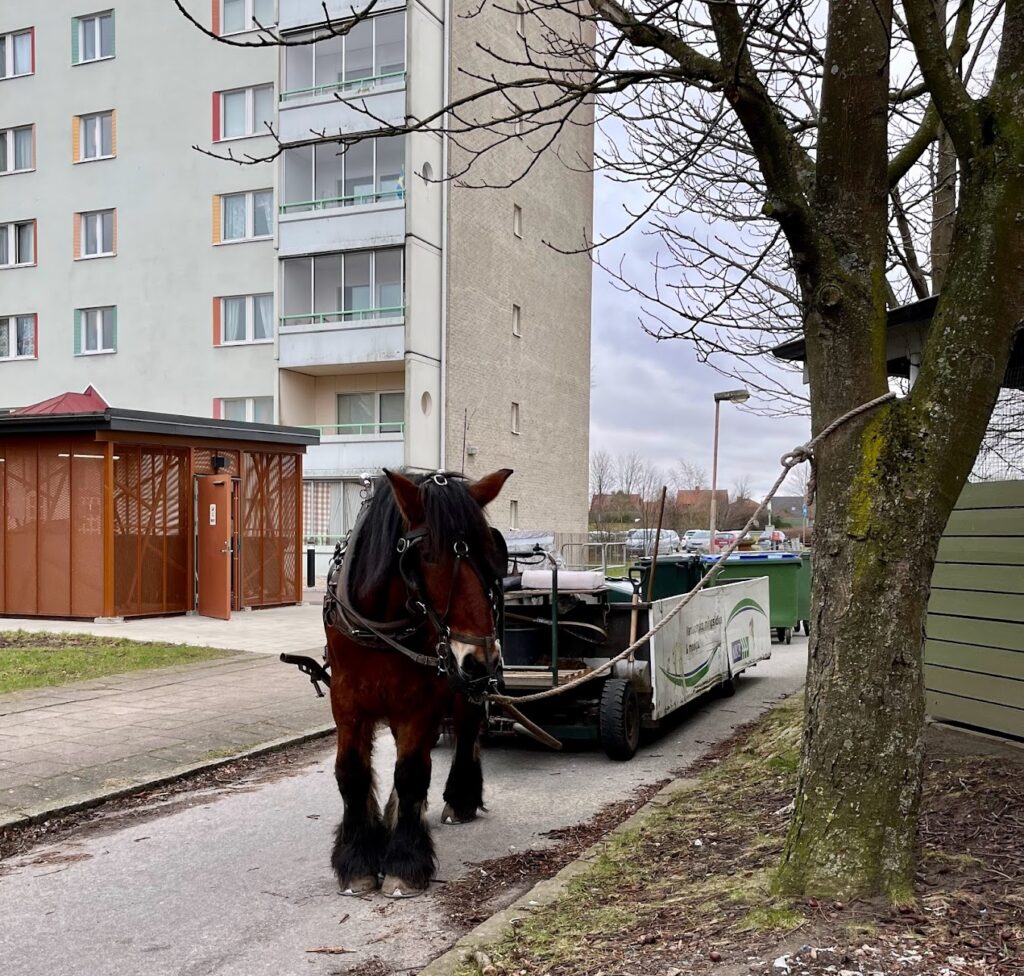
Horse-drawn cleaning cart for the high-rise outbuildings. Hyllie, Malmo, Sweden

It might be nice to stay in luxurious resorts or in city centres where you can just step out and go to the theatre or something. But I maintain that no vacation is complete without a day when you’ve walked at least ten miles, and seeing a dress in an empty summer house window or passing a preschool blasting out Moana while rosy-cheeked, blond kids in full snowsuits sniffle and shove at each other are every bit as fascinating to me as a museum or a palace.

Checking Out the History

Not to say that I don’t enjoy cathedrals and castles and all that. They’re intriguing glimpses into history, and more and more they try to reflect the wider experiences of citizens. We visited Malmo Castle, and learned about the strife between Denmark and Sweden in the 17th century, reading about the people caught up in it, military and civilian, from both sides. There was also a very creepy recreation of a plague town from the early 1700s, complete with sound effects of children whimpering, because some people believed if you buried a child alive, the whole village would be saved from disease.

And there were horrific tales of torture and execution from the 1800s when the place served as a prison. There was an outline on the floor where a boy would have been beheaded, and child executions trigger me worst of all. Such a horrific lack of empathy.

On a slightly more hopeful note, the building later served as a shelter for refugees after World War II, and we saw one of the Swedish “white buses” which rescued thousands of people from concentration camps before the war ended, made possible by an agreement with Himmler—behind Hitler’s back.

I think travel, even when it’s not glamorous, serves to remind us of stories happening all around, at every echelon of society. It pricks my curiosity for how others live their lives, whether in a castle or in a high-rise apartment.

The Everyday Moments

The ordinary is worth noticing, not just in the places we visit, but in moments we spend with each other. While abroad, we ate most of our dinners at the shopping centre across from our hotel, treating our kiddo as well. In turn, we were given guest passes to the event so we could watch the game our Bear was streaming. It was a fun setup—arcade games, swinging chairs, soft serve ice cream. We cheered and readily made fools of ourselves as fans.

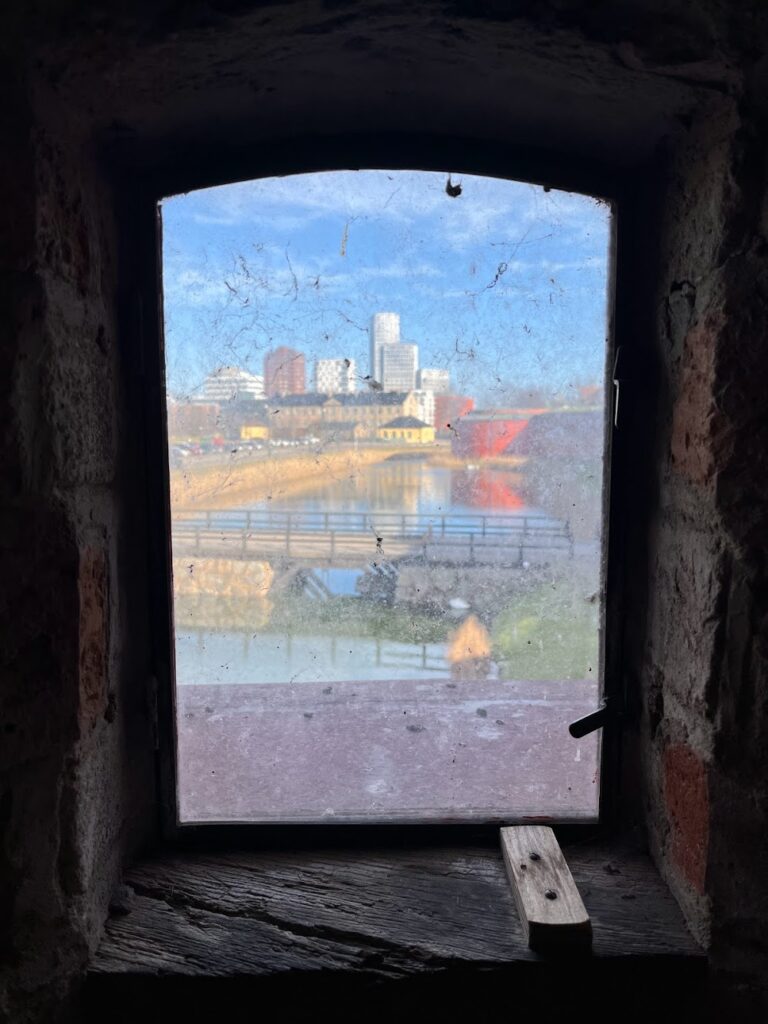
City view through a window of the Castle’s cannon tower

Later on, other gamers recognised my husband and I, saying how great that we’d come. It made me wonder, don’t their parents at least tune in virtually for their events? But a lot of people dismiss videogaming. I’ve never had time (or coordination, if I’m being honest) to do it myself, but I always tried my best to listen to the play-by-play accounts from my kid, so I could share in the successes and frustrations of one of my very favourite people. And look where it got Bear, having a blast in a city overseas, a break from the day job. It saddens me thinking how lonely some gamers must be at their families’ indifference, and how much their parents miss out. If people can’t summon the will to listen to their own kids’ interests, what hope for human empathy is there?

Now that I am separated from my child, living on opposite sides of the Atlantic, I miss quick conversations after work, the opportunity to provide a cup of tea or sandwich or cookie and be repaid with a smile and cuddle. I miss Bear popping down while I’m cooking or washing up. They would stand with one foot propped up behind the other knee like a stork, telling me about this or that game, how they might arrange the music, which gamer friend runs it, what time they hope to achieve speed running.

C.S. Lewis, in his memoir A Grief Observed, mentioned how he missed the “heartbreaking commonplace,” and that line has always stuck with me. The ordinary is so important. It’s the stuff we learn from, long for, and it’s vital for empathy, because when we talk about walking a mile in someone’s shoes, we don’t just mean their Sunday best.

Have you gained insight into people’s everyday lives from travel? Has it been useful for your writing or art?

Character Interrogations

This Week’s Bit of String: Practising Descriptions

It’s a cover lesson for our neediest Year 10 English class, and on a Friday afternoon no less. They’re supposed to practise personification and metaphors, and build descriptive skills. By the very end, I manage to wrangle a dictation out of one of the boys at the back for a paragraph describing a beautiful woman.

Me: “What’s she wearing?”

Student: “Uh, she was wearing a thin layer of duvet.”

Me: “…You do know what a duvet is?”

Student: “Yeah, like a thing women put on when they get out of bed.”

Me, suspecting he means negligee or some such but not really wanting to get into it: “Okay, erm, so what are her clothes doing? Do they flow when she moves? What do they flow like?”

Student: “Like a, like a bowling ball.”

Could the sun be rising on a beautiful friendship with your characters?

So we have a beautiful lady wearing a heavy quilt that flows like a bowling ball. At least she was clothed. Another boy kept begging me, “Can’t she just be nude?” Nope!

It’s not easy introducing characters: describing them, engaging readers with them, not oversharing. But when you’re just coming up with them, before you have to make them presentable to anyone else—that’s quite fun, don’t you think?

Starting Points

I used to start my project planning by delving into the most dramatic details of the protagonists’ backgrounds. I would use a three-pronged Harry Potter-based method: Boggarts, Dementors, and Patronuses. In other words, what was the character’s deepest fear, their worst memory, and their most happy memory.

Very important things to know. But as pivotal as those things are, they don’t control every waking moment of our lives. We’re a lot more than whatever traumatises us or even whatever gives us hope. Of course we add in interests, goals, family ties… But I think too, what reveals a lot about a character is their Default Setting.

What do they think about when they have nothing to do? Is there a daydream world they go to? Do they get caught up obsessing over past mistakes, or planning the rest of their day down to the minute? Do they play music for themselves in their minds, or play back favourite stories? That’s quite relevant to how a character presents themselves.

Rounding It Out

Thinking about it, a woman rolling out of bed dragging her duvet and it feeling like a bowling ball is pretty darn relatable. I might tune out if my student started droning on about a fabulous woman in an evening gown. When we’re creating characters, quirks count for a lot. A flaw can be so much more interesting than heroism.

Since I’ve been indulging in pages of possible character backstories and tastes and foibles lately, I keep thinking of two things. Firstly, there’s a wonderful speech in American Gods by Neil Gaiman, in which a young woman reels off a random list of things she believes, from firm opinions to preferences to faiths (full quote here). Secondly, and very differently, the quirky mini-bios created by Hercule, a Pet Portrait artist on Facebook. I know that sounds weird. But trust me, have a look and have a laugh.

I wonder what Hercule would have made of these floofy potatoes.

How do your characters like their herring? Hercule often makes sure we know whether the pets he sketches prefer their herring Goth or elasticated (?!). What can your characters absolutely not stop themselves from doing when the opportunity arises? What beliefs resonate with the deepest fibres of their beings?

Planning for a potential long project like a novel, it helps if I really like my characters. Or at least, if I find them fascinating. We’re going to be spending a lot of time together; I want to make it as enjoyable and motivating as I can. Yes, my characters will go through hard times and at some point, inevitably, disappoint each other or themselves. But if I’m going to list the random things I believe in, my characters had better be included.

So, if we’re trying to make our writing fun, I suggest treating your characters like friends. Sit them down and ask questions that might not have anything to do with your plot, but could have everything to do with your relationship, and your passion for continued writing.

What would their favourite childhood books have been? The songs or artists that helped them survive their teen years, the movies or shows that recharge them in adulthood? What’s the kindest thing someone ever did for them, and the cruelest thing? What’s their favourite way to eat cheese, and how do they like their chocolate? Do they have a favourite thunderstorm memory? A favourite seaside one? Who would be their ideal animal sidekick, what would they most like to be famous for?

I hope you have a great time with your characters this week!

Make Writing Fun Again

This Week’s Bit of String: A library getaway

A couple of weeks ago, a Sixth Form student I’d been working with not only passed her English GCSE re-sit—she aced it. It was a marvellous hullabaloo; the whole school was thrilled.

Now that I’m not accompanying her to re-take lessons with obstreperous peers, or helping her hunt down alliterations and pathetic fallacy, we can spend her supported study periods preparing for independent life, and pursuing her own creative interests.

One of these is writing. She is determinedly working on a novel about a teen with superpowers.

Last week she said, “I know what will happen next. They’ll escape to a library that’s full of magic spell books.” She leaned in with a little smile. “I’ve always wanted to write a story set in a library.”

I had a little, goshdarn-it-why-didn’t-I-think-of-that moment. Should we be thinking in these terms more frequently, focusing on what we’d really love to write about?

Love What You Write

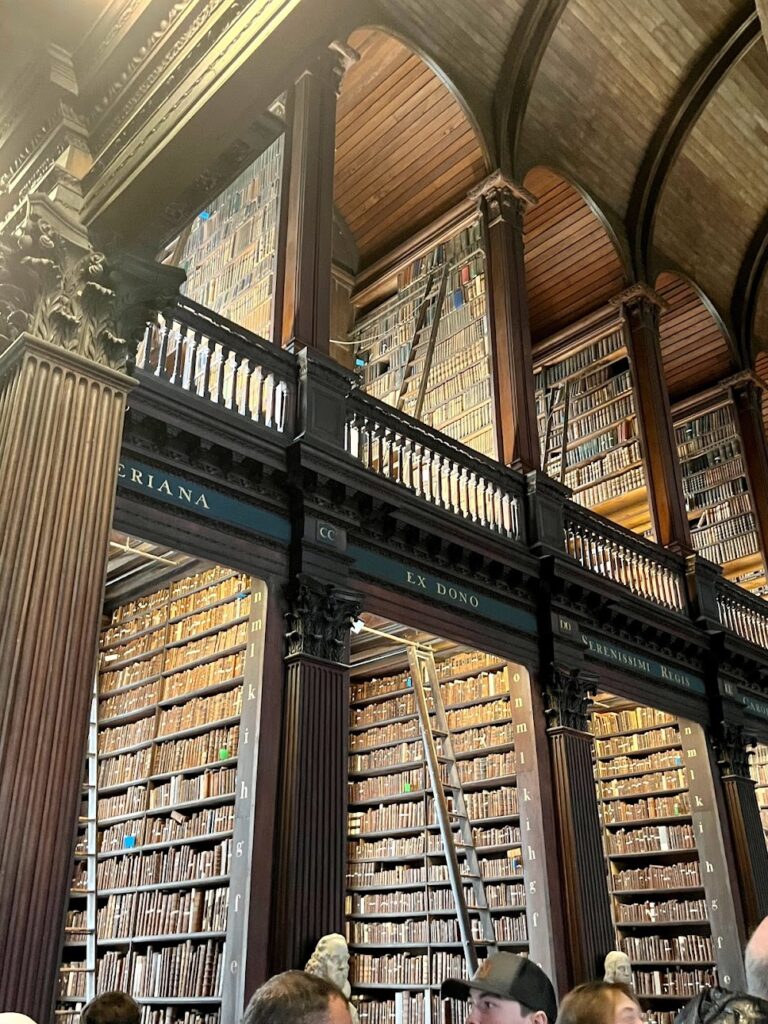
Trinity library, Dublin

Maybe you already do that. Hopefully you do. I fumble around in the chaos of daily life for my little bits of string and try to judge which ones might be the most publishable, the most profitable. Maybe that’s not the best measure of what I should be working on.

Often I seize on a concept, a what if… what if I became intangible and my hands had no impact when I tried to clean or shape or touch, what if eye contact between humans was literally hazardous? I write notes on these and compile images, but find myself disengaged when I start my process with mere ideas. 

I’ve noted this before, but need reminding. We have to write what we like. Otherwise, the slog will be evident. And of course, this is supposed to be fun. It’s necessary to our beings to create, but it’s also supposed to feel good, at least after a fashion.

I’m a bit jealous of poets; I feel as if they’re allowed to take a particularly striking tree, or a memorable event or cherished location and craft with it, run with its imagery and emotion, unfettered by plot. It’s not that I think poetry is simple. You have to imbue it with rhythm and beauty yet make it look effortless… Admit it though, finding a beginning, middle, and end for prose can be a wrench. I’m not convinced every idea is MEANT to be plotted.

A Bucket List for Writing

Or if we could be ancient Greek astronomers, designing constellations, grasping at our favourite stars and assigning shapes to them. I know, trying to make a story out of some random thing that interests us can be as far-fetched as dragging out a concept that doesn’t grip our soul. But it can’t hurt to play around with such things a bit, and see what ends up working.

Tiny kingdom

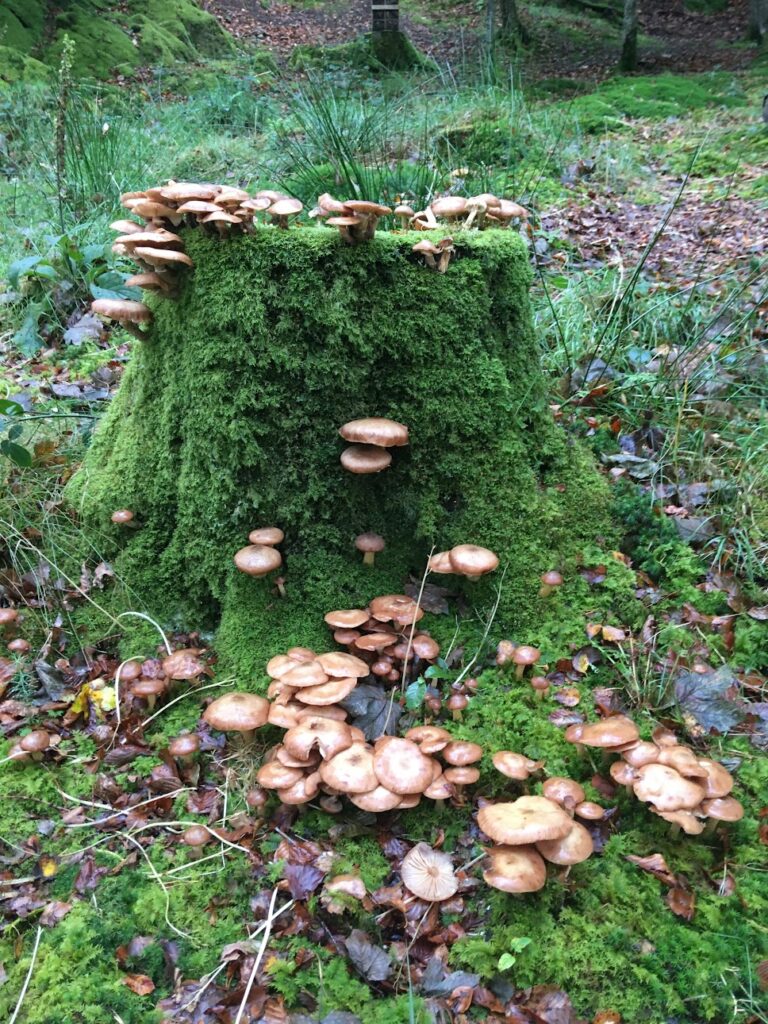
I’m coming up with a bucket list I want to write about. People (literal-minded characters feeling at odds with their own time period), settings (the sea, a couch cushion den, fairy castle tree stumps with moss-lined turrets and mushroom spiral staircases), props (lilacs, root beer, doll collections…) 

I’m not going to force a single story to revolve around these like a jukebox musical. But they could make good starting points, or exciting background details to add when I’m feeling stuck. 

In a sense, we can incorporate poems, odes to what we love, into the scenery of our stories. What sort of character might love the things we love? Or, what could some of these images mean to someone who’s experienced them completely differently–to someone suffering acute grief, or addiction, or whose perception would be different due to sensory impairment?

I’ve just started another rewrite of my Eve novel. I love those characters and that world, but it’s brutal going through again, making my sentences fear for their lives. I’m also finishing a draft of a short story, and always doing my daily scribbles and fiddling with other ideas.

Watching my student discover the creation process, though, makes me pine for that fresh taste. So I’ve been taking notes on a cast of characters for a new, long project. Pages of family history, sense memories, likes and dislikes, beliefs. It’s such fun, like when you start a relationship that’s all your own and you don’t have to worry what anyone else thinks because they’re all yours; you haven’t introduced them to anybody yet. What a luxury!

Do you relish the creation stage? What would be on your writing bucket list?

Learning Something New

This Week’s Bit of String: What poems, jellyfish, and King Tut have in common

I am starting 2023 building a new habit. I feel like that sounds more promising than a resolution, what do you think? Anyway, this habit is to learn something new every day.

I think we all learn stuff most days. Part of the reason I relish daily scribbles is because it teases out new information I glean without necessarily noticing. It’s also why I stop after each book I’ve read and write down my favourite quotes, instead of charging on to the next one. Just a little bit of reflection time. Because my mind’s always leaping to the next thing I absolutely MUST get done; the next book to tick off the To-Be-Read list; the next job to cross off from my planner. I’m very susceptible to the look-at-all-the-things-I’ve-done narrative on social media and I have to force myself to stop and reflect. I had to make it a part of my routine, a habit.

My dad used to ask us at the dinner table, “What did you learn at school today?”

We hated it. On principle, we often insisted we’d not learned a thing. And that may have been true some days. We expected that anything learned would be unmistakably gifted to us, not always understanding that we might need to flip through the resources and find what needed to be learned.

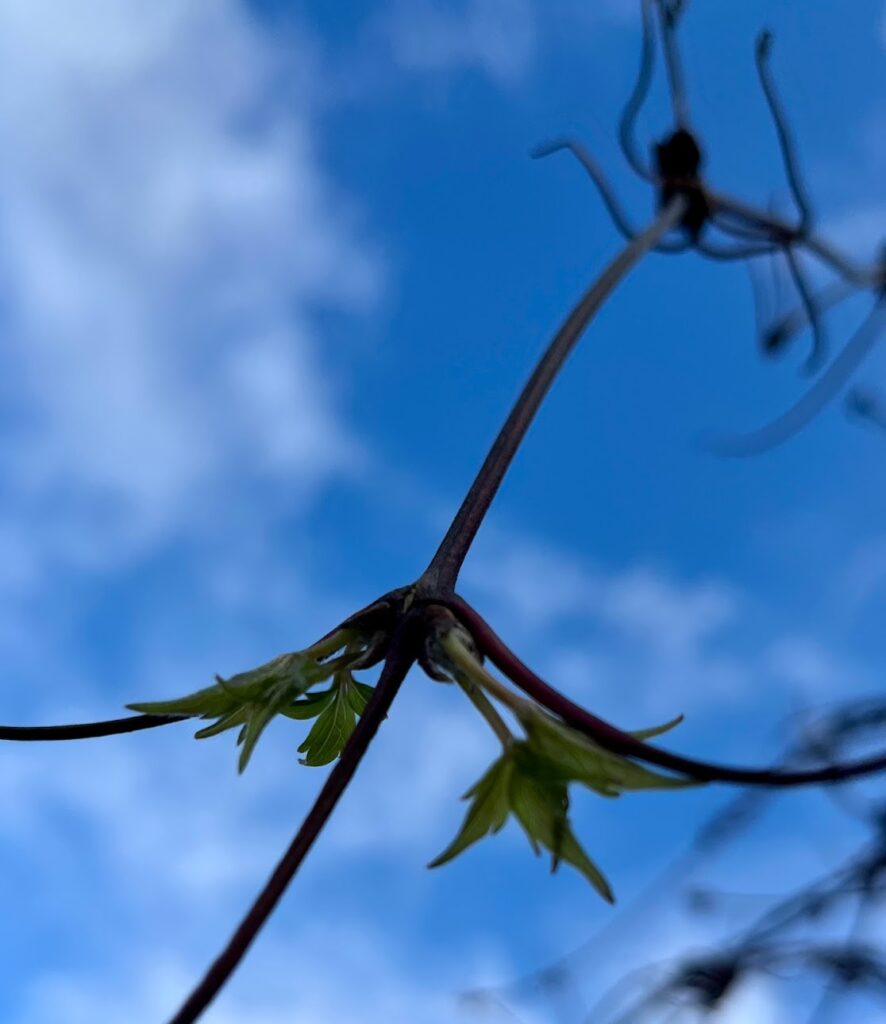
Time to turn over a new leaf…

So with this learning habit I’m working to develop, the rule is that the Something I learn for the day can’t be part of my normal reading. It has to be something extra, something I take time to look up and find out about. It IS allowed to be a poem or short story outside of my pre-planned reading list, for example delving into an online literary magazine, as long as it’s not just because I’m prepping my own submission for it.

The idea is to take in information or art for its own sake, free of agenda. To shake myself from the constant bridle of Getting Things Done, and just stretch my brain.

It’s also to repurpose scrolling time. As I mentioned earlier this year, I want to waste less time on social media. I haven’t been terrible about scrolling and spending time online, but I could do better. Instead of scanning Facebook and Twitter, brain on autopilot, just waiting for something salient to jump out at me, I will go and seek salience myself.

So far, my new habit has entailed:

Finding out about early British underground buildings like fogous and souterrains, because for her novel my student has created a Secret Hunting Society which lives in a village hidden underground.

Cooking dinners ahead for the week while listening to these fantastic Intelligence Squared videos featuring William Sieghart’s The Poetry Pharmacy

And this Intelligence Squared Dickens vs. Tolstoy debate, Simon Schama arguing on the latter’s behalf and sharing this Tolstoy quote: “The aim of the artist is not to solve a problem irrefutably, but to make people love life in all its manifestations.” (Makes it sound a bit simpler and more feasible, do you reckon?)

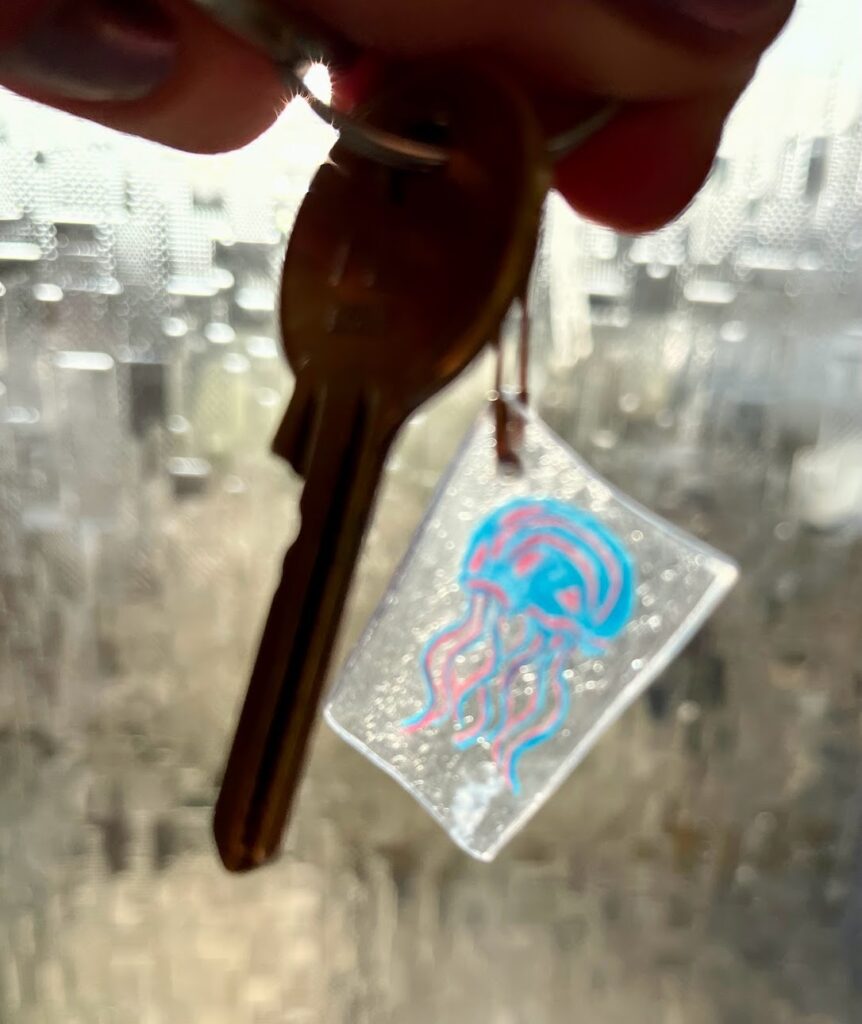
Research on jellyfish because I made a little ShrinkyDink jellyfish while crafting with my sisters over Christmas and I added it to my keychain

Reading some lovely poems from Plume Magazine— I particularly loved “The Classics” by Christina Lee and “Cathedral” by Kwame Dawes

Finding out about aphantasia, since another student believes she has it. People with aphantasia don’t see imagery in their minds, which makes it harder for her to connect with material she reads.

Jellyfish!

Researching Tutankhamun because the latest Royal Mail stamps for sending letters abroad have his possessions on them, and I was wondering… Do those really belong to this country?

Looking more deeply into a January 6, 1853 train accident that claimed the life of President Franklin Pierce’s only child just two months before Pierce’s inauguration, because it was alluded to in A Worse Place Than Hell, the book I’m reading. Pierce was the only president to ever hail from my home state, and it surprised me I’d never heard of this tragedy, when it must have heavily influenced his actions during a pivotal period.

Also, trying to find out about women runners in the 19th century because this nonfiction work mentions Louisa May Alcott going running in the early mornings before her long shifts at a Civil War hospital. I’m very curious about what women would have worn for morning runs in the 1860s, and I’ve found some interesting facts about the history of women runners but nothing that illuminates this passage, so if you know anything about it, do let me know.

The different types of attention that may be compromised by social media use, as outlined by Johann Hari on Jon Favreau’s Offline podcast. It rather motivated me to keep going with this little habit of mine!

Do have any suggestions of things I should learn about? What sorts of things have you sought to learn?