Life Raft

This Week’s Bit of String: Comedy face, tragedy face, angry face

Wielding the unholy power we’ve given it, Facebook keeps showing me adverts for a play my husband and I just saw in Bristol. That’s ok, it was brilliant; I’d still be mulling it over without the reminders. I noticed, though, that someone had responded to the theatre trailer with the angry face emoji.

Someone who doesn’t like modern adaptations or diverse casts, I thought. A couple months ago, we loved the RSC’s latest Julius Caesar with women in the main conspirator roles, but not everyone approved. Our latest dramatic adventure was the Bristol Old Vic’s production of Anna Karenina, and you’re not going to adapt that epic without controversy.

I peeked at the comments though, and here was the angry one: “While everyone drowns… The height of sophistication!”

So, they were mad that people spend money on the arts during a cost of living crisis.
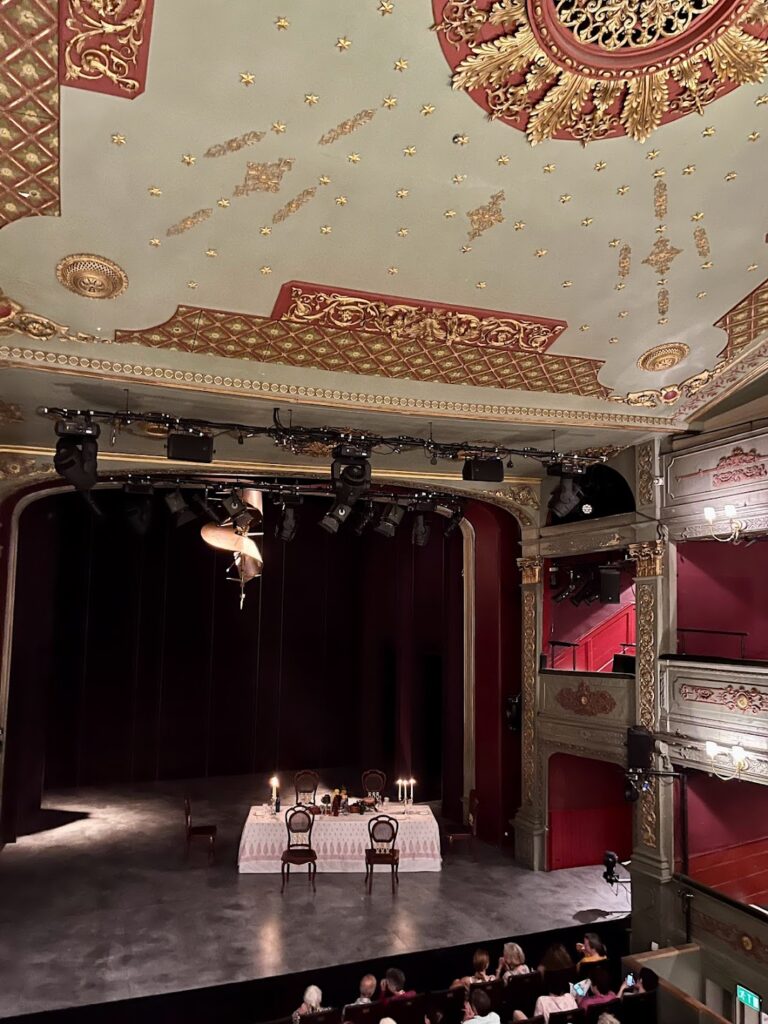
Anna Karenina at the Bristol Old Vic–I highly recommend it!

I am still thinking about this. I’m an empathetic person, which draws me to the arts in the first place, but I try to be pragmatic as well. Could I benefit more people with how I spend my bit of spare money?

Maybe the angry commenter is so strapped for cash they don’t realise some of us can spend money on more than one thing. I pay for shows a few times per year, but I have charity donations set up monthly. They may also not realise that people who work in theatres need money too. 

The actors and writers and crew for Anna Karenina did an incredible job, but I doubt they are earning celebrity-level amounts of cash. If we didn’t buy tickets to see their work, they might be “drowning,” too.

Bread and Circuses

I don’t go to the theatre to look or feel sophisticated. It’s not the most comfortable seating or temperature, half the time, so I’m fidgeting and worrying whether my husband is having an ok time (thankfully, he usually is).
 
I attend shows for the luxury of sinking into someone else’s story, as with reading a good book. I go for the cleansing catharsis of experiencing someone else’s heartbreak and redemption. I also go because I would hate for hard-working creative performances to go unappreciated. Not many of us get to earn income from our chosen art. I’m happy to pay so that some can.

These are the justifications I make to myself. I don’t know if they make me right.

There have been times when I genuinely, if unquantifiably, feel a performance has changed me as a person. It’s as if what I’ve seen blazed so brightly in its heartfelt declaration of humanity, a spark catches inside me and kindles a desire to love better, to create better. This might sound silly. But I felt permanently altered after seeing Miss Saigon’s 25th Anniversary show adapted for cinema, for example. Or when I watched La Boheme as a 10-year-old. 
Letting art sweep us out to sea

I can’t prove these things have made me a more compassionate, more resilient person. Even if they did, have they enabled me to benefit society as a whole? Still, there’s something much deeper here than entertainment, than a veneer of culture and sophistication. With Anna Karenina, the audience sees the perfect storm gather of misjudged desire, of lonely male domination, of a society obsessed with honour and prone to condemnation. It’s not genteel, it’s messy and raw. 

Resurfacing

I do appreciate reminders to be vigilant of all people’s needs and circumstances, and I want to always be sceptical about my practices. The truth is, anyone is at risk of “drowning” for a variety of reasons. I don’t want to act like the gossips in Anna Karenina, and judge people by trivialities such as how they spend their money. (Well… unless they’ve gained a tonne of it by shady means…)

No one has a right to sniff at how those with limited income spend their money. People who need help buying food shouldn’t be judged for spending money on, say, a smart phone. Not in these times.

Just as there are many things that can drag us under the current, there are many that might buoy us up. Maybe we need to build a righteous ark of highbrow theatre and literature, or witness an uplifting musical, or ride a wave of mass entertainment. Sometimes you just have to coast on a Disney cartoon. I’m not saying “Let them eat Shakespeare” or “Let them eat Netflix,” but I wouldn’t want to deprive anyone of those things any more than I’d deprive someone of food. 

How do you use arts to keep yourself and others afloat?
Celebrating Books

This Week’s Bit of String: An air of incredulity

“Miss, how are there people who like to read?” 

I’d been scribing answers to questions about Lord of the Flies while the severely dyslexic GCSE student dictated. He was then curious about why there are “neeks” (the word “geek” has evolved) like me who actually enjoy books.

“Well,” I told him, “I got to like reading because I was taught so many different books at school, I knew there were loads of great options.”

The openness of the question surprised me and I should perhaps have been more emotive, told him how reading takes me out of my own life and into different worlds. Or that it’s easily as entertaining as TV. I wish I’d had more time to tell him that with books, there really is something for everyone. As long as they can access it–which unfortunately, he physically cannot. 

I wonder if this young man gets the sense of luxuriousness from playing videogames which we find with books. Books free us from having to compete. They offer immersive surrender, and that’s what I crave sometimes. It’s liberation from being in life’s driver’s seat.

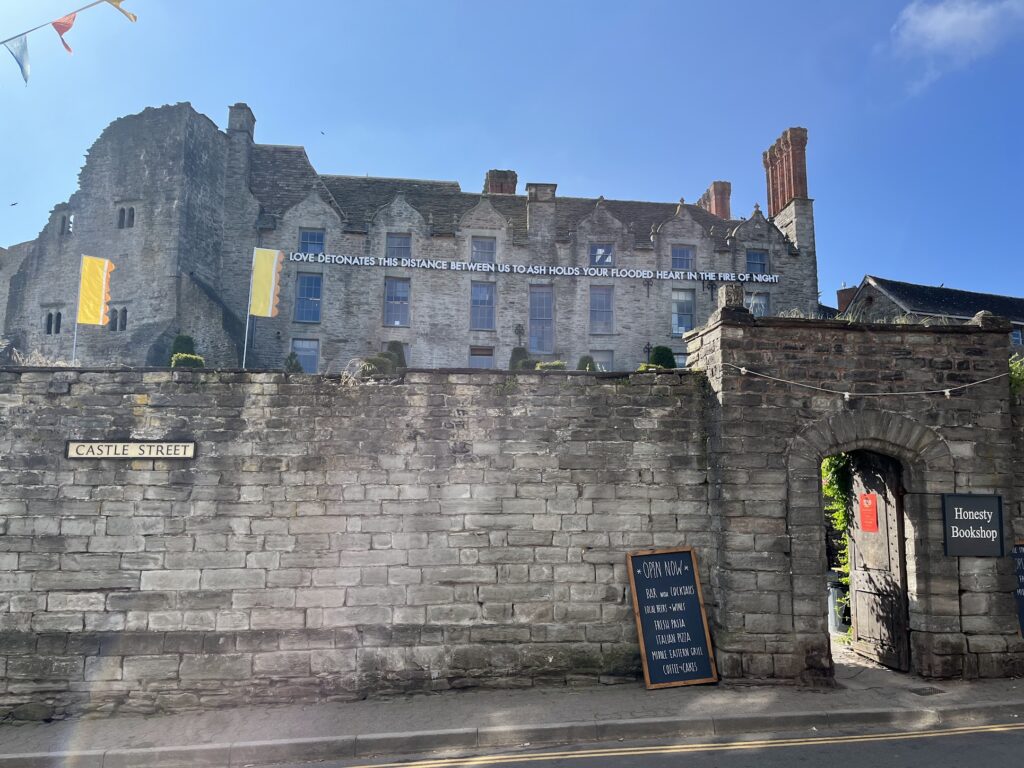
Hay Castle: “Love detonates this distance between us to ash holds your flooded heart in the fire of night”

Again, this only works if you can access it. We all go through stages when there simply isn’t time to read much. Sometimes I find myself reading with a grim desperation to tick books off my reading list. 

I remind myself that this is love. As with any relationship, we sometimes get caught up in our duties of care; keeping everyone fed and happy. But the love is there. When it comes to reading, I ensure I take the time to write down my favourite quotes, to reflect in my daily scribbles, before starting something else. It’s not a chore.

Burrowing and Borrowing

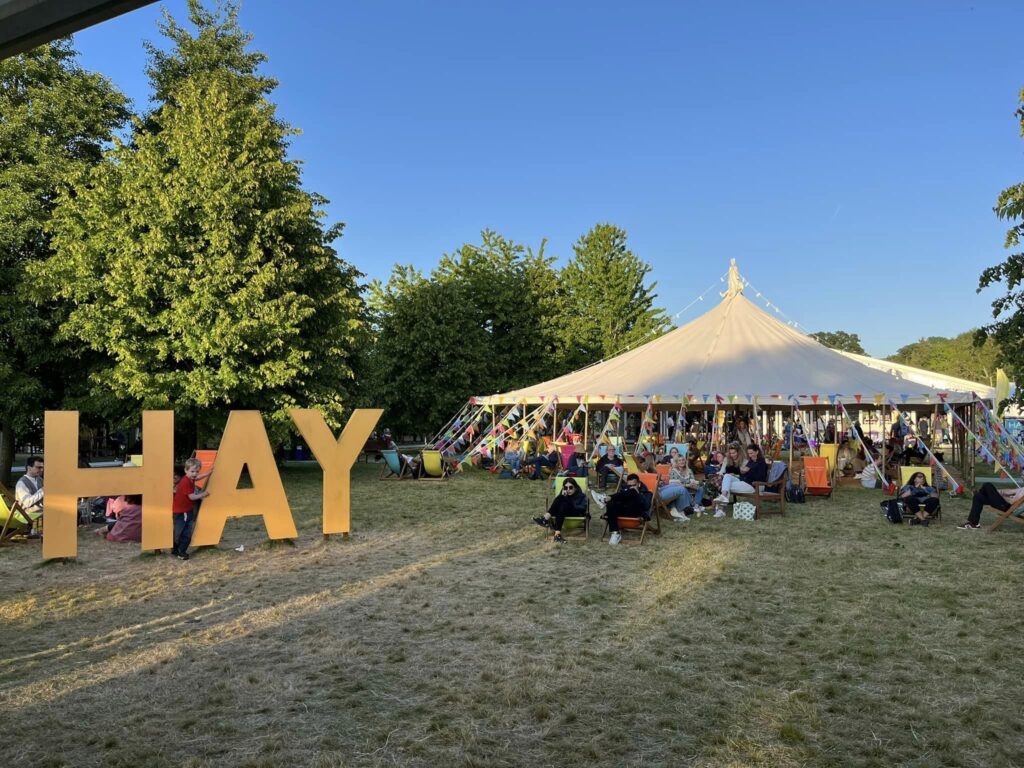
I spent last weekend at Hay-on-Wye Literature Festival. If you ever need to rekindle your love for reading, it’s a great place to do so. Sunny but chilled, colourful yet somewhat calming. I guess that’s because even though I’m among crowds, they feel like my people.

Not that Hay’s festival-goers are in any way homogenous. As with writers, there are all sorts of readers. Young and old, Welsh or English or from further abroad, people in motorised wheelchairs or with support dogs. At an evening talk I also noticed another woman on her own, like me, pencilling tiny notes.

Hay Festival 2023

In both the first talks I went to, though they were on very different topics, the writers talked about being magpie-like in storing and selecting detail. Marina Hyde, the Guardian columnist on current events, peppers her pieces with pop culture references. Peter Frankopan, a passionate historian who’s recently written about natural disasters throughout history, drew on so many different sources he ended up with 4000 footnotes in his latest book.

Later I enjoyed wonderful readings from the poet laureate Simon Armitage. He opened with “Thank You for Waiting” (have a listen here!) and he talked about how hard it was during lockdown to be inspired without everyday interactions and excursions. He calls those the “cement” which sticks our writing together. Trying to create in his upstairs office, he found himself writing poems about Velux windows.

The reason there are enough books in the world to interest any reader is because writers are so diverse. And maybe when we love our art enough, we can find ways to write about anything.

Safety in the Pages

Beyond offering inclusion, books throughout history have bestowed security. We listened to Irene Vallejo talk about her volume Papyrus, which uncovers the history of the written word. She shared stories of the library of Alexandria, and told us how things changed with the development of the Latin codex.

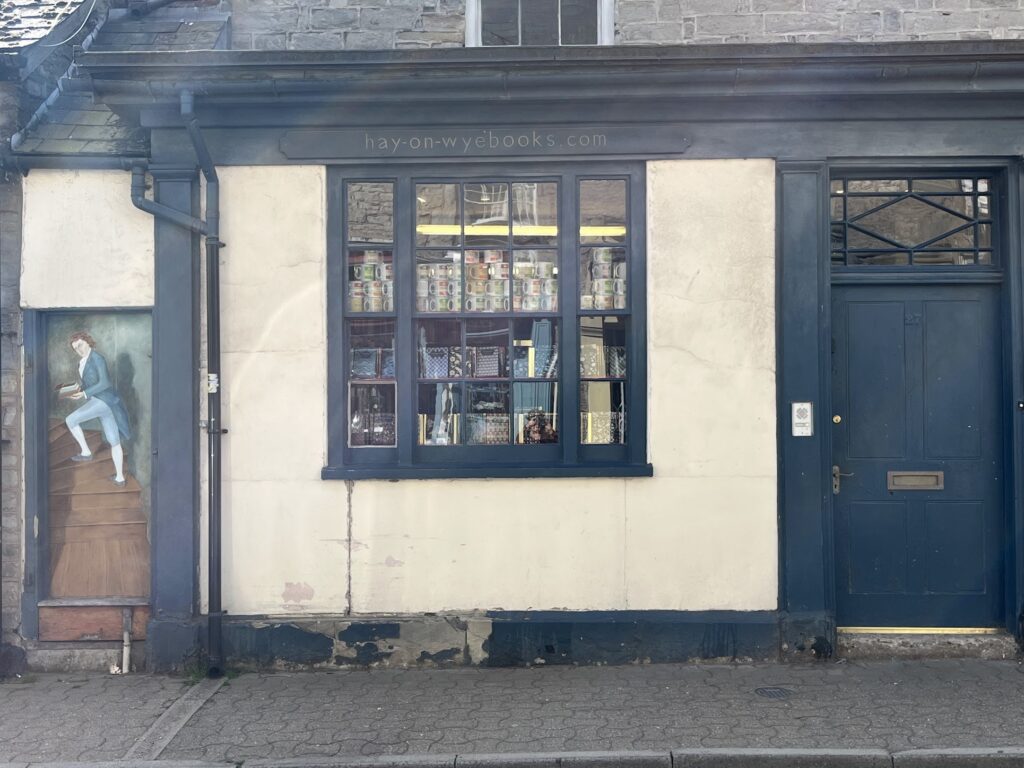
Bookish street art in Hay. Is it secret? Is it safe?

The codex, with similar etymological roots to the word book, means block of wood, or tree trunk. Instead of being a long, flattened scroll you’d have to roll back up for storage, the codex used sheets bound together like modern books.

This change wasn’t just culturally significant. It also made reading a safer hobby. In times of religious persecution, for example, Christians could read in codex form. Should someone come along, they could close the codex and stow it away as a humble block, thus keeping secret the substance of their reading.

I loved learning this bit of history. Even now, in our privileged times, there’s something reassuring about wandering around an event where lots of people have books under their arms or noses. Just a bunch of bookworms sharing a common love if not common tastes, and although there are plenty of magpies about, they’re the curious rather than vicious kind.

What makes you fall in love with reading?

Et Tu?

This Week’s Bit of String: Big wheels and street songs

We camped near Stratford-Upon-Avon over Easter weekend, our first visit there in nine years. A pretty Cotswolds town fiercely proud of being Shakespeare’s birthplace, it’s added a Big Wheel to rival the church spire and the tower of the Royal Shakespeare Company Theatre.

Just trying to have a quiet think.

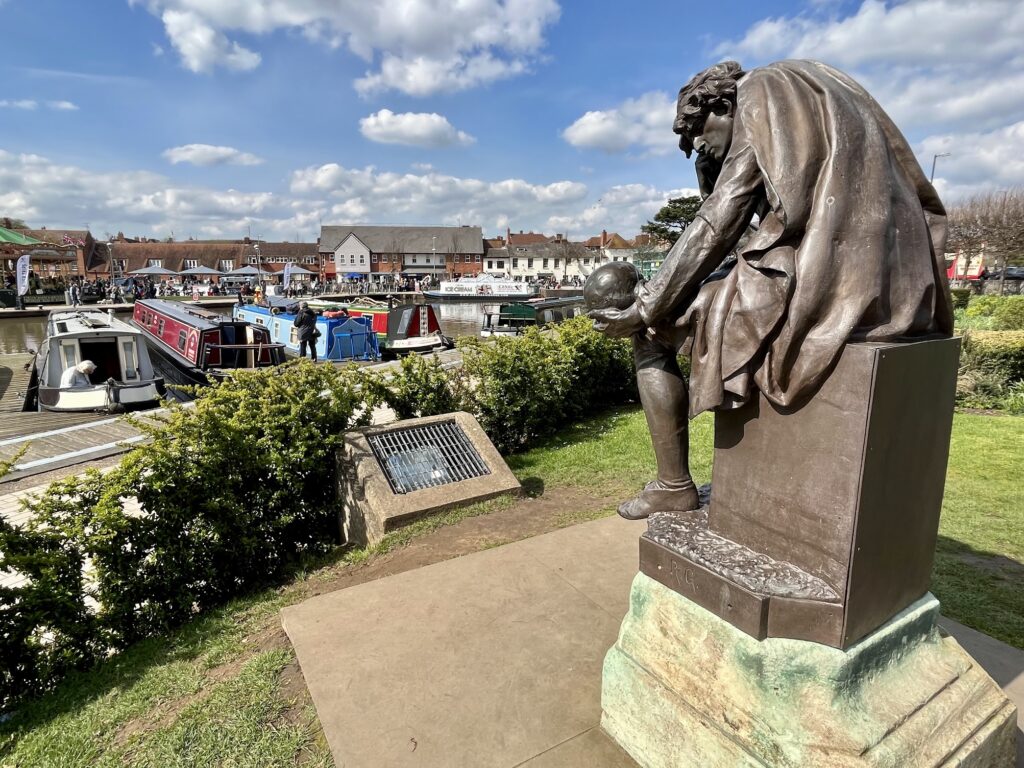
People snap selfies with the statues of famous Shakespearean characters surrounding his statue in the park. Lady Macbeth’s knuckles and the pate of Yorick’s skull are worn smooth by 150 years’ worth of tourists rubbing them for luck. Narrowboats mass on the Avon in front of them, cherry blossoms sway, and a street musician sings “To Make You Feel My Love.”

What would the Bard think of it all? I suspect he would have been okay with most developments, as long as they bring money in. And it wasn’t as if he was humourless. The range of topics he covered in his plays, he doesn’t seem completely traditionalist either.

A Theatre Trip

*Does contain spoilers for a centuries-old play about millennia-old famous historical events

My husband and I went to an RSC production of Julius Caesar while in town. It’s fascinating to me that Shakespeare chose to write this play, and frame the Conspirators with nuance and sympathy, even admiration, when he lived in a strictly royalist time. What could the preservation of democracy mean to him? This play contrasts with the anti-regicide message of Macbeth later on, for example.

We were completely engrossed by the show, although checking online later, it’s had a few sniffy reviews mixed in with decent ones. The director went for fairly plain costumes and set. There was a solemn, black-robed chorus between some scenes, just as the Greeks and Shakespeare would have intended. Between others, there were choreographed group scenes a bit like marches or parties or riots.

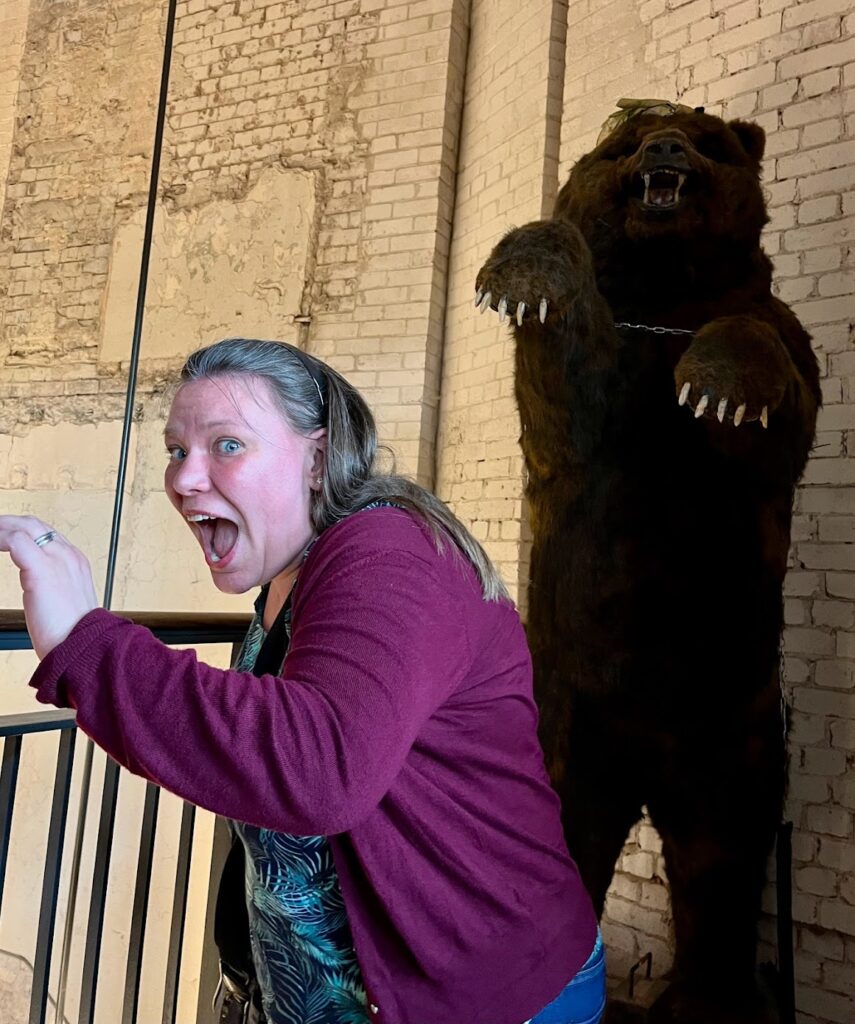
Daft, I know, but I had to get an “Exuent, pursued by…” photo with this Bear at the RSC Theatre.

This aspect was quite different and a little confusing. I’d looked at the cast list already, though, so I could pick out Brutus and see that her motions represented her inner conflict. I do wonder if some of the same people who criticise the choreographed segments as being too gimmicky, too distracting or confusing—might those not be the same people who advocate for opaque literature, for leaving things up to interpretation? So, I have interpreted it, and find it interesting, and thoroughly believe I would pick up more detail if I had the time and means to see it again.

Both Brutus and Cassius were played by women, which I felt made their friendship more moving, particularly in their parting scene. They were sisters-in-arms. Maybe I’m being egocentric and enjoying a chance to see my gender reflected more in traditional theatre. But perhaps there’s also an objective poignancy in seeing two women take on the accepted power structure, rather than two men do it.

At least one reviewer, as well as an elderly theatregoer my husband overheard, complained about how these two leads kept male character names while using female pronouns, and also kept some lines referring to the characters as men. I was not flummoxed by this. When Mark Antony repeats in his famous speech, “But Brutus is an honourable man,” it’s obvious who he’s referring to.

I wonder again if people who quibble over the lack of matching names/ pronouns/ gender language will wax lyrical about symbolism and analogy in Shakespeare. I suspect they know he’s not always literal. Maybe they just have certain buttons that get pushed when a young Black woman plays Brutus.

Death Scenes

The actress playing Brutus is Thalissa Teixeira, and she was riveting, with a cool elegance befitting an honourable soldier, and moments of passion which showed why she would have such loyal friends. She has ties to Brazil, and you can read how that influenced her portrayal of political upheaval and rebellion.

Brutus’s servant Lucius was played by Jamal Ajala, a deaf actor of colour. So some scenes at Brutus’s house were signed as well as spoken, and the director Atri Banerjee chose to have Lucius reappear in the final scenes as the friend who assists Brutus’s suicide. Brutus’s request to him and his acquiescence were completely silent, only signed. This made it much more striking.

Some juicy juxtaposition right here.

I had to read a lot of Shakespeare in my American high school and university years, much more than the strictly exam-based curriculum in Britain demands. Having been inundated mainly with his tragedies… they get a bit samey. There’s a lot of hand-wringing leading-up-to-death scenes, and this version put the hands to good use. For a taste of what I mean, here’s a video of Jamal Ajala performing Hamlet’s soliloquy in British Sign Language.

Shakespeare bestows an element of control on his characters’ deaths. People get to have little speeches and even Caesar, after he’s been stabbed by several people, doesn’t die until he’s sort of consented to do so: “Let fall Caesar!” This must have been how Shakespeare wrestled with the brutality of life in Tudor/ Jacobean times, when there probably weren’t many poetic farewells. Not during executions and plagues. I doubt he would have begrudged today’s directors and actors using his work to make a mark on society, to make it more inclusive and diverse.

What do you think about Shakespeare, and about reinterpretations of it? Is adding a Big Wheel to the literary landscape a betrayal tantamount to what Brutus did to Caesar?

Over the Rainbow

This Week’s Bit of String: A few hundred definite articles

When I was young and had energy–aged three, to be exact–I started eschewing naps. My mother would put me down for a “Quiet Time” instead, with a stack of books to look through. I knew their stories well, but I wanted to properly read them. Logically I started at the beginning, and as my mother settled me down, I asked what the first word of the top book’s title was.

It was “The,” as in The Wizard of Oz. Now able to read my first word, I went through every book I had and counted how many times “the” appeared in my books. I kept counting wherever I went, well up into the hundreds, until I noticed the word “there,” and counted those. I was in the midst of counting “thens” when all the other words started making sense and I lost count, too busy reading. Sucked into new realms.

Our copy of The Wizard of Oz was a big, almost A3-sized book with illustrations based on the film version. Since it became my first reading experience, I have a soft spot for the story–but clearly I was already drawn to it, since it inspired me to try and read in the first place.

Real Life or Dreams

One thing that bothered me about the movie was how it framed Dorothy’s whole adventure as a dream. I preferred the Chronicles of Narnia, in which all that happened was incontrovertibly real, just occurring in a different dimension (which I tried to reach through many a wardrobe). I felt it diminished Dorothy’s experiences to portray them as just a dream.

Even now, I get a bit ruffled when creators use the “But was it all a dream?” cliche. Hopefully this doesn’t make me too simplistic or uncultured, but I like reality clearly delineated. If an unreliable narrator misleads us for their own ends, or for their own survival, or if they’ve been misled, I’m all in and I have colossal respect for the storytelling (Elinor Oliphant is Completely Fine, Fingersmith, Life of Pi). But if, for example, a TV show or film implies the entire premise has only happened in a character’s mind, as one episode of Buffy the Vampire Slayer tried to do, I’m offended. How dare the whole plot be minimised in this way?

The secondary school where I work just finished an energetic, 6-performance run of The Wizard of Oz. My husband played in the band and I helped a bit with front of house and quick changes. When a production ends, it’s like waking up from a dream. There’s that sudden cessation of energy and the unwinding of a massive, intricate knot as everyone goes their separate ways.

It struck me, watching it again after a long while, that actually the way the story unfolds is just the way a child might imagine it. As a conquering hero, but innocent, with devoted friends and all sorts of magic. It’s not a diminishment of childhood experience, it’s an ode to their imagination, and I was quite moved by it.

Haunted Forests

It also serves as a reminder that even in our heads, even as children, we’re not completely safe. I don’t know any child capable of constructing a fantasy where nothing bad happens. Otherwise, how would we prove our heroism, and our comparative innocence? Dorothy tries to invent a place where there isn’t any trouble, but trouble gets in anyway.

Dreaming in colour

It’s all those anxieties about the future and those fearful spectres from our past creeping up. “Just try to stay out of my way,” they cackle. “Just TRY.”

One of the reasons I’m quite sensitive about stories being dismissed as “all in your head” derives from my experience in a psychiatric ward when I was 12. I was withdrawn and always thinking about stories. The staff wrote in my records that I seemed to be “responding to internal stimuli” and I was put on anti-hallucination medication.

“Are you hearing voices?” the psychiatrist, a toneless woman with an unfortunate resemblance to Jabba the Hutt, asked.

“No.”

“Are the voices telling you to say that?”

“No.”

But the doctors had become too entrenched in their own reality to decipher mine.

Fortunately, the pills didn’t affect my imaginings in the slightest; I could still escape. It shocks me that it never occurred to those medical professionals that a young patient would wish to imagine things outside the immediate reality of strip searches, iron-meshed windows and straitjacketed children screaming for help.

In my opinion, it should have been as obvious as Dorothy dreaming her way from black and white into colour. I suppose it proves how powerful our inner lives are; they can transport us so fully that people watching us have no idea where we’ve gone. I probably looked as if I was responding to internal stimuli when I was three years old counting “thes” and “thens,” and I go round mouthing dialogue to myself sometimes even now. I know what I’ve made up though, and what I haven’t. You can see why I’d find it irksome if someone tried to tell me otherwise.

What takes you over the rainbow? Has it ever gotten you into trouble?

Learning Something New

This Week’s Bit of String: What poems, jellyfish, and King Tut have in common

I am starting 2023 building a new habit. I feel like that sounds more promising than a resolution, what do you think? Anyway, this habit is to learn something new every day.

I think we all learn stuff most days. Part of the reason I relish daily scribbles is because it teases out new information I glean without necessarily noticing. It’s also why I stop after each book I’ve read and write down my favourite quotes, instead of charging on to the next one. Just a little bit of reflection time. Because my mind’s always leaping to the next thing I absolutely MUST get done; the next book to tick off the To-Be-Read list; the next job to cross off from my planner. I’m very susceptible to the look-at-all-the-things-I’ve-done narrative on social media and I have to force myself to stop and reflect. I had to make it a part of my routine, a habit.

My dad used to ask us at the dinner table, “What did you learn at school today?”

We hated it. On principle, we often insisted we’d not learned a thing. And that may have been true some days. We expected that anything learned would be unmistakably gifted to us, not always understanding that we might need to flip through the resources and find what needed to be learned.

Time to turn over a new leaf…

So with this learning habit I’m working to develop, the rule is that the Something I learn for the day can’t be part of my normal reading. It has to be something extra, something I take time to look up and find out about. It IS allowed to be a poem or short story outside of my pre-planned reading list, for example delving into an online literary magazine, as long as it’s not just because I’m prepping my own submission for it.

The idea is to take in information or art for its own sake, free of agenda. To shake myself from the constant bridle of Getting Things Done, and just stretch my brain.

It’s also to repurpose scrolling time. As I mentioned earlier this year, I want to waste less time on social media. I haven’t been terrible about scrolling and spending time online, but I could do better. Instead of scanning Facebook and Twitter, brain on autopilot, just waiting for something salient to jump out at me, I will go and seek salience myself.

So far, my new habit has entailed:

Finding out about early British underground buildings like fogous and souterrains, because for her novel my student has created a Secret Hunting Society which lives in a village hidden underground.

Cooking dinners ahead for the week while listening to these fantastic Intelligence Squared videos featuring William Sieghart’s The Poetry Pharmacy

And this Intelligence Squared Dickens vs. Tolstoy debate, Simon Schama arguing on the latter’s behalf and sharing this Tolstoy quote: “The aim of the artist is not to solve a problem irrefutably, but to make people love life in all its manifestations.” (Makes it sound a bit simpler and more feasible, do you reckon?)

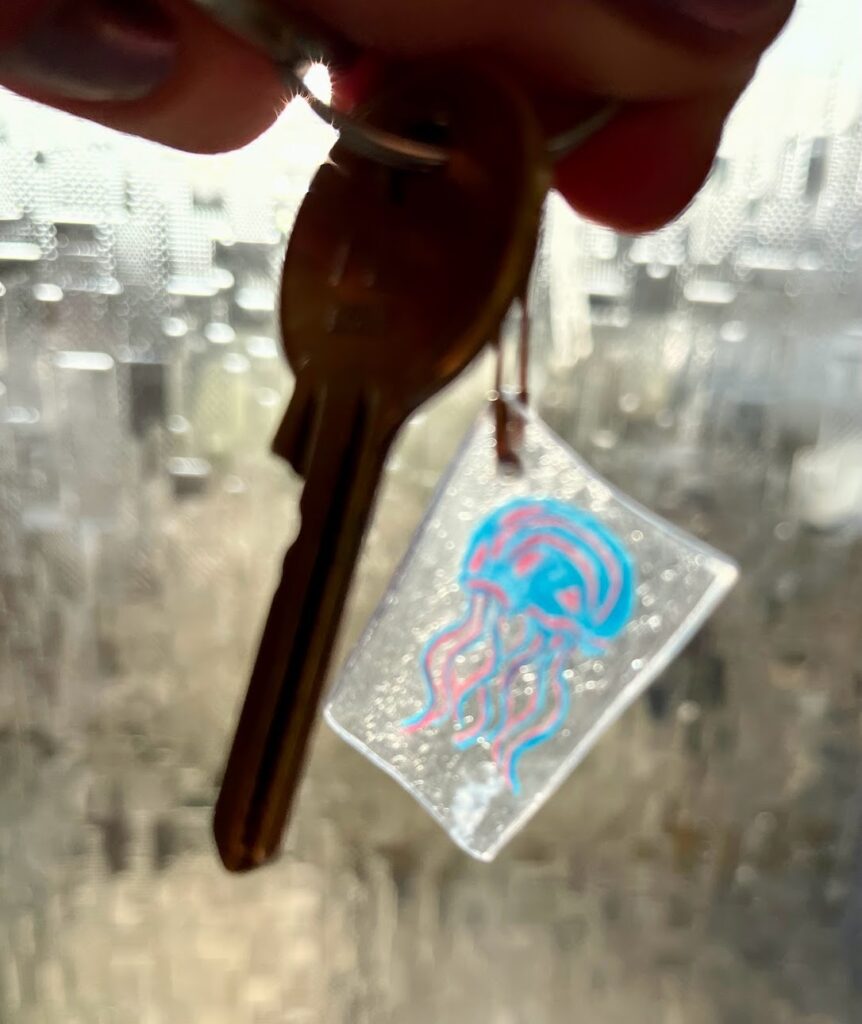
Research on jellyfish because I made a little ShrinkyDink jellyfish while crafting with my sisters over Christmas and I added it to my keychain

Reading some lovely poems from Plume Magazine— I particularly loved “The Classics” by Christina Lee and “Cathedral” by Kwame Dawes

Finding out about aphantasia, since another student believes she has it. People with aphantasia don’t see imagery in their minds, which makes it harder for her to connect with material she reads.

Jellyfish!

Researching Tutankhamun because the latest Royal Mail stamps for sending letters abroad have his possessions on them, and I was wondering… Do those really belong to this country?

Looking more deeply into a January 6, 1853 train accident that claimed the life of President Franklin Pierce’s only child just two months before Pierce’s inauguration, because it was alluded to in A Worse Place Than Hell, the book I’m reading. Pierce was the only president to ever hail from my home state, and it surprised me I’d never heard of this tragedy, when it must have heavily influenced his actions during a pivotal period.

Also, trying to find out about women runners in the 19th century because this nonfiction work mentions Louisa May Alcott going running in the early mornings before her long shifts at a Civil War hospital. I’m very curious about what women would have worn for morning runs in the 1860s, and I’ve found some interesting facts about the history of women runners but nothing that illuminates this passage, so if you know anything about it, do let me know.

The different types of attention that may be compromised by social media use, as outlined by Johann Hari on Jon Favreau’s Offline podcast. It rather motivated me to keep going with this little habit of mine!

Do have any suggestions of things I should learn about? What sorts of things have you sought to learn?

2022 Reading Round-Up

My top ten books from the year again feature quite heavily from independent publishers and writers I know… mostly writers I met on Twitter. So that medium has something good going for it, although in the year to come, I will attempt to convert some of my scrolling time to reading time. Might get through a few more books that way, don’t you reckon?

Cajoncito by Elizabeth M. Castillo

Multilingual poet Castillo gifts us this volume of English and Spanish poems. When she writes about love and loss, it’s as if she’s peeled back layers to say things I didn’t know how to. Many of her thoughts use metaphors of ink and pages, which were beautiful and also motivating to me as a writer. Particularly the first piece, “Can I Send You My Poems?” is perfection.

…Can I cleave
my way, breathless, across the seas? Can I scale
the mountains erected defiantly between us? Fight, bare-knuckled, the beasts that live at altitude?

A Spool of Blue Thread by Anne Tyler

I love Anne Tyler’s family sagas. Her characters are always so real, so nuanced and quirky, and the dynamics between them so plausibly fraught, I am amazed at where she finds the inspiration to keep developing such individual ones. I like her straightforward, often humorous style, as well.

But still, you know how it is when you’re missing a loved one. You try to turn every stranger into the person you were hoping for. You hear a certain piece of music and right away you tell yourself that he could have changed his clothing style, could have gained a ton of weight, could have acquired a car and then parked that car in front of another family’s house. ‘It’s him!’ you say. ‘He came! We knew he would; we always…’ But then you hear how pathetic you sound, and your words trail off into silence, and your heart breaks.

A Snow Garden and Other Stories by Rachel Joyce

These short stories are somewhat festively themed, and they reflect the heartache and joy of the holidays. There’s a fun modern-day nativity story, the title piece is haunting, and the final story quite lovely—but my favourite was the first, “A Faraway Smell of Lemon,” which seemed sort of an homage to Raymond Carver’s “A Small, Good Thing” with its great, moving simplicity.

Binny’s words echo in the silence. The young woman nods. And because she does not reply, because she does not fight Binny’s words, because she does not soften or dilute them with a sentence of her own, they fall for the first time. They land. Binny feels their weight, their loss, but the world does not stop or shudder. Yes, she is still standing. She is still breathing.

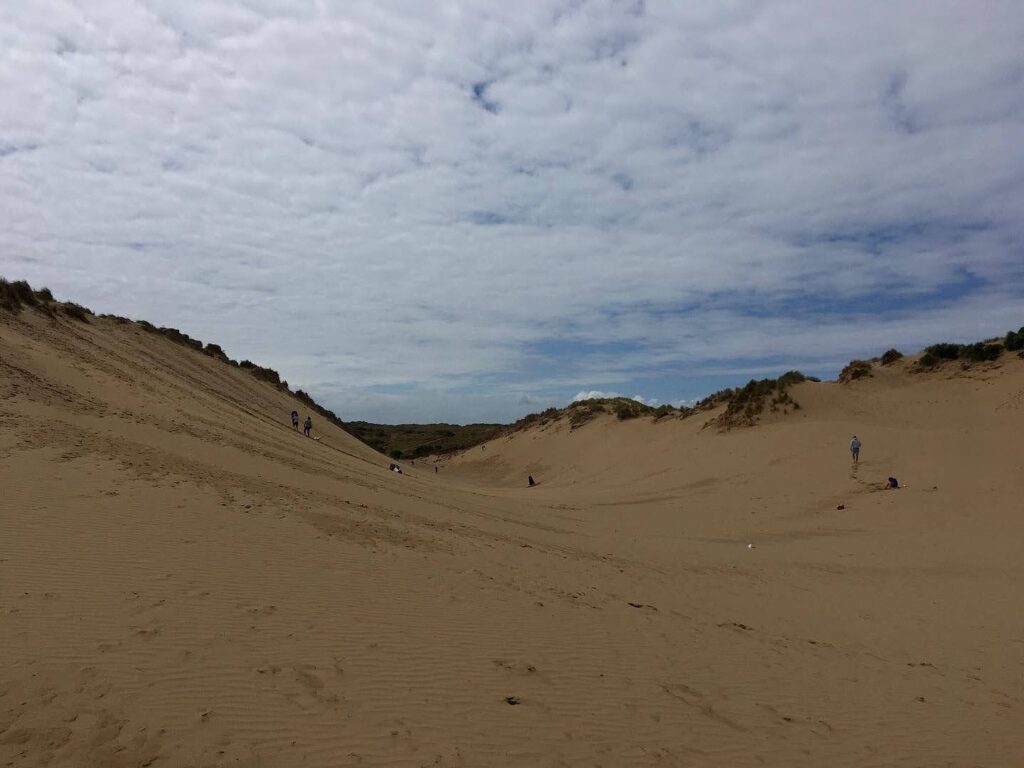
The opportunities we discover thanks to books! Braunton Burrows, Devon, UK

The Shadows We Cast by Sarah Tinsley

This is a real page-turner and a true feat of dramatic irony. As readers we know the twist from the start, and we’re desperate to know how the characters will work it out. It’s also an unflinching look at the aftermath of sexual assault, assigning the event its rightful significance while also developing the protagonist fully so she’s not at all defined by it. There’s so much to unpack in this book, I’ve reflected on it further here.

Coming here should have made it better, a distraction from the dreams that left her blunt and smudged. She feels like an echo.

The Salt Path by Raynor Winn

A travel memoir about dealing with tragedy by hiking the South West Coast Path, I may have particularly enjoyed it because I love that region anyway. I saved the book for when we were clifftop camping in North Devon, and thanks to Winn’s narrative, I found out about Braunton Burrows and we had a marvelous trek over the sand dunes. The book is candid and searching, but often also fun and irreverent.

We hide ourselves so well, exposing our skin in youth when it has nothing to say, but the other skin, with the record of time and event, the truth of life, we rarely show.

Piranesi by Susanna Clarke

The perfect read for cold January, this surreal, slightly gothic sort of mystery. I was tempted to start naming months in the way the protagonist takes to doing: The Month of Steadfastly Accumulating Tiredness, perhaps. But I don’t have the knack Clarke does. It’s an intriguing concept and so cleverly told.

Perhaps even people you like and admire immensely can make you see the World in ways you would rather not.

The History of Love by Nicole Krauss

You know I love a book about a book. Possession, Do Not Say We Have Nothing, and this novel by Krauss, are examples of a literary investigation which unfolds into a great personal journey. Here, there’s a book to be translated, and it brings together a girl grieving her father, and a holocaust survivor.

Strange what the mind can do when the heart is giving directions.

I might be needing a bit more bookshelf space in 2023…

Miss, What Does Incomprehensible Mean? by Fran Hill

Fran Hill is a terrifically warm and funny writer, and here’s one volume of her diary-style memoir about teaching secondary school English. This is quite an accomplishment given that a teacher comes into contact with many, many characters. She’s artfully chosen which ones to follow, and tracks relationships efficiently. It’s such an enjoyable read, especially if you work in education.

(Of a Sixth Form English class preparing to read The Handmaid’s Tale) “Rebekah certainly knows her Bible stories. The others hadn’t a clue. Conor thought a Testament was a body part.

Mrs. Narwhal’s Diary by S.J. Norbury

Another enriching, uplifting volume from indie publisher Louise Walters. This one’s in a diary style too, but much more novelesque, with in-depth looks into the protagonist and her family. The point-of-view is bemused and warm, often funny, and all the characters and the setting are so unique. I particularly liked the insights on parenting, and on trying to free a loved one from the clutches of repressed British genealogy.

Why can’t we change other people? Why isn’t there some sort of antidote to their toxic beliefs that we can slip surreptitiously into their tea?

Transcendent Kingdom by Yea Gyasi

This book has so much in it. It’s about families, neuroscience, race, religion, addiction, immigration… The characters were so relatable in their struggle for redemption and belonging, while the story illuminates wider issues of racial justice.

I, too, have spent years creating my little moat of good deeds in an attempt to protect the castle of myself.

Have you shared a love for any of these books? If you haven’t yet, there’s never a bad time to treat yourself. Enjoy!

Feast

This Week’s Bit of String: A whole block of cheese

It’s Friday last lesson again, and the English teacher has wisely chosen to engage our bottom-set Year 10s through writing about food. First, they are to describe their dream meal. I scribe for one of our special needs students while he tells me about his family’s cottage pie.

“Do you put a bit of cheese on top?” I prompt.

“Not a bit of cheese—a whole block!”

He tells me how they melt a whole block of cheese, sprinkled with herbs, and then pour it over the mash. When we move into class discussion, I’m urging him, “Tell about the block of cheese! Tell about the block of cheese!”

The teacher gets it. Her eyes widen as she hears about this feat of culinary excellence, and she calls it life-changing. The other kids, often so derisive at age 14/ 15, are chiming in appreciatively and they listen to each other share, their respect generally unwavering whether it’s one girl talking about her Jamaican parents’ curried goat, or the boy who lives on a farm discuss his chickens, or someone else describe her German grandmother’s bratwurst and peppers soup.

Funnily, the previous night I’d helped host a Women Writers Network Twitter Chat on the topic of Women Writing about Food. Lots of creative women joined to talk about food in literature, about how to describe it and what it can signify. You wouldn’t have thought there was anything amiss in the Twitterverse; it was just people coming together for a lively, supportive discussion.

The Room Where It Happens

While food and eating can have strong associations with loss and self-esteem issues, it also brings us together. Many of us are privileged enough to have happy kitchen memories from somewhere, and we’ll go still and listen when someone else recounts theirs. Being from kind of a big family, when I was growing up we were a bit strapped for cash, but we almost always had supper together and meals were noisome and fun.

I wonder what stories unfold at a kitchen table like this… (Seen in a London shop window)

My original writing location was the family kitchen table, although it was just outside the kitchen at the time. My mom had a typewriter set up there for work, and when I was four, I used it to type my first story. We made Valentines and decorated Christmas cookies and Easter eggs all at that table.

Not everyone gets to have that, of course. One boy in our Year 10 class offered up KFC as his dream meal, and didn’t join in with any tales of lovingly home-cooked food. I worry it might have been hard for him listening to what others were able to discuss.

Sometimes, the longing to connect can make us eat irresponsibly. I related hard to Nikesh Shukla’s chapter on food in his memoir Brown Baby. He writes, “Food is home and home is what I yearn for.” As an immigrant now also dealing with an empty nest, I truly get that.

Present in Its Absence

Almost as significant as food itself is the lack of it. Hunger can motivate creativity as much as satiation can—perhaps more. My first published story, in the Bristol Prize Anthology in 2010, was about a Haitian girl whose mother sold mud pies (literally) for a living. It reflects the fact that there are people in the world so disadvantaged, they eat earth.

Eating also makes a great metaphor. In the Retreat West anthology, my story has a girl called April describing how her older sister was a rapacious learner. I’m still very fond of the opening to that one:

“My sister devoured all history, beginning in the summer vacation when she was six. The century soon ending was Tabitha’s starter. She told me barbed wire cut her lip and toxic fumes tainted everything. Some of it was outer-space-cold, some burning-rainforest-hot.”

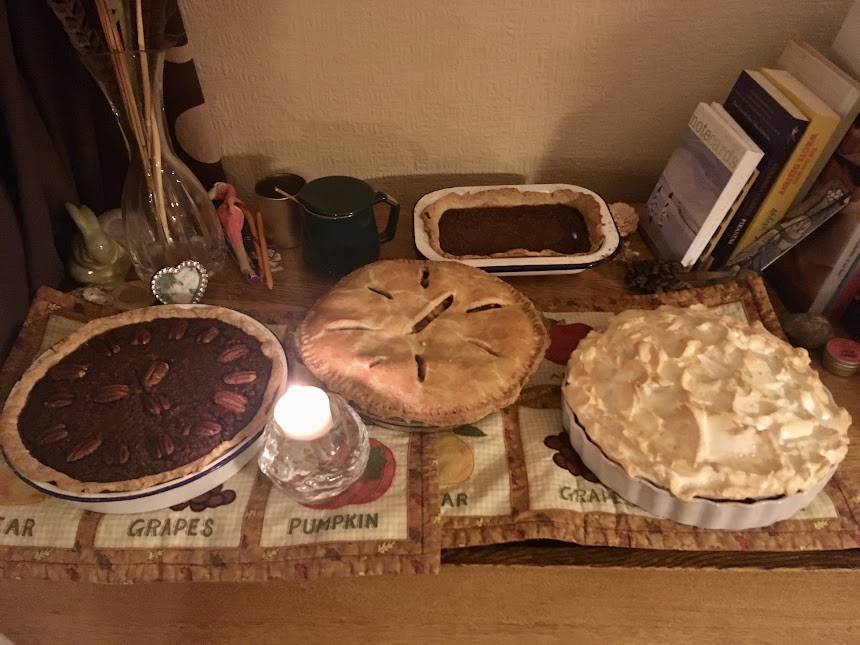
Happy Thanksgiving, everybody!

I’m not sure I’ve written many stories that don’t at least mention food. My latest novel, currently in polishing stages, is about Eve and the creation myth, so it features the forbidden fruit (which I’ve decided was a peach, by the way. Who gives up paradise just for an apple?) and contrasts the bounty of Eden with the strife of exile. In this story, of course, food is the ultimate separator, as that peach causes all kinds of rifts beyond just banishment. But as Adam and Eve’s family grows, mealtimes are when everyone gets together, round the fire circle, and are often where tensions or alliances become more visible.

How does food feature in your writing? I hope the Thanksgiving feast (if you are of that persuasion) brings comfort, joy, inspiration, and maybe even a whole block of cheese.

Engaging in Speculation

This Week’s Bit of String: Rainy day photos

It’s coming down hard outside. The school has a plastic, greenhousy roof and when it rains hard, it sounds through the whole building as if we’re barrelling down Niagara. On the bottom floor, in the Sixth Form Atrium, my student’s ears perk up. She wants to get some good, rainy pictures for Photography class, to convey the wrath of nature. So we leave behind the practice English paper I was scribing for her, and head for the doors. 

“If I drown, give my regards to my sister.” She’s off into the downpour. 

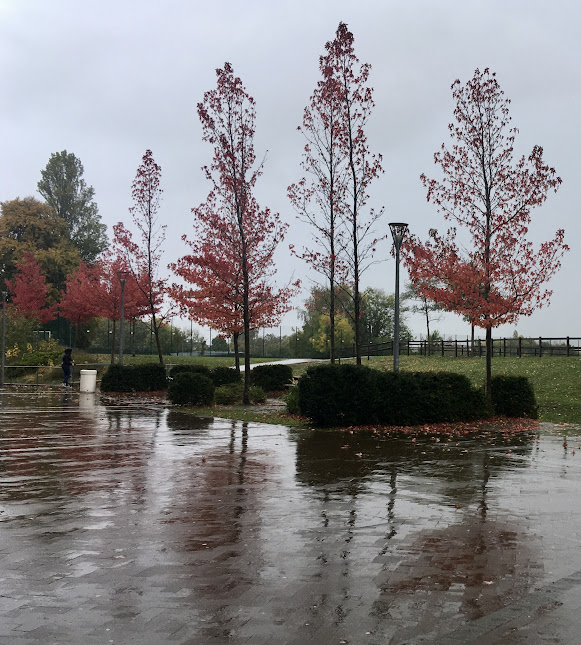
The wending row of young acers behind the school stand like candles in the dreary grey, their red leaves tapered to disappearing at the treetops. Paving stone puddles reflect the brightness, blurred by the pounding fury of more water.

As it calms down, I join my student taking pictures near the Music Block. The ground squelches beneath us and a budding saxophonist attempts “Mack the Knife” from the other side of the brick walls.

Later she asks me, “If photography didn’t exist, what would the world be like?” 

My own rainy photos

She means it rhetorically, a comment of pride in her work. But, as is often the case, I find myself reflecting on this later. There are times when photos, or the flagrant absence of them, have swayed the species enough to alter history. A Vietnamese girl running from a napalmed village; police bodycam footage. 

Beyond that, though, what would our society be like if we were not constantly confronted with extra images? If we didn’t have framed photos of the past, and we didn’t worry about how we looked when captured for posterity, I wonder if we’d be better at focusing on the present.

Considering the What-Ifs

This week I helped host the Women Writer’s Network Twitter chat on speculative fiction. We had some great conversations, which can be followed here. Margaret Atwood defines speculative fiction as “literature that deals with possibilities in a society which have not yet been enacted but are latent.” It can be science fiction, political thrillers, fantasy, multiverse… all sorts of things.

I like to think of it as entering parallel universes, branching off from a point, recent or historical, in the known timeline. I’m not fantastically imaginative, so most of my stories are written like this anyway, by rubbing at the edges of reality. I might consider people I’ve heard of and shade them into fiction, or in the novel I’m currently working on, I’m taking a well-known story and telling it from an alternative point of view.

Sometimes, what-ifs plague our personal lives and can make us anxious. It’s a relief to turn the tables on them and create our own hypotheticals from the past or present rather than cower under worries about the future.

Kids’ Questions

Our students, when they leave their this-is-boring, I-hate-school ruts, like to distract themselves by speculating about alternate realities. They’ll ponder how WWII would have gone down if Hitler were Jewish, or lament the lack of natural disasters like volcanoes and earthquakes in the UK (until I reminded them that those might be accompanied by loss of power and wi-fi).

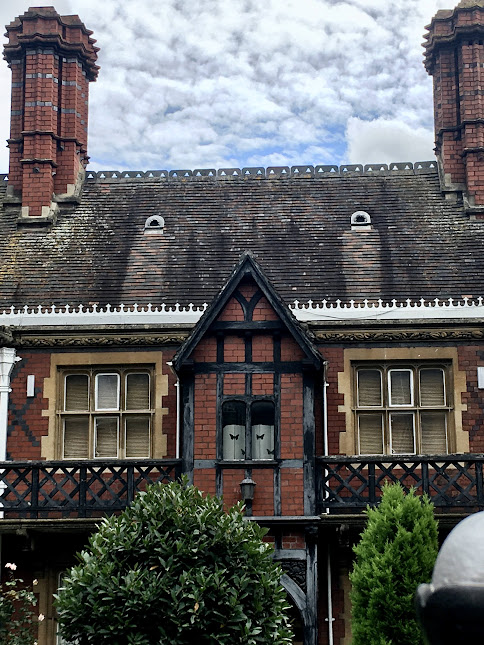
Some almshouses built for the “deserving poor” would have been funded by the slave trade.

The other day when we learned the prime minister had resigned, my Sixth Form student said: “If the next prime minister is crap again, I’m going to march to Winston Churchill’s grave and find a way to bring him back to life so he can sort this out.” I’m pretty sure he’s not the inclusive, progressive leader we need right now, but I do like imagining past figures reappearing to witness the world today.

Imagine if James Madison came back to life just to stand in the front row while Lizzo played his flute. We’d see him swoon like a slaveholding snowflake, or maybe he’d applaud politely like a mature and intelligent human being and accept that he was wrong about certain things. Either way, I wouldn’t mind seeing it. 

I wrote a piece a few years ago about Edward Colston randomly coming to life on a Saturday night in the centre of Bristol. Colston contributed toward Bristol’s prosperity in the 17th and early 18th centuries (even though he lived out of Bristol for most of his life). Much of his wealth came from trafficking human beings, so his legacy is corrupted. I liked picturing his confusion at the noise, colour, diversity, and excess of a Bristol weekend.

Where have the What Ifs taken you lately? Is there a point you’d like to stray from on our timeline?

Literary Locations

This Week’s Bit of String: Under the patchwork quilt

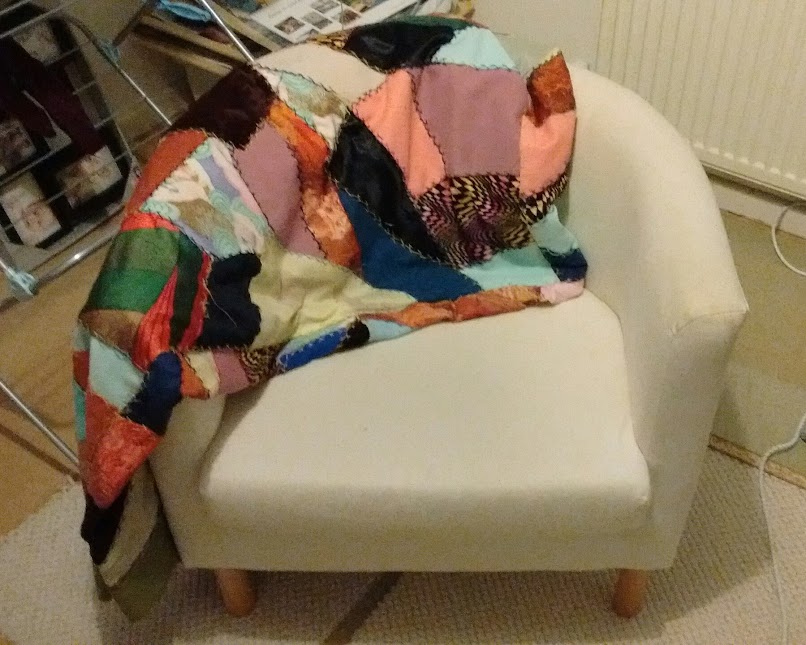
My grandparents’ guest bedroom was one of my favourite places. A rocking chair in the corner, a handmade crazy quilt on the bed. Shelves of AMC magazines that my Grandpa kept, unwilling to throw away anything with portraits of cinema’s Golden Age stars. The nightstands, under the dropped eaves, were metal and wire 1970s pieces loaded with books.

The books would change, and I never delved into how or why. Was my Grammy exchanging them with her sisters? Did my older cousins swap them out? However it happened, rootling around in this bedroom was where I discovered Little Women by Louisa May Alcott.

This is the quilt from Grammy’s house, in a writing corner I briefly had here before some, erm, home “improvements” commenced

It was an abridged version, still hefty, a yellow hardcover with that plastic that peels off in satiny strands if you pick at it distractedly while you read. There were a few black and white illustrations, the sisters each given distinct appearances. 

I was 9 or 10 when I found the book and read a few pages while my siblings ran around. The opening image of Jo stubbornly tomboying, sticking her hands in her pockets and whistling, made me laugh and I read it to the others and we all mimicked the gesture.

Family Home

At that point, my grandparents had lived in their Vermont house for at least 50 years, raising 6 children there. A pastiche of wallpapers, AM radio, the smell of American chop suey or home-baked donuts, and all objects well-worn, softened at the edges. Keeping the same house for so long felt magical, as if the air we breathed there was different, the atmosphere more sustaining.

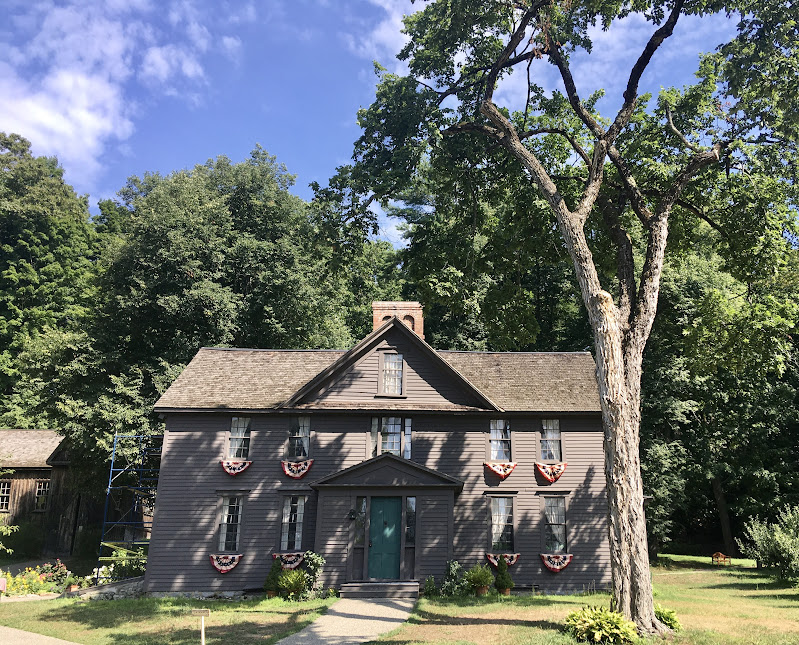
During my latest summer visit to New England, I took a trip with my two sisters down to Massachusetts to see Orchard House, where Louisa May Alcott lived with her family (after they’d moved dozens of times, due to financial struggles). It was a hundred degrees out, with a major heat warning cautioning everyone to stay inside. Fortunately for us, Orchard House is gently air conditioned, preserving the many artefacts within.

Recognise it?

We were amazed at how authentic the place still is. Nearly all furnishings were used or made by the Alcott family. Paintings by Louisa’s youngest sister May (aka Amy), doll clothes stitched by Lizzie (Beth), crocheted bedspreads and even the wedding dress of the oldest sister Anna (Meg). We were quite awestruck.

In the master bedroom, there was even a timetable devised by Mrs. Alcott (Marmee), allotting how many hours the girls ought to spend on learning, on chores, and on other types of enrichment. It reminded us of the chore charts our mother would create to encourage the three of us plus our brother to each do our share.

A Room of One’s Own

While my clever and crafty sisters took great interest in different crochet and knitted pieces, I geeked out over Louisa’s room. She had her own writing desk, a white, rounded table her father built her. It jutted out between two sunny windows. This was exceptionally rare, for a women to have a desk.

The desk was ornamented with a nautilus-shaped inkwell, very Transcendentalist, and pens given to Louisa by her mother. Mrs. Alcott had composed a little poem to go with them, a prayer that the Muse would keep Louisa’s creative fires burning. Such obvious support really moved me.

I’ve now read Little Women more than once, unabridged as well as that old abridged version, along with some of Alcott’s other works. If you’ve also read it, and/or watched the film adaptations (two of the more recent ones were filmed at the actual Orchard House so it is instantly recognisable), you’ll remember that Jo (aka Louisa) writes up in the garret, and stores her pages in a disused tin kitchen. However, Orchard House doesn’t have an accessible attic.

Schoolhouse behind Orchard House where the Alcotts and other Transcendentalists educated newly freed people from Missouri.

Much of Little Women is based on Louisa’s life, and I’m sure in the dozens of other places she lived while growing up, she did write in attics and in all kinds of nooks and crannies. I wonder if she looked back on those corners with the most nostalgia, and perhaps even found them more inspiring, despite the wonderful space she ended up with.

Certainly, creating a writing garret for the character of Jo was a brilliant authorial choice. Think of how many young, non-affluent readers Louisa made writing feel accessible to. You don’t need a desk, or a view, or a room of your own to write. Not according to Little Women, anyway.

That was something that I loved about the book growing up, and the Winona Ryder film version that came out when I was in high school. Thoughts of Jo, bundled up against the cold, writing through the night really motivated me to work harder. Whether it was under that quilt on my grandparents’ guest bed, or in a basement corner on a typewriter that cost $5 at a yard sale and that I later abandoned after finding a snake in it, or in countless notebooks on bumpy bus rides or squishy sofas or prickly theatre seats at dress rehearsals; whether it was with shouting children or my husband trumpeting upstairs; whether it was scribbling at a bar between taking orders from customers or in the back of a woodworking shop while my students were learning new skills on a field trip… Sometimes, the most unlikely writing places are the ones that stick with us. They yield the hard-earned words, they witness the flood of the ideas that simply will not be kept back.

After all, a main message of Little Women is how hard work makes life feel more meaningful. It was nice to see this backed up by the many loved, homemade objects in the Alcott house, just as I remember them being in my grandparents’ home.

What sorts of places have you written in, and who are the writers or characters that have inspired you to do so?

Make ‘Em Laugh

This Week’s Bit of String: Personification of ants

Our neediest Year 9s have been treated to a poet-in-residence course. The poet wears bright-patterned shirts and hipster glasses and leads the troop outside to find objects for personification practice. My dynamic duo choose an ant, and assign it a “he” pronoun. 

“A male ant,” I say. “That would be an uncle!”

It’s the last lesson of the day, and very hot. We are all tired. I start to chuckle at my own joke.

My student, who takes stairs three at a time and is so bouncy you could easily interchange him with Tigger (although the constant involuntary shouts and bird chirps might give him away), stills suddenly and gives me a stern look. “No.”

I’m not generally sadistic, but the poor reception of my pun makes me laugh even more. The kids are disgruntled, and that’s hilarious. I try to apologise, but I’m not very sorry.

In search of comedy crumbs…

A couple weeks ago I attended my first in-person workshop or course since before covid. It was about writing with humour, hosted for Evesham’s Festival of Words by Fran Hill, whose memoirs including Miss, What Does Incomprehensible Mean? are brilliant examples of warm humour and efficient prose. We went over different kinds of funny scenarios and set-ups, including wordplay like my awful hot-afternoon pun, and read and created lots of fun examples.

Because we don’t do this often enough, I thought I’d dedicate this post to comedy. So, in case you’re a bit tired and world-weary, here’s a little compendium of things I find really funny. Don’t worry, they’re higher quality than my ant joke.

Early Years

In my family we watched a lot of vintage comedy. My father passed his own father’s love of the Marx Brothers and Spike Jones down to us. The humour that often stays in my memory is musical. Here’s Chico Marx’s piano routine in Animal Crackers–and Groucho’s annoyance with it. “I can’t thinka the finish!” – “That’s strange, and I can’t think of anything else.”

Often what makes us laugh is an element of surprise. It’s characters who we expect to be straight-laced suddenly subverting stereotypes and doing something outrageous. Growing up (and this is still true for me), my siblings and I loved musicals and Disney animated films. I’ve got examples from both showing characters doing something hilariously unexpected: Fagin’s entrance in “I’d Do Anything for You” from Oliver!, and Kronk, the beefcake boytoy, creating his own theme music in The Emperor’s New Groove.

As we got older, we became fans of irony and understatement. We loved the Anguished English books, collecting the most egregious and uproarious written mistakes often from professional settings. We liked the absurd. Here’s a scene from the Beatles’ film Help, because Ringo’s flat-toned reaction to nearly having his finger bitten off in a vending machine tickled us: “I thought… y’know, I thought she was a sandwich.”

The Music Plays On

Given that the family I’ve raised is also quite musically inclined, I continue to enjoy that type of humour. Comedy increases its impact when it uses cultural references that people can further relate to. Bill Bailey is great at this. My husband and son and I love his Belgian jazz version of the Doctor Who (Docteur… Qui) theme song. Or, if you prefer, he also does a terrific reggae rendition of Downton Abbey.

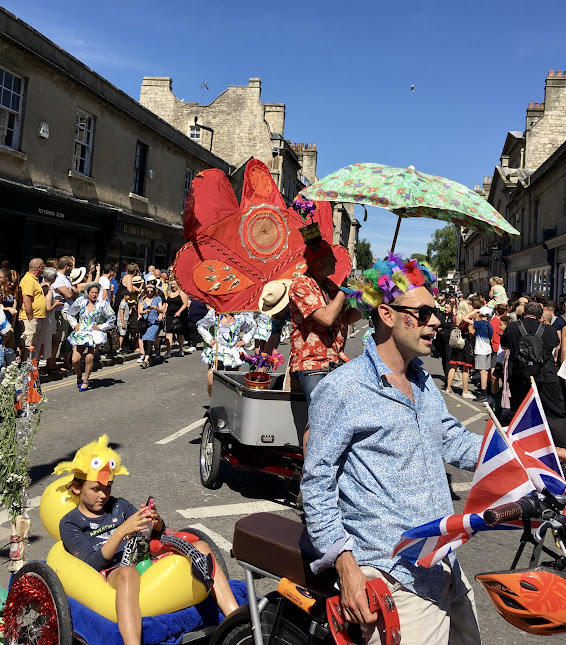
Bath Carnival last weekend… get happy!

Talking of unlikely combinations, here’s a fabulous mashup my son created, of Beethoven’s Fur Elise, and the Tetris theme. How awesome is it when your own kids make you laugh?

I also love an ensemble piece. For me, that’s what makes shows from Buffy the Vampire Slayer to The Office to Stranger Things to The Good Place so fantastic. You adore and rely on every cast member. Here are prime examples of ensemble comedy from each side of the pond, that have me laughing more with each character adding to the piece: The Muppets covering “Bohemian Rhapsody,” and several incredible British actors and actresses attempting Hamlet’s soliloquy together. You’ll love both of these from the beginning… but the endings blow them out of the water.

In literature, Dickens’s descriptions of people make me laugh, and Louisa May Alcott’s quick action tags like saying a boy exited “with the graceful gait of a young giraffe.” An especially memorable (partly because I was on a bus full of dour commuters at the time) laugh-out-loud passage is from Michael Chabon’s The Yiddish Policemen’s Union:

“Reunited in their parents’ bed, the Shemets boys set up a whistling and rumbling and a blatting of inner valves that would shame the grand pipe organ of Temple Emanu-El. The boys execute a series of maneuvers, a kung fu of slumber, that drives Landsman to the very limits of the bed…”

Most of all in my reading and writing, I like to celebrate surprising alliances, to build little bands of misfits, so maybe that’s why I enjoy odd pairings in comedy too. My humorous short story “From Newcastle, With Love” appears in the Stroud Short Stories anthology, and you can hear me read it (and hear the audience laughing at just the right places, too).

What are some of your favourite funnies?