Filling Spaces

This Week’s Bit of String: Dragons and evacuees and musicals, oh my…

Confession the First: In second grade I had to write a complete story for school, and I sort of stole it from a computer game. I didn’t know how to invent whole new ideas, and my family had been working through Sierra Entertainment’s King’s Quest games 1 and 2. They were monochromatic with blippy music, but loads of fun. I couldn’t get them out of my mind.

In turn, the games themselves borrowed fairy tale elements, so while I felt as if I should have come up with something original, I also figured borrowing stuff was allowed.
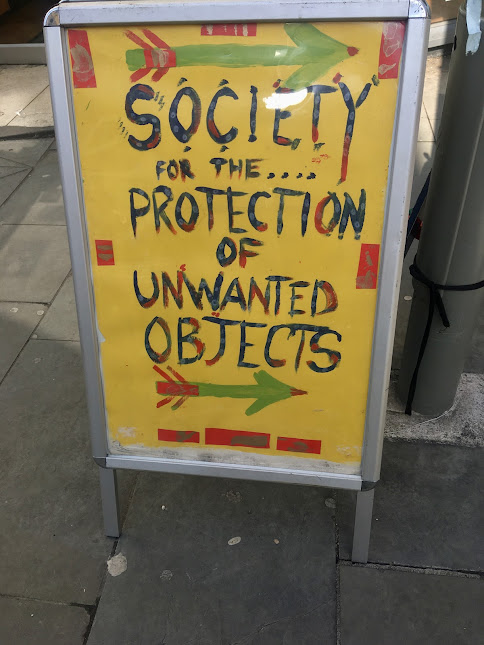
A story starts out as a bunch of objects. Why not begin with whatever ones we want?

I was already skilled at pastiche. Before even starting school, I’d assign my stuffed animals roles based on Narnia characters or von Trapp children from Sound of Music, to enact and sometimes remix my favourite tales. Less than a decade later, I devised a series of novels set during the holocaust. I had a plot but didn’t know enough people to inform strong characterisations (particularly of the male variety; middle school does not offer a rich seam of girl-boy friendships).

So, once again, I borrowed. I had characters based on Uncle Tom’s Cabin, Anne McCaffrey’s Dragonriders of Pern, and other books I liked. I’ve mentioned this before. They weren’t pristine or even recognisable copies, since I was putting them in different circumstances with different companions. But it helped me to carry on creating when I had a picture in my mind.

Just for the Moment…

In the first King’s Quest game, released in 1980, if you tried to turn your character a certain way in certain frames, or if you generally attempted something not in the programming, a message would pop up on the screen: “You can’t do that—at least not now!”

Sometimes, writing is like that. We have some of the ingredients for a full story, but are missing others. And you have to just put something in as a stopgap, in order to keep going.

At work I’m helping students prepare for exams. Every Year 11 in the country has to take the same subject exams, regardless of special needs or life circumstances. If they don’t pass at age 16 they must keep taking them each year. (I could pour my hatred of this system into several blog posts, ranging in temperature from grouchy to scathing, but I won’t trouble you with it now.) Most of my students have processing issues and biological literacy challenges that impair their ability to even understand the questions, which are set to trip students up anyway.

Still, we tell them to try. If it’s a Maths paper, put down whatever calculations you do and write something for the answer, even if it’s a guess. For the English papers, write as much as you can think of. Just put something down in those blank pages, to increase your chances of a pass.

In standard writing practice, we do something similar. A common exercise to get thoughts and words flowing is to free write for 5-15 minutes. You must keep writing the whole time, and you’re instructed, if you can’t think of something to write, to keep your pencil moving anyway. You can write “I don’t know, I don’t know, I don’t know,” or “blah blah blah,” but keep writing. Fill in the blanks.

Purloined Persons

Confession the Second: I haven’t written new fiction in almost a year. I have written hundreds of pages, scribbling about my daily life and the odd fleeting idea. I’ve done blog posts. But I haven’t created, I haven’t added building blocks to a story. Lack of time, headspace, energy, you know how it is.
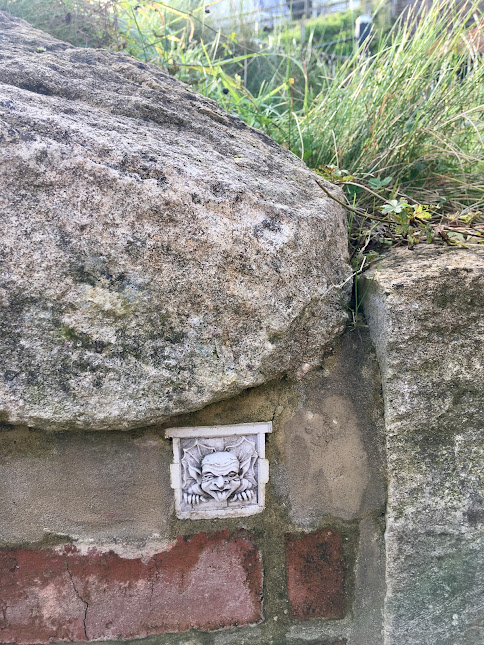
All kinds of building blocks to make this wall.

With the Easter holidays beginning, I decided to give it a go. After all, the longer you wait to do something, the more you believe you’re doomed to fail. Have you found that?

I unearthed a pretty decent story opening. I don’t entirely know what’s meant to happen in it. I’ve not been able to pull advances out of thin air. Why not borrow something, then? What if I take someone I know a little bit about, unpick the thread of a distinguishing characteristic or background detail, and then weave those into some gaps in my story?

It sounds kind of ruthless. Callous, perhaps, to borrow a person’s attributes. I don’t usually consciously do this. But sometimes you just have to fill in the blanks, and once you add to the ingredients you’ve already got, it’s all going to change anyway.

Sometimes a song or a picture will unlock a key element we need for our work. Other times we need a stronger nudge. Having come up with this plan, I managed to write 700 new words in just an hour and a half, even while frequently running off to check on dinner cooking. It’s still my own story, I just needed a bridge from reality into my long-unaccessed imagination. Already, now she’s got some words behind her, the character is finding her voice to tell me all sorts of things distinguishing her from her inspiration. And a story gets reworked so many times, characters evolve drastically.

What tricks do you have for filling gaps? Have there been things you loved so much, they may have shown up in your work, one way or another?
What Moves Us

This Week’s Bit of String: Possible planetary shift

“Miss, is it true that moving the earth even a centimetre out of orbit would basically destroy everything?” 

I’m not certain, Year 11 child who’s supposed to be completing a textbook-based cover lesson on greenhouse gases in the last period of the schoolday. 

If I’d thought critically about what an orbit is, and the way it represents the equilibrium of attraction between two planetary bodies, I would probably have confirmed the student’s query. A change in orbit could trigger sudden prolonged extreme temperatures or just cause the earth to plummet into the sun which, come to that, would be a particularly prolonged temperature change. 

But it’s hard to properly consider an extra theory when you still have remnants of covid brain from less than two weeks ago, and you’re trying to prepare teenagers for exams while fielding queries from cover teacher and students alike, such as: “Did you find Jacob?” and “Miss, what’s your opinion about amputees?” (Kids are just weird, ok?)

A perfect orbit

Anyway, once I was home and the dust of my thoughts settled, I channeled them into a new wormhole. I researched what would happen if the earth’s orbit skewed, if its tilt altered, and also looked into the calculations being done to check the feasibility of moving the earth further from the sun

All interesting and fairly unlikely, but what intrigued me was what, I suspect, intrigues a lot of us readers and writers. How a tiny change can make a big difference, how a slight tick of motion can catalyse vast movements.

Being Moved

My most recent (and utterly wonderful) read was Nicole Krauss’s The History of Love, in which a character mentions being “moved” by a book. “It moved me in a way one hopes to be moved each time one begins a book. What I mean is, in some way I’d find impossible to describe, it changed me.” 

I thought, couldn’t they have come up with a better verb for such a significant impact? “Move” is stretched wearily over many meanings. But as I reflected on our use of move, I warmed to the term. Sometimes having multiple uses is appropriate. It allows a word extra levels.

We talk about moving up or moving out. We move house and move away, dream of moving mountains and possibly moving the earth’s orbit. There are chess moves and symphonic movements and moves to proceed or to adjourn. Aristotle even came up with a theory referring to God as the Unmoved Mover.

A book (or other work of art) is an Unmoved Mover. It didn’t spring up out of nowhere, but by the time we hold it in our hands, it is standing on its own, detached from its maker. Its power is only what we can take from it, yet it gives so much.

Roots and Tongues

The oldest known version of the word move comes from the proto-Indo-European root meaning “to push away.” There are undoubtedly books that knock us slightly out of orbit. Our temperature heats up, and we proceed with a certain rawness. It’s often, as Krauss writes, impossible to point out a concrete change in our lives. Yet who can say what we notice, how we react, that comes down to our sensitivity being pricked by a book?

The challenge of capturing motion

While thinking about our use of this word in English, I consulted the gloriously warm and talented poet Elizabeth M Castillo. She is fluent in several languages, and let me know about the word “ému” in French, which is deeper and longer-lasting than “moved.” I suppose it’s a bit like our word emote, but in English that sounds sort of… clinical.

“Affect” or “inspire” are a bit vague, whereas I’ve come to like the physical, visceral implications of “move.” A story can be touching, but to say a book “touches” me feels uneasy.

In Spanish, Castillo says, there’s “conmovido,” which is different from their word for physical movement. It “implies something or someone is doing it to you… bringing you along into a feeling.” A bit like an Unmoved Mover, again.

Stories on the Move

I feel as if the best reads can be Unmoved Mover books that give you a shove, or companion books that move along with you, or paper boat books which do the moving for you. Elizabeth M Castillo’s poetry book Cajoncito is one of the latter. Reading her poems, I feel relieved, as if someone’s unlocked sentiments I hadn’t managed to untangle yet, and set them afloat. It’s on sale through Amazon, and honestly the first poem alone is worth the price. 

It’s not just books, of course. Would I have made it through my teen years without accompaniment from Tori Amos and the Les Miserables soundtrack? Have you ever had the lights go up from a live stage production and felt your life as you knew it is over; you’ve been elevated to a different plane and your trajectory has inevitably, if not definably, swerved? In the end, have you come up for a better word to describe the general experience than… “moving?”

Illuminating Literary Women

This Week’s Bit of Spring: Tears of a teenaged girl

Student J is crying. She’s had to stay after school for personal tuition as her GCSE exams approach. Her boyfriend, whose hoodie she carries with her and cuddles at every lesson, has gone to hang out with friends who happen to be girls. J is 16 and convinced this dooms her relationship of nearly a year.

I have another 16-year-old student who sometimes comes in exhausted, saying she can’t sleep because of anxiety that her boyfriend will cheat on her like an earlier boyfriend did. The doubts circle in her mind and she can’t shake them.

We tell the girls it’s fine, look how much he likes you, of course he doesn’t want someone else. Now let’s do a bit of coursework. But truthfully, it’s not likely these relationships will last. I’m not disparaging the feelings young people have for each other, I’m just not convinced these two particular guys are that great. The girls will find new opportunities as they get older and probably, hopefully, better partners to share them with, plus other possibilities to try along the way.

Should we, instead of just placating, be stealthily building up young ladies for themselves so they’re not utterly devastated if and when they’re on their own for a bit? Pondering this made me wonder if I do that enough in my writing.

A Woman, Herself

Many of us know now about the Bechdel test for movies. Are female characters integral and autonomous enough within the plot so there are two named ones who converse about anything other than men? Think about it—this is rare.

In fact, when I considered it, it felt so rare I worried my own stories don’t pass the Bechdel test. Does it count if a novel or short story is told first-person by a female character? That way, we’re hearing her thoughts which are definitely not just going to be about men. (Sorry guys, you’re not quite that all-consumingly important.)

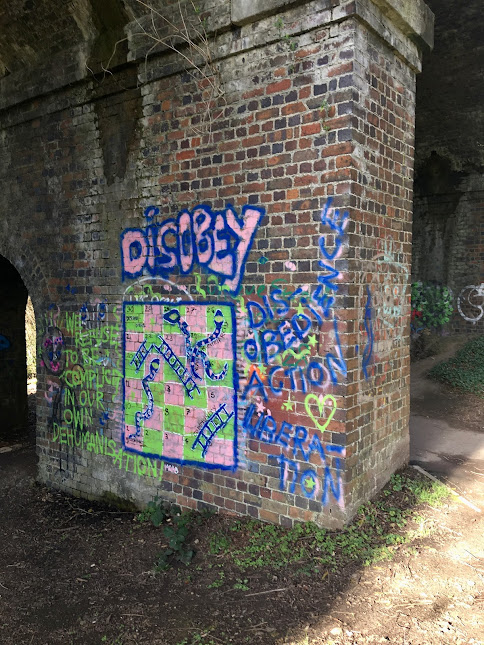
Disopedience–Action–Liberation graffiti in Stroud

Books and short stories are different from films—we can’t use the same feminism test on them. That’s why there’s the slightly more complicated but really useful Johanson analysis. Named for the critic MaryAnn Johanson, who writes on the FlickFilosopher website, it measures books or films in 4 main areas to see if they adequately portray and represent a gender which makes up half the world’s population.

Does the story grant centrality to a female character? Does she have her own arc somewhat independent of the male characters?

Is she able to influence others or is she merely influenced by them? Are female figures given authority and is that at least partially shown in a positive light?

When introducing or describing female characters, is more attention given to their physical appearance than anything else?

Are women (and characters identifying as women) defined by more than tropes or family roles?

These are really good questions, which I think my work mostly satisfies. I’ll definitely be keeping them in mind during my rewrites though, particularly since checking characters’ trajectories and making sure they actually develop as humans is always high on my list.

Let’s Talk About Relationships

Feminism isn’t Fight Club, so far as I know. We’re allowed to talk about all sorts of things and view them from a feminist angle. That includes men and our relationships with them; after all humans do crave relationships whether we want to or not. Most guys I know talk about relationships a lot. It does not diminish their identities, and nor should wanting a partnership diminish women’s individuality.

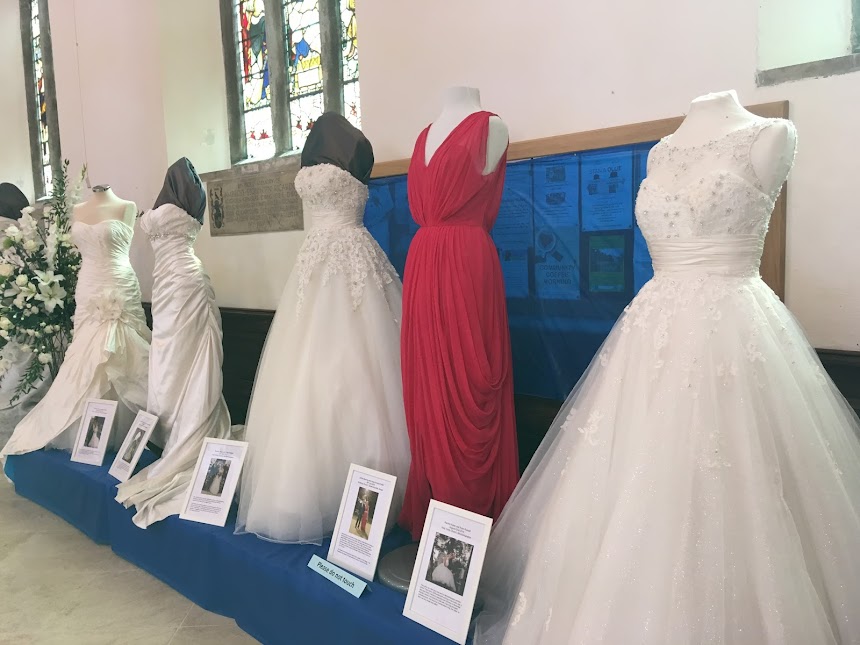
Wedding Dresses through history display at a local church. Women’s history isn’t just marriage, but marriage is part of our history.

When we meet up with friends, don’t we spend a fair bit of time discussing our families? Or discussing work. (I think work is more dehumanising than marriage, for most of us.) Being a mum is the most important part of my identity, even more so than being a writer, and I don’t think that makes me backward or less feminist. That’s what drew me to the novel I’ve lately been working on, The Gospel of Eve. In a feminist way, it gives Eve a chance to tell her side of the legend, and as she’s sometimes referred to as the first mother, it’s also an opportunity to explore various relationships.

Obviously we don’t want art or literature in which supporting and talking about men is the sole purpose of a female’s inclusion. But penalising books about relationships would affect a lot of work, by female and male writers, and beloved by readers of all kinds.

If we discouraged the young people in our care from talking about their relationships because it’s unenlightened, we’d shut ourselves out of something really important. We would be unable to support them when they might need help. As educators, role models, guardians, and writers, we want to explore all things, from relationships to our core individual selves.

For further reading on feminism in literature, Roxane Gay wrote an excellent essay on it in Dissent Magazine. Here’s her guiding definition: “A feminist novel illuminates some aspect of the female condition and/ or offers some kind of imperative for change and/ or makes a bold or unapologetic political statement in the best interests of women.”

What literature has illuminated something for you? What bold statements have you found inspiring, and do you have thoughts on creating your own?

The Right Mix

This Week’s Bit of String: A seating plan reshuffle

You know it’s time to amend the classroom seating plan when sitting through an English exam practice question results in two students pelting empty drinks bottles at each other, clipping a staff member’s ear, and unabashedly informing the teacher they’ll f each other up as soon as the bell sounds.

In this case, the teacher begrudgingly typed up an incident report but tried to make me write the new seating chart in my unpaid after-school time.

“Make sure students a, b, c, d, e, f, g, h, and i are nowhere near the windows,” she ordered. There are 3 window seats. There are 15 kids in the class.

She wanted at least 6 of them right in the front, but no one next to each other. Consign to some unreachable corner the special needs ones I’m there to support. “It’s a shame,” she said. “Most of them have been working well enough, but we’ll have to move everyone around in order to be fair.”

Rewriting a short story the following weekend felt like staring at the paper on which I was meant to draw up a new seating plan. Where to even start? So much I like, must I really chop and change the whole thing?

Outnumbered

For years since I first worked in the local secondary school, whenever I have to do something hard I have a recurring image in my mind. A dark-eyed little Year 8 slumped over basic arithmetic problems, throwing his head back and groaning, “This is so looooong!”

Long is a big insult from a student. Long is NEVER permissible to them.

Rewriting can feel long. Long and not particularly well-illuminated.

So it is with rewriting, in more ways than one. It takes a really long time, and I’d forgotten that because it’s been several months since I was free to sit down and fully overhaul a project. You think creating, yanking plot and character and language out of thin air, is the hardest bit. It should be quicker tidying things up, but it’s not.

It took hours of painstaking line-by-line work to shrink the word count by 40%, and that’s only the first go. Just as we make our Year 11s do more than one practice paper before exams, it’s going to take multiple versions before I get this story right.

The piece I’m working on is told by a mother of young kids. She has a terrible back injury and her husband’s disappeared. It’s funner than it sounds, because the kids are cute and the woman has a wry sense of humour. However, as with many tales, I have to balance out pain and hope, despair and wit.

Seating Plans Versus Story Drafts

There are a few similarities between helping run a classroom and pulling together a narrative.

No aimless gazing out the window: We want focus in the classroom (easier said than done) and definitely in a story. Every word and exchange should be trained toward the story’s purpose. No diddly passive verbs or excess prepositional phrases, no meandering side glances or navel-gazing either.

Long = Bad: This isn’t always true of course, but we don’t want anyone to feel something’s a slog. We give students various quick tasks to build different skills, and likewise with a story we can vary the tempo. Once I’ve made a major round of cuts, I look at the shape of the paragraphs on the page—are there too many rapid-fire dialogue lines, or excessively dense thickets of description? Where possible, I distribute these and alternate them.

Don’t forget the back row: The first page is like the classroom front row: curated with special care to set the tone. Because so much expectation rests on those initial words, I go over the beginning loads of times. But I also work backwards at some point, line-editing in reverse so my scalpel is sharp at the end for this round of cuts, rather than always sharpest at the beginning.

A little cold round the edges can bring the general shape into sharper relief

Maintaining balance: Move over Hamlet, the REAL question in life is do we lump the bad together so we get bigger swathes of good, or try to pace it out? In schools we often inflict a beastly child upon a lovely one in a seating plan. Otherwise the “bad” kids sit next to each other and form a whole beastly herd in Row 3. As a writer, I don’t want to present readers with unrelenting woe (I mean I’m not Thomas Hardy), so I emphasise warm relationships where possible and sprinkle humour throughout.

Make space for addition: When deep-diving into a rewrite, the immersion lasts beyond the hours of Post-It rearranging, pen slashing, and sitting at my laptop. I’ve reentered the world of my story and it takes a while to find the exit. In my dreams, on my walks, while I’m cooking dinner, I think of things I want to add. Parallels to be drawn more clearly perhaps, quick descriptors to enhance the mood.

Not ideal when trying to reduce word count to meet a competition’s maximum requirements. It’s like unleashing a kid fresh from the Internal Exclusion Room into a previously settled classroom. Will this knock everything off balance? But newcomers, whether people or words, deserve a chance.

Above all, when I’m editing I just wish someone could give me the answers. Does this go here? Am I allowed to keep this? Is something more needed there? I lucked out with the seating plan at school, because the other teaching assistant and I convinced the teacher it wasn’t our job to do it, and that little was required anyway. “You can keep most of the students where they are. It’s not as if it’s a secret why we have to move two or three of them.”

What are your tips for rewriting? Do you enjoy the process or do you find it… long?

Well-Balanced Nightmares

This Week’s Bit of String: How much can fit in one duffel bag

Recently I had a nightmare about being deported to a concentration camp. My family was packing as much as they could into their bags. In my dream no one else realised what this journey entailed, and I was debating whether to tell them what lay ahead; we wouldn’t be able to take our belongings with us.

I’ve travelled the world in nightmares. I’ve climbed trees to escape Rwandan genocide, tried to reason with a mob to save my son from Cambodian killing fields, I’ve found my sister dying in the desert following an ISIS-type invasion. I live a privileged life and such things may never affect me, but when I read about crises such as Rwanda’s, I’m struck by how quickly and brutally people can be turned against each other. Those who participated were, after all, no less human than you or I. My dreams solidify this for me and I’m kind of proud of that.

Do you ever find reading about something isn’t enough; there’s some satisfaction in knowing it’s imprinted on your subconscious?

Evasive Manœuvres

A couple weeks ago, nightmares became a hot election issue in the American state of Virginia—nightmares and racism and censorship. The Republican candidate for governor ran ads with a woman complaining about how the Democrat candidate would allow schools to assign books of the type that give children nightmares. Her son, while in his late teens, had suffered bad dreams from reading a Toni Morrison book recounting some horrors of slavery. Parents should get a say in what their kids read at school, and Democrats would deny parents that power, went the rationale.

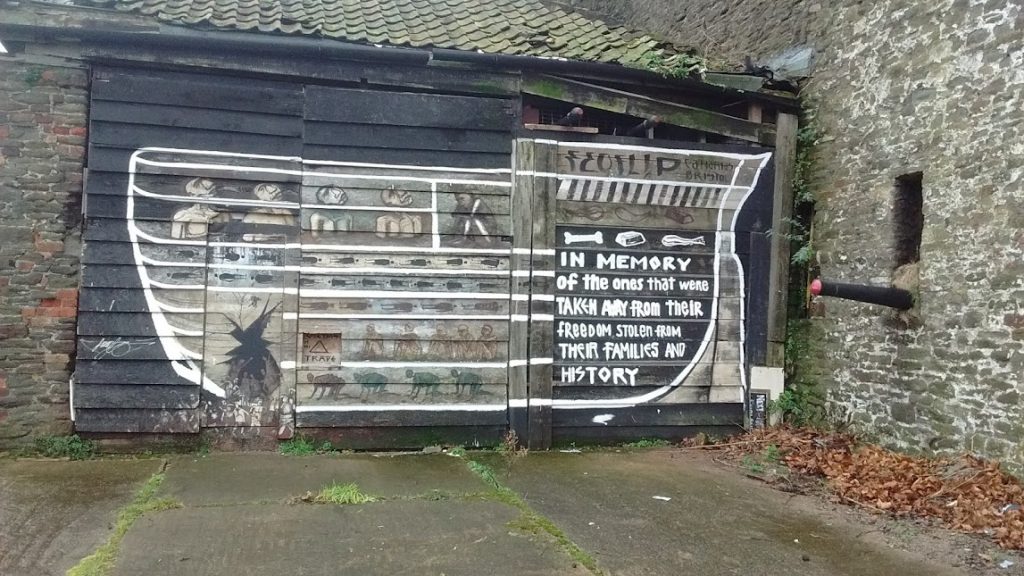
A memorial to trafficked and enslaved people, Bristol harbour

While I was in school there were a few books that met with my disapproval. Cormier’s The Chocolate War wasn’t up to my literary standards, for example, and the writer seemed to slip in references to masturbation just to impress his own teen son. Reading about Greek mythology annoyed me; the gods and goddesses were petty and selfish. Because of my own PTSD, I dreaded my sophomore year when I had to read I Know Why the Caged Bird Sings, Maya Angelou’s memoir. But it never occurred to me to object to reading them. School’s all about putting up with things you don’t like. So is life, come to that.

As a parent, I want school to broaden my child’s knowledge. There are plenty of books I recommend that he reads, but school professionals will introduce him to other things. If those things give him nightmares occasionally—good. He’s taking the world seriously.

How do you read about the torture and enslavement of human beings and not get nightmares? Is the discomfort of nightmares a legitimate excuse to not be educated about the crimes perpetrated on millions of our fellow Americans?

Selective Discomfort

Stories highlighting racial injustice and persecution aren’t the only ones parents are agitating to get removed from school curricula and from library shelves. There are a lot of campaigns against books that represent LGBTQIA characters. I’m not sure where the nightmare fuel in those are, although I did dream once that a gay colleague and I ran into King George III, who was going to execute my friend for his homosexuality, and the only way I could stop this was by stabbing His Majesty with a pencil.

It was pretty traumatic, inflicting that wound. But that’s just my brain putting weird spins on things again. The truth is, it looks as if a lot of people are trying to abolish diversity in literature.

I wonder if that video made for some awkward Christmas Eve bedtime conversations.

Years ago I had a brief job looking after 3-year-olds during Bible studies at a church. For Christmas, I was given a video to show them about Saint Nicholas’s life story. It was a cartoon, but it did feature his arrest and imprisonment, and the children were horrified. “Santa’s in jail!” I had seen this trend growing up religious; our church library had videos about Roman persecution of Christians featuring people being thrown to the lions. My friend watched these when she was nine years old.

I suspect the same young man who complained about slavery nightmares (which apparently he’d never have had if he hadn’t been forced to read a Toni Morrison novel his senior year in high school) probably knew the gruesomest details of Jesus’s crucifixion by the time he started Kindergarten. One of my earliest nightmares, at the age of 5, was seeing my mom carrying a cross down our street and knowing what would happen next.

Nightmare fuel?

The boy in Virginia went on to the dizzying heights of interning in the Trump White House. He’s fine. But I think schools play an essential role in helping us equalise our nightmares. We shouldn’t be allowed to only read about threats against people we think are like us. At heart, everyone is like us. Because I’m a law nerd as well as a literature and education one, I found this interesting case from 1977 where a federal appeals circuit ruled a school board could not remove books from school libraries, because students have “a right to know.” We might be seeing this case cited a lot in the coming months.

A disturbed sleep is a small price to pay to keep us in touch with the world, to perceive the harsh realities other people face. I’ve been told some of my grittier stories are “harrowing,” but also that “it’s good to be harrowed.” Sometimes that’s our job as writers. Would you be a bit proud if you wrote something that fuelled a nightmare or two?

Language Lessons

This Week’s Bit of String: Water, chipper, calm, them.

“Miss, where are you from? America—I knew it! Do you know how to shoot guns? Say something, say ‘water.’”

I’ve changed jobs recently, emerged from a spreadsheet jungle and opted to be pelted by howls of “Miss! Miss!” as a secondary school Teaching Assistant again. Negotiating crowds of teenagers is a big change after 19 months working from home. Seeing colleagues deliver clear, targeted lessons and witnessing new provisions to nurture students’ mental health makes me feel better about the world.

This view though… Looking out the wide open window from the TA offices

I worked at the same large local comprehensive school more than five years ago. This is a whole new group of students, slightly less mature than I remember their earlier cohorts being, because obviously they’ve had to deal with Covid disruption. Students still miss school for positive tests, teachers have long absences and our most vulnerable students can’t abide cover teachers. The windows are all open as the temperatures dip into the single digits (Celsius) so throughout the lessons we burrow into coats and scarves; a Year 11 girl shares her fuzzy white gloves so her friend can wear one while she wears the other.

Slang has evolved since I was last working with young adults. They still use “safe” and “wicked.” But there’s also “chipper” for when they want you to think they’ve understood something: “Nah, Miss, I’m chipper, I’ll start working in a minute.” And “calm” to describe someone they like. Maybe it’s just that they know they can get away with things around a “calm” teacher, but I suspect there are other ways they feel safer with him or her, too.

It makes sense that after the last few years “calm” might be one of the highest terms of esteem used by young people. And that “sick” has gone out of fashion.

Reuniting

Supporting in different lessons means I get to learn, too. In a GCSE class about Maths vocabulary, the teacher shared that “Algebra” comes from an Arabic term meaning “reunion of broken parts.” I love hearing that stuff. The kids were busy sharpening rulers under the table or doodling or exchanging gloves or peeling labels off glue sticks, but with gentle prompting they got a few notes down, and the disparate parts came together a little.

The pandemic seems to have given my school cover to broaden its aims from academic achievement to include more nurturing and tolerance. While the government was forced to acknowledge that students couldn’t be expected to pass the same rigorous exams due to lockdown disruptions, there was more leave to consider their mental state. Consequently, more students have Time Out options, to spend a few minutes cooling down in an alternative classroom designed for that purpose. When I last worked at school, students would get an official warning and be one step closer to detention if they didn’t have a pen. Now, all teachers have equipment to loan.

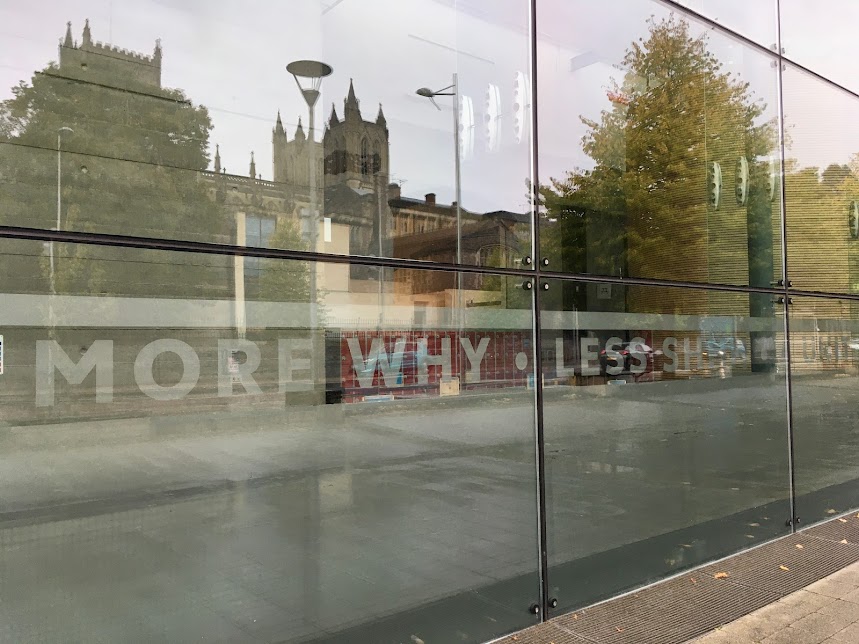
“More why, less shhh.” I love this slogan from the We the Curious museum in Bristol.

The fact that I’m American serves a similar purpose. My slight accent piques their curiosity, forces them to acknowledge I’m here, lets them make fun of my pronunciation and feel more comfortable. “Water” is a giveaway for an American accent. I can try to make the T more clipped, less like a D, but it sounds ridiculous and forced. When I first emigrated our street was called Water Lane and my accent embarrassed me every time I told my address to local people. I oblige the kids when they want to hear it, though. They like to feel superior in something, even if I have lived on this Small Island longer than they’ve been alive.

I have a stash of writing utensils too, of course. Lessons start much better when I can quietly check with a student that they have the equipment they need and lend what’s necessary, rather than them instantly getting into trouble.

“I bet you still say ‘water’ funny.”

“I’m afraid I haven’t quite got rid of all my Americanisms.”

“Oh, that’s okay, Miss.”

So they get to play the part of being generous and hospitable, too.

Retraining

One successful result of the school’s efforts to support well-being may be the diversity accepted within the student population. While it’s a rural area and not very multicultural, students support their friends of colour and Black Lives Matter. I also got to have a discussion with a Year 11 prefect about her witchcraft practice, and of course the crux of my job is to support students with various disabilities.

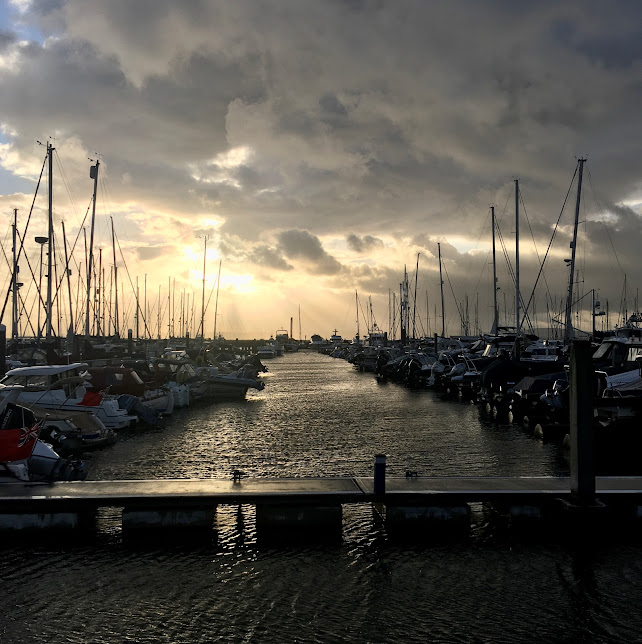
Sunrise on a new adventure. We’re not expecting fully calm seas, and that’s ok.

With a designated unisex bathroom now on site, other students are able, more and more, to inhabit more comfortable roles. Previously it was agony for certain teens to deal with bodies that were developing in an unwanted direction while their thoughts and preferences veered a different way, and everything around them reminded them how they ought to be. There’s a student in most of my Year 11 lessons whom I’ve tried to remember not to apply gendered language to, but I slip up sometimes since my ways of referring to subsets within the group are old-fashioned.

“Here you go, ladies.” I hand out the GCSE Language practice paper to the two students in the back.

“Non-binary,” corrects one, without even looking up.

“Of course. I’m so sorry, I’ll try to keep doing better.” They shrug and get on with the work. I hope that they’re always around people they can safely express their identity to. People who are, one might say, “calm.”

After all, I’m feeling more and more free to say “water” in my slightly redneck American way. That’s one word I won’t convincingly be able to fix, but I can work on a few others. Having to mind my language puts me in a much more writing-centred frame of mind than when I was dealing with billing and numbers. Have you been picking up any new lingo lately?

Who to Listen To

This Week’s Bit of String: Lurking teens

There were five of them, maybe seven, secondary school kids in baggy tracksuits. They would slouch in the passageway under our apartment building even though none of them lived there, and they’d munch and smoke and look surly, occasionally erupting in shrieks or guffaws.

Everyone gave them a wide berth and I too felt nervous leading my son, then quite young, past them. Why though? Even if they muttered something about us, what difference did it make? They were just kids.

So one rainy day, I looked right at them and said, “Hiya. What’s going on?”

“Nothing much,” they mumbled, looking at the littered ground, shuffling their feet.

I’d shrugged and carried on, when their greasy-ponytailed leading lady, who’d already been expelled from the local comprehensive school, called after me, “But thanks for asking!”

There was a plaintive note in her voice—she wasn’t being sarcastic. They were an eyesore everyone wanted to ignore, so they moulded themselves to the expectation. I saw this play out again when I took a job at the secondary school. One of our boisterous Year 7 girls with learning and behavioural difficulties went round to a friend’s house. The next day she recounted to me, amazed and flattered, “When we got there after school, her mum asked us all about our day. Like she really wanted to know and everything! I never heard anything like it.”

Giving Voice

In our writing, we take it fairly seriously who we give a voice to. We actively seek ideas and perspectives, rather than just wait for them to come to us. In middle school, my brother and sister got trained up to be junior mediators. The programme’s slogan was: “When I listen, people talk.” At home they grumbled about that motto. It would make more sense the other way around, we were all in agreement. “When people talk, I listen.” Because otherwise, we thought as adolescents, you’d just be sitting around waiting and hoping someone starts to talk.

Welcome to the life of an adult creative… it’s also the life of a parent of teens. We have to meaningfully show we’re ready to listen if we expect either our writing to take shape, or our kids to be comfortable confiding in us. Sometimes, we just have to wait.

It’s tricky when offering ourselves up to different viewpoints these days, though. Everyone seems aggrieved, and some causes are clearly more just (and less violent or downright crazy) than others. The very figures who insist health care, voting, and living wages aren’t basic rights are the same people who howl and moan if they get a book contract or a lucrative college speaking tour cancelled for a racist tweet (or for supporting a deadly insurrection). Is being listened to a human right? Can empathy and a kind ear solve divisions that threaten a Civil War?

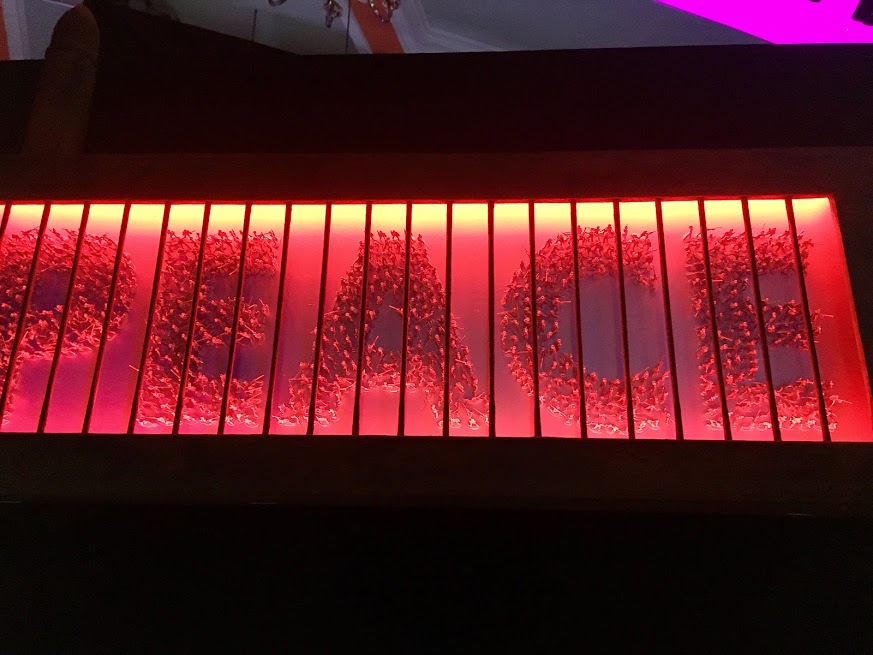
This word Peace formed by hundreds of toy soldiers at the Everything is Light exhibit in Stroud. Maybe anything is possible…

Not on a wide, national scale. Democrats in power now can’t just present obstreperous Republican senators with milk and cookies and ask how their day’s been. (I am picturing McConnell and Hawley and Greene in chavvy jogging bottoms, mumbling and dropping crumbs on the floor.) That’s because in order to work with people we need to not have our lives threatened by them, in the same way I had to talk myself out of fear before greeting the neighbourhood kids. The Republican party’s actions are increasingly reflecting their violent rhetoric, so there have to be major changes. But on a more immediate level, in our personal lives, perhaps we can reach out.

Understanding the Appeal

I get it, in a way, the whole QAnon, everyone’s-an-oppressive-threat thing. If a privileged person has used an incident to draw attention to themselves, they’ll have to find a bigger one next time. When the perils of migrant caravans didn’t materialise, a substantial percentage of the American population instead decided child-sacrificing pedophiles were running rampant, because of course everyone who disagreed with them must be in league with the man-goat.

I’m coming down from five years of worrying about Trump, his first campaign, and his administration. There are still many persecuted and neglected people and we have to make sure the new administration Does Something to help. But there’s some mental space free now, and it’s on me alone to use it, channel it into writing and into my family and my immediate community. There’s something almost facile about being caught up in national drama, having the excuse of a broader crisis to distract from the fraying mental health of my locked-down household, the novel ending that needs to be rewritten, and the distinct possibility that the shower and toilet are emptying below the floorboards.

Hence, I imagine, the appeal of QAnon and other Deep State conspiracy theories. You can shout about a crisis and be part of a super attentive group, but you don’t have to put effort into fixing your own life.

There, I’m beginning to form a bridge, by considering why some people might get absorbed, willingly, into this violent cult and admitting that we could have common flaws. I’m not labouring under the misapprehension that anyone from that side is going to cross that bridge and speak to me, but if they wanted to, I’d be ready to listen.

Good Morning, quarantined Dursley…

Last week at President Biden’s inauguration, poet Amanda Gorman won much attention with her poem “The Hill We Climb” and its exhortation to “be the light.” I remember another inauguration, when I’d just turned 12. Maya Angelou read her poem “On the Pulse of Morning” at Bill Clinton’s first inauguration. The last line of her poem stayed with me all this time, almost 30 years on: the hope that we can initiate change by fearlessly wishing each other Good Morning.

One of the things I’ve been telling myself in these recent times of floundering motivation, particularly as a writer, is that Small Steps Are Allowed. I don’t know how far I’m going to get when, but I’m going to do what little bits I can. Same with the world. I don’t know to reach the point where we can abide each other, but we can take this one small step recommended by Maya Angelou.

What if we just ask people around us, “What’s going on? How’s your day?” You never know, it could start a revolution.

The Great Circle of Literature

This Week’s Bit of String: Crime and Punishment

Spring 2003, early evening Eastern Standard Time/ late night Greenwich Mean Time. I pick up the wall-mounted cordless phone and ring my ex-boyfriend as arranged. Our son is occupied with Legos on the floor of my subsidised New Hampshire apartment.

His father answers his mobile in the London flat where he’s completing his masters. I refuse to let his voice thrill me this time; I’m giving up on waiting for him to re-articulate his interest.

We exchange the requisite weather updates and talk about our son. Then my ex-boyfriend says, “I’m reading Crime and Punishment. It’s quite good…”

Oh, are you? Instantly I’m hooked again.

Present Day, British Summer Time. I come home from work and husband-formerly-known-as-ex-boyfriend launches right in with his feelings regarding the latest twist in the John Irving novel I recommended. “I did not see that coming!”

Look at them all, conspiring shamelessly to keep my interest piqued.

Among all he and I share, reading is perhaps the most nourishing and positive. It fulfils us better than, say, watching TV together, because we’re using our brains a little more. Plus the flexing of empathy and imagination required to enjoy a book helps with the heavy lifting in a relationship.

There’s magic, too, from a book. We create a world in our heads, and what is more marvellous than subsequently talking to a loved one and finding that the same bits of magic worked on them, too? When you watch a film with someone, you see and hear the same things at once. Reading is more open to interpretation, so shared impressions are extra special and further observations are bonus insights.

Literary Connections

The unifying power of the written word seems to reach between books themselves sometimes, rather than just outward to us. Have you ever noticed that? I’ll read one book that makes the same historical reference my last, completely different read did. A couple weeks ago I read Benjamin Zephaniah’s autobiography. It immersed me in the activist, anti-National Front environment where he first started performing his poetry, with groups such as Rock Against Racism.

Then I read Kamila Shamsie’s (justly) award-winning Home Fires, about the tragic effects of radicalisation. It included a single line about a character’s parents meeting at a Rock Against Racism rally. Something I never knew about before, and suddenly my reading material conspired to bring it to my attention.

Home Fires is also a modern retelling of Sophocles’s Antigone, when before The Life and Rhymes of Benjamin Zephaniah I’d read Natalie Haynes’s rollicking The Ancient Guide to Modern Life. Its many cultural references included Antigone.

A couple of years ago I read a novel about George Eliot and then a novel about an affluent, up-and-coming German family in the lead-up to World War II. Quite different novels, set decades apart—yet characters from each travelled to Naples and stayed in the exact same hotel, and I happened to read the books one week after each other.

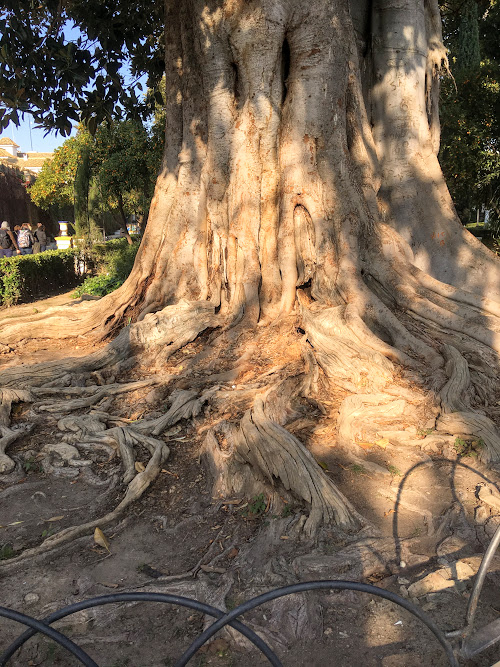
It’s as if books have their own invisible network of roots and fungi, communicating and passing nutrients to each other like some trees do. One book may seem isolated from another, but the survival of one can benefit the rest. Perhaps books know the more we read, the more our appetite grows. Ah, that tantalising moment when we get to decide what to read next!

The Roots System

Of course, there is a root system books connect to: our brains. Relatively recent studies show that brains’ ‘white matter’ is as essential to reading and learning as the grey matter. White matter are the neural pathways connecting parts of the brain (the grey matter). They’re named for the lipid myelin coating that protects some neuron parts. The wider these pathways are, the more easily signals can fire off from one long neural axon arm to the little dendrite roots on another neuron.

While having smooth white matter pathways helps us to read, reading in turn helps make the pathways smoother. It’s like a path in the woods; the more we walk down it, the smoother it gets. So improved connections in our brain is one of reading’s effects. It also improves our attention span, and anyone else who’s been married a few years (it’s fifteen for my husband and I now) knows a good attention span is useful.

Side note: My husband has been known to read things I wouldn’t. I read a lot I know he wouldn’t enjoy. That’s okay. Please never condemn a loved one for their reading choices. Or musical taste. Or even whether they like Brussels sprouts. Just please, let’s not.

The rewards of reading are somewhat analogous to a longterm relationship. There might be bits that aren’t as fast-paced. You’ve got to allow the narrative some descriptive time to set the scene. You’ve got to muddle through those dialogue bits my husband dislikes (and I love) during which, yes, unfortunately, a character’s thoughts and feelings may be exposed. And in the end, that effort is worth it because you’ve learned, you’ve laboured, and shared.

Have you found that books enhance relationships? Do you ever notice the pages conspiring with each other to broaden your horizons and change your fate?

If You Like It Be Prepared to Find a Price on It

This Week’s Bit of String: Campus costs

Confession time: I finished my university degree illegally. In my state, people receiving benefits weren’t allowed to pursue the extra financial burden of higher education (sometimes ‘Live free or die’ translates to ‘Live free and let others fall by the wayside.’) I was a single mother employed in per diem work, so I depended on state medical insurance and also some childcare reimbursement.

But while doing as much work as I could find, I completed my studies in the evenings. I relished the variety of lessons at the local community college and appreciated the more mature student population, often keener on their studies than my cohorts at the university I’d attended before I was pregnant.

Even that community college cost thousands of dollars per semester. I read and wrote so much, I’m sure it improved my work. But the expenditure, the hectic schedule in my son’s first months, not to mention the risk of incurring New Hampshire’s wrath… Could I have learned those things through independent study, through the myriad of recently sprouted online support networks and through regimented practice? Did my degree increase my job prospects or pay grade?

Shopping Around

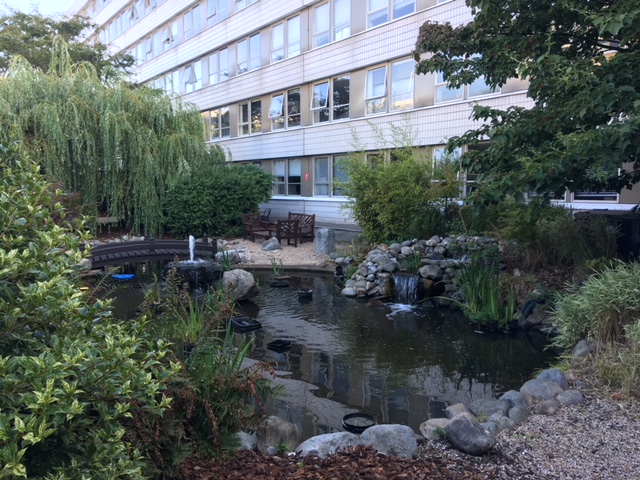
Japanese Garden in the courtyard of the Humanities building at University of Warwick

My son is starting A-Levels, the course of study in the UK for 16-18-year-olds. We’ve been doing research to ensure his subjects will be acceptable to whatever university he attends after. Maths and Philosophy degrees, Education and Psychology, a year abroad in Scandinavia…it reminds me how exciting it is to get sucked into the heart of a subject.

My reminiscences were enabled by a trip to the University of Warwick campus for the National Association of Writers Groups’ annual festival. En-suite bathrooms! Fountains and grassy rooftops! A Krispy Kreme counter in the campus grocery store! Exercise bikes and treadmills equipped with screens so you can Mahjongg while you run!

It’s a big deal here how much universities cost, but at £9000 per year it’s far less than American ones charge. And I’m hesitant to condemn the charge. I want my kid’s professors to earn a good wage, and I don’t expect the rather strapped government to fully subsidise this.

Tuition & Fees

Likewise, I want the speakers at NAWG Fest to be paid well. Writers’ pay at festivals is an issue of longstanding complexity. Quite a few attendees expressed concerns about the cost, and I sympathise, as there were a lot of pensioners among our gathering. But we must also consider that in addition to workshops and networking opportunities, our fees covered ample meals and reasonably comfortable accommodation, plus use of campus facilities.

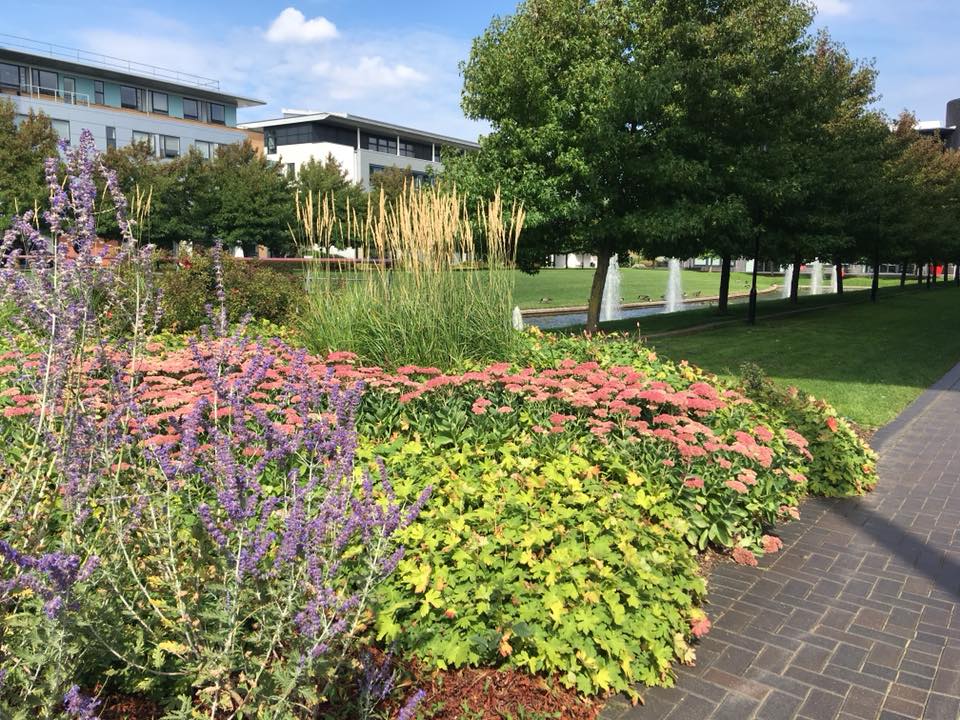
Gardens and fountains at University of Warwick
University of Warwick campus

What price can we put on jumpstarting our creativity? I spent £180 for a night’s stay, four meals and two workshops. I managed to squeeze in a gym session before the gala dinner, and I skipped the Annual General Meeting to take advantage of the swimming pool. A double bed and a bathroom of my own—invaluable to any wife and mum.

The workshop instructors had lengthy experience yet were genuinely interested in our work and ideas. The whole conference, I think, is designed especially for people newly exploring the craft of writing. I recommend it to those starting out because there’s no snobbery, and plenty of accessibility and warmth.

As someone who’s not starting out or dabbling, the concepts introduced in workshops on characterisation and plotting were somewhat familiar. However, I can always do with certain reminders, of how to raise the stakes in my plot and how to probe a story’s What Ifs to find who’s really at its heart.

My writing life consists mainly of dragging myself through alone, in snatched moments often on a bus full of miserable, drunk, and/ or manic people. I get lost in what I’m writing (thank goodness) but as others can probably attest, we cling to our ideas especially when they’re few and far between in our crowded lives. It’s hard to put a price on having someone march in and say, “Oh but remember to consider this…”

Being in the company of other writers is perhaps the most precious thing. I love listening to people who come every year talk about their work, and people who’ve just taken up writing talk about what it means to them.

Selfie after the NAWG Fest gala dinner
Satisfied NAWG Fest attendee.

And it never, never gets old when someone takes an interest in my work. At the gala dinner and awards ceremony, I was assigned to a table with one of my tutors from earlier, and various writers, novice and veteran, from different parts of the country. They were all cheering my shortlisted story and me on, ensuring that even without the first prize trophy, I left feeling satisfied and invigorated (the chocolate cake may well have helped).

Maybe this could have been achieved by other, cheaper means. But as with attending university, the extra money could be worth it because we need the corralling, cajoling, and challenging that comes with a comprehensive experience rather than the usual bits and pieces we use to sustain our artistic existences. And we should expect those benefits not to be free when they come with the help of others or the use of their institutions.

What kinds of writing experiences have you paid for? What constitutes value for money, and what kinds of free activities help give you a boost?

Sign Language Poetry

This Week’s Bit of String: Children’s hands tied to their chairs

Imagine going to a special school, for children who share with you a unique difference from much of the world. But if you use this difference, you’ll be punished. This school tries to make you as un-different as possible, in accordance with the wishes of Those Who Know Best.

It would be a bit like taking Defence Against the Dark Arts without being allowed to do magic, wouldn’t it?

Shockingly, this was the experience for many hearing impaired children from 1880, when hearing people took over the deaf schools and prohibited sign language, through the 1960s and possibly even the 70s. One woman who went to deaf school in the 70s remembers that if she were caught signing there—despite coming from a deaf family with whom she signed all the time at home, not to mention her classmates were deaf—her hands would be tied behind her to her chair.

Curbing minority languages has a long history. African slaves brought to Haiti were banned from drumming, as they’d used drums to communicate over long distances. The drum again became an important art form to Haitians once they’d battled their freedom back. Gaelic and Welsh were previously marginalised by the British education system before making a comeback.

Likewise, sign language is once again a vital means of communication for the hearing impaired. It is becoming more of a fixture in public life, too, including at Ledbury Poetry Festival on the 8th of July, when I attended an event showcasing British Sign Language (BSL) Poetry.

Sign Art

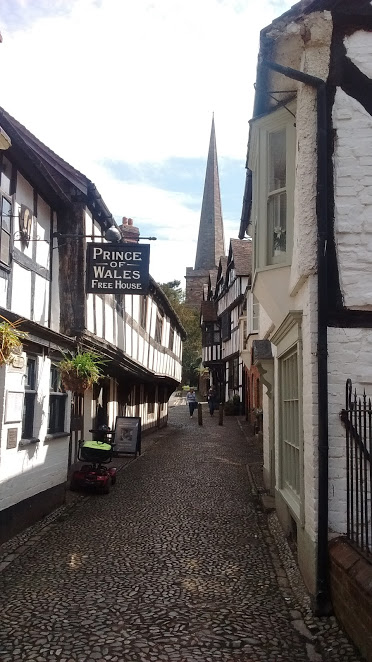
Tudor street in Ledbury
Ledbury street

I’m ashamed to say it never occurred to me that sign language poetry existed (also known as sign art). I was thankful for the opportunity to be enlightened.

Ledbury’s event featured the signed poetry of Paul Scott. How can you have poetry without words? Well, poetry is more than just words, I would argue. It is emotion, rhyme and rhythm. You can have all those things without words.

Mr. Scott makes his poems rhyme by using repeated hand gestures, coming back to the same signed refrain, in a way. There is certainly rhythm in his movement. These elements were further illustrated at this performance with Victoria Punch’s ‘vocal gestures.’ She did not use words to echo Mr. Scott’s poetry, but sang notes and sounds to correspond with his phrases. This way, she did not detract attention from his language but lent emphasis to its patterns.

The performance was further complemented by film-poetry by Helen Dewbery and Chaucer Cameron. Most of the images used were abstract, and timed to correspond with Mr. Scott’s phrasing, as Ms. Punch’s vocals were. In all, this became a rich sensory experience while also allowing us a glimpse into the world of those whom some might see as sensorily deprived. Very fitting, as the message of Mr. Scott’s poems is that he feels the world deeply and wants us to know he is not deprived.

Matters of Translation

Because BSL uses a different syntax to English, hostess Kyra Pollitt did not offer a straightforward interpretation, but gave a summary of the poems between performances. This method made me realise the power of sign language. A single hand motion and/ or facial expression can indicate a great deal, without equivalent sentences being necessary. These generously provide the emotion necessary to poetry.

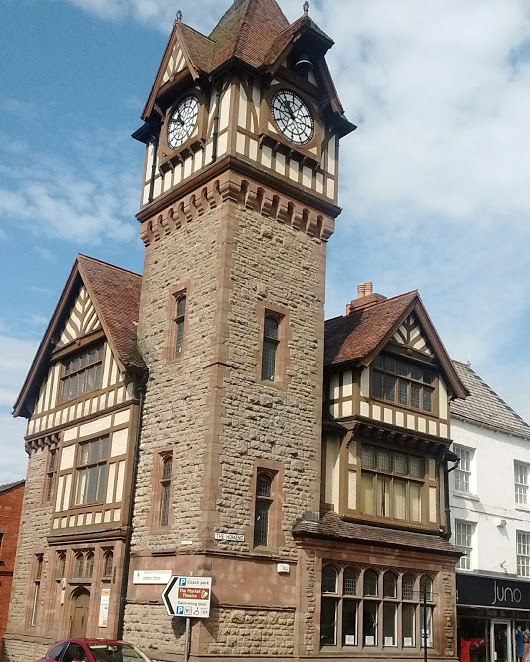
Tudor-sided corner building with gothic-style tower.
Ledbury’s former library building

Signed poetry can easily utilise the second person point of view. Mr. Scott’s poem ‘Who Stole My Heart’ implicated us as an audience, not in an excessively accusing way, but by making us aware of issues that concern him. Some of the audience felt this new language was more open to interpretation, but it seemed very direct to me (particularly when teamed with the preceding summary, the vocals and the film).

Other unique sign language qualities which enhance poetry: it allows for simultaneous symbols, which can add layers of meaning. It’s also a constantly, rapidly evolving means of communication, enabling the creation of new words to suit the work. There’s a cinematic aspect to it: sign language poets can zoom in or out, pan or freeze. As Ms. Pollitt described the art form, it creates ‘a collage of experience, making a medley.’

This uplifting event forced me to realise how intimate, and perhaps healthy it is to have an occasional holiday from words. I don’t know about you, but for me as a writer I’m often describing or narrating things in my mind. Of course it’s good to keep exercising those author muscles, but sometimes the phrases we’re turning turn our attention from the people in front of us.

This, on the other hand, was poetry with its heart on its sleeve, and I wholeheartedly recommend it. It’s scary that this form of communication was repressed for so long and generations missed out on learning from it–but as so often happens, trying to stifle a group of people results in feeding their resourcefulness and creativity. For other examples of sign language poetry, here is DeafFirefly’s website, linking to her YouTube channel and to the pages of other sign language poets.